Top 12 Best Trail Camera Booster Antenna You Need Now
Trail cameras often fail to send pictures through weak signals, a common frustration for anyone relying on the best trail camera booster antenna. A poorly made antenna can drop connection or limit range, making it hard to track wildlife or security events effectively.
Signal loss at crucial moments undermines the whole purpose of setting up a camera in remote areas.
The strength of a trail camera booster antenna mostly depends on its gain, typically measured in dBi, with 5-10 dBi being common for reliable outdoor use. Material quality matters too; antennas made from corrosion-resistant metals last longer when exposed to weather. Size and compatibility with your specific camera model also affect performance, an antenna that’s too large or has the wrong connector won’t improve signal and can be difficult to mount securely.
Need a Quick Check?
| Image | Product | Price |
|---|---|---|
Our Top Picks 1  | Black 4G Antenna Booster | Check Price |
Our Top Picks 2  | Eifagur 10dBi LTE Antenna | Check Price |
Our Top Picks 3  | 10dBi 4G LTE Booster | Check Price |
Our Selected Top 12 Trail Camera Booster Antenna Worth Your Money
This list includes carefully selected trail camera booster antennas that improve signal strength and reliability across different environments. Each review covers performance details, ideal user scenarios, and highlights both advantages and limitations to help you find the best fit for your needs.
1. Black Antenna Booster for 4G Cellular Trail Camera
Strong signal boost stands out immediately with this antenna, designed for 4G cellular trail cameras. It suits anyone needing better connectivity in remote areas, especially with trail cameras from brands like Spypoint and Moultrie.
The biggest advantage is its high gain of 9dBi, which significantly improves cellular reception for clearer, faster data transmission.
Setting up takes just a few steps thanks to the included 20FT cable with KMR200 quality and convenient connectors like N-Male and SMA Male. Daily use outdoors proves reliable since it is weatherproof and fits a wide range of popular cameras without fuss.
The wall mount option helps position it properly to catch the best signal, making it quite practical for daily trail monitoring.
It performs well by noticeably extending cellular range and maintaining a steady connection, essential for trail camera data uploads. The build shows solid weatherproofing and durable materials, surviving outdoor conditions.
Positive feedback highlights strong signal gain, while the common downside mentioned is occasional cable stiffness that requires extra care when positioning the antenna.
Strong signal gain of 9dBi delivers better cellular data reliability, essential for remote trail camera setups. Cable stiffness is the most common issue, meaning it takes a little patience when adjusting or routing to avoid damage.
People placing cameras in areas with weak cellular coverage will appreciate this boost and weatherproof durability. Those needing flexible mounting beyond walls or an ultra-soft cable might look for other options better suited to those specific needs.
Pros
- High gain improves 4G cellular reception significantly
- Wide compatibility with many trail camera models
- Weatherproof design perfect for outdoor use
- Long 20FT cable offers flexible installation options
Cons
- Cable can be stiff and requires careful handling
- Mounting limited to wall installations only
| Specification | Details |
|---|---|
| Frequency Range | 698-2700MHz |
| Gain | 9dBi |
| Antenna Length | 40cm/16.2inch |
| Cable | 20FT KMR200 N Female to SMA Male Connector |
| Adapter | SMA Female to RP-SMA Male |
| SW R | ≤1.5 |
2. Eifagur 10dBi LTE Cellular Antenna for Trail Cameras
Signal strength is often the biggest hurdle with remote trail cameras, and this antenna suits anyone needing a reliable boost in low coverage areas. Its main draw is the 10dBi gain, helping to pull in cellular signals from various frequencies for smoother photo transmission on your phone.
Setup involves mounting the antenna on a wall using the included 3m (10 feet) RG58 cable with an RP-SMA Male connector, which then connects to your trail camera via an adapter converting RP-SMA Female to SMA Male. The omni-directional design means there’s no need for constant re-aiming, making day-to-day use straightforward as it picks up signals from all around effectively.
Performance-wise, the antenna improves weak signals noticeably by amplifying LTE frequencies ranging from 698-2700 MHz. Its build feels solid enough for outdoor mounting and the cable length offers flexibility.
Most appreciate the signal boost it provides, though some find the fixed cable a bit limiting for certain placements or longer distances.
Users note that the antenna boosts cellular signals well enough to improve image transmission speed and reduce connection dropouts, especially in weak signal zones. The most common drawback is the rigidity of the cable length, which can complicate finding the ideal mounting spot without additional extension.
Anyone placing cameras not far from mounting points will appreciate the ease and boost provided. Those needing longer or more flexible cable runs might be better served by a product offering customizable cable options or detachable antenna components.
Pros
- Strong 10dBi gain for improved signal
- Omni-directional coverage avoids frequent aiming
- Includes 3m cable for flexible positioning
- Comes with adapter to fit multiple camera connectors
Cons
- Cable length may be limiting for distant camera setups
- Fixed cable restricts custom installation options
| Specification | Details |
|---|---|
| Frequency Range | 698-960 MHz, 1710-2170 MHz, 2300-2700 MHz |
| Gain | 10dBi |
| Direction | Omni-directional |
| Cable Length | 3m/10 feet RG58 Cable |
| Antenna Connector | RP-SMA Male |
3. 10dBi 4G LTE Cellular Booster Antenna
Challenging cellular signal spots can ruin the excitement of trail camera scouting. Designed for all series Spypoint Flex Link Micro, Stealth CAM, Moultrie Edge, Tactacam Reveal X Gen 2.0/3.0, and X PRO cameras, this 10dBi 4G LTE Cellular Booster Antenna excels at amplifying weak signals for clearer, faster photo transmissions in those tough locations.
Setting up involves connecting the 16.4FT low-loss KSR200 cable from the antenna to your trail camera’s RP-SMA port using the included adapter. Its omni-directional design means you don’t have to aim it precisely, letting it work in any direction to gather signals.
The IP67 waterproof rating ensures it withstands outdoor conditions well without worrying about rain or dust affecting performance.
Signal boosting works consistently over a wide frequency range of 698-2700 MHz, which covers most 4G LTE bands. The antenna’s 10dBi gain noticeably improves image transmission speed and reliability in weak signal areas.
Its 11-inch length balances sturdy build quality with manageable size. Some users have noted limited gains in extremely remote locations, but most appreciate how well it strengthens everyday signal strength for trail cams.
Most users find the antenna reliably strengthens cellular signals, improving photo transmissions from areas with known weak reception. Occasional complaints mention it offers little help when far from any cell tower, highlighting a limit in truly remote regions.
Anyone struggling with patchy signal around wooded or semi-rural spots will appreciate the performance boost and solid outdoor durability. Those working deep in wilderness with almost no coverage might need a specialized, higher-gain or directional antenna instead.
Pros
- Amplifies weak 4G LTE signals effectively
- Waterproof IP67 rating suits outdoor use
- Compatible with many popular trail camera models
- Long, low-loss cable offers flexible placement
Cons
- Limited improvement in very remote areas
- Requires an adapter for SMA connection
| Specification | Details |
|---|---|
| Frequency Range | 698-2700 MHz |
| Gain | 10dBi |
| Direction | Omni-directional |
| Waterproof Rating | IP67 |
| Antenna Cable | 16.4FT Low Loss KSR200 Cable |
| Antenna Connector | RP-SMA Male |
4. RP-SMA Male Antenna Booster for 4G LTE Trail Cameras, 2-Pack

With a 9dBi gain and an omni-directional design, this antenna booster suits anyone needing better cellular reception for trail cameras. It excels at improving signal strength for various 4G LTE models, making it ideal for outdoor setups where connectivity matters most.
Installing the antennas on compatible devices is straightforward thanks to the RP-SMA Male connector. Daily use shows consistent performance in different directions due to its omni-directional feature.
The IP67 rating means it handles wet conditions without worry, so it stays reliable throughout outdoor adventures regardless of weather.
It delivers on boosting cellular connection as expected and feels solidly built for rough environments. Users often appreciate the clear signal improvements, although some mention the antenna’s size may require careful positioning. This balance between durability and functionality makes it generally suited for rugged outdoor use.
The antenna consistently improves cellular signals for compatible trail cameras while standing up well to outdoor weather conditions. The size sometimes makes positioning tricky, demanding a bit of trial and error to find the optimal spot. These factors shape the day-to-day experience.
Those using Spypoint Link or TACTACAM devices with RP-SMA connectors will find this booster adds reliable range and signal strength. People with cameras lacking this connector type should consider alternatives designed for their models.
Pros
- Improves signal across multiple 4G LTE cameras
- Waterproof rating ensures weather resistance
- Universal fit for RP-SMA connector devices
- Sold as a convenient 2-pack
Cons
- Antenna size requires careful placement
- Limited to devices with RP-SMA Male connectors
| Specification | Details |
|---|---|
| Frequency Range | 698-2700 MHz |
| Gain | 9dBi |
| Direction | Omni-directional |
| Waterproof Rating | IP67 |
| Antenna Connector | RP-SMA Male |
5. RP-SMA Male Antenna Booster for 4G LTE Trail Cameras

Anyone relying on cellular trail cameras that need better signal strength will appreciate this antenna booster. It’s designed to fit specific models from Spypoint and TACTACAM, making it a reliable choice for those wanting to upgrade or replace worn antennas.
Its biggest strength lies in significantly improving LTE connectivity.
Installation is straightforward since it connects via an RP-SMA male connector, a common standard on compatible cameras. The booster works right out of the box, enhancing connection without adding extra complexity. Its waterproof IP67 rating allows it to withstand rough outdoor conditions without worry, so it stays dependable through daily use in the wild.
With a 9dBi gain across a broad frequency range of 698-2700 MHz, this antenna makes a noticeable difference in signal reception. Constructed with durability in mind, the omni-directional design ensures consistent coverage. Most feedback praises the clear improvement in connectivity, though some mention the antenna’s size can be a bit bulky on smaller cameras.
The antenna regularly receives praise for significantly boosting signal strength, restoring connectivity that factory antennas lose over time. At the same time, some users note the physical size can be cumbersome when attached to compact cameras, which may affect portability or camera positioning.
Great for outdoors users needing a stronger cellular connection on compatible Spypoint or TACTACAM trail cameras. Those with cameras outside the listed compatibility or requiring a smaller antenna might want to explore alternative options better suited for their setup.
Pros
- Compatible with several popular trail cameras
- Improves LTE signal strength noticeably
- Waterproof design for outdoor durability
- Omni-directional antenna for broad coverage
Cons
- Can be bulky on smaller trail cameras
- Only compatible with specific camera models
| Specification | Details |
|---|---|
| Frequency Range | 698-2700 MHz |
| Gain | 9dBi |
| Direction | Omni-directional |
| Waterproof Rating | IP67 |
| Antenna Connector | RP-SMA Male |
6. Bingfu 4G LTE Outdoor Cellular Trail Camera Antenna

Designed specifically for trail cameras with cellular connections, this antenna works well with brands like Spypoint and Tactacam. It stands out by improving signal strength outdoors, making it a solid choice for anyone needing better reception from their 4G LTE trail or security cameras in remote settings.
Installation is straightforward thanks to the standard SMA or RP-SMA connector, fitting easily onto compatible devices without fuss. Daily use benefits from stable signal improvements that help keep cameras connected over long distances. The antenna’s compatibility with a variety of cameras and even other cellular devices adds convenience beyond just hunting or wildlife monitoring.
Signal boosting performs reliably, providing more consistent uploads and fewer dropped connections. Its build feels sturdy enough for outdoor use, though a few note it could be a bit more weather-resistant.
The most praised aspect is the noticeable increase in reception quality, while occasional complaints mention compatibility quirks with some camera models despite listed compatibility.
The antenna consistently delivers stronger cell signal, which helps maintain connection for remote cameras. Some users find it doesn’t fit all models as smoothly as expected despite advertised compatibility, causing connection frustrations in a few cases.
Outdoor enthusiasts and wildlife watchers using supported camera brands will benefit most from this antenna. Those needing a rugged, fully weatherproof option or using less common camera models might want to look for alternatives better suited to their setup.
Pros
- Works with many Spypoint and Tactacam cameras
- Easy installation with standard connectors
- Improves cellular signal outdoors
- Compatible with various other devices beyond trail cameras
Cons
- Could be more weather-resistant for harsh environments
- May not fit perfectly with every compatible camera model
| Specification | Details |
|---|---|
| Compatible Devices | Spypoint & Tactacam models with SMA or RP-SMA connector |
| Brand | BINGFU |
| Model Number | BFN00664 |
| Unit Count | 1 Count |
| Application | 4G Hunting Wildlife Game Camera, Outdoor Security Camera and others |
7. Bingfu 4G LTE SMA Antenna Replacement

Bingfu 4G LTE SMA Antenna Replacement stands out as a reliable signal booster for several popular trail cameras. Ideal for hunters and wildlife observers needing better cellular reception, its biggest strength lies in broad compatibility with cameras from Spypoint, Tactacam, Stealth Cam, and more.
Setting up the antenna is straightforward thanks to the SMA connector and the included 10ft low loss cable that lets you position it for the best signal. Daily use involves simply mounting it where reception is strongest, which can greatly extend your camera’s connectivity range. It works on various game cams and even some wireless routers or modems, adding flexibility to where you can place your devices.
The cable length gives enough freedom to place the antenna high up or near windows without hassles.
Performance lives up to expectations, delivering a noticeable signal boost in many situations. Build quality is solid with an emphasis on durability to withstand outdoor conditions. The most praised feature is the improved reception on tricky cellular networks, while the main complaint revolves around occasional compatibility and fit issues on less common camera models.
The design is simple and functional but doesn’t stand out cosmetically.
Many find it boosts reception noticeably and expands camera placement options. Some experience compatibility glitches with certain camera models, mainly due to antenna mounting or connector size differences. Signal improvement tends to be the biggest benefit noted.
People using common Spypoint, Tactacam, or Stealth Cam models will appreciate better signal strength. Those with specialized or rare camera brands might need to check compatibility carefully before picking this antenna. It’s best suited for anyone wanting a straightforward upgrade without extra features.
Pros
- Compatible with many popular trail cameras
- Includes a long 10ft low loss cable
- Improves cellular reception significantly
- Durable build for outdoor use
Cons
- Occasional fit issues on less common models
- Basic design lacks protective casing
| Specification | Details |
|---|---|
| Brand | BINGFU |
| Model Number | BFN00425 |
| Unit Count | 1 Count |
| Cable Length | 10ft Low Loss Cable |
| Compatible with | Spypoint, Tactacam, Stealth Cam, Moultrie |
8. RP-SMA Male Antenna Replacement for 4G LTE Trail Cameras, 2-Pack

Signal boosters rarely feel this straightforward and effective. These RP-SMA Male Antennas suit anyone struggling with weak 4G LTE reception on their trail cameras. Their biggest strength lies in making cellular signals stronger, so images send faster and more reliably.
Setup takes just a moment since the antennas are designed as replacements with RP-SMA Male connectors. Once attached, their omni-directional design means you don’t have to aim them exactly. They work well outdoors too, thanks to the waterproof IP67 rating, making daily field use worry-free even when the weather turns bad.
Performance is solid within the 600-6000 MHz frequency range, offering a 10dBi gain that noticeably improves signal strength. The build feels sturdy, and they handle outdoor conditions without issue.
Praise often mentions smoother image transmission, while some note that signal improvement depends on existing coverage quality rather than creating a new connection from nothing.
Smoother image transmission is the strongest point, especially in areas with some signal already present. The most common complaint is that it won’t create a signal where none exists, so placement and network presence still matter a lot.
Anyone using compatible trail cameras and dealing with spotty cellular reception will find these antennas useful. Those in dead zones without any signal should look for other options that don’t rely on existing coverage to work.
Pros
- Improves signal in known weak areas
- Waterproof and durable for outdoor use
- Omni-directional, no aiming needed
- Comes in a convenient 2-pack
Cons
- Signal boost limited by existing network coverage
- May not fit non-RP-SMA connectors
| Specification | Details |
|---|---|
| Frequency Range | 600-6000 MHz |
| Gain | 10dBi |
| Direction | Omni-directional |
| Waterproof Rating | IP67 |
| Antenna Connector | RP-SMA Male |
| Impedance | 50Ω |
9. 4G LTE Cellular Antenna with 10ft Cable for Trail Cameras

Boosting trail camera signals in weak cellular areas becomes manageable with this 4G LTE Cellular Antenna from eifagur. Best suited for hunters or wildlife watchers using compatible Spypoint trail cameras, its biggest advantage lies in reliably amplifying signal strength to help transmit pictures more smoothly.
Setup is straightforward thanks to a 10ft RG58 cable that allows flexible placement in remote spots. The omni-directional design means the antenna picks up signals from all directions without needing precise alignment. Daily use benefits from its waterproof IP67 rating, so rain or dew won’t affect performance, making it suitable for various outdoor environments.
Signal improvement is noticeable as images get sent more consistently where the baseline connection was weak. Built solid with a 5dBi gain antenna frequency range from 698-960 MHz, it stands up well to weather. Some users mention the cable length as a limiting factor depending on camera placement, but most praise its durability and waterproof qualities.
Many users highlight how the antenna reliably boosts signal strength and holds up well in wet conditions thanks to its waterproof design. The main drawback reported is the cable length, which can limit placement flexibility for some trail camera users.
People looking for an easy way to boost signal on compatible Spypoint cameras will appreciate this antenna. Those requiring longer cable runs or more powerful gain should look for an alternative solution tailored to those demands.
Pros
- Waterproof IP67 rating for outdoor use
- Omni-directional for consistent signal reception
- Compatible with multiple Spypoint trail cameras
- 10ft cable offers flexible setup options
Cons
- Cable length may be short for some setups
- Gain limited to 5dBi, not suitable for extremely weak signals
| Specification | Details |
|---|---|
| Frequency Range | 698-960 MHz, 1710-2170 MHz, 2300-2700 MHz |
| Gain | 5dBi |
| Direction | Omni-directional |
| Waterproof Rating | IP67 |
| Cable Type | 3M/10FT RG58 Cable |
| Impedance | 50Ω |
10. Long Range High Gain Booster Antenna for Trail Cameras

Grey metal construction and included pole mounting hardware make the Long Range High Gain Booster Antenna a solid option for anyone looking to boost cellular signal on a trail camera. It is designed for cellular trail cameras with a screw-on antenna connector and stands out for its directional focus to improve reception in weak signal areas.
Setting up takes a bit of work but nothing complicated. The 15-foot low loss coax cable gives flexibility for placement, and the adapter included works with Spypoint and Tactacam cameras that need an RP-SMA connection.
Painting it for camouflage is possible, which helps blend it into outdoor environments. Pole mounting hardware comes with it, though the pole itself is not included, so that will have to be sourced separately.
Performance-wise, the directional high gain design really helps extend the range on cellular signals, which is its primary job. The build feels durable and practical outdoors, with solid cabling and a weather-resistant finish.
Many appreciate the improved signal strength after installing it. Some note the antenna’s size and weight can make positioning tricky in some spots, but the mounting hardware helps manage that.
Most people appreciate the noticeable boost in cellular signal strength, especially in remote areas where cameras otherwise struggle to stay connected. The common downside mentioned involves the antenna’s bulk making it tricky to mount in certain spots without the right pole or setup.
Anyone needing a reliable signal increase on a cellular trail camera with screw-on connections will find this a strong choice. Those needing a more compact or lightweight antenna, or who do not want to source a mounting pole separately, might want to consider other options.
Pros
- Directional design improves cellular signal reception
- Includes 15 foot low loss coax cable
- Adapter for Spypoint and Tactacam cameras included
- Grey color can be painted for camouflage
Cons
- Pole for mounting not included, must be bought separately
- Large size and weight can challenge some mounting setups
| Specification | Details |
|---|---|
| Type | Directional Antenna |
| Cable Length | 15′ Low Loss Coax |
| Connector | SMA and SMA to RP-SMA adapter included |
| Color | Grey, paintable |
| Mounting | Pole Mounting Hardware Included |
11. 4G LTE High Gain Long Range Cellular Antenna
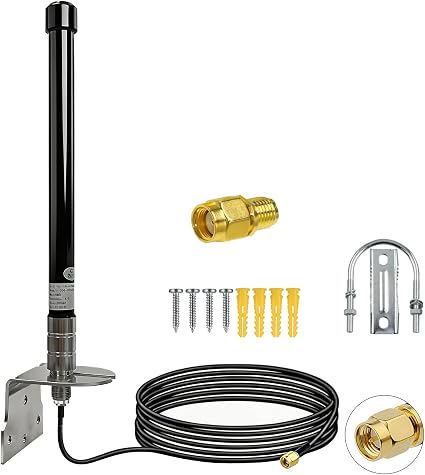
Signal strength improvement stands out most with the 4G LTE High Gain Long Range Cellular Antenna, making it ideal for anyone struggling with weak service in remote areas. It suits cellular trail cameras that rely on a strong connection, giving them a better shot at staying linked and sending data.
Setting it up is straightforward thanks to the omnidirectional design, so there’s no need to fuss over aiming it at a particular direction. The included sturdy wall-mount bracket holds well outdoors, and the antenna’s waterproof, fiberglass build keeps it reliable through rain and various weather. Using it day-to-day means less worrying about dropped connections or unclear images from the trail cameras.
Performance-wise, the antenna improves signal strength noticeably for supported trail cameras, especially in rough signal spots. The fiberglass cover feels tough and ready for long-term outdoor exposure without damage. Hearing praise mostly centers on its dependable durability.
Some occasionally mention the size might be a bit bulky for very compact setups.
The antenna reliably boosts weak cellular signals and holds up well in wet environments due to its rugged fiberglass waterproof design. Some find its size a little large compared to smaller trail camera setups, which could limit placement options.
Those needing a steady, long-range signal for compatible trail cameras will appreciate the dependable connection it offers. Users with very compact or minimal mounting space might want to look for a smaller or different style antenna.
Pros
- Improves cellular signal strength effectively
- Omnidirectional, no aiming needed
- Waterproof and durable fiberglass cover
- Sturdy mount for outdoor use
Cons
- Size can feel bulky for small spaces
- Only one antenna per pack
| Specification | Details |
|---|---|
| Model Number | GT600 |
| Brand | GTOMNI |
| Unit Count | 1 Count |
| Item Highlight | Works with Spypoint Flex, LM2, Link Micro Series, and others |
| Material | High quality fiberglass, waterproof |
| Warranty Description | 1 Year Manufacturer |
12. Soft Whip Replacement Antenna for 4G LTE Trail Cameras

Designed to boost cellular signals for trail cameras, this antenna suits those struggling with weak signal areas. Its main strength lies in significantly improving signal strength for smoother image transmission to your phone, ensuring better connectivity during outdoor monitoring.
Installation is straightforward thanks to the SMA Male connector and included SMA Female to RP-SMA Male adapter, fitting several popular trail camera models like SPYPOINT and TACTACAM. The omni-directional design means it picks up signals from all around without needing constant adjustment.
Its waterproof IP67 rating lets you leave it outside without worrying about weather damage.
Signal amplification works effectively across key frequency ranges between 698-2700 MHz, helping to clear up lag and signal drops. The antenna has a solid build that holds up well outdoors, while some users note the connector can feel a bit delicate and may require careful handling to avoid damage.
This antenna effectively boosts cellular signals over a broad frequency range, making picture transmission more reliable in tough locations. Some users find the antenna connector somewhat fragile, requiring gentle installation to prevent issues.
Suitable for those needing better reception with compatible trail cameras, especially in areas known for weak signals. Those with multiple cameras or a need for broader coverage might want to consider additional or different antenna options.
Pros
- Improves signal strength in weak areas
- Compatible with popular trail camera models
- Durable waterproof design for outdoor use
- Omni-directional for wide signal reception
Cons
- Connector can be fragile and needs careful handling
- Single antenna pack may limit coverage in larger setups
| Specification | Details |
|---|---|
| Frequency Range | 698-960 MHz, 1710-2170 MHz, 2300-2700 MHz |
| Gain | 8dBi |
| Direction | Omni-directional |
| Waterproof | IP67 |
| Antenna Connector | SMA Male |
| Adapter | SMA Female to RP-SMA Male |
Comparison of Top Trail Camera Booster Antennas
| Product | Compatibility | Antenna Gain | Cable Length | Warranty |
|---|---|---|---|---|
| Black 4G Antenna Booster | Smartphone | High Gain | – | 2 years |
| Eifagur 10dBi LTE Antenna | – | 10dBi | – | – |
| 10dBi 4G LTE Booster | Spypoint, Moultrie, Tactacam | 10dBi | – | – |
| RP-SMA 4G LTE Antenna 2-Pack | – | – | – | 2 years |
| RP-SMA 4G LTE Antenna | – | – | – | 2 years |
| Bingfu 4G LTE Trail Antenna | Spypoint, Moultrie, Stealth, others | – | – | – |
| Bingfu 4G LTE SMA Replacement | Spypoint, Tactacam, Moultrie | – | 10ft Low Loss | – |
| RP-SMA 4G LTE Replacement 2-Pack | – | – | – | 2 years |
| 4G LTE Antenna 10ft Cable | Compatible with various trail cams | 5dBi | 10ft | – |
| Long Range Booster Antenna | – | Directional | 15ft Coax | – |
| 4G LTE High Gain Antenna | – | High-performance Mimo | – | – |
| Soft Whip 4G LTE Antenna | – | – | – | 2 years |
- CompatibilitySmartphone
- Antenna GainHigh Gain
- Cable Length–
- Warranty2 years
- Compatibility–
- Antenna Gain10dBi
- Cable Length–
- Warranty–
- CompatibilitySpypoint, Moultrie, Tactacam
- Antenna Gain10dBi
- Cable Length–
- Warranty–
- Compatibility–
- Antenna Gain–
- Cable Length–
- Warranty2 years
- Compatibility–
- Antenna Gain–
- Cable Length–
- Warranty2 years
- CompatibilitySpypoint, Moultrie, Stealth, others
- Antenna Gain–
- Cable Length–
- Warranty–
- CompatibilitySpypoint, Tactacam, Moultrie
- Antenna Gain–
- Cable Length10ft Low Loss
- Warranty–
- Compatibility–
- Antenna Gain–
- Cable Length–
- Warranty2 years
- CompatibilityCompatible with various trail cams
- Antenna Gain5dBi
- Cable Length10ft
- Warranty–
- Compatibility–
- Antenna GainDirectional
- Cable Length15ft Coax
- Warranty–
- Compatibility–
- Antenna GainHigh-performance Mimo
- Cable Length–
- Warranty–
- Compatibility–
- Antenna Gain–
- Cable Length–
- Warranty2 years
How to Choose the Right Trail Camera Booster Antenna
Choosing the right trail camera booster antenna depends on signal range, durability, and compatibility with your camera. A good match ensures reliable connectivity in remote areas, reducing missed photos and preventing unnecessary replacements. Prioritizing these factors saves money and avoids frustration in the field.
Compatibility with Trail Camera Models
Using an antenna with the wrong connector type can be frustrating because it simply won’t fit your camera’s port, leaving the setup incomplete. For example, many trail cameras use SMA or RP-SMA connectors, and mixing these up means either struggling with an ill-fitting connection or needing extra adapters.
The antenna must also support the same frequency bands your camera uses, commonly 3G, 4G LTE, or even 5G bands depending on the model, to ensure it actually improves signal reception.
Size and mounting practicality matter in real use. An antenna too large or with incompatible mounting brackets might not fit on certain compact camera models or may get in the way of positioning.
Confirm dimensions and mounting types (magnetic base, screw mount, or adhesive) so you don’t end up improvising with zip ties or duct tape.
Signal Boosting Performance
Devices with antennas rated around 7-9 dBi gain usually deliver noticeable signal improvements in typical wooded areas, while lower gain models might only help minimally. The difference shows during poor cellular coverage or thick foliage where the signal is patchy or weak.
Antennas can be directional, focusing signal strength in one direction to improve long-range connectivity, or omnidirectional, which pick up signals from all sides but with less range.
Directional antennas are better for placing cameras in a fixed location where the cell tower direction is known, whereas omnidirectional types suit setups where you want coverage regardless of orientation. Terrain plays a role, too, hilly or forested areas reduce effective range gains compared to flat open locations, so claimed ranges should be considered realistically.
Durability and Weather Resistance
Outdoor antennas that lack a rating of at least IP65 usually can’t handle heavy rain, leading to water ingress and malfunction. The toughest models feature materials like anodized aluminum or UV-resistant plastics to prevent rust and degradation after months in sun and snow.
Not testing durability in advance often results in replacing antennas after one harsh season.
Strong winds or falling branches are everyday challenges on trails. Antennas mounted loosely or made of fragile materials can break or lose position easily.
Expect antennas to come with solid casings and secure mounting options to hold up to those conditions without constant maintenance or adjustment.
Ease of Installation and Portability
Setting up a new antenna can be a hassle if it arrives without any mounting equipment. Antennas that come with brackets, screws, or magnetic bases save time and avoid extra trips to hardware stores. Portability is key when moving trail cameras often.
Heavy or bulky antennas make transport and installation tiresome.
Check cable length carefully. Too short means stretching or adding extensions, which may degrade signal, while too long cables can be cumbersome.
Flexible cables that bend easily without damage help position the antenna for the strongest signal without awkward setups.
Power Requirements and Connectivity
Passive antennas draw power directly from the camera, which simplifies installation and reduces parts to manage. Those requiring external power need a power source nearby, adding complexity and potentially limiting placement options. Knowing this beforehand prevents unplanned trips for batteries or power units.
Cable connectors vary; some come with standard plugs matching common ports, others need adapters. Many antennas support plug-and-play use, enabling quick setups, but certain models require technical configuration which can be frustrating without the right tools or knowledge.
Confirm compatibility and setup complexity before committing to avoid wasted time and money.
Optimizing Signal Reception: Placement and Installation Tips for Trail Camera Booster Antennas
Signal strength depends largely on where the booster antenna is positioned. Placing the antenna higher, such as on a tree branch or a pole, helps reduce obstructions like bushes or terrain that can block the signal.
Avoid mounting it directly on metal surfaces since metal can interfere with reception. The antenna should be angled to face the general direction of the nearest cell tower for the best connection.
Installation tips include:
- Use sturdy mounts to prevent movement caused by wind, which can disrupt the signal.
- Keep cables as short as possible between the antenna and camera to reduce signal loss.
- Seal cable connections against moisture to avoid corrosion and maintain signal quality.
Properly securing the antenna ensures consistent reception and reduces the chance of needing frequent adjustments in the field.
Maintaining Your Trail Camera Booster Antenna for Long-Term Performance
Regular checks go a long way in maintaining a booster antenna’s performance. Dirt buildup on the antenna can weaken signal quality, so gently cleaning it with a damp cloth helps keep the surface clear.
Moisture and temperature fluctuations can wear out cables and connectors, so inspect these parts for cracks or rust.
Routine maintenance steps include:
- Checking tightness of all mounts and fasteners to prevent antenna movement or damage.
- Applying weatherproofing tape or sealant on connectors to protect against water intrusion.
- Replacing worn cables promptly to avoid signal drops.
Keeping the antenna clean and well-protected extends the lifespan of both the antenna and the trail camera’s signal reliability.
Comparing External Booster Antennas with Built-In Signal Enhancers for Trail Cameras
External booster antennas generally provide stronger signal enhancement compared to built-in signal enhancers because they can be positioned independently for optimal reception. Built-in enhancers rely on the camera’s location, which might be behind obstructions or lower to the ground. External antennas also offer flexibility to upgrade or replace just the antenna without changing the whole camera.
Key differences include:
- External antennas allow positioning in higher or clearer spots, improving performance.
- Built-in enhancers are compact and convenient but limited by the camera’s surroundings.
- External options typically use coaxial cables, which can introduce some signal loss if too long.
Choosing between the two depends on the specific setup and signal requirements at the camera location.
People Also Asked
How Do I Install a Trail Camera Booster Antenna Properly?
Connect the booster antenna to your trail camera’s antenna port securely, usually with a screw-on or snap-on connector. Position the antenna in a spot with minimal obstructions, ideally mounted higher off the ground to get better signal reception. Make sure any cables are neatly arranged and protected against water and damage.
Will the Booster Antenna Improve Signal Through Dense Forest?
A booster antenna can improve signal through dense forest to some extent by focusing signal strength outward. Thick tree cover and heavy foliage will still reduce overall range but the booster helps maintain a more stable connection at moderate distances. Placing the antenna above the canopy or near a gap improves performance.
Are Booster Antennas Compatible with All Trail Camera Models?
Booster antennas are typically designed for specific frequencies or brands, so not all will work with every trail camera. Check the antenna’s compatibility details, such as connection type and supported frequency bands, before buying. Using an antenna not designed for your camera can result in no signal improvement.
How Long Does a Trail Camera Booster Antenna Typically Last?
Trail camera booster antennas generally last several seasons if kept dry and physically protected from impacts. Weather exposure, especially moisture and UV light, can degrade their external components over time. Regularly inspect for loose connectors or damage and replace if performance drops.
Can Using a Booster Antenna Cause Any Safety Issues?
Using a booster antenna does not generally cause safety issues but ensure all connections are secure to avoid damaged equipment. Avoid mounting antennas near power lines or metal structures that could cause interference or pose a hazard. Also, protect yourself from sharp edges when installing to prevent minor injuries.
Conclusion
Signal range and compatibility with your trail camera model are key factors to consider when choosing a booster antenna. Durability matters too since these antennas often face outdoor conditions. Finally, look at the cable length and connector type to ensure it fits your setup without extra adapters.
Think about how often you use your trail camera and the environment it will be in before picking an antenna that fits your needs and budget. A longer cable or sturdier build often comes with a higher price but can be worth it for heavy use.
Refer back to the comparison table and product details to find the best option for your situation.