
Top 12 Best Whale Watching Spotting Scope You Need Now!
Watching whales from shore or a boat only works well if you have the best whale watching spotting scope. A low-quality scope often struggles with foggy or salty air, making distant shapes blur into unrecognizable shadows.
Magnification might be too weak or too strong, causing shaky images that make it impossible to identify whales clearly. Finding a scope that balances power and clarity avoids these frustrating experiences.
The key features are optical quality, magnification, and durability. A good spotting scope usually offers around 20 to 60 times magnification with a large objective lens between 60 to 80 millimeters to collect enough light for sharp images. Waterproof and fogproof construction is essential to withstand marine environments without internal fogging.
Ease of cleaning lenses also matters since salt and spray can accumulate quickly during whale watching trips.
Need a Quick Check?
| Image | Product | Price |
|---|---|---|
Our Top Picks 1  | SVBONY SV28 Scope | Check Price |
Our Top Picks 2  | Unbranded 20-60×80 Scope | Check Price |
Our Top Picks 3  | Celestron Ultima 100 | Check Price |
Our Selected Top 12 Whale Watching Spotting Scope Picks for Every Need
This list features carefully chosen spotting scopes ideal for whale watching, each reviewed for performance, user suitability, and key advantages and drawbacks. Readers will gain clear insights to help select the best option based on their specific needs and preferences.
1. SVBONY SV28 Spotting Scope
Perfect for beginners looking to get into whale watching, the SVBONY SV28 offers a good balance between zoom power and light gathering thanks to its 25-75x zoom and 70mm objective lens. Its standout feature is the easy magnification adjustment paired with a large lens that brightens distant views.
Setting it up takes no time, with manual focus and an extendable sunshade to cut down on glare during sunny days. Its compatibility with cameras and tripods means you can get steady shots or hands-free spotting.
The non-slip finish makes it easy to hold, even in damp conditions, and the waterproof design helps protect it from sudden weather changes offshore.
Image quality is clear enough to identify whales at varying distances, though fine details depend on steady handling or a tripod. The waterproof build and FMC coating add durability in outdoor environments. Most praise highlights its user-friendly zoom and clarity, while the main complaint centers on the need for manual focus, which can be tricky at higher magnifications.
Users find the zoom eyepiece smooth and easy to handle, providing bright, sharp images useful for spotting whales from a distance. Many note the challenge with manual focusing at higher magnifications, which may slow quick adjustments during active watching.
Anyone new to spotting scopes and on a budget will appreciate its straightforward setup and reliable optics. Those needing faster focusing or wider fields of view might want to consider more advanced options.
Pros
- Large 70mm lens for good light gathering
- Zoom eyepiece easy to adjust magnification
- Waterproof with non-slip finish for wet conditions
- Compatible with cameras and tripods
Cons
- Manual focusing requires patience at high zoom
- Limited field of view compared to pricier models
| Specification | Details |
|---|---|
| Zoom Ratio | 3:1 |
| Focal Length | 380 millimeters |
| Objective Lens Diameter | 70mm |
| Field Of View | 64 feet |
| Mount Type | Equatorial Mount |
| Waterproof | Yes |
2. Unbranded 20-60×80 Spotting Scope
Sogries 20-60×80 Spotting Scope delivers a powerful zoom range well-suited for outdoor enthusiasts keen on detailed whale watching. Its biggest strength lies in the smooth dual focusing system that makes it easy to zero in quickly on distant objects, perfect for spotting whales from a shore or boat.
Setting it up is straightforward thanks to the included tripod and carrying case, making transport simple. The zoom adjusts from 20x to 60x easily, and the dual focus knobs let you get sharp images without much fiddling. The aluminum construction feels sturdy yet lightweight enough for long observation sessions, while the phone adapter adds convenience for capturing or sharing what you see.
Performance is solid, with a clear image across the zoom spectrum and good field of view coverage from 48.2 to 86.4 feet per 1000 yards. The build is durable with metal parts and a green finish that blends into natural surroundings. The strongest praise highlights the precise and smooth focusing, and the most common complaint mentions its weight of 1.18 kg as somewhat heavy for handheld use over extended periods.
Strong, sharp zoom and smooth focusing stand out as major advantages, while the weight can make handheld use tiring during long watching sessions. People appreciate the sturdy feel but note that setup is best with the tripod for comfort.
Those who prioritize detailed, stable views during whale watching and don’t mind carrying a bit more weight will like this scope. Casual users seeking an ultra-light option might want to look elsewhere.
Pros
- Powerful 20-60x zoom range
- Smooth dual focus knobs for quick adjustment
- Durable aluminum body
- Comes with tripod and phone adapter
Cons
- Weighs 1.18 kg, heavy for handheld use
- No protective lens covers included
| Specification | Details |
|---|---|
| Magnification | 20-60x |
| Objective Lens Diameter | 80 mm |
| Weight | 1.18 kg |
| Dimensions (LxWxH) | 14.96 x 3.54 x 6.5 inches |
| Material | Aluminum |
| Included Components | Spotting Scope, carrying case, tripod, phone adapter |
3. Celestron Ultima 22-66×100 Spotting Scope
Using the Celestron Ultima 22-66×100 Spotting Scope feels solid and dependable right away, great for anyone who spends time outdoors wanting a clear, zoomed-in view of distant wildlife or landscapes. Its standout feature is the 100mm objective lens paired with a 22-66x zoom, which brings far-off subjects sharply into focus.
Setting it up is straightforward with the equatorial mount and manual focus, making adjustments easy to get just the right detail. The included soft carrying case and tripod mounting plate make it practical to take along.
Multi-coated optics cut glare and improve color and brightness, so you get a good picture whether early morning or late afternoon. The reflex finderscope also helps to quickly locate objects before zooming in.
Views through the scope are bright and contrasty, revealing a lot of fine detail on whales or birds. The durable build stands up well to outdoor conditions, thanks to its waterproof, fogproof, and UV-protection features. Common praise highlights the clear, sharp images, but some mention that the manual focus takes a bit of getting used to during long sessions.
Exceptional image quality with bright, sharp views gets consistent praise, while the manual focusing system is noted as a slight challenge for those needing quick and easy adjustments. The scope’s waterproof and fogproof design stands up well to outdoor use.
Anyone looking for a powerful, durable spotting scope suited for detailed long-distance viewing will appreciate this model. People who want very fast focusing or simple mounts might prefer a different setup, as the manual and equatorial features require some practice to control effectively.
Pros
- Large 100mm objective lens for bright views
- Multi-coated optics improve color and contrast
- Comes with soft carrying case and zoom eyepiece
- Waterproof and fogproof for outdoor durability
Cons
- Manual focus requires patience and close attention
- Equatorial mount may feel complex for quick setups
| Specification | Details |
|---|---|
| Eye Piece Lens Description | 22-66x zoom |
| Mount | Equatorial Mount |
| Focus Type | Manual Focus |
| Focal Length Description | 540 millimeters |
| Field Of View | 45 degrees |
| Additional Features | fogproof, full-size, uv-protection, waterproof, zoom |
4. SVBONY SV406P 20-60×80 Angled ED Spotting Scope

Great for serious whale watchers, it offers sharp color accuracy and strong magnification through its 20-60×80 ED lens. Its ability to cut down on chromatic aberration makes it a solid choice for spotting whales clearly from a distance.
Setup is straightforward with the detachable 1.25-inch eyepiece that fits various cameras directly without extra parts. The dual focus helps quickly sharpen the image even in changing light conditions. Its altazimuth mount allows simple movement, which is handy during long sessions outdoors by the sea.
Image quality stands out due to the Extra-low Dispersion glass, which keeps colors true and reduces blurriness on edges at high zoom. The build feels solid and it’s protected by an IPX7 waterproof fogproof rating, making it reliable in damp marine environments. Some mention weight and bulkiness as downsides when carrying it around.
The sharp color accuracy and reduction of edge blurriness stand out as the biggest strength, making whale watching visually satisfying. The most frequent downside mentioned is the weight, which can be tiring when hiking to remote spots or carrying all day.
People focused on detailed, color-true views and compatibility with camera gear will appreciate this scope. Those needing a super lightweight or simpler zoom might look for alternatives better suited to travel ease.
Pros
- Extra-low Dispersion glass for clear color
- Detachable 1.25-inch eyepiece fits cameras directly
- Dual focus for precise image adjustments
- Waterproof and fogproof design
Cons
- Heavier and bulky for long carry trips
- Somewhat limited zoom ratio at 3:1
| Specification | Details |
|---|---|
| Eye Piece Lens Description | 20-60×80 ED lens |
| Mount | Altazimuth Mount |
| Focus Type | Dual Focus |
| Focal Length Description | 7-21mm (eyepiece), 5.5m (minimum focal length) |
| Field Of View | 42 degrees |
| Waterproof Rating | IPX7 waterproof fogproof |
5. Unbranded 25-75×80 Spotting Scope

Made with a sturdy adjustable tripod and a large 80mm objective lens, this spotting scope suits anyone looking for detailed, long-distance viewing. Its strongest point is the variable 25x to 75x magnification, letting you get very close to distant subjects, which is perfect for whale watching or birding.
Setup involves extending the tripod from 18.3 to 59.3 to find a comfortable height for viewing. The phone adapter makes it easy to snap photos or videos without fumbling with extra gear. Daily use benefits from the included cleaning cloth and lens covers, helping keep the optics clear without much hassle.
Carrying it around in the bag provided keeps the whole setup protected during outdoor adventures.
Performance delivers sharp images at all magnifications, though the highest zoom requires steady hands or the tripod locked tightly to avoid shaking. The build feels solid but the whole system weighs almost 9 pounds, making it less ideal for long hikes.
The most common praise focuses on clear, close-up views, while one drawback mentioned is the weight and bulkiness.
Clear and detailed viewing stands out as the most praised feature, allowing users to zoom deeply into distant wildlife. At the same time, the nearly 9-pound weight is often mentioned as a downside, making it less convenient for long trips on foot. The sturdy tripod and protective accessories add value but do add to the bulk.
Those who want stable, powerful magnification in one place or short hikes will enjoy this spotting scope. People needing a lightweight option for extended adventures might prefer a lighter model. The included phone adapter suits anyone interested in nature photography using their smartphone.
Pros
- Wide magnification range from 25x to 75x
- Adjustable tripod for comfortable viewing height
- Universal phone adapter for easy photo and video capture
- Protective covers and cleaning cloth included
Cons
- Heavier than many comparable spotting scopes
- High magnification requires steady setup to avoid shake
| Specification | Details |
|---|---|
| Magnification | 25X-75X |
| Objective Lens Diameter | 80 mm |
| Tripod Height | 18.3″ – 59.3″ |
| Item Weight | 8.98 pounds |
| Package Dimensions | 24 x 9 x 8 inches |
6. Unbranded 20-60×80 Spotting Scope

Sharp clarity and powerful zoom make this spotting scope perfect for whale watchers wanting close-up views from a distance. Suited for anyone who values detailed long-range observation, it stands out with its easy adjustable zoom from 20x to 60x.
Setting up is straightforward with the altazimuth mount and smooth manual focus, letting you quickly lock in on distant whales. The built-in reflex finderscope helps locate subjects before zooming in, and the fully multi-coated lens keeps images bright and clear throughout your outing.
Compatible with smartphone adapters, it also allows capturing those impressive views.
Images come through bright and clear thanks to the 80mm fully multi-coated lens and BAK4 prism, making long-distance watching rewarding. The build feels solid, and its water-resistant design adds durability for outdoor use. People often praise its sharp optics, while some note the manual focus can take patience for perfect clarity at higher zoom levels.
This scope gets praised for its bright, clear images and powerful zoom, delivering satisfying long-range views. Many find the manual focus takes more care to achieve sharpness, especially at maximum zoom.
Ideal for those wanting detailed close-ups of distant whales and outdoor durability. Users needing quicker autofocus or lighter gear may want to explore different options instead.
Pros
- Variable zoom from 20x to 60x
- Bright, sharp images with BAK4 prism
- Water resistant design for outdoor use
- Compatible with smartphone adapters
Cons
- Manual focus requires some patience
- Heavier than some other scopes
| Specification | Details |
|---|---|
| Magnification | 20-60x |
| Objective Lens | 80mm fully multi-coated green film |
| Prism Type | BAK4 Porro prism |
| Field of View | 82.9–48ft/1000 yards |
| Mount | Altazimuth Mount |
| Focus Type | Manual Focus |
7. Unbranded 8×42 Monocular Telescope
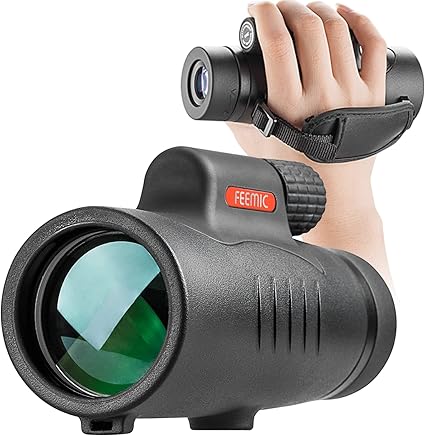
Great for anyone wanting clear, detailed views on whale watching trips, this 8×42 monocular offers sharp optics and a wide-angle perspective. Its biggest strength is the combination of 8X magnification with a 42mm lens, giving a broad and bright image that suits outdoor adventures without breaking the bank.
Setting it up involves simple manual focusing and adjusting the altazimuth mount, which is straightforward on a boat or shore. The wide field of view at 360ft/1000yards means you can scan the water smoothly.
The waterproof and fogproof exterior ensures it stays reliable in different weather, while the dust cover helps keep the glass clean over time. Fits easily in one hand for quick use.
The optics deliver a crisp and clear image with FMC Superior BAK-4 Green Film Prism glass, giving it a real edge in clarity compared to cheaper scopes. The body feels solid with a rubber finish that handles shocks well, making it durable for rougher conditions.
Many users appreciate the waterproof design, but some mention that the manual focus requires patience to get right for fast-moving subjects.
The waterproof and dust-resistant features make it a reliable companion in rough or wet environments, ensuring clear viewing without lens fog or dirt. The most frequent drawback is the manual focus system, which can slow down spotting fast-moving whales or sudden distances.
People looking for a straightforward, tough monocular with good magnification and excellent image quality will enjoy it. Those wanting quick autofocus or image stabilization should explore other options better suited for fast, shaky viewing conditions.
Pros
- Wide-angle, clear image with 8X magnification
- Waterproof and fogproof for varied conditions
- Durable shock-resistant rubber exterior
- Compact and easy to handle
Cons
- Manual focus may be tricky for quick targets
- No built-in stabilizer for shaky hands
| Specification | Details |
|---|---|
| Magnification | 8X |
| Objective Diameter | 42mm |
| Field Of View | 360ft/1000yards |
| Mount Type | Altazimuth Mount |
| Focus Type | Manual Focus |
| Waterproof | Yes, Nitrogen-filled |
8. Vortex Solo 10×36 Monocular

Watching whales up close requires a scope that offers clear views without being cumbersome. The Vortex Solo 10×36 Monocular fits perfectly for nature lovers who want a compact, easy-to-handle option with solid magnification and sharp image quality.
Its biggest strength lies in delivering bright and detailed images despite its small size.
Putting it to use is straightforward due to its lightweight and compact design. The manual focus is smooth and precise, making it easy to adjust in real time as whales move through the water.
A rubber armor keeps it secure in hand, even in wet conditions, while the adjustable eyecup makes viewing comfortable whether you wear glasses or not. Attaching it quickly to gear or clothing is simple thanks to the multi-position utility clip.
Performance-wise, the 10x magnification combined with the 36mm objective lens provides steady, clear views essential for spotting distant whales. Its fully multi-coated lenses increase light transmission for brighter sighting in varied lighting. Durability gets a boost from the nitrogen purging and o-ring seals, which guarantee waterproof and fogproof protection.
The single common gripe revolves around the manual focus, which can take a moment to lock in precisely.
The binocular impresses with its clear, bright images and durability in harsh outdoor conditions, thanks to multi-coated lenses and waterproof design. The most frequent issue noted is the manual focus requiring patience to lock in the exact distance.
Those who prioritize portability and clear optics will appreciate this monocular during whale watching outings. People needing faster auto-focus or a wider field of view might want to explore other options with different features.
Pros
- Compact and lightweight for easy carrying
- Rubber armored for a secure grip
- Adjustable eyecup suits eyeglass wearers
- Waterproof and fogproof for all weather
Cons
- Manual focus can be slow to adjust precisely
- Limited field of view at 6.2 degrees
| Specification | Details |
|---|---|
| Magnification | 10x |
| Objective Lens | 36mm |
| Field Of View | 6.2 |
| Focus Type | Manual Focus |
| Coating | Fully Multi-Coated |
| Waterproof/Fogproof | Nitrogen purged and o-ring sealed |
9. Nikon Prostaff 5 Proscope 82mm Spotting Scope

Boasting an 82mm objective lens, this spotting scope offers a great balance of size and brightness, ideal for those who want clear, detailed views of whales from a distance. It suits outdoor enthusiasts who value optical clarity and durability during marine excursions.
Setting up is straightforward. The center focus makes adjusting the zoom from 20 to 60 times smooth and precise.
Its lightweight Porro prism design feels comfortable during extended use, and the built-in sliding sunshade helps cut down glare on sunny days while protecting the lens from rain and dust. Being waterproof and fogproof means it holds up well in changing weather without extra care.
Seeing whales through the scope delivers bright, high-contrast images with true colors thanks to the fully multi-coated optics. The internal surface texturing reduces reflective light loss, enhancing visibility even at higher zoom levels. Build quality feels solid with nitrogen purging and O-ring sealing keeping moisture out.
Users often praise sharpness and brightness but mention the manual focus can take getting used to.
The scope stands out for its clarity and brightness, making spotting whales enjoyable even at long distances. Many appreciate its rugged, weather-resistant build, but the manual focusing demands a bit of patience to get sharp views quickly.
Anyone focused on long outdoor viewing sessions with varying weather will find this scope reliable and easy to carry. Those wanting motorized focus or illuminated reticles might want to consider alternative models.
Pros
- Bright, high contrast image quality
- Lightweight and ergonomic design
- Waterproof and fogproof construction
- Built-in sliding sunshade for glare reduction
Cons
- Manual focus requires some practice
- No battery-powered features included
| Specification | Details |
|---|---|
| Objective Lens | 82mm |
| Zoom Ratio | 20-60x |
| Focus Type | Center Focus |
| Coating | Fully Multi-Coated |
| Waterproof/Fogproof | Nitrogen-purged and O-ring sealed |
10. SVBONY SA401 APO 25-75×100 Spotting Scope

Ideal for outdoor enthusiasts and whale watchers who want clear, detailed views from a distance, the SVBONY SA401 APO 25-75×100 spotting scope stands out with its large 100mm aperture that captures bright, vivid images. Its versatility in zoom levels suits long sessions by the water or inland nature spotting.
Setting up the scope is straightforward, thanks to its detachable eyepiece, which lets you mix and match observation styles. Daily use benefits from the wide field of view and improved light intake, making it easier to track moving whales without losing clarity, even in changing light conditions. Its compatibility with a WiFi camera adds a modern touch for sharing your sightings.
The optical performance shines because of the dual ED ultra-low dispersion glass, which minimizes color fringing and keeps images crisp across zoom levels. The rubber material adds a protective feel, but weighing nearly 6 kilograms means it isn’t the lightest option for hiking far out. The most common praise highlights the bright, sharp images, while users note the weight can be tiring during extended handheld use.
Sharp and vivid images are a highlight thanks to the dual ED glass and wide aperture, but carrying almost 6 kilograms means it isn’t ideal for quick handheld use. The detachable eyepiece offers flexibility while the camera compatibility allows for sharing sightings without difficulty.
Whale watchers who prioritize image clarity and brightness will appreciate this scope’s performance. Those needing a lightweight or tripod-free option should consider smaller models. The added tech options appeal to users who want to capture and share images easily during outings.
Pros
- Large 100mm aperture provides bright images
- Dual ED glass reduces chromatic aberration
- Wide 25-75x zoom range
- Detachable eyepiece for versatile observation
Cons
- Hefty 5940 g weight can be cumbersome
- Requires tripod for long viewing sessions
| Specification | Details |
|---|---|
| Magnification Range | 25-75x |
| Objective Lens Diameter | 100 mm |
| Optical Glass | Dual ED, 4 pieces/4 group |
| Item Weight | 5940 g |
| Material | Rubber |
| Compatibility | SC001 WIFI camera |
11. Maven CS2A 26-66×85 Spotting Scope

Built to deliver impressive clarity, the Maven CS2A 26-66×85 Spotting Scope suits serious whale watchers who want sharp, detailed views at varying distances. Its biggest strength lies in the large 85mm objective lens that brightens images even in low light, making it perfect for dawn or overcast observations.
Setting up the scope is straightforward, with zoom ranging from 26x to 66x letting you easily adjust to different whale distances. The fully multi-coated lenses bring crispness and color accuracy, while the waterproof and fogproof design keeps the scope ready for early morning fog or damp conditions by the water.
Smartphone compatibility also adds convenience for quick snapshots or sharing views.
Performance stands out with the CS2A’s premium ED glass delivering sharp and high-contrast images, minimizing color fringing on whale details. Its solid build feels durable and reliable outdoors. Most commonly praised for its outstanding image clarity, the only regular critique is occasional difficulty in focus at the highest magnification settings in some situations.
Users recognize the crystal-clear detail from premium ED glass as the strongest advantage, especially under challenging light. The most mentioned issue is some difficulty maintaining sharp focus at maximum zoom, which can slow down quick spotting in the field.
Anyone seeking vivid, color-accurate whale views early in the day or in shade will find this scope fits perfectly. Those wanting something lighter or easier to handle for fast-moving scenes might prefer a smaller, simpler model.
Pros
- Bright images in low-light conditions
- Sharp detail with low chromatic aberration
- Wide zoom range from 26x to 66x
- Waterproof and fogproof for outdoor use
Cons
- Focus can be tricky at highest magnification
- Relatively heavy compared to smaller scopes
| Specification | Details |
|---|---|
| Objective Lens Diameter | 8.5 centimeters |
| Magnification Maximum | 66 x |
| Lowest Useful Magnification | 26 x |
| Exit Pupil Diameter | 3.27 millimeters |
| Coating | Fully Multi-Coated |
| Additional Features | Waterproof and Fogproof |
12. BARSKA 3-90×100 Spotting Scope

Barska 3-90×100 Spotting Scope is a powerful optic designed for serious nature observers and whale watchers who want to see distant subjects clearly. Its standout feature is the wide magnification range that lets you zoom from 3x up to 90x without losing sharpness.
Setup feels straightforward with the included tripod and case, making it convenient to stabilize and protect the scope when out in the field. The large 100mm objective gathers plenty of light, which is key for spotting whales during early mornings or cloudy days. Adjusting the zoom is smooth, and its size offers a solid feel without being overly heavy.
The Porro prism system delivers bright, sharp images with true color, perfect for tracking fast-moving whales across the water. Construction is sturdy but comes with some heft at 3.56 kg, so it’s not something you’ll casually carry for hours. The clearest images come at lower zoom levels, while some users note the highest magnification can be tricky to keep steady despite the tripod.
Bright and crisp images stand out as the best attribute thanks to the Porro prism system and large lens. Steady viewing at maximum zoom is the main challenge, even when using the tripod included. Users appreciate the clarity but note the weight affects mobility.
The scope suits anyone focused on extended observation sessions from fixed positions, especially whale watchers needing detailed views at long distances. Those wanting lighter gear for quick hikes or travel might prefer a smaller, less powerful option.
Pros
- Wide 3-90x magnification range
- Large 100mm objective lens for light gathering
- Includes tripod and protective case
- Bright, sharp images with true color reproduction
Cons
- Heavier than many portable scopes
- Highest zoom levels require very steady support
| Specification | Details |
|---|---|
| Magnification | 3-90x |
| Objective Lens Diameter | 100mm |
| Prism Type | Porro prism system |
| Item Dimensions (LxWxH) | 18.9 x 12 x 7.48 inches |
| Package Weight | 3.56 kg |
Best Whale Watching Spotting Scopes Compared Side by Side
| Product | Magnification Range | Objective Lens Size | Weight | Waterproof |
|---|---|---|---|---|
| SVBONY SV28 Scope | 3:1 zoom | 380 mm focal length | – | Waterproof |
| Unbranded 20-60×80 Scope | 20-60x | 80 mm | 1.18 kg | – |
| Celestron Ultima 100 | 22-66x | 100 mm (Ultima 100) | – | – |
| SVBONY SV406P Angled ED | 20-60x | 80 mm ED lens | – | – |
| Unbranded 25-75×80 Scope | 25-75x | 80 mm | 8.98 lbs | – |
| Unbranded 20-60×80 Scope II | 20-60x | 80 mm | – | – |
| Unbranded 8×42 Monocular | 8x | 42 mm | – | – |
| Vortex Solo 10×36 | 10x | 36 mm | – | – |
| Nikon Prostaff 82mm Scope | 20-60x | 82 mm | – | – |
| SVBONY SA401 APO 100 | – | 100 mm | 5940 g | – |
| Maven CS2A 85mm Scope | 26-66x | 85 mm | – | Waterproof and Fogproof |
| BARSKA 3-90×100 Scope | 3-90x | 100 mm | 3.56 kg | – |
- Magnification Range3:1 zoom
- Objective Lens Size380 mm focal length
- Weight–
- WaterproofWaterproof
- Magnification Range20-60x
- Objective Lens Size80 mm
- Weight1.18 kg
- Waterproof–
- Magnification Range22-66x
- Objective Lens Size100 mm (Ultima 100)
- Weight–
- Waterproof–
- Magnification Range20-60x
- Objective Lens Size80 mm ED lens
- Weight–
- Waterproof–
- Magnification Range25-75x
- Objective Lens Size80 mm
- Weight8.98 lbs
- Waterproof–
- Magnification Range20-60x
- Objective Lens Size80 mm
- Weight–
- Waterproof–
- Magnification Range8x
- Objective Lens Size42 mm
- Weight–
- Waterproof–
- Magnification Range10x
- Objective Lens Size36 mm
- Weight–
- Waterproof–
- Magnification Range20-60x
- Objective Lens Size82 mm
- Weight–
- Waterproof–
- Magnification Range–
- Objective Lens Size100 mm
- Weight5940 g
- Waterproof–
- Magnification Range26-66x
- Objective Lens Size85 mm
- Weight–
- WaterproofWaterproof and Fogproof
- Magnification Range3-90x
- Objective Lens Size100 mm
- Weight3.56 kg
- Waterproof–
How to Choose the Best Whale Watching Scope
Choosing a good whale watching scope depends on factors like magnification, lens quality, and durability to ensure clear, stable views in changing outdoor conditions. Getting these right avoids frequent replacements and frustration, making your whale watching trips more enjoyable and cost-effective.
Optical Magnification and Clarity
Watching whales from a distance means relying heavily on how well the scope can bring these giants into clear view. Choosing a device with about 20x to 30x magnification gives enough zoom to spot details without making the image too shaky. Lenses that use multiple coatings on each surface cut down reflections and boost brightness, which really helps on cloudy days or during low light.
Optical clarity depends a lot on the glass quality inside the scope. Lower quality lenses often produce blurry or dim images, making tracking a moving whale frustrating.
The field of view is another key factor; a wide view allows easier following of swimming animals without having to constantly readjust. Look for a field of view of at least 40 feet at 1000 yards for practical use.
Durability and Weather Resistance
Marine environments are harsh with constant exposure to salt spray and humid conditions. Devices that claim to be waterproof and fogproof prevent water from entering and moisture from condensing inside the lenses, which can quickly ruin viewing. This feature is essential on boats or rocky coastlines where weather changes fast.
Scopes built with materials like anodized aluminum resist corrosion from saltwater better than plastic bodies. A tough rubber armor covering helps absorb shocks from accidental drops or rough handling.
The overall robustness affects how long the scope stays reliable through repeated use outdoors in varying weather.
Size and Portability
Having a spotting scope that’s small enough to carry comfortably on long hikes but heavy enough to stay stable during use is a difficult balance. Smaller, lighter scopes are easier to pack but often less steady when hand-held, leading to a shaky image.
Larger scopes offer stability but can become a burden on extended outings.
Weight around 1.5 to 3 pounds fits most needs, light enough for all-day carry yet manageable on a tripod. The scope should allow easy mounting to standard tripods without extra adapters. Portability extends usability by making it simple to bring out for spontaneous whale sightings.
Ergonomics and Usability
Extended viewing sessions require a comfortable eyepiece design that doesn’t press too hard against the eye socket or cause strain. Soft rubber eyecups and adjustable eye relief accommodate users who wear glasses.
Smooth and precise focus adjustment is critical when on a moving boat or uneven shoreline as it keeps the image sharp without frustrating overshooting.
Quick setup also matters. A focus knob that moves neither too loosely nor too stiffly helps lock onto whale movements right away. Being able to adjust focus easily while tracking reduces missed moments and improves overall viewing experience.
Accessory Compatibility
Being able to attach the scope firmly to tripods or stabilizers makes a big difference in reducing shake and improving image clarity, especially at higher magnifications. Compatibility with common tripod mounts ensures users can switch between handheld and stationary use depending on conditions.
Included or optional accessories like sunshades reduce glare from bright sunlight, protecting the lenses and improving visibility. Lens caps keep optics clean and safe during transport.
Some scopes work with smartphone adapters or camera mounts, allowing casual photography or documentation of whale sightings without needing expensive camera gear.
Maximizing Whale Watching Experience with Your Spotting Scope
Using a spotting scope effectively can make a big difference when observing whales at a distance. Most scopes offer variable magnification, so adjusting the zoom depending on how far the whale is can help maintain a clear, steady image without too much shakiness.
Stability is important, so pairing the scope with a sturdy tripod reduces vibrations caused by hand shaking or wind.
Look through the scope from different angles to find the best view, as light and water reflections can sometimes interfere. A spotting scope with a wide field of view also helps locate whales faster before zooming in for detailed observation.
Carrying extra lenses or eyecups, if compatible, provides options that cater to different viewing conditions, such as bright sunlight or low light.
- Adjust magnification based on whale distance
- Use a tripod to steady the image
- Experiment with angles for optimal visibility
- Choose scopes with wider fields of view
Essential Maintenance and Care Tips for Prolonged Scope Performance
Regular cleaning of lenses improves clarity and prevents scratches. Use a soft microfiber cloth or lens cleaning tissue specifically designed for optics; harsh materials can damage coatings.
Avoid touching lenses with fingers as oils make smudges harder to remove. Store the scope in a protective case to keep dust and moisture away between trips.
Check mechanical parts like focus knobs and eyepiece mounts for smooth operation before heading out. Applying a small amount of silicone-based lubricant to moving components can prevent stiffness or grinding. Keep scopes dry; if exposed to seawater spray, rinse gently with freshwater and dry thoroughly.
Avoid extreme temperatures which may warp seals or fog internal lenses.
- Clean lenses carefully with soft cloths
- Store in protective, dust-proof cases
- Lubricate moving parts occasionally
- Rinse off saltwater and dry immediately
Comparing Spotting Scopes to Binoculars for Whale Watching Adventures
Spotting scopes generally offer higher magnification and larger objective lenses than binoculars, which means better clarity and details at long distances. This makes them suitable for watching whales that may surface far offshore.
However, spotting scopes tend to be heavier and bulkier, requiring tripods for steady viewing, so they are less portable than binoculars.
Binoculars provide quick, handheld usability and a wider field of view, which is helpful for scanning the horizon to locate whales. They allow fast repositioning and are easier to carry during quick-water excursions. Spotting scopes, on the other hand, excel in delivering sharper images once the whale’s location is fixed.
- Spotting scopes have greater magnification and detail
- Binoculars are more portable and quicker to use
- Tripods are usually needed for spotting scopes
- Binoculars offer wider fields for initial spotting
People Also Asked
How Do I Properly Clean and Maintain My Whale Watching Scope?
Use a soft brush or air blower first to remove dust, then gently clean the lenses with a microfiber cloth and lens cleaning solution made for optics. Avoid using household cleaners which can damage lens coatings. Store the scope in its case to protect it from dirt and moisture after use.
What Size Spotting Scope Is Ideal for Whale Watching Trips?
A spotting scope with 20-60x magnification and a 70mm objective lens works well for whale watching, balancing clear close-up views with portability. Larger lenses gather more light for better images in low light but add weight and bulk, which can be tiring on extended boat trips.
Are Whale Watching Spotting Scopes Safe to Use Near Water?
Spotting scopes designed for outdoor use are usually water-resistant or waterproof, which protects them from splashes and light rain during whale watching. Always check the scope’s specifications for water resistance levels and consider using a rain guard or cover for extra protection.
How Do I Attach a Spotting Scope to Different Types of Tripods?
Most spotting scopes have a standard tripod mount with a 1/4-20 screw hole; align this with the tripod head’s screw and tighten securely. Some tripods come with quick-release plates that make attaching and detaching easier when switching between cameras and scopes.
What Are Common Problems with Whale Watching Spotting Scopes and Fixes?
Fogging inside lenses is common; storing the scope in a dry place and using silica gel packs can help prevent this. Loose or stiff focus rings may occur; cleaning and gentle adjustments often restore smoothness. Always check for dirt or debris on lenses, which causes blurry images, and clean them carefully.
Conclusion
Choosing a whale watching spotting scope means focusing on lens quality, durability, and ease of use. Clear, sharp optics make it easier to spot whales at a distance. A sturdy build helps the scope hold steady on uneven surfaces like boats or rocky shores.
Comfortable handling and a reliable tripod connection are also important for long viewing sessions.
Consider where and how often you plan to use the scope before buying. A compact model works well in small spaces, while a heavier-duty one handles frequent use and tougher conditions. Check the comparison table and earlier reviews to find the balance between features and price that works best for your needs.


