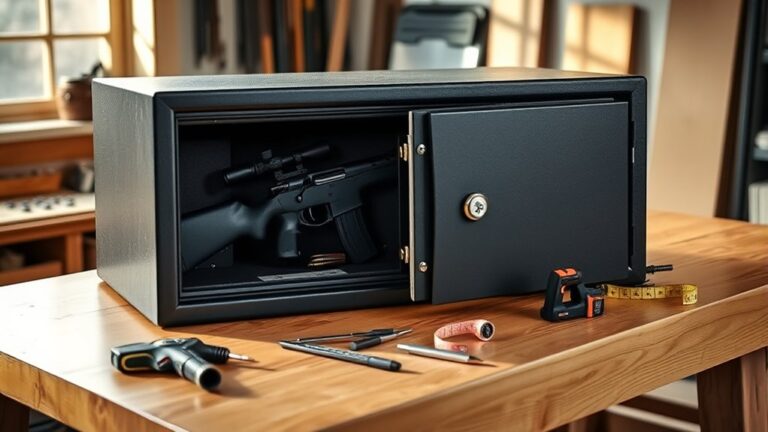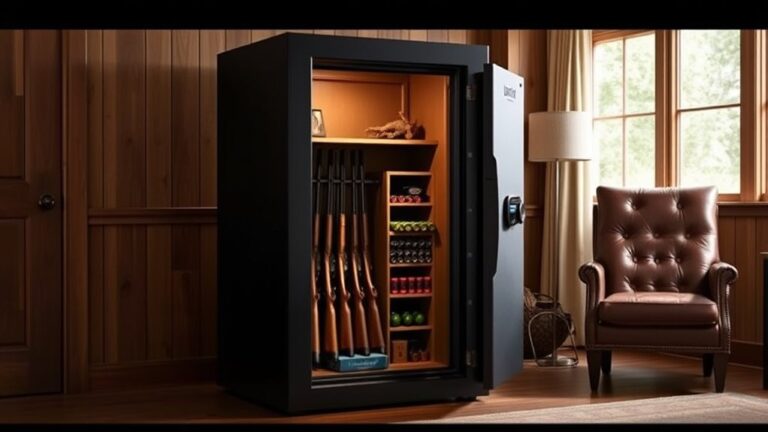
Can You Lay a Gun Safe Down?
Many people struggle with figuring out the best way to move or position their gun safe without causing damage. You’re not alone—this can be tricky, and many wonder if they can lay a gun safe down safely.
Laying a gun safe down isn’t generally recommended because it can cause internal damage to locks, hinges, and padding, which may compromise its security and fire protection.
Most manufacturers advise against it unless specified otherwise, as it can weaken the structure and misalign internal components.
If you need to move or position your safe horizontally, you must follow proper procedures to avoid damage.
Keep exploring to uncover detailed tips on how to do this safely and securely.
Key Takeaways
- Laying a gun safe on its side can misalign internal components, which might damage locks and hinges.
- Manufacturer guidelines are different for each safe. Some safes can be laid down if you’re careful, but others should stay upright.
- When handling a safe, it’s important to secure it properly during transport. You want to avoid shifting internal parts that could cause problems later.
- Always follow the safety and structural recommendations provided by the manufacturer. This helps keep the safe’s integrity and security intact.
- After laying the safe down, take a moment to inspect it. Make sure it’s still stable and undamaged before using it again.
Can You Safely Lay a Gun Safe on Its Side?
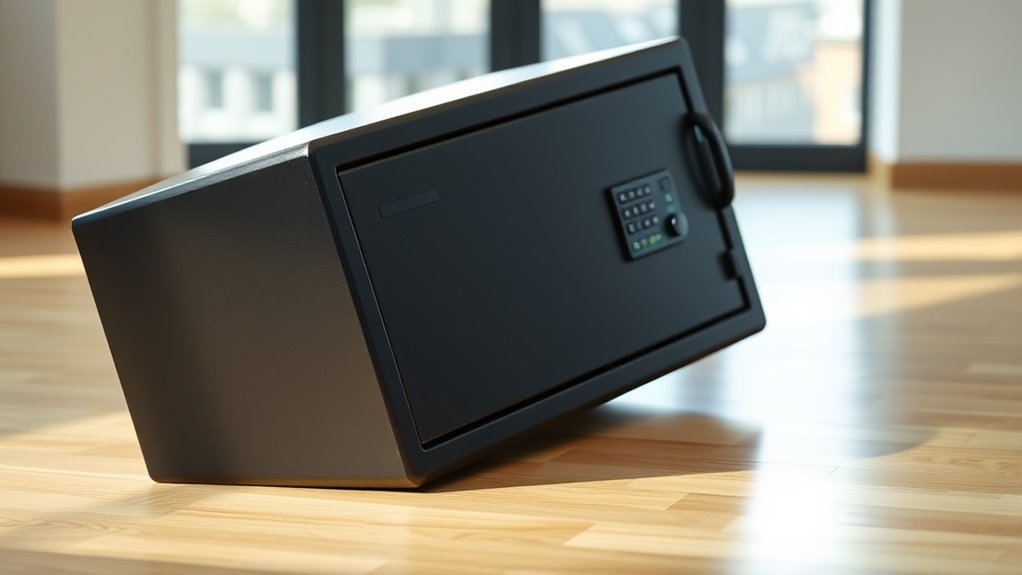
Is it safe to lay a gun safe on its side? Usually, it’s not a good idea. Gun safes are meant to stay upright, and laying them on their side can cause internal parts like locks and hinges to shift or become misaligned.
This could mess up the locking mechanism or even damage the inside padding. If you need to move the safe, do it carefully and avoid tilting it too much. Keep in mind that laying it on its side might also affect the finish or paint, especially if you don’t store it properly afterward.
Always follow the manufacturer’s guidelines for handling and installing your safe. Doing so helps prevent any potential damage and keeps everything working smoothly.
What Do Manufacturers Say About Safe Positioning?
Manufacturers have different recommendations regarding safe positioning, so you should always check their guidelines. Your safety and the safe function of your firearm depend on following these instructions carefully.
Keep in mind that improper placement can affect both security and accessibility. It’s important to follow the specific advice provided by each manufacturer to ensure everything works correctly and safely.
Manufacturer Recommendations Vary
Different safe manufacturers offer varying guidance on the ideal positioning of gun safes, which can make it confusing to determine the best way to install yours. Some recommend keeping safes upright to preserve lock integrity, while others say laying it down won’t harm the mechanism if done carefully.
To navigate these differences, consider these points:
- Follow the manufacturer’s specific instructions to avoid voiding warranties.
- Assess the safe’s design, as some are engineered for certain positions.
- Avoid excessive movement, which can damage internal components.
- Prioritize safety and security to ensure your safe remains stable and accessible.
Understanding these distinctions helps you make an informed choice, but always check your specific model’s guidelines. Proper installation guarantees your safe functions correctly and lasts longer.
Impact on Safety and Function
While the safest and most reliable way to ensure your gun safe works properly is to follow the manufacturer’s guidelines, many experts agree that improper positioning can compromise safety and security. Laying a safe down might seem harmless, but it can affect the locking mechanism, sensors, or electronic parts, leading to malfunctions.
Some manufacturers warn that tilting or placing the safe on its side could damage internal components or misalign sensitive locking systems. This not only risks your valuables but also delays access in emergencies.
Always follow the specific instructions provided by your safe’s manufacturer to confirm safety and proper operation. Proper positioning helps maintain the safe’s integrity, security, and functionality.
This gives you peace of mind knowing your firearm is protected and accessible when needed.
Are Most Gun Safes Safe to Lay Down?
Most gun safes aren’t designed to be laid on their sides, and doing so can weaken their structure.
It’s always a good idea to check the manufacturer’s guidelines and advice before changing the safe’s position.
Ignoring these recommendations could damage the safe or even void the warranty.
Structural Integrity Concerns
You might wonder whether laying a gun safe down compromises its structural integrity, and the answer depends on the safe’s design and construction. Some safes are built to withstand this orientation, while others aren’t.
Consider these key factors:
- Reinforced Shelves. Safes with sturdy, glued-in shelves are less likely to shift or break.
- Locking Mechanism Placement. Safes with internal locks can be vulnerable if tipped, risking misalignment.
- Weight Distribution. Even weight distribution helps prevent stress on the walls and hinges.
- Construction Materials. High-quality steel and reinforced corners improve overall durability during repositioning.
Understanding these elements helps determine if laying your safe down will jeopardize its structural integrity. Always check the manufacturer’s specifications for specific guidance.
Manufacturer Guidelines and Advice
Manufacturer guidelines vary quite a bit, so it’s important to check your safe’s instructions before laying it down. Many manufacturers specify whether their safes can be placed on their side or back safely.
Some safes have internal components that could get damaged if moved incorrectly, while others are built to handle it better. Ignoring these guidelines might void your warranty or compromise the safe’s security.
Always look for official documentation or contact the manufacturer directly for advice. If the instructions aren’t clear or don’t specify, it’s a good idea to consult a professional safe mover.
Following the manufacturer’s advice helps prevent damage and keeps your safe secure over time. When in doubt, it’s best to be cautious and seek expert guidance.
How Laying a Safe Can Damage Locks and Structure
Laying a safe down improperly can cause serious damage to its locks and overall structure. When you position it incorrectly, you risk compromising essential components. Here’s what can happen:
- Misaligning locking bolts can cause them to bend or break, making the safe difficult or impossible to lock securely.
- Damaging the locking mechanism from excess pressure or improper placement can wear out or deform internal parts.
- Warping the safe’s body occurs when uneven pressure distorts the steel, weakening its overall integrity.
- Compromising the door seal happens if the door doesn’t close flush, reducing fire and security protection.
Careless handling during placement can lead to costly repairs and reduce the safe’s effectiveness.
Best Practices for Moving and Positioning Your Gun Safe
Moving and positioning your gun safe requires careful planning to prevent damage and ensure safety. First, clear a path and remove any obstacles nearby.
Use proper lifting techniques—bend your knees, keep your back straight, and lift with your legs—to avoid injury. If you can, get help, especially for heavy or large safes.
Use furniture dollies or sliders made for heavy loads to make moving easier. When handling the safe, keep it upright to prevent internal damage, and avoid dragging it across floors to protect both the surface and the safe’s structure.
Once you’ve moved it to the right spot, carefully position the safe, making sure it’s level and stable. If needed, secure it to the wall or floor following the manufacturer’s instructions to prevent tipping or shifting.
When Is It Necessary to Lay Your Safe Down, and How to Do It Correctly?
Sometimes, it’s necessary to lay your safe down during installation or when maneuvering through tight spaces, especially if it’s too heavy or awkward to stand upright. Doing this safely requires some planning.
First, clear the area of obstacles and protect the floor from scratches. Second, secure the safe with straps or get help to prevent it from slipping or tipping unexpectedly.
Third, lift with your legs, not your back, to reduce the risk of injury. Fourth, keep the safe level as you lay it down and avoid sudden movements that could damage internal parts.
This approach minimizes damage, keeps you safe, and helps you position the safe correctly. Always follow the manufacturer’s instructions and use proper equipment when needed.
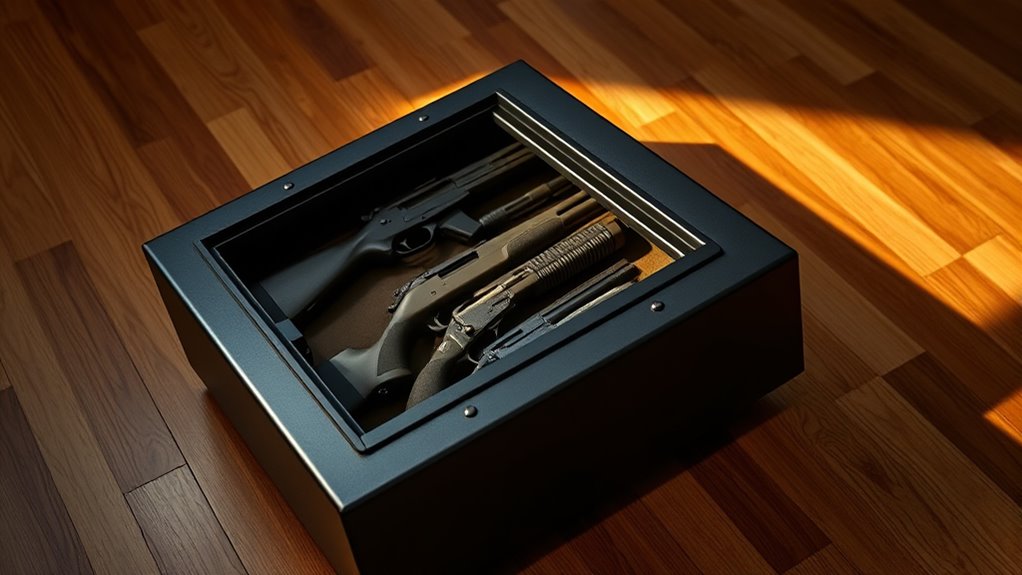
Protecting Your Firearms When Placing a Safe Horizontally
Have you thought about how placing your safe horizontally might affect your firearms? When you position a safe sideways, parts like the locking mechanism or shelving could shift or become misaligned.
To keep your guns protected, make sure the safe is on a flat, stable surface to prevent any movement. If possible, lay it down gently to avoid jarring the internal parts.
Avoid tilting or forcing the safe into position, as this can damage the locking system or the firearms inside. It’s also a good idea to check that the interior padding or foam stays in place to cushion your guns.
Taking these simple steps helps prevent accidental damage and keeps your firearms secure when the safe is stored horizontally.
Common Mistakes to Avoid When Laying Down a Gun Safe
Laying down a gun safe improperly can lead to costly damage or even compromise your firearms’ safety. To avoid mistakes, keep these points in mind:
- Ignoring manufacturer instructions. Different safes have specific guidelines for placement, and neglecting these can cause issues.
- Choosing an unstable surface. Placing the safe on an uneven or weak surface risks tipping or collapsing.
- Forgetting to secure the safe. Not anchoring or bolting it down makes it prone to tipping or theft.
- Not considering internal components. Laying the safe in a way that stresses hinges or locks can damage those mechanisms over time.
Avoid these mistakes to keep your safe in good shape and ensure your firearms stay protected and accessible.
Final Tips for Keeping Your Safe Secure in Any Position
To keep your safe secure in any position, it’s important to follow consistent locking and anchoring practices. Always ensure the safe is properly anchored to the floor or wall using high-quality bolts.
Regularly check that these anchors stay tight and secure, especially after moving or handling the safe. Use a level to make sure the safe remains balanced and doesn’t tip or shift.
You might also consider adding a secondary lock or security cable for extra protection. Keep the safe in a discreet spot, away from obvious access points.
If you need to move or reposition it, do so carefully and re-anchor it right away. These steps help keep the safe’s integrity intact, preventing unauthorized access.
Following these tips makes sure your valuables stay protected, no matter the safe’s position.
Frequently Asked Questions
Can Laying a Gun Safe on Its Side Affect Its Fire or Water Resistance?
Laying a gun safe on its side can potentially affect its fire and water resistance. The seals designed to keep out heat and moisture are typically positioned to work best when upright.
When you lay it down, these seals might shift or become compromised, which can reduce the protection they offer. To keep your safe’s integrity intact, it’s best to store it upright.
Avoid unnecessary repositioning, especially if the safe is designed specifically for vertical placement. This helps ensure it continues to provide the protection you rely on.
Are There Specific Types of Gun Safes That Can Be Safely Laid Down?
Yes, certain types of gun safes can be safely laid down, especially those with a solid, reinforced structure designed for versatility. Modular safes or smaller, portable models often allow for horizontal placement without compromising security or integrity.
However, always check the manufacturer’s guidelines before laying your safe down. Some models, especially those with electronic locks or specific internal configurations, may be damaged or less effective if positioned incorrectly.
How Does Laying a Safe Impact Its Warranty or Insurance Coverage?
Laying your safe down is like flipping a delicate treasure chest—risking damage and voiding warranties. It can weaken structural components, making insurance claims tricky.
You might think you’re protecting your valuables, but you could be compromising coverage or repair guarantees. Always check your safe’s manual or contact the manufacturer first.
Treat it like a precious artifact, keep it upright, and safeguard your investment against unnecessary risks.
What Tools or Equipment Are Recommended for Safely Laying a Gun Safe?
You’ll want to use a dolly or hand truck to move your gun safe safely. Protect the safe and your floors with moving blankets or padding.
Use straps to secure the safe to the dolly, and work with at least one other person for balance. Clear a path and lift carefully to avoid injury.
These tools and precautions make the process safer and help prevent damage.
Can Laying a Safe Down Cause Damage to Its Internal Components?
Laying a safe down can cause damage to its internal components, especially if you’re not careful. You might accidentally dislodge or misalign the locking mechanism or scratch or crack the interior.
You could also damage the electronic parts inside. To avoid this, handle the safe gently, avoid dropping it, and follow the manufacturer’s instructions.
Supporting the safe properly during movement helps protect the internal mechanisms. This way, your firearm storage stays secure and remains functional.
Conclusion
To keep your guns secure, protect your safe’s integrity, and ensure your peace of mind, always follow manufacturer guidelines. Handle your safe carefully and avoid rushing the process.
Whether you’re placing it upright or on its side, prioritize safety, prevent damage, and keep it accessible.
By doing these things, you’ll safeguard your firearms, extend your safe’s lifespan, and stay confident that your valuables are protected.
So, can you lay a gun safe down? Yes, but always do so with caution, especially if the manufacturer says it’s okay.