10 Steps to Adjust Pistol Sights Perfectly
Many shooters find it challenging to get their pistol sights perfectly zeroed, and you’re not alone in facing this struggle. Achieving precise accuracy can feel like a daunting task, especially when your shots aren’t hitting where you want them to.
But don’t worry—adjusting your sights is something you can master with a bit of patience and the right steps.
To adjust your pistol sights perfectly, first confirm your firearm is unloaded and secure. Identify the type of sights and gather the right tools like screwdrivers or wrenches.
Zero your sights using a consistent target and shooting technique, then observe where your shots hit. Make small adjustments based on the impact pattern, checking for proper alignment.
Regularly inspect and clean your sights, and if issues persist, troubleshoot loose or damaged parts. Keep practicing—there’s more to learn for perfect accuracy.
Key Takeaways
- Ensure the pistol is unloaded and properly stabilized before beginning adjustments.
- Identify the type of sights you have and gather the right tools for precise adjustments.
- Zero the pistol at a consistent distance. Use a marked target and maintain a steady shooting technique.
- Make small, incremental sight adjustments. Watch how your shots group and analyze where they hit.
- Re-test your sights regularly to verify everything is aligned correctly. Don’t forget to tighten screws and clean the sights for proper maintenance.
Why Proper Pistol Sight Alignment Matters
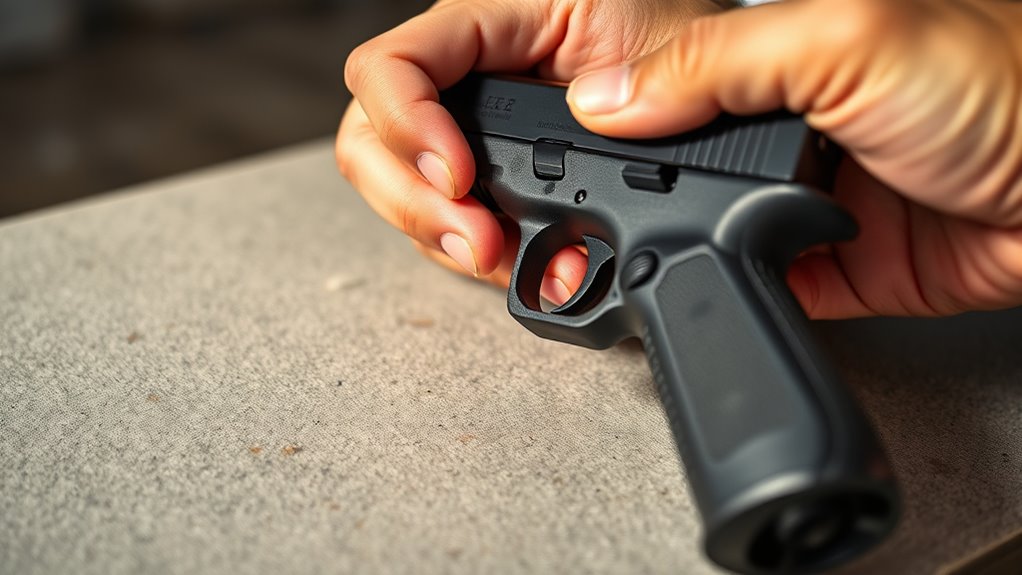
Proper pistol sight alignment is essential because it directly impacts your accuracy and shooting consistency. When your sights are properly aligned, your shots hit where you intend, boosting your confidence and effectiveness.
Misaligned sights cause your bullets to drift off target, forcing you to compensate and potentially leading to missed shots. Consistent alignment guarantees every shot is accurate, whether you’re practicing at the range or defending yourself.
It also helps you develop muscle memory for quick, precise aiming under stress. Without correct sight alignment, even a skilled shooter struggles to hit the mark consistently.
Understanding Different Types of Pistol Sights
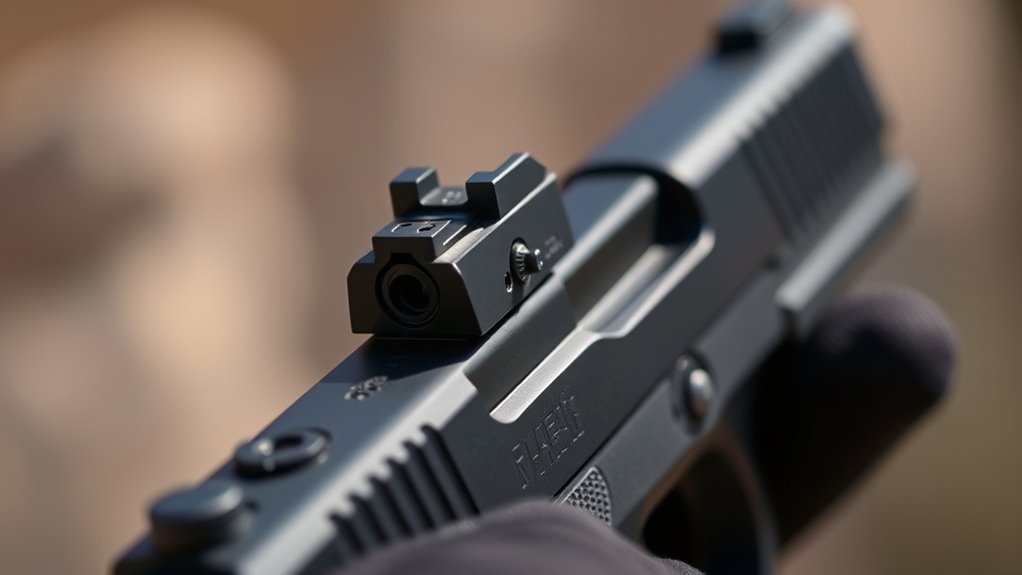
To effectively align your sights, it’s important to understand the different types of pistol sights available. There are mainly three types: fixed, adjustable, and night sights.
Fixed sights are non-movable and come standard on many pistols. They offer durability and simplicity, making them a popular choice for everyday use.
Adjustable sights let you fine-tune your aim by moving the front or rear sight. They’re ideal if you want precision shooting or need to account for different distances.
Night sights contain tritium or other luminous materials, so you can see the sights in low light or darkness. Some models even combine features, like adjustable night sights, for added versatility.
Knowing which type you have helps you understand how to maintain and adjust them properly. Each serves different purposes, so choosing the right one depends on your shooting needs and conditions.
Choosing the Right Tools for Sight Adjustment
Choosing the right tools is essential for accurately adjusting your pistol sights. Without proper equipment, you risk misalignment or damaging your firearm.
You’ll need basic tools like a small screwdriver, punch, or Allen wrench, depending on your sight type. Precision is key, so pick tools that fit securely without slipping.
Consider using a sight adjustment tool designed specifically for pistols. It offers better control and reduces the chance of stripping screws.
Having a stable work surface and good lighting helps ensure precise adjustments. Here’s a quick guide:
| Tool Type | Purpose | Recommended Quality |
|---|---|---|
| Small screwdriver | Adjusting windage/elevation | Magnetic, well-fitted |
| Punch | Holding sights in place | Steel, non-marring |
| Allen wrench | Tightening/loosening screws | Correct size |
| Sight adjustment tool | Precise alignment | Designed for pistols |
| Flashlight | Better visibility | Bright, focused |
Getting Your Pistol Ready for Sight Adjustment
Before adjusting your sights, make sure you’re handling your pistol safely and correctly.
Gather all the tools you’ll need to make precise adjustments, so you’re prepared to work efficiently.
Once everything is in order, you can confidently proceed with the sight alignment process.
Verify Proper Firearm Handling
Making sure your firearm is handled properly is the first step before you start adjusting your pistol sights. Always keep the gun pointed in a safe direction, and confirm it’s unloaded by removing the magazine and checking the chamber.
Keep your finger off the trigger and avoid any unnecessary movement. Wear appropriate eye and ear protection to stay safe during the process.
Make sure the pistol is stable in your grip, and avoid any distractions around you. Double-check that the safety is engaged if your firearm has one to prevent accidental discharges.
Handling your pistol responsibly not only keeps you safe but also helps you stay in control while making sight adjustments.
Taking these precautions creates a safe environment, so you can focus on making precise, accurate sight modifications.
Gather Necessary Adjustment Tools
Gather the necessary adjustment tools
To properly adjust your pistol sights, you’ll want to gather the right tools for precise changes. Start with a small screwdriver or an Allen wrench that fits your sight screws, since different pistols use various fasteners. You might also need a sight adjustment tool, which offers better control and accuracy.
A pair of tweezers or needle-nose pliers can help handle tiny parts if needed. Make sure you have a stable work surface and good lighting so you can see everything clearly. Some pistols require a punch or drift pin for adjustments, so check your firearm’s manual beforehand.
Having these tools ready will help you make accurate sight adjustments without damaging your pistol or the sights.
How to Zero Your Pistol Sights: Setting Your Reference Point
To zero your pistol sights, start by establishing a clear zero point on your target. Use a consistent shooting technique to make sure your shots are reliable and repeatable.
This foundation helps you accurately adjust your sights and achieve precise aiming. Taking your time and staying steady will make the process much easier.
Establish Your Zero Point
Establishing your zero point is the first step to align your pistol sights for accurate shooting. Pick a stable shooting position and aim at a clearly marked target from the same distance each time.
Use a steady grip and proper stance to keep your movement minimal. Fire a few test shots and focus on hitting the center of the target. Check where your shots land compared to your sights and note the pattern.
Adjust your sights to bring your shots closer to the center—move the front or rear sights as needed. This process creates a reliable reference point and ensures your pistol is accurately zeroed.
Use Consistent Shooting Technique
Once your zero point is established, maintaining a consistent shooting technique becomes essential for accurate adjustments. You want to shoot the same way each time, focusing on your grip, stance, and trigger pull.
Keep your grip firm but relaxed, making sure your hand and wrist stay steady. Stand in a stable position, with your arms and body aligned naturally. When pulling the trigger, do so smoothly and steadily without jerking or flinching.
Consistency helps you identify real sight misalignments from shot to shot, rather than variations caused by your technique. Before making adjustments, fire several shots, analyze the groupings, and note any patterns.
This disciplined approach guarantees your sight corrections are precise and effective, leading to better accuracy over time.
How to Adjust the Front Sight for Better Accuracy
Adjusting the front sight is pretty simple and can really boost your shooting accuracy. First, make sure your pistol is unloaded and steady.
Look directly at the front sight and see if it lines up with the rear sight. If your shots are hitting too low, raise the front sight a bit by turning the adjustment screw clockwise. If they’re too high, turn it counterclockwise.
Make small turns—about a quarter of a turn—and then shoot a few test rounds. Check where the shots hit and adjust again if needed.
Keep repeating this process until the front sight lines up with the rear sight notch and your shots hit the target where you want them to. Remember, getting the front sight aligned perfectly is key to shooting accurately and consistently.
Adjusting the Rear Sight for Precise Alignment
To get your sights perfectly aligned, focus on adjusting the rear sight so it matches the position of the front sight. Proper adjustments ensure your shots hit where you want them to.
Use a small screwdriver or adjustment tool to move the rear sight left, right, up, or down as needed. Make small adjustments at a time and check your alignment after each one.
Remember, keeping the sights consistently positioned is key to accuracy. To help you understand the adjustments, here’s a simple table:
| Adjustment Direction | Effect on Sighting |
|---|---|
| Left | Moves point of impact right |
| Right | Moves point of impact left |
| Up | Moves point of impact lower |
| Down | Moves point of impact higher |
| No change | Correct alignment achieved |
Focusing on these adjustments will help you improve your accuracy more efficiently.
Testing and Confirming Your Sight Adjustments
After making your sight adjustments, it’s important to test your pistol at a safe distance to check its accuracy. Head to your shooting range or a secure outdoor spot with a target set up.
Fire a few shots and pay attention to where they hit compared to your aim point. If your shots are grouping near the center of the target, your adjustments worked.
If they’re off, note the direction and how far off they are. Make small, incremental changes to your sights and test again.
Repeating this process helps confirm that your sights are aligned correctly. Consistent results will boost your confidence with every shot.
Troubleshooting Common Pistol Sight Issues
If your shots aren’t hitting where you aim, your sights might be misaligned or not adjusted properly. Common mistakes include over-tightening screws or misreading sight markings.
Fixing light-related issues usually means cleaning your sights or replacing damaged ones to improve visibility. This can make a big difference in your accuracy.
Identifying Sight Misalignment
Detecting sight misalignment starts with a careful inspection of your pistol’s sights. Examine the front and rear sights closely, looking for any signs they’re not aligned properly.
The front sight should be centered and level within the rear sight notch. Check if the sights are crooked, loose, or damaged. If they look skewed or uneven, your aim will be off.
Pay attention to the alignment when the gun is in a steady, aimed position. Any deviation from a straight line indicates misalignment.
Take note of how the sights sit relative to each other. This visual check helps you see if they are correctly aligned or if they need adjustment.
Proper identification ensures you address the right issue before making any corrections.
Common Adjustment Errors
One common mistake when adjusting pistol sights is misaligning the front and rear sights, which can lead to inconsistent accuracy. This often happens when you rush the process or forget to verify the sights are properly centered.
Another error is making small adjustments without testing the impact, causing overcorrection. Sometimes, you may forget to tighten the screws securely, which can make the sights shift during shooting.
Neglecting to verify your target or using an incorrect sight picture can also skew your results. Here’s a quick overview:
| Mistake | How to Avoid | Consequence |
|---|---|---|
| Misaligned front and rear | Double-check alignment before shooting | Inconsistent grouping |
| Over-adjusting | Make small, incremental changes | Difficulty zeroing in |
| Loose screws | Tighten securely after adjustments | Sight shifting during fire |
| Ignoring test results | Always test after adjustments | Persistent inaccuracy |
Fixing Light-Related Issues
Light-related issues with pistol sights can really make it tough to acquire targets quickly and accurately. If your sights are hard to see in low light, check for dirt, dust, or residue that might be covering the luminescent parts.
Clean the sights gently with a soft brush or cloth to remove any buildup. If your sights have glow-in-the-dark or tritium inserts, make sure they are charged by exposing them to a light source before shooting.
Think about adding a small flashlight or tactical light to your pistol if you often shoot in dim conditions. Adjust your lighting setup or shoot in better-lit areas whenever possible.
Good lighting makes a big difference in how well you can see your sights and improves your overall shooting accuracy.
Maintaining and Rechecking Your Sights Over Time
Even with perfectly aligned sights, regular maintenance is essential to keep them accurate over time. You should routinely check your sights for dirt, dust, or corrosion that can mess with your aim.
Use a soft brush or cloth to clean them gently, making sure no debris blocks your view. Also, check for any looseness or damage, and tighten screws if needed.
Periodically, recheck your sights by shooting at a target and verifying your point of impact. If your shots drift, re-zero your sights accordingly.
Keep a maintenance schedule based on how often you shoot—more often if you shoot frequently or in tough conditions. Regular cleaning and rechecking help keep your pistol accurate and reliable throughout its life.
Frequently Asked Questions
How Often Should I Recheck My Pistol Sights?
You should recheck your pistol sights regularly, ideally before each shooting session or at least once a month if you’re a frequent shooter. Environmental factors, handling, or accidental bumps can shift sights over time.
Regular checks help keep your shots accurate. After cleaning or dropping your pistol, it’s a good idea to reverify your sights. Staying proactive makes sure your aim stays precise.
Making sight rechecks a routine part of your firearm maintenance is a smart habit. It’s a simple step that can really improve your shooting consistency.
Can I Adjust Sights on All Pistol Models?
Yes, you can adjust sights on most pistol models, but not all. Many pistols have adjustable sights, so you can fine-tune them for better accuracy.
However, some models come with fixed sights that you can’t modify without professional help. It’s always a good idea to check your pistol’s manual or ask a gunsmith before making any adjustments.
This way, you avoid damaging your firearm and ensure you’re making the right changes for your specific pistol model.
What Signs Indicate My Sights Need Realignment?
If your shots keep hitting left, right, high, or low, your sights probably need realignment. You might also find it hard to hit your target or notice uneven groupings, which can mean your sights are off.
Visual clues like a crooked front sight or a rear sight that’s shifted can also signal it’s time for an adjustment. Regularly check your sights and keep an eye on your accuracy to see when realignment is needed.
Are There Safety Precautions During Sight Adjustment?
Yes, you should take safety precautions when adjusting pistol sights. Always verify the firearm is unloaded before making any adjustments.
Keep the muzzle pointed in a safe direction, away from yourself and others. Wear safety glasses to protect your eyes from debris or accidental discharge.
Work in a well-lit area and avoid distractions. If you’re unsure, it’s best to consult a professional to help with adjustments safely.
How Do Environmental Factors Affect Sight Accuracy?
Environmental factors like lighting can really impact your sight accuracy. For example, shooting outdoors at sunset might make it harder to judge your shot because of the low light.
You may struggle to see the sights clearly, which can lead to less accurate shots. To fix this, try using sights with brighter or illuminated elements.
Or, you can adjust your aiming technique to better handle different environmental conditions. This way, you can maintain better precision no matter where you’re shooting.
Conclusion
Just like an archer fine-tunes their bow before hitting the target, you should regularly check and adjust your pistol sights to stay on point.
Mastering these steps guarantees your aim remains true, much like the precision of a seasoned marksman.
Remember, consistent maintenance transforms a good shot into a great one. It turns your firearm into an extension of your resolve.
Keep honing your skills, and your sights will always guide you true.
By regularly adjusting your pistol sights, you’ll ensure your shots stay accurate and reliable.