10 Steps to Move a Heavy Gun Safe Safely
Moving a heavy gun safe can feel overwhelming, especially if you’re worried about damaging your home or straining yourself. Many people struggle with how to do it safely and efficiently. Don’t worry—you’re not alone, and with a little planning, you can get it done without a hassle.
To move a heavy gun safe safely, start by clearing the space and gathering supplies like straps, dollies, and padding. Measure all doorways and hallways to plan your route carefully.
Use sturdy gloves and proper lifting techniques, and enlist help if needed. Secure the safe onto a dolly, protect walls and floors with blankets, and navigate stairs and narrow spaces carefully.
Once in its new spot, verify it’s stable and secure. Want more tips? Continue exploring the full process.
Key Takeaways
- Clear the route and surrounding area. Remove any obstacles that could get in the way. Measure doorways and hallways to make sure the safe will fit through safely.
- Gather your moving supplies like straps, dollies, padding, and gloves. Check everything to make sure it’s in good condition and ready to use.
- Secure the safe to a dolly with straps. Make sure it’s positioned correctly and balanced before you start moving. This helps prevent tipping or slipping.
- Protect your walls and floors by putting padding, blankets, or plywood down. Wrap the edges of the safe to prevent scratches or damage during transit.
- When lifting, use proper technique. Ask for help if needed. Move slowly and carefully, keeping the safe stable and secure the whole time.
Prepare Your Space and Gather Your Supplies
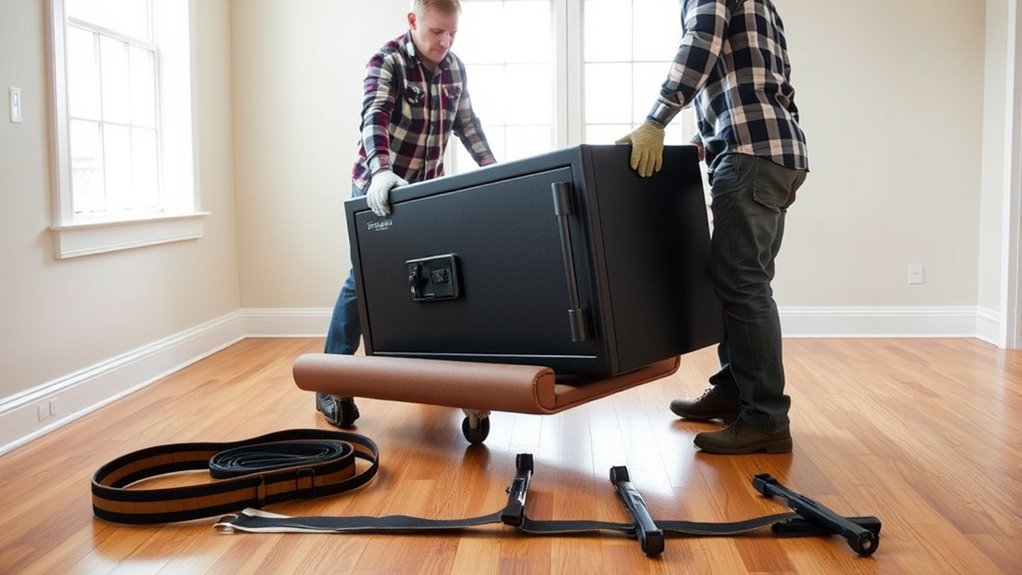
Before moving a heavy gun safe, you need to prepare the space and gather the right supplies. Clear the area around the safe, removing furniture, rugs, and obstacles that could cause tripping or make the move awkward.
Make sure there’s enough room to maneuver the safe safely out of its spot. Gather supplies like moving straps, dollies, furniture sliders, and padding or blankets to protect both the safe and your floors.
Ensure ample space and gather protective supplies for a safe, smooth safe relocation.
Wear sturdy gloves to improve your grip and reduce the risk of injury. Check the path for narrow doorways or tight corners, and plan your route in advance.
Having everything ready beforehand helps you move efficiently and safely, reducing surprises along the way.
Assess Your Space and Make a Moving Plan
Start by measuring your doorways and hallways to make sure your safe can pass through easily. It’s a good step to avoid any surprises on moving day.
Next, plan the right moving equipment, like dollies or straps, to handle the weight of your items. Being prepared makes the whole process smoother and less stressful.
Measure Doorways and Pathways
Have you measured your doorways and pathways yet? Knowing the exact dimensions helps you plan the safe move of your heavy gun safe. Measure the width, height, and depth of doorways, hallways, stairwells, and any tight corners.
Don’t forget to account for any protruding fixtures or obstacles. Here are some tips:
- Use a tape measure for accurate dimensions.
- Check for clearance at every turn.
- Mark measurements on a floor plan or notes.
- Measure the height of door frames and ceilings.
- Consider the width of your safe and any padding needed.
Plan Moving Equipment Needed
To guarantee a safe and efficient move, you need to assess your space carefully and plan the right equipment for the job. Start by measuring doorways, hallways, and any tight corners to see what tools will fit and work best.
Consider using dollies, straps, lifting straps, and moving pads to protect both your safe and your floors. If the safe is especially heavy or bulky, you might need a hand truck or hydraulic lift.
Check if you’ll need furniture sliders to reduce friction and prevent damage. Also, verify you have enough helpers to manage the weight safely.
Planning ahead for the right equipment reduces risks, speeds up the process, and helps prevent injuries or damage during the move.
Gather Tools and Equipment for Safe Safe Relocation
Before you start moving a heavy gun safe, it’s important to gather all the tools and equipment you’ll need for a safe and smooth process. Having the right gear helps prevent injuries and keeps your safe and property protected.
Make sure you have heavy-duty gloves for a secure grip, moving straps to stabilize and lift, and a dolly or hand truck to make moving easier. Furniture pads or blankets are also helpful to prevent scratches on your safe and your floors.
Don’t forget a measuring tape to plan your route and check door clearances before you begin. Having these items ready saves time and reduces the chance of accidents.
Double-check that all your tools are in good condition before you start. Proper preparation makes the move safer and helps you avoid unnecessary setbacks.
Use Moving Aids Effectively (Dollies, Straps, and More)
Once you’ve gathered the necessary tools, using your moving aids properly can really make a difference when handling a heavy gun safe. Use a sturdy dollie designed for heavy loads to keep the safe stable and reduce strain on your back. Secure the safe with strong straps to prevent shifting during movement.
Place the dollie under the safe’s center, making sure it’s balanced before you start moving. When pushing, keep your back straight and use your legs for power. If needed, use additional straps or ropes to anchor the safe to the dollie.
Clear your path of obstacles and plan your route in advance. Moving aids not only make the process safer but also more manageable, helping to reduce the risk of injury or damage.
Enlist Help When Moving a Heavy Gun Safe
Ever wondered why enlisting help is essential when moving a heavy gun safe? Moving such a weight alone can be dangerous and lead to injury or damage. Having extra people makes the process safer and easier to manage.
Teamwork also helps with coordinating lifting, turning, and navigating tight spaces. When gathering help, keep a few things in mind:
- Choose strong, reliable people who know how to lift safely
- Communicate clearly about the plan and each person’s role
- Make sure everyone understands safety precautions
- Assign someone to guide the route and clear obstacles
- Use proper lifting techniques to avoid strain
Having a few extra hands makes sure your gun safe moves safely and efficiently. It’s always better to share the load to prevent injuries or property damage.
Step-by-Step: Lifting and Moving the Safe Safely
To lift and move a heavy gun safe safely, start by positioning everyone involved around the safe, making sure each person has a firm footing and knows their role.
Communicate clearly about the plan before lifting. Bend at your knees, not your waist, and grip the safe firmly with both hands.
Lift together in a coordinated motion, keeping your back straight and using your leg muscles to avoid strain.
Move slowly and steadily, maintaining balance at all times. Avoid twisting your body while carrying the safe; instead, turn with your feet.
Keep the safe close to your body to reduce strain. Verify a clear path before moving, and pause if anyone feels unsure or fatigued.
Proper technique minimizes risk and keeps everyone safe.
Navigate Doorways and Stairs Without Damage
Before moving your safe through doorways and upstairs, measure the dimensions to make sure it fits. This way, you can avoid any surprises along the way.
Use protective padding on the safe and door frames to prevent scratches and dents. It’s a simple step that can save you a lot of hassle later.
Carefully plan your route on stairs, checking for clearance and securing the path. This helps prevent accidents and keeps everything moving smoothly.
Measure Doorway Dimensions
Measuring your doorway dimensions accurately is essential to guarantee the safe passage of a heavy gun safe. Start by measuring the width, height, and depth of the doorway, including any obstacles like doorframes or moldings. Use a tape measure for precise results.
Check the clearance around hinges and handles that might extend beyond the main frame. Don’t forget to measure the width of staircases, hallways, and tight turns along the route. Be sure to note any narrow spots or obstructions that could hinder movement.
Before attempting to move the safe, compare these measurements with the safe’s dimensions to confirm it will pass through without damage. Proper measurements prevent surprises and help you plan the safest, most efficient route.
Use Protective Padding
Using protective padding is essential for safeguarding your walls, doorframes, and the safe itself during the move. Wrap the edges of the safe with thick blankets, moving pads, or foam to prevent scratches and dents.
Place padding along doorframes and tight corners to shield them from accidental bumps. When passing through narrow spaces or doorways, keep padding in place to avoid hitting or scraping surfaces.
Secure the padding with packing tape or straps to prevent slipping during movement. Be sure to check all sides of the safe and surrounding areas as you go.
Proper padding minimizes damage to your property and reduces the risk of injury. Always keep padding accessible and ready to reposition as needed while maneuvering through tight spots.
Plan Stairs Carefully
Maneuvering doorways and stairs with a heavy gun safe requires careful planning to prevent damage to your property and ensure safety. Before moving, measure the safe and doorways to make sure it fits without forcing it.
Clear the pathway of obstacles, furniture, and decorations. Consider protecting walls and banisters with padding or blankets to avoid any scratches or dents.
When going through stairs, tilt the safe carefully and keep it close to your body. Make sure to communicate clearly with your helpers so everyone moves in sync.
Use straps or a dolly for better control, and take your time to avoid sudden shifts or accidents. Moving slowly and carefully is key to getting the job done safely.
Secure the Safe in Its New Spot
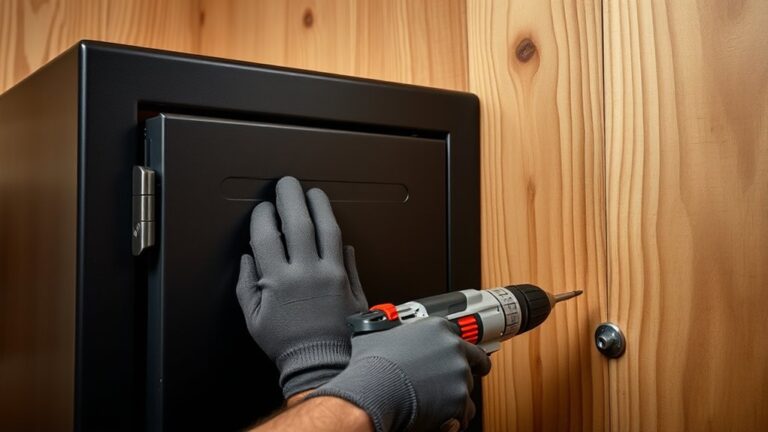
Once you’ve positioned the safe in its new location, it’s crucial to secure it properly to prevent shifting or tipping. Begin by ensuring the safe sits level and stable. If possible, use furniture straps or brackets to anchor the safe to the wall or floor.
Tighten all bolts or screws to secure it firmly. Check for any wobbling and adjust the position if needed. Using non-slip pads beneath the base can also help keep it in place.
If your safe has pre-drilled holes, utilize them to bolt it securely to the floor or wall. This provides extra stability. Securing the safe minimizes the risk of accidents and theft, ensuring it stays safely in place for years to come.
Protect Your Walls and Floors During the Move
To protect your walls and floors during the move, take proactive steps to prevent damage from the heavy safe and moving equipment. First, lay down thick moving blankets or furniture pads along hallways and doorways to cushion impacts.
Use plywood sheets or thick cardboard under the safe’s path to distribute weight evenly and prevent dents on your flooring. Secure corner protectors on sharp edges of the safe to avoid scratching walls.
Employ straps or ropes to control movement and prevent sudden shifts that could cause wall damage. Also, clear the area of obstacles and fragile items to create a safe, open space for the move.
These precautions help preserve your home’s surfaces and make the entire process smoother.
Tips to Prevent Injuries and Avoid Property Damage
Protecting yourself and your property during the move is just as important as safeguarding your walls and floors. To prevent injuries, always lift with your legs, not your back, and ask for help when needed.
Use proper lifting techniques and avoid twisting your body while carrying the safe. Secure the safe with straps or dollies to prevent slipping or dropping.
Wear gloves for a better grip and protective footwear to shield your feet. Clear a wide path to avoid tripping hazards and move slowly, especially on stairs or uneven surfaces.
Keep bystanders at a safe distance. Taking these precautions minimizes the risk of injury and property damage, ensuring a safer, smoother move.
Frequently Asked Questions
What Are the Legal Considerations for Moving a Gun Safe?
When moving a gun safe, you need to consider local and federal laws about firearm storage and transportation. Make sure you have the proper permits if needed.
Check that the contents of your safe stay within legal limits and comply with regulations. It’s also a good idea to notify authorities if you’re crossing state lines.
How Do I Estimate the Weight of My Gun Safe Accurately?
You can get a good estimate of your gun safe’s weight by checking the manufacturer’s label or manual if available. If not, weigh it on a sturdy scale by removing any loose items first.
Another option is to measure its dimensions and use online calculators for an approximate weight. Just keep in mind that these methods won’t be as precise as weighing it directly.
Can I Move a Safe Alone Safely Without Help?
Moving a safe alone isn’t safe, especially if it’s heavy. You risk injuring yourself or damaging your property.
It’s best to get help from at least two people or hire professionals with proper equipment. Using dollies, straps, and good lifting techniques can make the move easier and safer.
Never rush or force the safe. Taking precautions protects you and your belongings. Always put safety first over convenience.
What Should I Do if the Safe Gets Stuck During the Move?
When your safe gets stuck, think of it as a stubborn beast that needs gentle persuasion. First, stop and assess the situation calmly.
Gently wiggle or rock the safe to loosen it. If it’s still stuck, try using a lubricant or a pry bar carefully to free it.
Avoid forcing it, as that could damage the safe or cause injury. Patience and a careful approach will help you get past this obstacle smoothly.
How Do I Secure the Safe During Long-Distance Transportation?
To secure your safe during long-distance transportation, first, bolt it to a sturdy, reinforced pallet or platform. Use high-quality straps or ratchet tie-downs to anchor it tightly, preventing movement.
Wrap it in heavy-duty blankets or padding to protect against shocks and vibrations. Double-check all fastenings before loading.
Drive carefully, avoiding sudden stops or sharp turns. Consider hiring professional movers who are experienced with heavy, valuable items.
Conclusion
Moving a heavy gun safe might seem intimidating, but with the right plan and tools, you can do it safely and efficiently. Think of it as a chess game. Every move counts. Prepare, enlist help, and use proper equipment to protect yourself and your property.
Remember, the goal isn’t just to relocate the safe. It’s to do so without a single piece falling out of place. Stay smart, stay safe, and conquer the move like a pro. With careful planning, moving your gun safe can be a smooth process.