8 Simple Steps to Secure Your Gun Safe to the Floor
Many people struggle with keeping their firearms safe and secure at home. You’re not alone—finding effective ways to protect your guns can feel overwhelming.
Securing your gun safe to the floor involves eight simple steps. First, choose a sturdy, discreet location and gather tools like a drill, anchors, and a measuring tape.
Mark the drill points carefully, then drill holes and insert anchors suited for your floor type. Secure the safe with bolts, ensuring stability by testing its steadiness.
You can also conceal anchors for safety and aesthetics. Following these steps carefully will help you effectively protect your firearms and safety, and there’s more to uncover as you proceed.
Key Takeaways
- Select a sturdy, level location such as a basement or closet for installation. It’s best to pick a spot that’s both secure and convenient for access.
- Mark precise drilling spots using a level or straightedge to align with the safe’s mounting holes. This way, everything lines up perfectly before you start drilling.
- Drill holes with appropriate bits, then insert anchors or bolts securely into the floor. Make sure they’re tight so the safe stays put.
- Tighten all mounting hardware and verify the safe’s stability by gently rocking it. If it moves too much, double-check your bolts and anchors.
- Conceal anchors with covers or rugs to keep things looking neat. Regularly check the safe for stability and wear to ensure everything stays secure over time.
Why You Need to Secure Your Gun Safe to the Floor
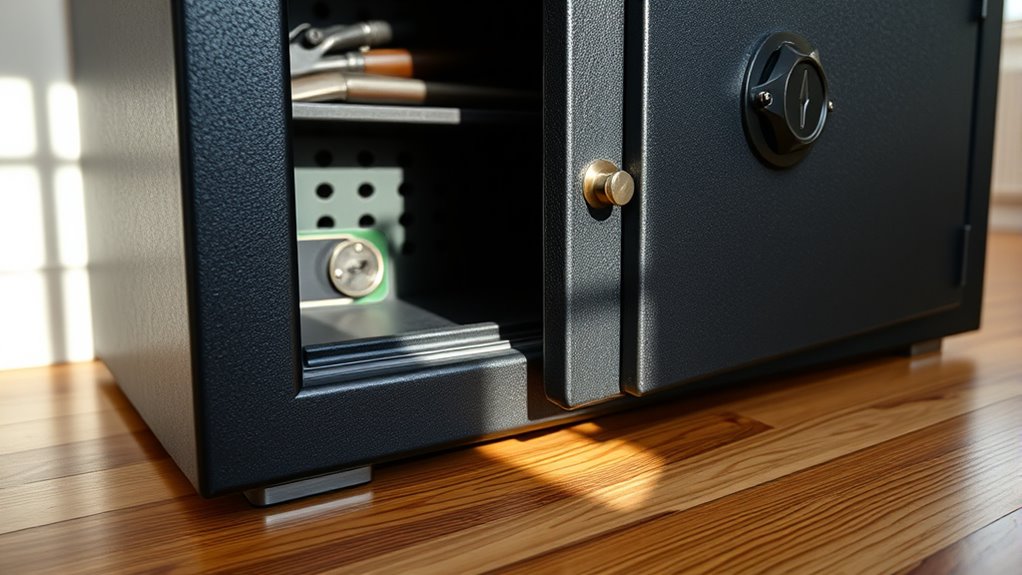
Securing your gun safe to the floor is key to preventing theft and accidents. Without proper anchoring, a thief can easily carry it away or force it open.
Even if your safe is sturdy, determined criminals might still try to pry or tip it over. Securing it to the floor makes theft much harder and acts as a strong deterrent.
It also helps prevent accidents, especially if you have kids or pets around. A safe that’s anchored stays in place during earthquakes or bumps, reducing the risk of injury or damage.
Gather the Tools and Materials You’ll Need
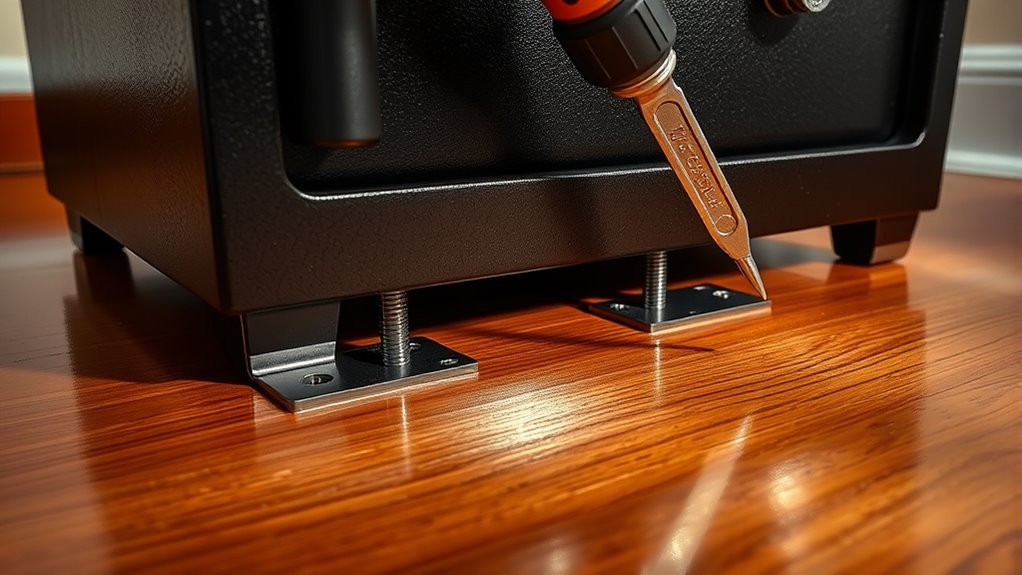
Before you can secure your gun safe to the floor, you’ll want to gather the right tools and materials. First, get a drill with suitable drill bits, preferably masonry bits if you’re attaching to a concrete floor.
Gather essential tools like a drill and masonry bits to securely attach your gun safe to the floor.
You’ll also need anchors or bolts designed for your floor type, like concrete anchors or lag bolts. Have a wrench or socket set ready to tighten the anchors securely.
A measuring tape or ruler will help you position the safe accurately, and a pencil or chalk marks where you’ll drill. If you’re using mounting plates or brackets, gather those as well.
Finally, keep safety gear like gloves and eye protection nearby. Having these tools and materials ready makes the process smooth and efficient when you’re ready to secure your safe.
Choose the Best Floor Location for Your Safe
Choosing the right floor for your safe means thinking about the material. Sturdy, reinforced floors provide better support and security.
You should also consider how easy it is for you to access the safe, while still making it hard for intruders to reach.
Focusing on both strength and concealment will help keep your firearms safe and protected.
Floor Material Considerations
The type of flooring beneath your gun safe can really affect its security and stability. Picking the right material helps ensure your safe stays secure and doesn’t shift or get damaged.
Hard, solid surfaces are best because they give a stable base that prevents wobbling or tipping. Avoid carpeted or uneven floors, as they can make the safe less stable.
Also, check the floor’s weight capacity—some floors might not support the combined weight of the safe and its contents. If needed, reinforce weaker surfaces to make sure they can handle the load.
Key points to consider include having a concrete or wood subfloor for maximum stability, avoiding soft or uneven flooring, confirming the floor can support heavy weight, and using reinforcement if necessary.
Accessibility and Security
Selecting the right floor location for your safe is essential to balancing accessibility with security. You want it easy to access but also hidden enough to deter theft. Consider placing it in a discreet spot like a closet or basement corner, away from windows and doors.
Avoid high-traffic areas or places prone to moisture. Stability is key—make sure the floor can support the weight without sagging. Use the table below to compare options:
| Location | Pros | Cons |
|---|---|---|
| Basement corner | Hidden, stable | May be damp or cold |
| Closet inside room | Easy access, discreet | Less secure if visible |
| Underfloor in garage | Secure, out of sight | Difficult to access |
Choose a spot that balances quick access with added security.
Mark and Measure Drill Points Accurately
Before you start drilling, it’s essential to mark your drill points carefully to ensure your safe is securely anchored. Accurate marking guarantees the safe stays firmly in place and prevents misalignment. Measure twice to confirm your positions line up with the mounting holes on your safe.
Carefully mark drill points and measure twice for secure, precise safe installation.
Use a level or straightedge to keep marks even and precise. Double-check your measurements before making any marks or drilling. Proper marking also helps avoid damaging your floor or safe during installation.
Take your time to be exact and don’t rush this step. A well-measured, clearly marked plan makes the entire anchoring process smoother and more reliable. Use a tape measure for precise measurements and confirm the safe’s mounting holes align with your marks.
Mark with a pencil for easy adjustments, and double-check measurements before drilling.
Drill Holes and Install Floor Anchors Properly
Start by drilling carefully into the marked spots, keeping your drill straight to guarantee clean, accurate holes. Use a drill bit suitable for your floor material, whether concrete, wood, or tile. Apply steady pressure and avoid forcing the drill, which could cause uneven holes or damage.
Once the holes are drilled, insert the appropriate anchors—metal or plastic—depending on your floor type. Tap them in gently with a hammer if needed, making sure they sit flush with the surface.
Next, align your safe’s mounting holes with the anchors and insert the bolts through the safe’s base into the anchors. Tighten the bolts securely with a wrench, ensuring the safe is firmly anchored without over-tightening. Over-tightening could damage the safe or strip the anchors.
Secure Your Safe and Verify Its Stability
To keep your gun safe secure, focus on effective anchoring techniques that ensure it stays in place.
After installing it, be sure to check its stability with simple methods like gently rocking or pressing down.
This way, you can be confident that your safe is firmly anchored and ready to protect your valuables.
Anchoring Techniques
Securing your gun safe starts with proper anchoring techniques that keep it firmly in place. To do this effectively, you need to choose the right method for your floor type and safe design. Proper anchoring prevents theft and accidental tipping, ensuring safety.
Use high-quality hardware and follow the manufacturer’s instructions for the best results. Before anchoring, make sure the safe is level so it doesn’t shift over time.
Consider these anchoring options:
- Bolting directly into concrete with concrete anchors
- Using masonry screws for brick or stone surfaces
- Anchoring to wooden floors with heavy-duty lag bolts
- Installing a security cable for extra stability
Always double-check your work and verify the safe doesn’t wobble or move after installation. Proper anchoring is key to keeping your safe secure in the long run.
Stability Verification Methods
Ever wondered if your safe truly stays put after installation? Checking its stability is really important for safety.
To verify, gently try to move the safe side to side and front to back. If it shifts easily, it’s not secure enough.
You can also use a level to confirm it’s perfectly upright; an uneven position can compromise stability.
Tighten all mounting bolts and check for loose connections. For extra peace of mind, place some weight inside and see if it causes any movement.
Regularly inspecting your safe’s stability helps prevent accidents or theft. Remember, even a well-anchored safe can come loose over time, so routine checks are key.
Making sure your safe stays stable gives you peace of mind, knowing your valuables are well protected.
How to Hide or Protect Floor Anchors for Safety and Aesthetics
Floor anchors are essential for keeping your gun safe secure, but they can also be unsightly or pose a tripping hazard if left exposed. To improve safety and appearance, you can hide or protect them effectively.
Consider installing a decorative cover plate that blends with your flooring, or use a custom-cut rug or mat to conceal the anchors while providing a non-slip surface. You might also embed the anchors beneath a layer of flooring or carpeting for a seamless look.
Applying a durable sealant or paint can protect the anchors from rust and damage. These solutions guarantee your anchors stay hidden yet accessible, enhancing both safety and aesthetics in your space.
- Use decorative cover plates or caps
- Embed anchors beneath flooring or carpet
- Place rugs or mats over anchors
- Apply protective sealant or paint
Troubleshooting Common Issues When Anchoring Your Safe
Anchoring your gun safe can sometimes be tricky, especially if the bolts don’t line up with the pre-drilled holes.
Double-check that the safe is level and properly positioned before proceeding.
Sometimes, debris or an uneven floor can prevent secure fastening, so make sure to clean the area thoroughly.
Ensure the area is clean and level to achieve a secure, stable safe installation.
If the safe wobbles after installation, ensure you’ve tightened all the bolts evenly for stability.
When the anchors don’t seem to hold, try using longer or stronger anchors suited for your floor type.
If you keep running into issues, don’t force the bolts, as this can damage your safe or the floor.
Instead, consult the safe’s manufacturer or a professional for advice tailored to your specific situation.
Frequently Asked Questions
Can I Secure My Gun Safe to Any Type of Flooring?
Yes, you can secure your gun safe to most types of flooring, but the method varies. For concrete floors, use heavy-duty anchors or bolts directly into the concrete.
If you have wood or carpeted floors, consider using lag bolts through the safe’s pre-drilled holes into the subfloor or attaching a mounting plate. Always verify you’re using the right anchors and hardware to prevent theft or accidental tipping.
What Safety Precautions Should I Take During Installation?
Think of installation as setting a sturdy anchor for your safety fortress. You should wear gloves to protect your hands and make sure the area is free of debris.
Use a level to keep everything straight and double-check your measurements before proceeding. When drilling, be careful to avoid electrical wires or pipes behind the floor.
Follow the manufacturer’s instructions closely, and if you’re unsure about anything, consider consulting a professional. Safety first keeps your valuables secure and your mind at ease.
Is Professional Installation Recommended for Heavy Safes?
Yes, professional installation is highly recommended for heavy safes. When you hire experts, they ensure the safe is securely anchored and properly positioned, which helps prevent tipping or theft.
Professionals have the right tools and experience to handle heavy and bulky safes safely. Doing it yourself might lead to improper installation, which can compromise security and safety.
Investing in professional help guarantees your safe is correctly secured and functions as intended.
How Often Should I Check the Security of My Safe?
You should check the security of your safe at least once every three to six months. Regular inspections help ensure that bolts and locks stay tight and that no tampering or damage has occurred.
If you notice anything unusual, make sure to address it right away. Also, after any major move or change in your home, do a thorough check to be safe.
Staying proactive is key to keeping your safe secure and your valuables protected.
Can I Relocate My Safe Easily After Anchoring It?
Relocating your safe after anchoring it isn’t easy, but it’s doable with some effort. You’ll need tools to remove the bolts or anchors holding it in place.
Keep in mind, the process might damage the floor or the safe’s finish. It’s best to plan ahead before anchoring.
But if you need to move it later, take your time and go carefully to avoid damage or injury.
Conclusion
Securing your gun safe to the floor is like planting a sturdy oak in your home’s landscape—strong, reliable, and built to last. With these simple steps, you’ll anchor it firm against any gust of misfortune.
Think of it as locking away peace of mind, ensuring your valuables stay rooted where they belong. When you finish, your safe will stand resilient, a silent guardian watching over your peace of mind, unshaken by life’s storms.
By anchoring your gun safe to the floor, you’re making sure it stays put no matter what. This small step adds a big layer of security, giving you confidence that your valuables are well protected.
Securely attaching it to the floor means your safe isn’t just a heavy object—it’s a fortress against theft and accidents. It’s a simple but vital move to keep your home safe and your mind at ease.