What Are the Legal Requirements for Transporting Ammo Across State Lines?
Are you tired of stressing over the legalities when transporting ammo across state lines? You’re not alone—many gun owners find navigating these laws confusing and overwhelming. Staying compliant is crucial, but it can feel like a lot to keep track of.
When transporting ammo across state lines, you must follow federal rules set by the ATF and check each state’s laws, which can vary widely.
Make certain your ammo is securely packed in impact-resistant, lockable containers and keep different types separated. Carry necessary documents like your firearm permits and proof of ownership.
Be aware of restrictions on certain ammo types and follow proper storage practices. Staying informed helps you avoid legal trouble—continue to uncover more tips for safe, law-abiding transport.
Key Takeaways
- Federal regulations generally don’t require permits, but it’s important to check the specific laws in each state and local area before you transport ammo.
- Be sure to look into any restrictions on certain types of ammunition or the quantities you’re carrying.
- Use impact-resistant, lockable containers to pack your ammo safely. Keep different types of ammo separated to prevent any issues.
- Don’t forget to carry the necessary documents, like firearm permits, proof of ownership, and any state transportation permits you might need.
- Take some time to research all the rules along your route. Staying compliant with each state’s laws can save you from potential legal trouble.
What Federal and State Laws Govern Transporting Ammo?

When transporting ammunition, it’s important to know both federal and state laws that apply to you. Federal regulations, enforced by the Bureau of Alcohol, Tobacco, Firearms and Explosives (ATF), set basic rules like banning ammo in certain restricted areas and requiring proper storage during transport.
Know federal and state laws before transporting ammunition to avoid fines or legal trouble.
But keep in mind, each state can have its own rules, like banning specific types of ammo or limiting how much you can carry. Some states might ask for permits or registration, while others have strict storage requirements.
It’s your responsibility to look up the laws for every state you plan to pass through or stay in. Not following these rules can result in fines, confiscation, or even arrest.
Always stay informed before you hit the road with ammunition.
Which Types of Ammo Are Legal to Transport?
Not all types of ammunition are legal to transport, so it’s important to know which ones are allowed under federal and state laws. Generally, standard cartridges like full metal jacket or hollow point rounds are legal to carry across state lines if they’re stored properly and you’re following local rules.
That said, some types, such as armor-piercing or incendiary rounds, are often restricted or banned in many states. It’s always a good idea to check specific state laws because some places prohibit certain ammunition for civilians.
Make sure you avoid transporting any ammo that’s illegal or restricted at your destination. Staying informed and compliant helps you avoid legal trouble and ensures your firearms accessories are transported safely and lawfully.
How to Pack and Store Ammo Safely for Transport
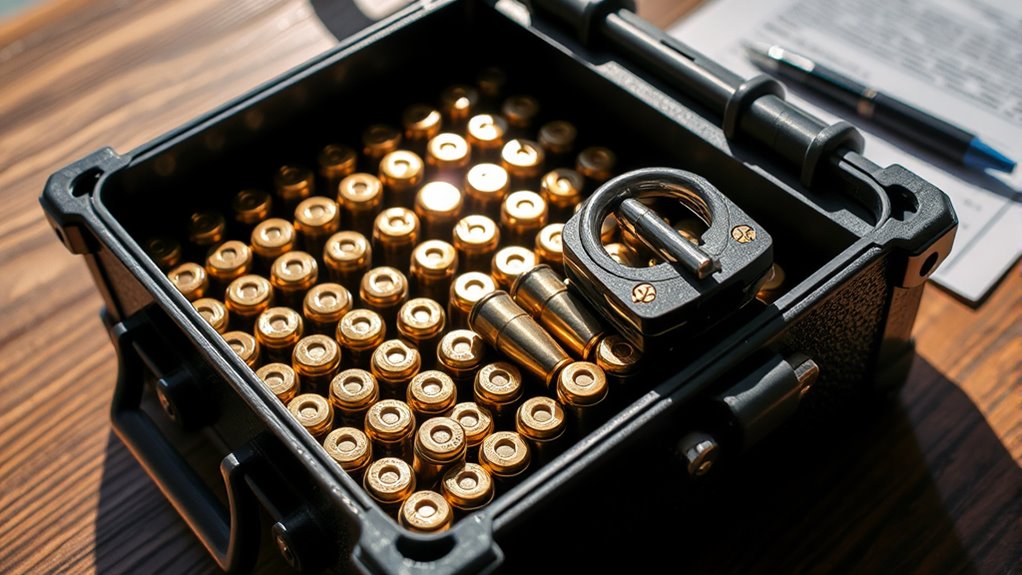
To guarantee safe transport, you should pack and store your ammo securely in appropriate containers designed for firearm accessories. Use sturdy, lockable cases or containers specifically made for ammunition.
Keep each type of ammo separately to prevent accidental detonation or damage. Confirm the containers are leak-proof and resistant to impact, protecting the ammo from jostling during transit.
Avoid overpacking, which could cause damage or misfire risks. Store your ammo in a cool, dry place to prevent corrosion or deterioration.
Keep the containers out of reach of children and unauthorized persons. Label the storage clearly to identify the contents.
Proper packing not only complies with legal standards but also reduces safety risks for you and others during transport.
What Permits Do You Need to Cross State Lines With Ammo?
Crossing state lines with ammunition usually needs some permits or paperwork to stay within the law. Generally, you don’t need a federal permit just to move ammo across states, but some states have their own rules.
If you’re carrying a lot of ammo or specific types, you might need a permit or license from the state you’re going into. It’s really important to look up each state’s laws before you go, since some might ask for registration or special approval for certain ammo.
While federal law doesn’t require a permit for transport, having proof of ownership or purchase can come in handy if you get questioned. Always double-check state-specific rules so you don’t run into legal issues during your trip.
Where Are Ammo Restrictions and Prohibited Areas?
Have you ever wondered where you can’t carry or store ammunition? Many federal, state, and local laws limit ammo in certain places.
You can’t carry or store ammunition in secure facilities like courthouses, schools, or government buildings. Some states also ban firearms and ammo altogether in public spaces, parks, or vehicle zones.
Military bases and secure airports also prohibit ammo possession. Plus, many states restrict ammo in places like alcohol establishments or private properties.
It’s really important to research local laws before transporting ammo. Restrictions can vary a lot, so what’s legal in one state might be illegal in another.
Always check the specific rules in your destination and transit areas to avoid penalties or legal trouble.
Common Mistakes When Transporting Ammo and How to Avoid Them
One common mistake is using improper packaging, which can lead to damage or safety violations during transport.
Ignoring specific state regulations can also cause legal issues or fines.
To avoid these problems, make sure you package ammo correctly and stay informed about all applicable laws.
Improper Packaging Methods
Improper packaging is a common mistake that can lead to dangerous situations when transporting ammunition. If you don’t pack your ammo correctly, it can shift, get damaged, or cause accidental discharge. To avoid this, make sure you follow proper packaging methods.
Use sturdy, labeled containers designed for ammunition. Keep rounds separated from other items to prevent damage. Avoid using flimsy plastic bags or cardboard boxes that can easily tear or crush.
Seal containers tightly to prevent movement during transit. Store ammunition away from heat and moisture to keep it safe. Proper packaging not only keeps you safe but also helps you meet legal standards.
Always double-check that your packaging is secure and appropriate for transport. Doing so can prevent accidents or legal issues and ensure safe handling at all times.
Ignoring State Regulations
Ignoring state-specific regulations when transporting ammunition can lead to serious legal consequences and safety hazards. Each state has its own rules about what types of ammo you can carry, how much you can transport, and how it must be stored.
Failing to research these laws before your trip risks fines, confiscation, or even criminal charges. Some states ban certain calibers or require specific packaging, so it’s important to know the rules.
It’s your responsibility to follow these regulations to avoid legal trouble. Don’t assume federal laws are enough—state laws often have additional restrictions.
Always check the laws of both your departure and destination states, and stay informed about any updates. Being proactive helps ensure a safe, legal journey with your ammunition.
Resources and Tips for Legal Ammo Transport
To make sure you’re transporting ammo legally, get familiar with the specific rules in your state and stay updated on any changes.
Properly secure your ammo using recommended packaging methods to prevent accidents. Always carry the necessary documents to prove your transport is legal.
Using trustworthy resources and following these tips will help you stay compliant and avoid potential legal issues.
State Regulations Variations
Since state regulations on transporting ammunition can vary widely, it’s important to research the specific laws in your destination and transit states before you travel. Some states have strict limits on how much you can carry, while others might require special permits or storage methods.
You should also check if certain types of ammunition are banned or restricted. To stay compliant, consider these tips:
- Review state-specific firearm and ammunition laws online
- Contact local law enforcement for clarifications
- Confirm if permits are needed for transit
- Understand storage requirements for each state
- Be aware of any bans on particular ammunition types
Staying informed helps you avoid legal issues and ensures a smooth transport across state lines.
Secure Packaging Tips
Properly securing your ammunition is essential to ensure safe transportation and stay within legal boundaries. Use sturdy, lockable containers designed specifically for ammo, like plastic or metal boxes with tight-fitting lids.
Avoid soft or flimsy bags that can easily open or get damaged. Make sure each container is clearly labeled as “ammunition” to prevent any confusion.
Keep the boxes in the trunk of your vehicle or in a separate, locked compartment away from passengers. Do not carry loose rounds or mixed calibers in one container.
Double-check that the packaging is intact and secure before traveling. Following these tips helps reduce the risk of accidental discharge, theft, or legal issues, keeping you compliant during transport.
Documentation Requirements
When transporting ammunition legally, it’s important to have the right documents with you to avoid any legal issues. Proper paperwork shows you’re following federal and state laws.
Make sure to carry a valid firearm license or permit, along with proof of purchase or ownership for the ammunition. If needed, include any state-specific transportation permits.
You should also have a bill of sale or transfer documentation, plus any applicable federal forms or registration papers. Keeping these documents accessible helps authorities verify your legality during transport.
Check the requirements for each state you’ll pass through, as they might differ. Keep all your paperwork in a secure, easy-to-reach spot in your vehicle to prevent delays or fines.
Being prepared makes your journey smoother and ensures you’re transporting your ammunition lawfully.
Frequently Asked Questions
Can I Transport Ammo in My Checked Luggage on a Plane?
You can generally transport ammo in your checked luggage, but you need to follow airline and TSA rules. Pack the ammunition securely, ideally in a manufacturer’s box or a similar container.
Keep it in a locked, hard-sided container. Be sure to declare it during check-in if required. Always check specific airline policies and state laws before traveling.
Rules can vary, and some places may have restrictions or bans. So, it’s best to stay informed before you fly.
Are There Specific Vehicle Requirements for Transporting Ammo Across State Lines?
Yes, there are specific vehicle requirements for transporting ammo across state lines. You need to make sure your vehicle is secure, with ammo stored in a locked container, separate from your firearm if applicable.
Avoid leaving ammo in plain sight, and follow any state-specific laws about container types and storage methods. Properly securing your ammo helps you stay compliant and safe during transport across state borders.
How Does Transporting Ammo Differ Between Personal and Commercial Purposes?
Transporting ammo for personal use is like a casual Sunday drive—just keep it in a secure container, stay within legal limits, and don’t flaunt it like a badge of honor. It’s pretty straightforward.
For commercial purposes, it’s a whole new ballgame. You’ll need to follow stricter rules: licensing, detailed record-keeping, and maybe even inspections. It’s less about convenience and more about compliance.
Basically, turning your ammo transport from a leisurely stroll into a well-documented, law-abiding parade. It’s less fun and more paperwork, but necessary to stay on the right side of the law.
What Are the Penalties for Illegal Ammo Transportation Across State Borders?
If you illegally transport ammo across state borders, you risk serious penalties. These can include hefty fines, confiscation of your firearms and ammunition, and even jail time.
Law enforcement agencies take these violations very seriously, especially if you’re breaking federal or state laws. It’s important to follow all legal guidelines before crossing state lines with ammo.
Make sure you understand the proper storage and transportation methods, and stay informed about specific laws in each state. That way, you can avoid the potentially severe consequences of illegal ammo transport.
Are There Age Restrictions for Transporting Ammo Across State Lines?
Imagine you’re planning a hunting trip and wondering if age restrictions apply. You generally need to be at least 18 to legally transport ammunition across state lines, but it can depend on the type of ammo.
In some states, minors can’t carry ammunition unless they’re supervised. It’s a good idea to check both your home state and your destination’s laws before you go.
Violating these rules can lead to fines or even criminal charges. Staying informed helps ensure your transportation is smooth and legal.
Conclusion
So, after all that, you’d think crossing state lines with ammo is a walk in the park, right? Turns out, it’s more like walking a tightrope—full of rules, permits, and restrictions.
But hey, if you enjoy living on the edge (legally, of course), just remember: a little research and careful packing can keep you from turning a simple trip into a federal offense.
Who knew ammo transport could be so thrilling? Staying compliant with federal and state laws is key.