What Humidity Should You Maintain in a Gun Safe?
Many gun owners know the frustration of dealing with rust, corrosion, or warped wood on their firearms. It’s a common problem, and you’re not alone in wanting to keep your guns in perfect shape.
Proper humidity control is key to protecting your investment. You should aim to keep the humidity in your gun safe between 30% and 50%. Staying in this range helps prevent rust, corrosion, and wood warping.
Too high humidity increases the risk of mold and metal damage, while too low can cause wood to crack and lubricants to dry out. Regularly monitoring with a hygrometer and using control devices can help maintain these levels.
Keep going to learn more about keeping your firearms in top shape.
Key Takeaways
- Maintain humidity levels between 30% and 50% for optimal firearm preservation.
- 30-40% is slightly dry, which is great for protecting metal and preventing rust.
- 40-50% offers a good balance, helping to guard against rust, mold, and wood damage.
- Try to avoid going over 50% because that can increase the risk of rust, mold, and corrosion.
- It’s a good idea to regularly check humidity levels with hygrometers to keep everything consistent.
Why Proper Humidity Is Critical for Gun Safety and Preservation
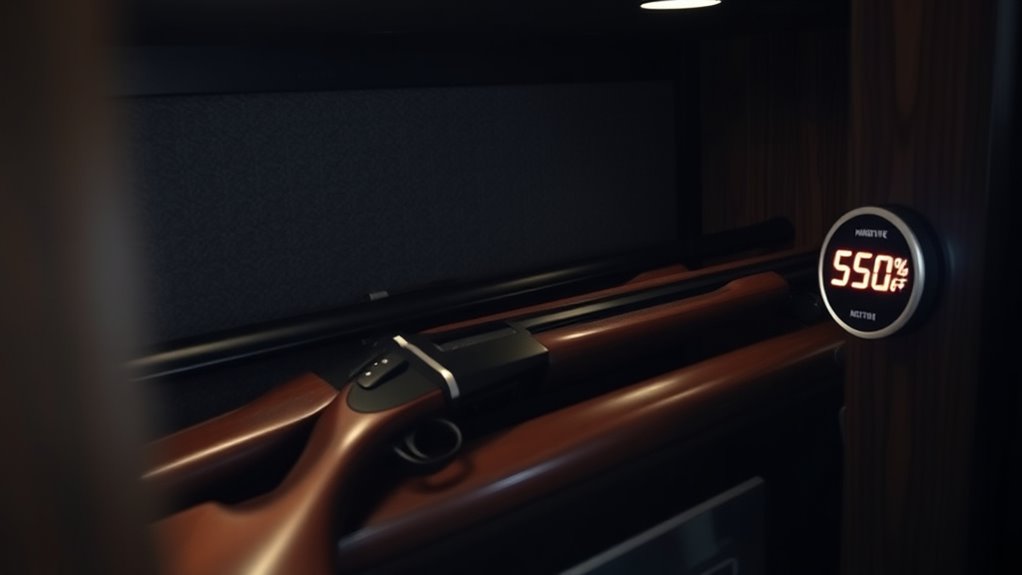
Maintaining proper humidity levels in your gun safe is essential to prevent rust and corrosion that can damage your firearms over time. When humidity is too high, moisture builds up on metal surfaces, leading to rust that weakens the gun’s integrity and shortens its lifespan.
On the other hand, extremely low humidity can cause wooden stocks and grips to crack or warp, which can compromise the firearm’s structural stability. Proper humidity helps keep metal parts dry and stops corrosion from forming.
It also protects wooden components from drying out and cracking. Consistent humidity control ensures your guns stay in great condition and are ready to use when you need them.
In the end, maintaining the right humidity not only safeguards your investment but also enhances safety by keeping your firearms in optimal shape.
What’s the Right Humidity Level for Your Gun Safe?
Finding the right humidity level for your gun safe helps ensure your firearms stay in great condition. Aim to keep humidity between 30% and 50%. This range helps prevent rust and mold without drying out and damaging wood or leather.
Here’s a quick reference to make it easier:
| Humidity Level | Effect |
|---|---|
| 30-40% | Slightly dry, good for metal |
| 40-50% | Perfect balance, prevents rust |
| Above 50% | Risk of rust and mold |
Keeping your humidity within this range guarantees your guns stay protected. Use a hygrometer to check levels regularly. Adjust with dehumidifiers or silica gel packs as needed.
Staying within this range will keep your firearms in prime condition for years to come.
How Excess Moisture Can Damage Your Firearms Over Time
Excess moisture in your gun safe can silently cause long-term damage to your firearms. Over time, it promotes rust and corrosion, especially on metal parts that you might not notice immediately. Rust weakens the structural integrity of your guns and can affect their accuracy and safety.
Moisture also accelerates the deterioration of wood stocks and other materials, leading to warping or cracking. If you don’t control humidity levels, condensation can form inside the safe, trapping moisture around your firearms.
This persistent dampness creates an environment perfect for corrosion. Even minor exposure to excess moisture repeatedly can greatly shorten the lifespan of your guns.
Regularly monitoring and maintaining proper humidity levels helps prevent this damage, ensuring your firearms stay in top condition for years to come.
What Happens When Your Gun Safe Gets Too Dry?
When your gun safe becomes too dry, it can cause the materials inside to shrink, warp, or crack over time.
Wood components like gun stocks and furniture may split or become brittle, which weakens their structure.
Dry conditions can cause gun stocks and furniture to crack and weaken over time.
Metal parts can become more prone to corrosion because dry air speeds up oxidation, especially if residual moisture isn’t evenly spread.
Lubricants and protective coatings can dry out too, leading to increased friction and wear on moving parts.
This dryness may also cause leather or rubber seals to crack or deteriorate, which can compromise the safe’s overall seal.
As a result, your firearms might be less protected from environmental damage, and small issues could turn into costly repairs.
Maintaining proper humidity levels helps prevent these dry-related problems and keeps everything in good shape.
Top Devices to Monitor and Control Humidity in Gun Safes
To keep your gun safe in prime condition, you need reliable tools to monitor and control humidity levels. The best humidity monitors give accurate readings so you know when adjustments are needed.
Effective humidity controllers then help maintain the perfect environment. This protects your firearms from moisture damage and keeps them in top shape.
Best Humidity Monitors
Are you unsure which humidity monitor is best for your gun safe? The right device helps you keep ideal humidity levels and protect your firearms.
Digital hygrometers are popular because they give accurate, real-time readings and are easy to read. Look for models with features like calibration options and humidity alerts to stay informed.
Analog monitors can also work well, especially if you prefer a simple, no-battery device. Some advanced monitors connect to your smartphone via Bluetooth, so you can track conditions remotely.
When choosing a humidity monitor, think about durability, accuracy, and ease of use. The best device fits your budget and makes monitoring simple, so you can focus on keeping your guns safe from moisture damage.
Effective Humidity Controllers
Effective humidity controllers are key for keeping your gun safe in the best condition. They help prevent rust and corrosion by managing moisture levels inside.
These devices actively work to regulate humidity, so your firearms stay protected. You can choose from options like desiccant packs, electronic dehumidifiers, or silica gel beads — depending on your needs and budget.
| Device Type | How It Works | Best For |
|---|---|---|
| Desiccant Packs | Absorbs moisture passively | Small safes, low-maintenance |
| Electronic Dehumidifiers | Uses power to remove moisture | Larger safes, high humidity |
| Silica Gel Beads | Reusable moisture absorption | Budget-friendly, versatile |
Pick the right controller to keep humidity at ideal levels and ensure your firearms stay in top shape.
How to Keep Your Gun Safe at the Right Humidity Level
Maintaining the proper humidity level inside your gun safe is essential for preventing rust and corrosion on your firearms. To do this, regularly monitor the humidity with a reliable hygrometer. Keep the humidity between 30% and 50%, adjusting as needed.
Use silica gel packs or other desiccants to absorb excess moisture, especially in humid environments. Avoid opening the safe unnecessarily, which can introduce humidity. If you notice high humidity levels, consider installing a commercial dehumidifier designed for safes.
Keep the safe in a cool, dry location away from direct sunlight and heat sources. Regularly check your humidity control devices and replace or recharge them when necessary. Consistent maintenance will help you keep your firearms in prime condition.
Common Mistakes That Lead to Humidity Problems in Gun Safes
One common mistake is ignoring proper ventilation, which can trap moisture and cause rust.
Using the wrong humidity devices or neglecting regular monitoring also leads to humidity issues.
Paying attention to these details helps you keep your guns safe and dry.
Ignoring Proper Ventilation
Ignoring proper ventilation is a common mistake that can lead to humidity buildup inside your gun safe. When you don’t allow fresh air to circulate, moisture gets trapped, creating a damp environment.
This can cause rust and corrosion on your firearms and damage stored items. Many gun owners overlook ventilation, thinking it’s unnecessary, but stagnant air actually increases humidity levels.
To prevent this, make sure your safe has enough ventilation or airflow. Avoid sealing it completely airtight without some form of ventilation, especially if you live in a humid climate.
Regularly opening the safe for a few minutes can also help release excess moisture. Proper ventilation is key to keeping your guns dry and safe, helping prevent rust and extending their lifespan.
Using Inappropriate Humidity Devices
Choosing the right humidity control devices is key to keeping your gun safe from moisture damage. Using the wrong devices can actually make humidity problems worse instead of fixing them.
For example, some devices are meant for small spaces and won’t work well in larger safes. Others might release moisture if they break or aren’t maintained properly. It’s important to pick devices suited for your safe’s size and conditions.
Here’s a quick comparison:
| Device Type | Pros | Cons |
|---|---|---|
| Silica Gel Packs | Inexpensive, reusable | Need frequent replacement or recharging |
| Electric Dehumidifiers | Automated, consistent control | Higher cost, power dependency |
| Desiccants | Simple, portable | Limited capacity, needs replacement |
| Humidity Traps | Easy to install | May leak or malfunction |
Choose wisely to prevent moisture buildup and protect your firearms.
Overlooking Regular Monitoring
Regularly checking the humidity levels inside your gun safe is essential because moisture can quickly cause rust and damage if left unchecked. Many gun owners make the mistake of setting a humidity level and then forgetting about it, assuming it will stay stable.
Humidity fluctuates with seasonal changes, temperature shifts, and even opening the safe. Without routine monitoring, you might not notice rising moisture levels until it’s too late.
Regular checks help you catch problems early and adjust your dehumidification methods accordingly. Use a reliable hygrometer to track humidity consistently.
How to Adjust Humidity Settings Based on Your Environment
To effectively adjust your humidity settings, start by evaluating the environment where your gun safe is stored. Consider factors like climate, temperature fluctuations, and humidity levels in the room.
If you live in a humid area, you might need to lower your safe’s humidity setting or use desiccants to prevent excess moisture. Conversely, in dry regions, you may need to increase humidity slightly or add moisture sources to prevent rust.
Keep an eye on seasonal changes, as humidity levels can vary throughout the year. Use a reliable hygrometer to monitor conditions regularly.
Monitor seasonal changes with a hygrometer to ensure consistent, ideal humidity levels year-round.
Adjust your dehumidifiers or humidifiers accordingly, aiming for the recommended 45-55% humidity range. Regularly reassess your environment to maintain ideal conditions for your firearms.
When to Call a Professional for Humidity Control Help
Even when you’ve carefully adjusted your humidity settings, sometimes issues still pop up that need a professional touch. If things aren’t improving, it’s time to call in an expert.
Look out for these signs:
- Constant moisture or mold: If mold keeps forming despite your efforts, a professional can find the root cause, like ventilation or sealing problems.
- Corrosion or rust: Ongoing rust on your firearms suggests humidity is still too high, and you might need specialized solutions.
- Unusual fluctuations: Sudden or irregular changes in humidity levels could mean your control system isn’t working right, so expert help is a good idea.
Getting professional assistance ensures your gun safe stays properly humidified and your firearms stay protected without risking damage from incorrect adjustments.
Frequently Asked Questions
Can Humidity Levels Affect the Accuracy of My Firearms?
Yes, humidity levels can affect your firearms’ accuracy. Excess moisture causes rust and corrosion, which can damage the barrel and internal parts, leading to inconsistent firing.
On the flip side, low humidity can dry out lubricants, increasing wear and friction. Keeping humidity around 40-50% helps prevent rust and keeps your guns functioning reliably.
This way, your firearms are more likely to perform accurately when you need them most. Proper storage is key to maintaining firearm precision over time.
How Often Should I Check Humidity Levels in My Gun Safe?
You should check humidity levels in your gun safe at least once a month. Regular monitoring can prevent rust and corrosion, which affect over 70% of firearms stored improperly.
By keeping an eye on humidity, you catch moisture issues early and protect your firearms’ accuracy and lifespan. Use a reliable hygrometer to get accurate readings.
If the humidity isn’t in the ideal 30-50% range, adjust your humidity controls promptly. Staying consistent helps keep your safe at the perfect level to safeguard your guns.
Are There Specific Humidity Levels for Different Types of Firearms?
Yes, different firearms benefit from specific humidity levels. For most guns, keeping humidity between 30-50% helps prevent rust and corrosion while avoiding mold.
For high-value or antique firearms, aim for a slightly narrower range of 40-45%. Modern firearms, especially those stored long-term, do well around 40%.
Adjust the humidity based on your gun’s material and age, and always monitor regularly to keep your firearms in peak condition.
What Are the Signs of Humidity-Related Damage on Guns?
Humidity-related damage on guns is like a slow, silent thief. You might notice rust spots, corrosion, or a sticky, grimy feeling on metal surfaces.
Barrel or chamber pitting shows moisture’s prolonged attack. Sometimes, wood stocks can warp or swell over time.
If you see these signs, clean your firearm and adjust the humidity levels where you store it. Regular inspections help catch damage early and keep your guns in great shape.
Does the Climate of My Location Impact Ideal Humidity Settings?
Yes, the climate of your location affects the ideal humidity settings in your gun safe. If you live in a humid area, you’ll want to keep the humidity lower to prevent rust and corrosion.
On the other hand, in dry climates, a slightly higher humidity level can help prevent wooden stocks from cracking or drying out. Regularly check your safe’s humidity and adjust with dehumidifiers or humidifiers as needed to keep your firearms protected.
Conclusion
Maintaining the right humidity in your gun safe is like tending to a delicate garden—you need the perfect balance to guarantee longevity and safety. Too much moisture invites rust, while dryness can cause cracking.
By monitoring and adjusting humidity levels, you’re safeguarding your firearms for generations. Think of it as nurturing your collection to stay in top shape.
Stay vigilant, and your guns will flourish in pristine condition, standing the test of time like a well-kept myth. Proper humidity control in your gun safe is key to preserving your firearms for years to come.