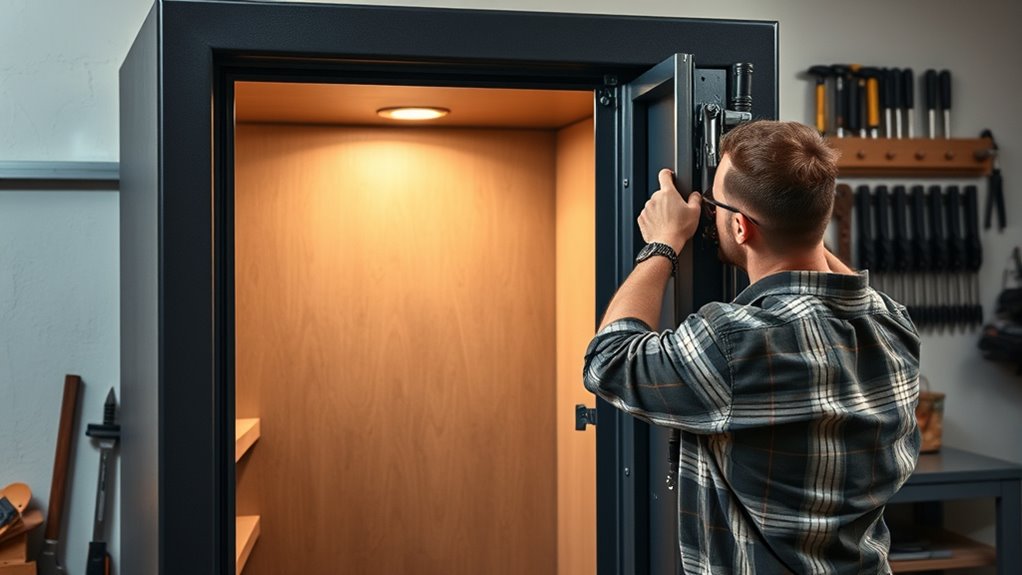
7 Simple Steps to Secure Your Gun Safe to the Wall
Many gun owners want to keep their firearms safe and out of reach, but figuring out how to secure a gun safe to the wall can feel overwhelming. You’re not alone—lots of people struggle with making sure their safes stay put and are tamper-proof.
To secure your gun safe to the wall, start by gathering the right tools, including a drill, level, and sturdy hardware. Choose a sturdy wall and a discreet spot away from hazards.
Mark where to drill, then carefully drill and install wall anchors. Next, fasten the safe securely using bolts or safety straps. Test its stability and check periodically for wear.
Keep following these steps to make sure your safe stays secure and out of reach of intruders—or continue for more detailed guidance.
Key Takeaways
- Choose a discreet, sturdy wall location away from hazards and high-traffic areas.
- Assess the type of wall you have—whether it’s drywall, brick, or concrete—to pick the right anchors and hardware.
- Mark where you’ll drill the holes on the wall. Use a level to make sure everything lines up properly.
- Drill the holes at the marked spots. Then, insert the appropriate wall anchors so they sit flush with the surface.
- Finally, secure the safe with heavy-duty bolts or straps. Give it a good shake to make sure it’s stable.
Gather the Right Tools and Hardware for Wall Mounting
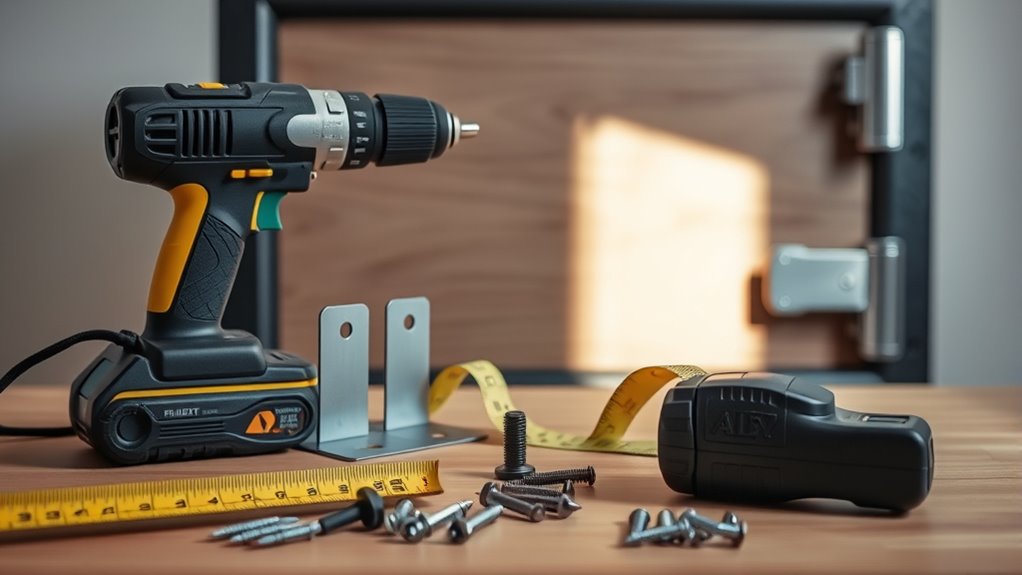
Before you start mounting your gun safe to the wall, gather all the tools and hardware you’ll need. Make sure you have a drill with the right bits, a stud finder, a level, and a measuring tape.
It’s also important to get lag bolts or heavy-duty screws that can handle your safe’s weight and match your wall material. Don’t forget a pencil for marking where you’ll drill.
Check if your safe comes with mounting brackets or hardware and gather those too. Having everything ready will save you time and stop any interruptions during installation.
Double-check that the hardware is suitable for your wall type and your safe’s specifications. Preparing these tools and materials ahead of time will make the process smoother and safer, giving you confidence your safe will stay securely in place.
Assess Your Wall Type and Choose the Best Location for Your Safe
Understanding your wall type is key to making sure your gun safe is mounted securely without causing damage. First, figure out whether your wall is drywall, plaster, brick, or concrete.
Drywall is common and easier to work with but might need extra reinforcement. Plaster walls are sturdier but can be delicate to drill into. Brick or concrete walls offer great support but require special tools and anchors.
Next, pick a spot that’s discreet, easy to reach, and away from hazards like windows or heaters. Avoid placing the safe in high-traffic areas or places prone to moisture.
Choose a discreet, accessible spot away from hazards and moisture for secure, convenient safe placement.
Before marking your spot, check for obstructions, electrical wiring, or plumbing behind the wall. Choosing the right wall and location helps ensure your safe stays secure, stable, and accessible when you need it.
Mark Drilling Points for Secure Wall Anchors
Start by placing your safe against the wall at the spot you want. Use a pencil to mark the locations of the mounting holes through the safe’s pre-drilled points. Take your time to make sure the safe is level and aligned correctly.
Double-check your measurements after marking to avoid mistakes. Precise marking ensures the safe stays secure and doesn’t shift accidentally.
Properly Drill Holes and Install Wall Anchors
Careful drilling is key to securely anchoring your safe. Start by choosing the right drill bit size, matching it to your wall anchors’ instructions.
Mark the spots where you plan to drill, and double-check they line up with your earlier markings. Before drilling, confirm the wall’s thickness and material.
Use a level to keep your drill straight, and apply steady pressure as you drill into the wall. Stop once you reach the desired depth to avoid over-penetration.
Remove any dust or debris from the holes to ensure a tight fit for the anchors. Insert the wall anchors fully into the drilled holes, tapping them gently if needed so they sit flush with the wall surface.
Proper drilling and anchor placement give you a solid foundation for a secure and stable safe.
Secure Your Gun Safe to the Wall Using Bolts or Straps
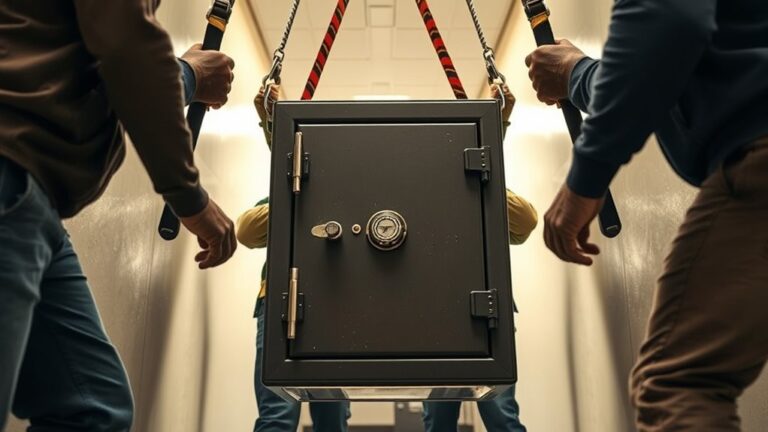
To securely attach your gun safe to the wall, use heavy-duty bolts or safety straps made for this purpose. First, position the safe against the wall where you’ve already drilled holes and installed anchors.
Next, insert the bolts through the pre-drilled holes in the safe’s back or sides, then tighten them into the wall anchors securely. If bolts aren’t an option, safety straps are a good alternative.
Wrap the straps around the safe and anchor them to the wall studs. Make sure the straps are strong enough to hold the weight and prevent tipping or removal.
Finally, tighten everything firmly to eliminate any wobbling. This method helps keep your safe in place, reducing the risk of theft or accidental tipping.
Test the Stability and Security of Your Mounted Safe
Testing the stability and security of your mounted safe is key to making sure it can handle daily use and any tampering attempts.
Start by giving the safe a firm shake in all directions. If it moves or shifts, you’ll want to tighten the bolts or straps. Make sure all mounting hardware sits flush against the wall and is properly anchored.
Use a level to check that the safe is aligned correctly. Try lifting or tilting it slightly—if it doesn’t budge, you’re good. Look at the mounting points for any signs of wear or damage.
If you notice looseness or instability, re-tighten the bolts and reinforce the mounting if needed. Regular testing helps ensure your safe stays securely attached and keeps your valuables protected.
Maintain and Reassess Wall Mount Security Over Time
Regularly maintaining and reassessing your wall-mounted safe helps ensure it stays secure over time, especially as the wall or mounting hardware can shift or wear. Check the mounting brackets and hardware at least twice a year for rust, looseness, or damage.
Tighten any loose screws and replace worn components right away. Take a look at the wall itself for signs of cracking or shifting that could affect the safe’s stability.
If you notice movement or deterioration, reinforce or reposition the safe as needed. Keep the area around the safe clear to prevent accidental damage.
Periodic checks make sure your safe remains securely anchored, which helps protect your valuables effectively. Staying proactive can prevent accidents or theft, giving you peace of mind that your safe stays properly attached over the years.
Frequently Asked Questions
What Are the Legal Considerations for Wall-Mounting a Gun Safe?
You should check local laws and regulations before wall-mounting your gun safe. Some areas require safes to meet specific security standards or be anchored in certain ways.
You might need permits or to notify authorities. Always verify your safe complies with legal definitions of secure storage, especially if you keep firearms accessible to minors or in shared living spaces.
Staying informed helps you avoid legal issues and keeps your firearms safely stored.
Can I Mount a Safe on a Plaster or Drywall Ceiling?
Mounting a safe on a plaster or drywall ceiling isn’t a good idea because most ceilings aren’t built to hold heavy loads like safes. Drywall alone can only support about 20-30 pounds per square foot, which is much less than what a typical safe weighs.
Instead, you should anchor the safe to ceiling joists or reinforced beams. This helps ensure stability and safety. Avoid mounting a safe on the ceiling unless you reinforce the structure first.
How Do I Conceal the Safe to Prevent Theft?
To conceal your safe and prevent theft, hide it behind a false wall or a large piece of furniture, like a bookcase or cabinet, that blends with your decor. Use paint or wallpaper to match the surroundings, making it harder to spot.
You can also install a mirror or a painting over the safe so it appears as part of the wall. Regularly changing its hiding spot can also add an extra layer of security.
What Safety Precautions Should I Take During Installation?
Back in the day, safety was king, and it still is. When installing your gun safe, make sure to wear gloves and eye protection to prevent injuries.
Choose a sturdy wall and locate studs using a stud finder. Double-check your measurements before drilling, and use appropriate anchors or bolts.
Keep children and pets away during installation. Ensure the safe is level and securely fastened to prevent tipping or theft.
Is Professional Installation Necessary for Maximum Security?
Professional installation isn’t strictly necessary, but it can really boost your gun safe’s security. Experts make sure it’s anchored properly, which helps prevent theft or accidental tipping.
If you’re handy and follow the instructions carefully, you can secure it yourself. However, for peace of mind and maximum security, hiring a professional ensures it’s installed correctly and safely.
This reduces any potential vulnerabilities and gives you confidence that your safe is as secure as it can be.
Conclusion
Securing your gun safe to the wall is a smart move. Did you know that over 60% of unauthorized firearm access happens in homes without proper safety measures?
By following these simple steps, you’ll greatly reduce the risk of theft or accidents. Regularly check your setup to make sure it stays secure.
You’ll enjoy peace of mind knowing your firearms are safely stored and protected. Remember, safety starts with you—so take action today to secure your gun safe effectively.