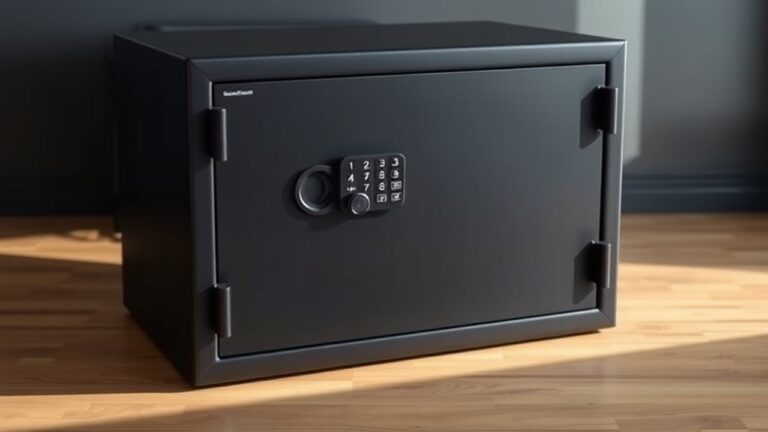
Determining Gun Safes as Tax Deductible
Many gun owners and businesses wonder if they can make their firearm storage work for tax benefits. You’re not alone—navigating what qualifies as a deductible can feel confusing.
You can qualify to deduct a gun safe if you use it primarily for your business, such as protecting profession-related firearms or assets.
Personal safes usually don’t qualify unless you can prove a legitimate business need.
Keep detailed records, receipts, and justify its use for security or safety reasons related to your trade.
To guarantee you’re maximizing this deduction and staying compliant, it’s important to understand the rules and avoid common mistakes—more details follow.
Key Takeaways
- Gun safes are tax deductible if they are used mainly for business or profession-related firearm security.
- Be sure to keep detailed records and documentation that link the safe to legitimate business purposes.
- Personal safes usually don’t qualify unless you can prove they’re necessary for your business activities.
- If the safe is classified as a business asset, you can also depreciate it over time.
- Remember, proper classification, good documentation, and following IRS rules are crucial to avoid any audits.
Do You Qualify to Deduct a Gun Safe on Taxes?

Are you wondering if you can claim a gun safe as a tax deduction? To qualify, you need to show that the safe’s primary purpose is for business use or to protect assets related to your profession.
Personal safes generally don’t qualify unless you can prove a legitimate business need, like safeguarding expensive firearms used for work or security reasons. The IRS looks for clear documentation showing the gun safe’s connection to your trade or business.
If you’re self-employed or run a firearm-related business, you might have a stronger case. Keep in mind, personal safety at home usually doesn’t qualify. Be prepared to provide detailed records and reasoning to support your deduction claim.
What Are the IRS Rules for Deducting Business Equipment Like Gun Safes?
The IRS has specific rules about deducting business equipment, including items like gun safes. To qualify, the gun safe must be used exclusively for your business purposes, such as storing firearms related to your trade or profession.
You’ll need to keep detailed records showing how the safe directly relates to your business activities. Usually, the cost can be deducted in the year you buy it if it’s considered an ordinary and necessary expense.
If the safe has any personal use, only the part used for business can be deducted. Also, the IRS might require you to itemize deductions and provide supporting documentation if you’re audited.
Make sure your usage aligns with IRS rules to avoid getting your deduction disallowed.
Is a Gun Safe Considered a Deductible Business Asset?
Determining whether a gun safe qualifies as a deductible business asset depends on how you use it in your operations. If you own a business that involves safeguarding firearms, such as a shooting range or gun store, the safe may be classified as a capital asset.
This means it’s considered a long-term investment that appreciates over time and can be depreciated over its useful life. Conversely, if you use the gun safe solely for personal reasons, it generally isn’t deductible.
The IRS typically views it as a personal security item rather than a business asset. To qualify, your primary use must be related to your business activities, and proper documentation is essential to support your claim.
When Does a Gun Safe Qualify as a Business Expense?
A gun safe qualifies as a business expense when it’s mainly used for business purposes, like securing firearms in a commercial setting such as a gun store or shooting range.
To meet the criteria, your use should be consistent, necessary, and directly linked to your business operations.
If you keep firearms secure for customer safety or inventory management, the safe is probably deductible.
Keep these points in mind:
- The safe is essential for protecting valuable inventory or sensitive information.
- Its use is regular and a key part of your daily business activities.
- The safe’s purpose matches your business’s safety and security needs.
If these conditions fit, you can justify the safe as a business expense on your taxes.
How to Tell if Your Gun Safe Is for Personal or Business Use
If you’re unsure whether your gun safe qualifies as a business expense or is meant for personal use, start by examining how and where you use it.
If the safe is primarily located at your business premises and used exclusively for storing firearms related to your trade, it leans toward business use.
If the safe is mainly at your business and stores firearms related to your trade, it likely qualifies as a business expense.
Conversely, if it’s kept at home and used mainly for personal firearms, it’s for personal use.
Consider your intent: is the safe purchased to protect business inventory or personal possessions?
Also, look at who has access—if it’s restricted to business employees, that suggests business use.
Keep in mind that mixed use can complicate deductions, so understanding the primary purpose helps determine its classification.
What Documentation Do You Need to Claim a Gun Safe Deduction?
To successfully claim a gun safe deduction, you need to gather proper documentation that proves the expense is legitimate and directly related to your business or deductible personal purpose.
This documentation helps substantiate your claim if you’re audited. Keep copies of receipts, invoices, or bank statements showing the purchase date and amount paid.
Additionally, maintain records that demonstrate the safe’s purpose, such as correspondence with your accountant or details from your business plan.
Key documentation includes proof of purchase, records linking the safe to your business or deductible activity, and any written justification explaining the safety or security reasons.
Having these documents ready ensures your deduction is well-supported and compliant with tax regulations.
Are There Limits or Caps on Deducting Gun Safe Purchases?
You might wonder if there are limits on how much you can deduct for a gun safe purchase. The IRS sets caps based on your overall deductions and specific eligibility criteria.
Understanding these rules helps you maximize your deduction without overstepping any limits. It’s a good idea to stay informed so you can make the most of your eligible expenses.
Deduction Limits and Caps
The IRS sets limits and caps on how much you can deduct for gun safe purchases, making sure only reasonable expenses related to your firearms qualify. Generally, there’s no specific dollar cap just for safes, but the deduction should match the item’s purpose and value.
If your safe is really expensive, the IRS might question whether it qualifies as a deductible expense. To stay within the rules, keep these points in mind:
- The safe should mainly be used for storing firearms, not just for general home security.
- Deductible expenses should reflect the safe’s fair market value.
- Costs that are too high might be disallowed or need extra documentation.
Knowing these limits helps ensure your deduction is legitimate and follows IRS rules.
Eligibility and Qualification
While there aren’t strict dollar caps specifically for gun safes, eligibility for deducting their purchase depends on their primary use and documented purpose.
If you buy a safe solely for storing firearms used in your trade or business, you can generally deduct the full cost.
However, if the safe also stores personal belongings or non-business-related firearms, only the portion related to your trade qualifies.
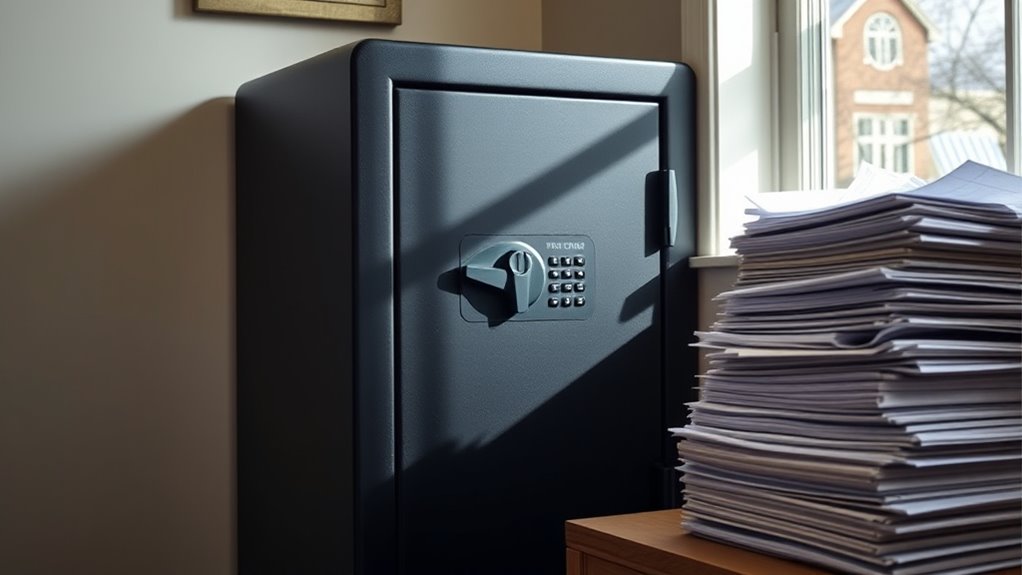
The IRS requires that you keep detailed records, such as receipts and usage logs, to substantiate your deduction.
There’s no specific limit on how much you can deduct, but the safe must be directly related to your profession.
Always verify your purchase aligns with IRS guidelines to qualify, and consult a tax professional for personalized advice.
How Your Firearms Business Impacts Gun Safe Deductibility
Your firearms business can really influence whether gun safes are deductible as business expenses. If you use gun safes only for storing firearms related to your business, the IRS is more likely to see them as deductible.
How you keep records, document their use, and allocate expenses matters a lot. Properly categorizing safes used solely for business purposes makes your case stronger.
Keep in mind that safes used for both personal and business firearms need careful apportioning. Clear documentation showing how the safe is part of your operations is essential.
Consistent bookkeeping also helps justify the expense if you’re ever audited.
Can Home Gun Owners Write Off a Gun Safe for Storage?
You might wonder if you can write off a gun safe for storage on your taxes.
To do that, you need to look at home office deduction rules and see if the safe is essential for your work or safety.
Proper storage not only keeps your firearms protected but can also qualify as a legitimate expense under certain conditions.
Home Office Deduction Rules
If you use a gun safe exclusively for storing firearms and related accessories in a dedicated home office space, you might qualify for a tax deduction. The important part is that the safe is used only for business purposes and is located within your home office.
To qualify, your home office needs to meet IRS requirements, like being your main place of business or a space where you regularly work. Keep in mind these points:
- The safe’s main purpose should match your business needs
- Your home office should be clearly defined and used only for work
- The expense needs to be necessary and directly related to your profession
Storage Safety Benefits
Using a gun safe for storage isn’t just about organization. It also offers important safety benefits for home gun owners. By securely storing your firearms, you reduce the risk of accidental discharge, especially around children or visitors.
A quality safe prevents unauthorized access, helping to keep your guns out of the wrong hands and reducing the chance of theft. It also minimizes the risk of damage or deterioration, preserving your firearms’ condition.
Proper storage in a safe guarantees that guns are kept in a controlled environment, preventing rust and corrosion. Overall, investing in a gun safe improves safety by keeping firearms secure and inaccessible to unintended users.
This provides peace of mind and helps protect your household from potential accidents or security breaches.
Common Mistakes to Avoid When Deducting a Gun Safe
One of the most common mistakes when deducting a gun safe is failing to verify it qualifies as a necessary business expense. Without proper documentation or a clear connection to your trade or profession, your deduction may be rejected.
To avoid this, make sure the safe is used exclusively for work-related purposes, such as storing firearms for security or business operations. Keep detailed records showing the safe’s business purpose.
Ensure the safe is used solely for work-related storage and keep detailed records for IRS compliance.
Confirm that the expense aligns with IRS guidelines for business deductions. Avoid mixing personal and business use, which can complicate your claim.
Misclassifying personal safes as business expenses can lead to audits and penalties. Be precise, stay compliant, and document everything diligently.
How to Maximize Your Tax Savings With Gun Safe Investments
Maximizing your tax savings with gun safe investments involves understanding how to use business deductions effectively.
If you use a gun safe for your profession, like a firearms instructor or security contractor, you can deduct its cost as a business expense.
Make sure the safe is necessary for your work and keep proper documentation. Keep receipts and clearly record the safe’s purpose.
Think about the safe’s depreciation over time if it’s a significant investment. It’s also important to be aware of IRS rules about personal versus business use.
Only deduct the portion used for work. By keeping detailed records and understanding tax laws, you can optimize your deductions.
Proper planning helps you maximize savings while staying compliant with tax regulations.
Frequently Asked Questions
Can Personal Gun Safes Be Claimed as Tax Deductions?
No, personal gun safes generally can’t be claimed as tax deductions. The IRS considers them a personal expense, which isn’t deductible unless you’re a firearm dealer or using the safe specifically for business purposes.
If you’re self-employed and use your gun safe for work-related activities, you might be able to deduct it as a business expense. Otherwise, for personal use, it’s not eligible for a tax deduction.
Are There Specific IRS Forms for Claiming Gun Safe Deductions?
No, there are no specific IRS forms for claiming gun safe deductions. If you think your gun safe qualifies as a deductible expense, you generally report it on Schedule C if it’s for business use or on Schedule A if it’s part of deductible home office expenses.
Be sure to keep detailed receipts and documentation. It’s also a good idea to consult a tax professional to make sure you’re claiming the deduction correctly.
How Does Gun Safe Depreciation Affect Tax Deductions?
Think of depreciation as the erosion of a mountain over time, gradually revealing its true value. When you depreciate your gun safe, you spread its cost over several years, which reduces your taxable income each year.
This process effectively stretches your deduction, turning a one-time expense into a steady stream of savings. By understanding this, you can maximize your tax benefits and keep more of your hard-earned money in your pocket.
What Are the Penalties for Falsely Claiming a Gun Safe Deduction?
If you falsely claim a gun safe deduction, you could face penalties like fines, interest, and possibly criminal charges for tax fraud. The IRS can audit your return, and if they find the deduction was illegitimate, they may impose penalties ranging from a percentage of the amount claimed to criminal prosecution.
To avoid these issues, verify your claim is accurate, substantiated, and complies with tax laws.
Does Claiming a Gun Safe Deduction Impact Future Audits?
Claiming a gun safe deduction can increase your chances of future audits, especially if the IRS suspects the deduction isn’t justified. While it doesn’t automatically trigger an audit, it might flag your return for review.
To avoid issues, make sure your deduction is legitimate, well-documented, and clearly related to your business or security needs.
Being transparent and prepared can help minimize any potential scrutiny down the line.
Conclusion
Think of your gun safe as a trusty shield, not just for protection but also for your finances. Just like a well-placed safe keeps your valuables secure, properly deducting your gun safe on taxes can help safeguard your wallet.
By understanding IRS rules and keeping good records, you can ensure your investment pays off. Staying informed is your best weapon, so don’t leave deductions open—secure them wisely for maximum savings.
Remember, when it comes to tax deductions, a gun safe can be a smart choice. Properly claiming it can make a real difference in your tax savings.