How to Determine if Brake Cleaner Is Safe for Guns
Cleaning your firearm can be a real challenge, especially when you’re trying to find the safest and most effective products. Many gun owners worry about using the wrong chemicals that could damage their guns or cause corrosion.
You’re not alone—this is a common concern among shooters and hunters alike.
To see if brake cleaner is safe for your firearm, check its chemical ingredients—avoid those with harsh solvents like acetone or methylene chloride.
Always follow your gun manufacturer’s recommendations and test a small, inconspicuous area first to spot any damage. Watch for signs of corrosion or finish stripping.
Using safer alternatives like gun-specific solvents or isopropyl alcohol is usually better.
If you want to learn more about cleaning safely, keep exploring the details below.
Key Takeaways
- Check the chemical composition for harmful solvents like methylene chloride or acetone. These can damage your firearm’s finish.
- It’s a good idea to look at your firearm’s manufacturer guidelines. They usually specify whether brake cleaner is safe or if you should use a different product.
- After cleaning, keep an eye out for signs of chemical damage. Discoloration, pitting, or residue can indicate that the cleaner is too harsh.
- Whenever possible, opt for dedicated gun cleaning solvents or safer options like isopropyl alcohol instead of brake cleaner.
- If you do use brake cleaner, do so in moderation. Make sure you’re in a well-ventilated area and wear proper protective gear to stay safe.
Is Brake Cleaner Safe for Firearms?
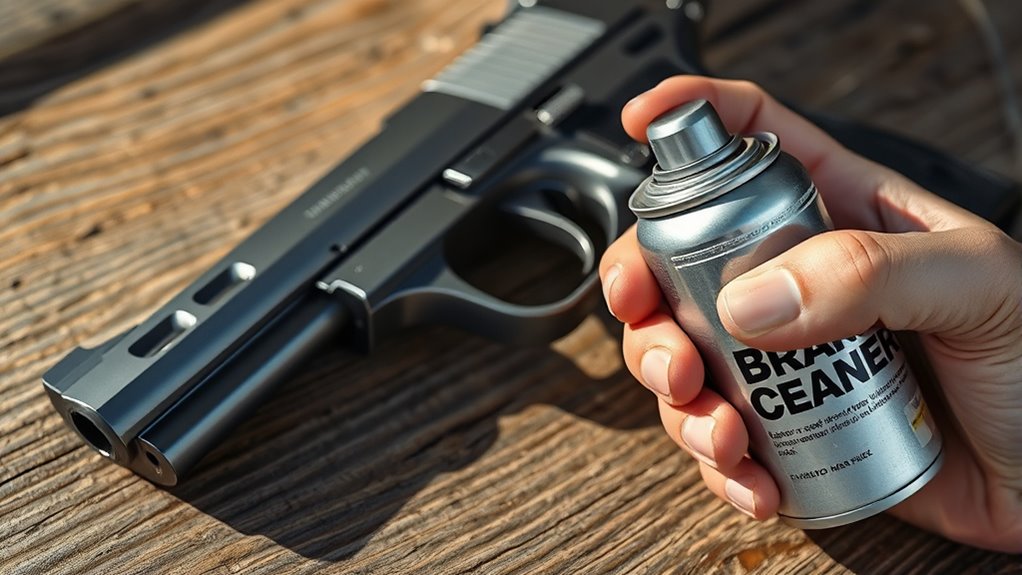
Is brake cleaner safe for firearms? Generally, the answer is no. Brake cleaners contain harsh chemicals like chlorinated solvents and other aggressive agents that can damage firearm finishes, plastics, and rubber parts.
Using brake cleaner on guns risks stripping protective coatings, which can lead to corrosion and deterioration over time. Plus, the fumes are toxic and can pose health hazards if inhaled or if they come into contact with your skin.
Using brake cleaner on firearms can damage coatings and pose health risks from toxic fumes.
While brake cleaner is great for cleaning automotive parts, it’s not formulated for firearms. Instead, choose cleaning solutions specifically designed for guns. These products will effectively remove fouling without damaging delicate components or finishes.
Always prioritize using firearm-safe cleaners to keep your gun in prime condition.
What Is Brake Cleaner Made Of and How Does It Work?
Brake cleaner is made with a mix of powerful solvents and cleaning agents that quickly dissolve grease, oil, and brake dust. The main ingredients are often volatile hydrocarbons like xylene, heptane, or toluene, which break down stubborn grime.
These solvents evaporate fast, leaving surfaces clean and dry. Some formulas also include degreasers or detergents to boost their cleaning power.
When you spray brake cleaner, the solvents penetrate and loosen contaminants from metal surfaces, making it easier to wipe away dirt and brake residue. The quick evaporation ensures no residue is left behind, so the surface is clean and dry, ready for inspection or reassembly.
Its effectiveness depends on fast-acting solvents that dissolve and carry away grime efficiently.
Risks of Using Brake Cleaner on Guns
Using brake cleaner on guns can be risky because its strong solvents aren’t meant for firearm maintenance. They can cause damage or create safety hazards.
The chemicals in brake cleaner might strip away protective coatings, harm lubricants, or even corrode metal parts. Residues can also stay behind and interfere with how your gun works, possibly leading to malfunctions.
Breathing in the fumes or getting them on your skin can cause health issues too. To see these risks clearly, check out the table below:
| Risk Type | Potential Damage | Safety Hazard |
|---|---|---|
| Chemical corrosion | Metal parts corroding or pitting | Skin or eye irritation |
| Residue buildup | Impairing firearm function | Inhalation of toxic fumes |
| Lubricant stripping | Increased wear and tear | Firearm malfunction |
Always use cleaning products specifically designed for guns to stay safe and keep your firearm in good shape.
Factors to Consider Before Using Brake Cleaner on Your Firearm
Before using brake cleaner on your firearm, you need to consider its chemical makeup and safety precautions, since some formulas can be harsh or corrosive.
Be aware of the potential damage it might cause to gun parts or finishes.
Finally, always check the manufacturer’s recommendations to make sure you’re not risking harm to your firearm or voiding its warranty.
Chemical Composition and Safety
Understanding the chemical composition of brake cleaner is essential before applying it to your firearm, as not all formulas are safe or suitable for gun maintenance. Many brake cleaners contain harsh solvents like chlorinated hydrocarbons or volatile hydrocarbons, which can damage gun finishes or internal parts.
Some formulas include aggressive chemicals that may leave residues, causing corrosion or affecting the firearm’s performance. Always check the label for ingredients such as methylene chloride or acetone, and research whether those chemicals are safe for firearms.
Opt for brake cleaners labeled as safe for delicate components or specifically designed for guns. Knowing what’s in the cleaner helps you avoid potential damage and guarantees you choose a product that maintains your firearm’s integrity and safety.
Potential Damage Risks
While brake cleaner can effectively remove grease and grime, it also poses significant risks to your firearm’s delicate components if not used carefully. Many brake cleaners contain harsh chemicals like chlorinated solvents or acetone, which can damage or degrade gun parts over time.
These chemicals can cause rubber seals, gaskets, and lubricants to deteriorate, leading to malfunctions or corrosion. The high volatility of brake cleaner means it evaporates quickly, but this can strip away necessary protective oils from your gun’s metal surfaces, increasing the risk of rust.
Furthermore, some formulations may leave residues that attract dirt or moisture. Before using brake cleaner, consider these potential damage risks to avoid compromising your firearm’s safety, reliability, and longevity.
Manufacturer Recommendations
Always check your firearm manufacturer’s guidelines before reaching for a brake cleaner, as using the wrong products can void warranties or cause damage. Manufacturers often specify which cleaning agents are compatible, including whether brake cleaner is safe for your gun. Ignoring these recommendations can lead to corrosion, material breakdown, or even firearm failure.
Before using any cleaner, make sure it’s explicitly approved or check if there are any restrictions. Look for information on material compatibility, such as steel or polymer, recommended cleaning solvents, and products to avoid. Also, review maintenance instructions specific to your firearm model.
Following the manufacturer’s guidelines helps prevent accidental damage and keeps your firearm performing well for years. If you’re unsure, always consult the manual or contact the manufacturer directly for advice.
How to Test Brake Cleaner Compatibility With Your Gun
Wondering if brake cleaner might harm your gun? The best way to find out is by testing it on a small, hidden area first.
Choose a discreet spot, like inside the magazine well or under the slide, where any damage won’t be obvious. Spray a small amount of brake cleaner and wait a few minutes.
Test on a hidden area like inside the magazine well before full cleaning.
Observe for any changes, such as discoloration, corrosion, or material softening. If you notice any issues, avoid using brake cleaner on your entire firearm.
If it looks fine, you can proceed with caution, but always keep in mind that testing is just a preliminary step.
This simple test helps you determine if the brake cleaner is safe for your specific gun before risking damage to the visible or functional parts.
Safer Alternatives to Brake Cleaner for Gun Maintenance
If you’re worried about the risks of brake cleaner on your firearm, there are safer options that work just as well. These alternatives can clean your gun effectively without causing damage.
You can choose products made specifically for firearm maintenance, which are gentler but still good at removing dirt and residue. Some good options include gun cleaning solvents designed for firearms, isopropyl alcohol (at least 90%), or mild dish soap and water for regular cleaning.
CLP solutions—those that clean, lubricate, and protect—are also a great choice for gun maintenance. Using these safer options helps prevent damage to finishes or internal parts.
Plus, they’re usually safer to handle and more environmentally friendly. Always pick cleaning products made for guns to keep your firearm in top shape and ensure its longevity.
How to Properly Apply Brake Cleaner to Your Firearm
When applying brake cleaner to your firearm, make sure to spray it evenly over all metal surfaces. Keep the can at least a few inches away from the firearm.
Always wear gloves and eye protection to prevent contact with your skin and eyes. It’s best to do this in a well-ventilated area.
Follow these safety steps and proper technique to clean your firearm effectively while staying safe.
Proper Application Technique
To guarantee effective cleaning and safety, start by removing any loose debris or dirt from your firearm before applying brake cleaner. This prevents dirt from trapping under the cleaner and helps get better results.
Hold the spray can about 6-8 inches from the surface and use short, controlled bursts to cover all greasy or dirty areas evenly. Avoid oversaturating parts, as excess fluid can seep into unintended areas.
Focus on the spots with buildup, and use a brush or cloth to scrub stubborn areas if needed. After spraying, let the cleaner sit for a few seconds before wiping or scrubbing.
Remember to aim the spray at affected areas only, keep the can upright to prevent leaks, and use a lint-free cloth for wiping. Be careful not to overspray onto parts that don’t need cleaning.
Safety Precautions to Follow
Before you start applying brake cleaner to your firearm, it’s essential to prioritize safety by working in a well-ventilated area and wearing proper protective gear. Use gloves to prevent skin contact and goggles to shield your eyes from splashes.
Make sure you’re outdoors or near a strong exhaust system to avoid inhaling fumes. Keep the brake cleaner away from open flames, heat sources, and sparks since it is highly flammable.
Avoid inhaling vapors directly by wearing a mask if necessary. Handle the spray carefully, aiming only at the parts you need to clean.
After applying, wash your hands thoroughly and dispose of any used rags or containers properly. Following these precautions minimizes health risks and ensures safe, effective cleaning.
Signs Brake Cleaner Is Damaging Your Gun
Cracks, rust, and corrosion are clear signs brake cleaner is harming your gun. If you notice any of these, it’s a red flag that the cleaner may be damaging your firearm’s metal or finish.
You might also see pitting or discoloration, which indicates the protective coating is breaking down. Sometimes, brake cleaner leaves behind a sticky or oily residue that’s hard to remove, hinting at chemical damage.
Keep an eye out for these signs:
- Cracks or fractures in the metal
- Rust spots or discoloration
- Pitting or surface roughness
- Residue that won’t wash away easily
Recognizing these signs helps prevent further damage and keeps your gun safe and functional.
Protecting Your Gun’s Finish During Cleaning
To protect your gun’s finish during cleaning, always wear protective gear like gloves and goggles to prevent splashes and fumes.
Applying brake cleaner in thin, even coats helps minimize the risk of damage and ensures thorough cleaning.
Use Protective Gear
Protecting your gun’s finish during cleaning is key to keeping it in good shape and maintaining its value. To do this properly, you need to wear the right protective gear.
Wearing gloves keeps chemicals away from your skin, which reduces irritation and absorption. Safety goggles are important to shield your eyes from splashes or fumes that could cause irritation or injury.
A respirator or mask helps protect you from inhaling harmful fumes or particles released during cleaning. Plus, wearing an apron or old clothes prevents chemicals from staining or damaging your clothing.
Apply Thin Coats
Applying thin coats of brake cleaner guarantees the solvent effectively cleans your gun without overwhelming the finish. You should spray the cleaner lightly, focusing on small sections at a time.
Avoid heavy applications that can seep into delicate areas or cause damage. Multiple thin coats are better than one thick layer because they allow the cleaner to evaporate quickly and minimize residue.
Keep the spray at a safe distance, usually a few inches from the surface, to prevent over-application. Wipe off excess cleaner with a clean cloth before it dries.
This approach helps preserve your gun’s finish while ensuring a thorough cleaning. Remember, patience and precision are key to protecting your firearm during the process.
When to Seek Professional Help for Gun Cleaning
Even with careful cleaning, there are times when it’s better to call in a professional. If you notice persistent malfunctions or unusual wear, don’t risk causing more damage.
Seek help if you’re unsure about using specific cleaners or solvents like brake cleaner on your firearm. Also, consider professional assistance when cleaning involves complex parts or if your gun malfunctions after cleaning.
Get professional help if you’re unsure about cleaning products or if your firearm malfunctions afterward.
You should consult a professional if:
- The firearm has deep rust or corrosion issues
- You’re unsure about cleaning procedures or products
- There are damage or cracks in critical components
- You’ve experienced recurring malfunctions after cleaning
Knowing when to get expert help ensures your gun stays safe, reliable, and in top condition.
Final Tips for Safe Firearm Maintenance
After figuring out when to get professional help for gun cleaning, remember that proper maintenance also means following some simple safety tips. Always make sure your firearm is unloaded before you start cleaning.
Wear gloves and eye protection to keep chemicals from touching your skin or eyes. Work in a well-ventilated area so you don’t breathe in any fumes.
Check your tools and cleaning supplies regularly to ensure they aren’t damaged or contaminated. Here’s a quick guide:
| Safety Tip | Why It Matters |
|---|---|
| Unload firearm before cleaning | Prevent accidental discharge |
| Use protective gear | Protects skin and eyes |
| Work in ventilated space | Reduces inhalation of harmful fumes |
| Avoid mixing chemicals | Prevents dangerous reactions |
| Regularly check tools | Ensures safe, effective cleaning |
Sticking to these tips helps keep your firearm safe and always in great shape.
Frequently Asked Questions
Can Brake Cleaner Cause Corrosion on Firearms?
Yes, brake cleaner can cause corrosion on firearms if used improperly. Its harsh chemicals, especially if left on the metal surface, can strip protective finishes and lead to rust over time.
You should always avoid prolonged contact with gun parts, rinse thoroughly with water afterward, and reapply a protective lubricant or oil. Using a cleaner specifically designed for firearms is safer and helps prevent corrosion effectively.
Does Brake Cleaner Leave Harmful Residues on Guns?
Did you know that some brake cleaners contain harsh chemicals that can leave residues? Brake cleaner can indeed leave harmful residues on your gun, which might affect its performance and safety.
It’s really important to rinse thoroughly and wipe your firearm after using brake cleaner. Always check the product label for safety info, and consider using gun-specific cleaning solvents to avoid any damage or residue buildup.
How Long Should Brake Cleaner Sit on a Firearm?
You should let brake cleaner sit on a firearm for just a few seconds, usually around 10 to 15 seconds, to loosen grease and grime effectively.
After that, wipe or scrub the surface thoroughly with a clean cloth or brush. Avoid leaving it on for too long, as it can damage sensitive parts or leave residues.
Always follow the manufacturer’s instructions and make sure the firearm is completely dry before reassembling or firing.
Are There Specific Gun Materials That React Badly With Brake Cleaner?
Certain gun materials, like plastic or rubber parts, react badly with brake cleaner. You might think it’s just cleaning, but it can cause swelling, cracking, or deterioration over time.
Metal surfaces generally withstand it, but always test on a small area first. If you’re unsure, avoid using brake cleaner on delicate parts.
Protect your firearm’s integrity by knowing your materials and choosing safer cleaning alternatives when necessary.
Is It Safe to Use Brake Cleaner on All Firearm Parts?
No, you shouldn’t use brake cleaner on all firearm parts. While it works well for cleaning metal components, it can damage plastics, rubber, and certain finishes.
Always check your firearm’s material compatibility before applying brake cleaner. It’s a good idea to test a small, hidden area first.
If you’re unsure, go for dedicated gun cleaning solvents. Using the wrong cleaner can cause corrosion or damage, so be cautious to keep your firearm safe and in good shape.
Conclusion
Before you reach for that brake cleaner, remember—what works on your car might not be safe for your firearm. Testing and caution are key, but surprises can still happen. Are you prepared to spot the signs of damage early?
Sometimes, the safest choice is to leave certain cleaning tasks to professionals. Don’t risk your gun’s integrity. Stay vigilant, stay informed, and keep your firearm in top shape for whatever’s ahead. When it comes to cleaning guns, always consider if brake cleaner is safe for guns.