Top 12 Best Hiking Radios You Can’t Travel Without Today
Anyone who has relied on cheap hiking radios knows how quickly frustration can set in when the signal cuts out or the battery dies halfway through a trip. The best hiking radios handle rough conditions better and keep communication open, even in dense forests or steep valleys where phones often fail.
Without reliable radios, groups can easily lose contact, creating safety risks and complicating navigation.
Durability is key, radios made from sturdy materials with a waterproof rating of at least IPX4 stand up to rain and bumps on the trail. Battery life is equally important; models with rechargeable packs that last 12 hours or more on moderate power are practical for day hikes. Compact size and simple controls also matter since bulky units or complicated interfaces can be a nuisance when quick communication is necessary.
A solid connection range, typically around 3 to 5 miles depending on terrain, is the baseline for dependable radios in most hiking environments.
Need a Quick Check?
| Image | Product | Price |
|---|---|---|
Our Top Picks 1  | Mountain Long Range FRS | Check Price |
Our Top Picks 2  | Motorola Talkabout T605_H2O | Check Price |
Our Top Picks 3 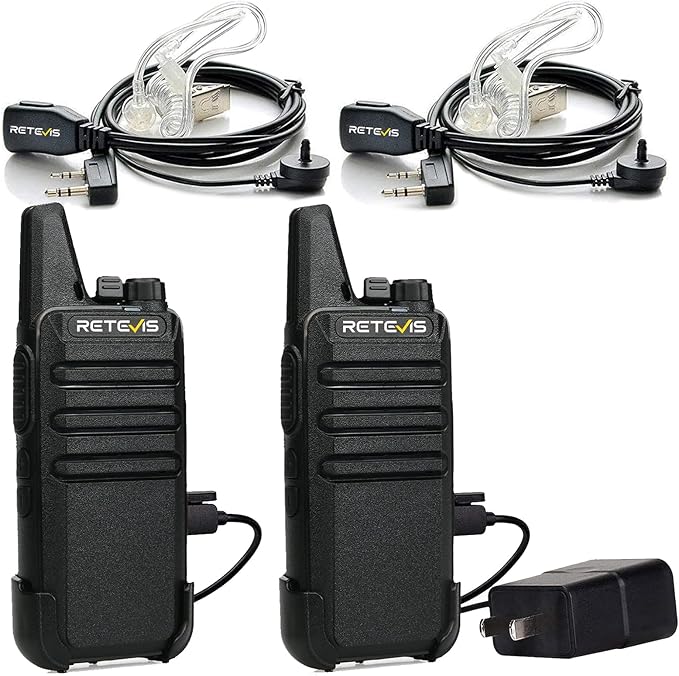 | Retevis RT22 Rechargeable | Check Price |
Our Selected Top 12 Hiking Radios Worth Buying
This list features a range of reliable hiking radios designed for outdoor use, offering details on their performance, suitability for different users, and key advantages and disadvantages. Each review helps you understand which radio might best match your hiking needs and preferences.
1. Mountain Radio Long Range FRS Walkie Talkies 2 Pack
Shatterproof LED screens and a thermoplastic protective cover make these radios tough enough for rough hikes. Perfect for anyone needing solid communication without a license, their standout feature is the long-range capability that reaches beyond 35 miles in ideal conditions.
Setup is straightforward with rechargeable lithium-ion batteries that last over four days, even in cold weather. Carrying them is easy thanks to the metal-reinforced leash and ultra-light climbing-rated carabiner, which clips securely onto backpacks or harnesses. The 128 channels offer plenty of options, and the water-resistant design means you don’t have to worry about rain or sweat.
Communication reaches typical distances of 1 to 5 miles in backcountry terrain, with maximum power legally allowed for this type of device. Built for durability, the radios avoid fragile clips and focus on rugged attachments and casing.
Most praise centers on the long battery life and durability; the main drawback users note is that the maximum 35-mile range is rarely reached in dense terrain.
The radios are especially praised for their battery life and rugged build, making them reliable for extended trips. The most common issue reported is that the maximum range is often much less in real-world backcountry environments.
People frequently traveling in open areas will appreciate the range and durability. Those who mostly hike in dense forests or need full waterproofing should consider other options.
Pros
- Long battery life even in cold conditions
- Durable with shatterproof LED screen
- Secure metal-backed leash and carabiner
- Wide selection of 128 channels
Cons
- Maximum range rarely achieved in dense terrain
- Water resistant, not fully waterproof
| Specification | Details |
|---|---|
| Number of Channels | 128 |
| Battery Average Life | 4 days |
| Talking Range Maximum | 35 miles |
| Water Resistance Level | Water Resistant |
| Connectivity Protocol | FRS |
| Tuner Type | UHF |
2. Motorola Talkabout T605_H2O FRS Two-Way Radios 2 Pack
Known for floating face up and being fully waterproof, these radios are perfect for hikers who want reliable communication even around water. The biggest plus is their IP67 rating, meaning they can handle tough weather and accidental drops into streams without a hitch.
Getting started is simple, with easy pairing across 22 channels and 121 privacy codes that help avoid interference. The water-activated flashlight adds a safety layer when light runs out without fiddling for buttons.
USB-C charging offers convenience, while the backlit display keeps things readable during low light or night treks.
Communication reaches up to 35 miles under ideal conditions, covering most hiking areas comfortably. Built tough and weather resistant, the radios impress with long battery life averaging 9 hours.
Complaints mainly revolve around the bulkiness and the need for 12V batteries, which might be heavier than some expect but fits the dual power design.
These radios stand out for their waterproof feature and floating design, making them reliable near water. Most users praise these qualities, though the size and heavier 12V batteries sometimes cause discomfort on long hikes.
Ideal for hikers who prioritize durability and range in wet conditions, especially those carrying backpacks where weight is less critical. Not the best choice for those seeking ultralight gear or compact radios.
Pros
- Floats face up for easy retrieval in water
- Water-activated flashlight for quick access
- Long 9-hour average battery life
- Wide range of channels and privacy codes
Cons
- Requires 12V batteries, adding some weight
- Bulkier design may not suit minimalist setups
| Specification | Details |
|---|---|
| Number of Channels | 22 |
| Talking Range Maximum | 35 mile |
| Water Resistance Level | Waterproof (IP67) |
| Battery Average Life | 9 hours |
| Connectivity Protocol | FRS |
| Charging | USB-C Charging |
3. Retevis RT22 Rechargeable Walkie Talkies 2 Pack
Perfect for hikers wanting a compact walkie talkie with clear sound, the Retevis RT22 Rechargeable Walkie Talkies stand out for being lightweight and easy to carry on long treks. Its main strength is delivering loud, clear communication in a design that doesn’t weigh you down during outdoor adventures.
Setup is simple, and you are ready to go right out of the box. The VOX hands-free feature means you can talk without holding down the button, keeping your hands free for hiking gear. Battery life lasts about 12 hours on a full charge, so it easily covers day trips.
The detachable belt clip and water resistance make it practical for active use in changing weather conditions.
Sound quality remains loud and clear through outdoor noise, working well up to 2 miles apart. The radios feel sturdy yet light, avoiding bulkiness common in some models. Common feedback praises the sound clarity while a frequent complaint is the limited range for very remote areas.
These radios are designed to be tough enough for trails but not meant for extreme long-range communication.
The loud and clear sound makes conversations easy even in noisy outdoors, while many find the 2-mile range restrictive for very large, remote hiking areas. Battery life impresses, but the VOX feature, though convenient, can occasionally pick up background noise.
Those hiking or working within moderate distances will appreciate the light design and clear audio. Anyone needing longer range or who prefers standard AA batteries might want to look at other options.
Pros
- Lightweight and compact design
- Loud, clear sound quality
- Hands-free VOX communication
- Long 12-hour battery life
Cons
- Maximum talking range only 2 miles
- Uses rechargeable lithium-ion batteries only
| Specification | Details |
|---|---|
| Battery Average Life | 12 hours |
| Talking Range Maximum | 2 miles |
| Number of Channels | 16 |
| Water Resistance Level | Water Resistant |
| Frequency Range | FRS |
4. Radioddity HD-2 Waterproof Walkie Talkies 2 Pack

Staying connected on remote trails, in rain or snow, becomes easier with these rugged walkie talkies. Perfect for hikers, kayakers, or anyone facing tough weather, their waterproof and dustproof design really stands out. The ability to keep going in cold conditions is their biggest strength.
Setting them up is straightforward, with 22 channels to choose from for clear communication during hikes or outdoor activities. The clip and carabiner options make carrying simple, while the dual PTT buttons add convenience.
Daily use feels reliable thanks to the long-lasting battery life, and the USB-C output handy for charging other devices when away from power sources.
Communication remains solid up to 4 miles in open areas, handling rough contact without damage due to its shockproof housing. The reinforced sealing keeps water and dust out, matching the IP67 rating perfectly. Most praise goes to its strong waterproofing and battery life, while complaints sometimes mention the rather bulky feel.
The most appreciated feature is its rugged design that keeps working through rain and snow, backed by excellent battery life that endures cold weather. The most common downside involves the size and weight, which can feel a bit cumbersome on long hikes.
People venturing into harsh environments will find the waterproofing and cold resistance valuable. Anyone looking for a lightweight or more compact radio might want to consider other options.
Pros
- IP67 waterproof for 1-meter submersion
- Cold-resistant battery lasts in chilly conditions
- Dual PTT for simple communication
- Clip and carabiner options for easy carry
Cons
- Bigger and heavier than some other radios
- Requires 2 9V batteries, not rechargeable inside
| Specification | Details |
|---|---|
| IP Rating | IP67 Waterproof |
| Battery | 2 9V batteries included |
| Channels | 22 |
| Max Talking Range | 4 miles |
| Temperature Range | -22°F to +140°F |
| Emergency Power Output | USB-C, supports backup power |
5. Garmin inReach Mini 2 Satellite Communicator

A standout feature is the Garmin inReach Mini 2’s two-way messaging over satellite, making it ideal for hikers wanting reliable global communication and safety. Compact and lightweight, it fits easily in a backpack or pocket, perfect for anyone heading outdoors alone or in remote areas where cell coverage is scarce.
Setting it up involves activating a satellite subscription and pairing with your smartphone via Bluetooth, which feels straightforward. Day-to-day use relies on the touchscreen and push buttons to send messages or trigger SOS alerts. Navigation highlights like TracBack routing help track your path back, and sharing your location via MapShare keeps friends or family updated without hassle.
It performs well as a satellite communicator, delivering accurate location and messaging capabilities globally. The water-resistant design stands up to rough conditions, and the battery life of 336 hours means long trips won’t drain it quickly.
Praise often points to dependable two-way messaging, while complaints tend to focus on the small 1.27-inch screen making some interactions fiddly.
The strongest praise is for reliable and consistent two-way satellite messaging that works worldwide. A common complaint centers on the small, monochrome screen, which can make typing or navigation details tougher, especially in harsh light despite its sunlight-readable design.
Hikers venturing into remote, off-grid locations who need consistent communication and tracking will appreciate the device. Those wanting a larger display or no subscription fees should consider alternative options better suited to those needs.
Pros
- Compact and lightweight for easy carry
- Global two-way messaging with SOS
- Long battery life of 336 hours
- Accurate digital compass and GPS
Cons
- Small 1.27-inch screen can be hard to read
- Requires active satellite subscription to use
| Specification | Details |
|---|---|
| Screen Size | 1.27 inches |
| Battery Average Life | 336 hours |
| Connectivity Technology | Bluetooth, USB |
| Display Type | Sunlight-Readable, Monochrome, Transflective Memory-in-Pixel (MIP) |
| Supported Satellite Navigation System | GPS |
| Water Resistant | Yes |
6. Midland GXT1000VP4 GMRS Two-Way Radios 2 Pack

Great for outdoor enthusiasts who need reliable communication far from cell service, these radios are made for hikers, campers, and workers navigating large areas. The biggest strength lies in their impressive 36-mile range on 50 channels, helping you stay connected over long distances with ease.
Getting started is straightforward since the two radios come charged and ready with rechargeable battery packs and a desktop charger included. You can switch between rechargeable batteries and AA cells for backup power. The hands-free voice activation lets you talk without holding the unit, which is perfect when your hands are busy.
The keypad lock prevents accidental channel changes, and weather alerts keep you informed about severe storms.
On the trail or job site, these radios deliver clear sound and reach across large distances as promised. They feel solid and weather resistant, suitable for rough outdoor conditions. The strongest praise highlights their long range and reliable weather alert feature.
Some mention that the bulkiness and battery life could be downsides for lighter or longer hikes.
The standout feature users appreciate most is the long-range capability combined with reliable weather alerts, making it easy to stay in touch and aware of severe conditions. Common complaints focus on the size and battery life not meeting expectations for ultra-light or extended hikes.
Anyone needing dependable long-distance communication in tough environments will find these radios well-suited. Those who prefer smaller, lighter devices or require longer usage on a single charge might want to look at other options.
Pros
- Long 36-mile communication range
- Includes rechargeable battery packs
- Built-in NOAA weather alerts
- Hands-free voice activation feature
Cons
- Bulkier than some other hiking radios
- Average battery life about 10 hours
| Specification | Details |
|---|---|
| Number of Channels | 50 |
| Talking Range Maximum | 36 mile |
| Battery Average Life | 10 hours |
| Voltage | 6 volts |
| Water Resistance Level | Water Resistant |
7. Retevis RT22 Compact FRS Walkie Talkies 4 Pack

Compact size and safety-focused design set these apart from typical hiking radios. Ideal for family hikes or group outings where easy carry and quick communication matter most. The short, blunted antenna reduces snagging and poking risks, making it a practical choice for active, outdoor use.
Getting started involves charging via USB-C, which is simple and convenient on the trail. The lightweight device easily slips into pockets or clips onto belts with the detachable clip, allowing quick access when needed without removing it fully. Clear audio through the 300 mW speaker helps keep conversations audible even in noisy outdoor settings.
Communications stay reliable up to 2 miles on FRS channels, covering typical hiking distances well. The build is water resistant, suitable for light weather conditions, and the battery life can stretch to 12 hours. Common praise includes clear sound quality thanks to the squelch function.
A frequent complaint centers on the limited range which doesn’t cover very rugged or mountainous areas extensively.
Clear and loud sound quality is highly praised, making conversations easy under typical outdoor noise. The short antenna design improves safety while hiking, but the limited range is often noted as a drawback for more remote or rugged areas.
Those hiking in moderate terrain with a small group will find these radios practical and safe to use. For extended backcountry trips where longer communication range is critical, other models might serve better.
Pros
- Compact and lightweight for easy carrying
- Thumb-length antenna improves safety
- Clear audio with built-in squelch function
- Rechargeable with USB-C port
Cons
- Maximum range limited to 2 miles
- Water resistance but not fully waterproof
| Specification | Details |
|---|---|
| Number of Channels | 16 |
| Talking Range Maximum | 2 mile |
| Battery Average Life | 12 hours |
| Frequency Range | FRS |
| Charging Port | USB-C |
8. MOICO 22 Channel Long Range FRS Walkie Talkies

MOICO 22 Channel Long Range FRS Walkie Talkies are meant for folks who want reliable communication on hikes or group outings. Its biggest strength lies in the ability to block out other conversations using 22 channels and over 2,000 privacy code combinations, keeping your chats clear and private.
Setting them up is straightforward, with a digital display showing your channel and tone settings. The VOX hands-free function is handy for hiking when your hands might be full or wearing gloves.
Changing channels and locking buttons prevents accidental switches, and they run on AAA batteries, lasting about 12 hours, making them suitable for day-long trips.
These radios cover around 3 miles, which generally works well on trails and parks. They feel sturdy and shockproof enough for outdoor use, with their water-resistant build handling light showers without trouble.
Most appreciate the privacy options, though some mention the range might be less in dense forests or hilly areas.
Privacy settings and hands-free use get frequent praise for keeping communication clear and convenient. Complaints mostly focus on the maximum range feeling limited in tough outdoor terrain.
Great for groups needing reliable talk on short to mid-distance hikes or parks. Not ideal for long-distance or professional outdoor use where more power or waterproofing might matter.
Pros
- 22 FRS channels with 2178 privacy tone combos
- VOX hands-free transmission with adjustable sensitivity
- Lightweight and shockproof design
- Keypad lock prevents accidental changes
Cons
- Range can drop in dense woods or hills
- Requires 4 AAA batteries, not rechargeable included
| Specification | Details |
|---|---|
| Number of Channels | 22 |
| Talking Range Maximum | 3 miles |
| Battery Average Life | 12 hours |
| Water Resistance Level | Water Resistant |
| Frequency Range | 462.5500-462.7250MHz, 462.5625-462.7125MHz, 467.5625-467.7125MHz |
9. Motorola Talkabout T475 Extreme Two-Way Radios 2 Pack

Easy to use and reliable in the outdoors, these radios fit right into hiking gear with their solid range and weatherproof design. They’re especially good for groups that want clear communication without a license.
The standout feature is the sheer number of channel and privacy code combinations for interference-free chats.
Getting started is straightforward with easy pairing and a good battery life that covers a day on the trail. The built-in flashlight adds safety at dusk or in dark situations.
Switching between 22 channels and 121 privacy codes lets you avoid other talk traffic. The Dual Power option means running on rechargeable NiMH or AA batteries, which gives flexibility when supplies run low.
The radios handle their main job well, offering communication up to 35 miles under ideal conditions. They resist water with IPx4 weatherproofing, which is enough for rain but not submersion.
Most people appreciate the built-in NOAA weather alerts for staying updated on conditions. Some users have mentioned battery life could be better in heavy use and that the range varies a lot depending on terrain.
Communication stays clear thanks to 2,662 channel combinations and the radios survive wet weather with IPx4 water resistance. Regular feedback notes battery life as a limit during busy or long days on trails. Range depends heavily on the environment and won’t always hit 35 miles.
Good for hikers who want dependable weather alerts and multiple privacy channels for group chats. Less suitable for those needing deeper water resistance or extremely long battery life on extended trips without recharging options.
Pros
- Large number of channel and privacy code combinations
- Weatherproof design suitable for rain
- Includes built-in flashlight for dark conditions
- Flexible Dual Power battery options
Cons
- Range varies greatly depending on terrain
- Battery life could drain faster with heavy use
| Specification | Details |
|---|---|
| Number of Channels | 22 |
| Water Resistance Level | Water Resistant (IPx4) |
| Battery Life | Up to 12 hours (NiMH 800 mAH included) |
| Talking Range Maximum | 35 miles |
| Frequency Range | 462-467 MHz |
10. Retevis RB48 FRS Long Range Walkie Talkies

Retevis RB48 FRS walkie talkies suit anyone needing tough, reliable communication on long hikes or rough outdoor adventures. Their military-grade durability stands out, built to keep working no matter how rough the conditions get.
Turning on these radios and setting them up is straightforward. The USB-C charging and charge station make powering up easy, even when you’re on the move.
They come with 22 channels and dual PTT buttons, meaning you can operate them comfortably even with gloves on. The battery lasts up to 20 hours, which is plenty for day-long use in the backcountry.
On the trail, their communication stays clear and stable up to about two miles, covering big hiking areas or tall buildings. The IP67 waterproof and dustproof rating means the radios shrug off rain, mud, and dust without a problem.
Most users mention the surprising toughness across drops and rough handling. Common complaints revolve around the occasional signal drop in very dense forests or mountainous terrain.
These radios receive high marks for handling drops and wet conditions without breaking, making them trusted partners on any hike in rough environments. Their main drawback is occasional signal instability in dense, mountain terrain, which limits their range in tricky areas.
Look to these walkie talkies if you want sturdy and long-lasting communication gear for standard hiking and outdoor trips. Those needing perfect signal in dense or vertical terrain might find other models more suited to their needs.
Pros
- Extremely durable and weatherproof
- Clear communication up to two miles
- Easy USB-C and station charging
- Works well with gloves on
Cons
- Signal can drop in very dense forests
- Relies on lithium-ion batteries included
| Specification | Details |
|---|---|
| Number of Channels | 22 |
| Talking Range Maximum | 2 miles |
| Battery Average Life | 18 hours |
| Water Resistance Level | Waterproof |
| Frequency Range | FRS |
| Durability Standard | MIL-STD-810H |
11. Radioddity HD-1 Waterproof Heavy Duty Walkie Talkies 4 Pack

Built with tough PC+TPE material, these walkie talkies suit anyone needing reliable communication outdoors. Their biggest strength is surviving rough use while staying waterproof enough to float during water activities, making them a solid pick for hiking, camping, or emergency situations.
Setup is straightforward with twenty-two channels to choose from, covering up to 4 miles in range on the FRS frequency. Daily use benefits from dual PTT buttons allowing easy switching between channels or groups, and a one-key group call to keep everyone connected.
The weather alert and emergency alarm add safety without extra hassle.
These radios perform well, maintaining clear communication over several miles under normal outdoor conditions. The rugged design resists drops from two meters and handles heat and pressure without cracking. Most praise highlights their durability and floating capability, while some mention the need to change batteries daily during heavy use.
Durability stands out strongly as these radios survive drops and rough weather, with the floating feature reducing risk of losing them in water. However, frequent heavy use calls for regular battery changes, which can interrupt long hikes or trips unless spares are handy.
Those who need tough radios that handle water and rough terrain will appreciate what these offer. People looking for something lighter or with longer continuous battery life on a single charge might want to explore other options better suited to lighter or prolonged use.
Pros
- Floating design prevents loss in water
- Rugged and drop-tested for tough environments
- Long standby up to 4-5 days
- Emergency alarm and weather alert included
Cons
- Daily use may drain batteries quickly
- Weight heavier due to durable build
| Specification | Details |
|---|---|
| Number of Channels | 22 |
| Talking Range Maximum | 4 mile |
| Frequency Range | FRS |
| Battery Type | 4 9V batteries required (included) |
| Water Resistance Level | Waterproof |
12. Midland T61VP3 X-Talker FRS Walkie Talkies 2 Pack

Impressive range stands out immediately, making these walkie-talkies perfect for hikers wanting reliable communication over long distances. With 36 FRS channels, staying connected in the wilderness is straightforward and dependable.
Ideal for those who value clear signals without needing a license.
Setup involves popping in the six included AAA batteries, which last around 10 hours. Daily use involves switching between 36 channels to find the clearest line and using the channel scan feature to monitor activity.
The radios connect well in open spaces without many obstacles, which suits trail conversations and group coordination on hikes.
Performance holds steady with clarity maintaining across long ranges up to 32 miles in the right settings. The build feels solid but is not water-resistant, requiring some care in damp or rainy conditions.
Praise often goes to the broad channel selection and long battery life. The common downside is the lack of waterproofing, which can be limiting outdoors.
Clear communication over long distances receives strong praise, making it reliable in open hiking areas. The water resistance is the most common complaint since these radios require careful handling around moisture or rain.
Hikers who mainly trek in dry, open landscapes will find these radios quite useful. Those facing wet conditions often or needing longer battery life might want to look for a more rugged or waterproof alternative.
Pros
- Long maximum range of 32 miles in ideal conditions
- Includes 6 AAA batteries for immediate use
- 36 channels with channel scan for activity monitoring
- License-free operation makes using this product simple and convenient
Cons
- Not water resistant, vulnerable in wet environments
- Battery life limited to around 10 hours
| Specification | Details |
|---|---|
| Number of Channels | 36 |
| Talking Range Maximum | 32 miles |
| Battery Average Life | 10 hours |
| Number of Batteries | 6 AAA batteries (included) |
| Water Resistance Level | Not Water Resistant |
Best Hiking Radios Comparison Table
| Product | Channels | Max Range | Water Resistance | Battery Life |
|---|---|---|---|---|
| Mountain Long Range FRS | 128 | 35 miles | Water Resistant | 4 days |
| Motorola Talkabout T605_H2O | 22 | 35 mile | Waterproof | 2 12V batteries included |
| Retevis RT22 Rechargeable | 16 | 2 miles | Water Resistant | – |
| Radioddity HD-2 Waterproof | 22 | 4 mile | Waterproof | – |
| Garmin inReach Mini 2 | – | – | – | 336 hours |
| Midland GXT1000VP4 GMRS | 50 | 36 mile | Water Resistant | 8 AA batteries required |
| Retevis RT22 Compact 4-Pack | 16 | 2 mile | Water Resistant | Rechargeable |
| MOICO 22 Channel FRS | 22 | 3 miles | Water Resistant | – |
| Motorola Talkabout T475 Extreme | 22 | 35 miles | Water Resistant | 2 AA batteries included |
| Retevis RB48 Long Range | 22 | 2 miles | Waterproof | – |
| Radioddity HD-1 Heavy Duty | 22 | 4 mile | Waterproof | 4 9V batteries included |
| Midland T61VP3 X-Talker | 36 | 32 miles | Not Water Resistant | 6 AAA batteries included |
- Channels128
- Max Range35 miles
- Water ResistanceWater Resistant
- Battery Life4 days
- Channels22
- Max Range35 mile
- Water ResistanceWaterproof
- Battery Life2 12V batteries included
- Channels16
- Max Range2 miles
- Water ResistanceWater Resistant
- Battery Life–
- Channels22
- Max Range4 mile
- Water ResistanceWaterproof
- Battery Life–
- Channels–
- Max Range–
- Water Resistance–
- Battery Life336 hours
- Channels50
- Max Range36 mile
- Water ResistanceWater Resistant
- Battery Life8 AA batteries required
- Channels16
- Max Range2 mile
- Water ResistanceWater Resistant
- Battery LifeRechargeable
- Channels22
- Max Range3 miles
- Water ResistanceWater Resistant
- Battery Life–
- Channels22
- Max Range35 miles
- Water ResistanceWater Resistant
- Battery Life2 AA batteries included
- Channels22
- Max Range2 miles
- Water ResistanceWaterproof
- Battery Life–
- Channels22
- Max Range4 mile
- Water ResistanceWaterproof
- Battery Life4 9V batteries included
- Channels36
- Max Range32 miles
- Water ResistanceNot Water Resistant
- Battery Life6 AAA batteries included
How to Choose the Best Hiking Radio
Choosing a good hiking radio means focusing on range, battery life, durability, and ease of use to ensure reliable communication on the trail. Getting these factors right helps avoid dropped signals, running out of power, and gear that can’t withstand rough conditions, saving time and frustration.
Range and Signal Strength
Hiking in dense forests or rugged mountains often means losing signal abruptly or dealing with distorted audio. Maximum effective communication distance varies enormously depending on terrain.
Radios claiming long-range reach on open land can lose half that range in wooded or hilly areas. Signal clarity degrades quickly if the device lacks interference filtering or does not support multiple frequency bands. Trying to communicate through thick trees without proper signal strength quickly becomes frustrating, defeating the purpose of carrying the radio.
Good devices often include features such as frequency hopping or UHF/VHF band options to maintain connectivity in difficult environments. Look for a model advertising a minimum of 2 to 5 miles range in forested or mountainous terrain and check if it supports privacy tones or noise cancellation, which help reduce static. Radios designed specifically for outdoor use usually address these connectivity challenges more effectively than basic walkie-talkies.
Battery Life and Power Options
Battery life is critical on long hiking trips. Having a radio that dies quickly means losing your main line of communication. Some radios run only on disposable AA or AAA batteries, which can be replaced easily but add to your pack weight.
Others come with built-in rechargeable lithium-ion batteries, allowing multiple charges from a USB power bank, ideal for extended outings.
Good radios often last between 8 to 12 hours on a single charge or set of batteries under normal usage. Power-saving modes that reduce transmission strength or auto-shutoff features extend this runtime further.
Battery status indicators or low-battery alerts are very useful to avoid unexpected shutdowns. Choosing a radio with versatile power options and clear battery information improves reliability in remote areas.
Durability and Weather Resistance
Outdoor radios frequently encounter drops on rocky trails, rain showers, and dust kicked up from windy paths. Radios built with sturdy plastic or rubberized exteriors hold up better against impacts. Those rated with an IPX4 rating or higher provide resistance to splashes and rain, while IP67 models ensure full waterproofing, even for accidental immersion.
Waterproofing matters greatly if you expect rain or river crossings.
Devices also benefit from dust-resistant features, preventing dirt from entering buttons or charging ports to avoid malfunctions. Radios that combine shock resistance and reliable weatherproofing protect your investment and guarantee communication in tough outdoor conditions.
Durability ratings or mentions of military-grade testing signal better long-term performance during hikes.
User Interface and Ease of Use
Being able to operate the radio without fumbling is important when wearing gloves or navigating in low light at dusk or dawn. Large, clearly labeled buttons with tactile feedback reduce mistakes.
Displays with backlighting or high-contrast fonts make reading channels and battery life easier. Sound quality is equally important; radios with crystal-clear audio reduce the need to repeat messages, saving time and frustration.
Quick channel switching through dedicated buttons or rotary dials makes it easy to stay connected with different groups. Emergency signaling features like an SOS alert or emergency channel scanning add a critical layer of safety. Intuitive layouts combine multiple features in a way that doesn’t overwhelm users needing fast communication.
Size and Portability
Carrying heavy or bulky equipment quickly wears on a hiker, especially over long distances. Radios weighing less than 10 ounces and fitting comfortably in one hand usually strike the right balance between performance and convenience.
Compact models are easier to stow in pockets or clip to backpacks but should still have enough space for sizable buttons and battery compartments.
A reliable belt clip, carabiner loop, or backpack attachment point is essential for keeping the radio accessible without occupying hands or risking drops. While smaller radios excel in portability, extremely tiny models sometimes compromise battery life or signal strength.
Choosing a moderately sized radio with secure carry options helps maintain both comfort and communication capabilities on the trail.
Effective Communication Strategies When Using Hiking Radios
Clear and consistent communication is crucial when relying on hiking radios during outdoor adventures. Choose channels ahead of time and stick to them to avoid confusion. Keep messages short and to the point, stating your location, direction, and any changes in plans. Use call signs or group names instead of personal names for quick identification.
Make it a habit to check in regularly, even when there is no new information, so everyone knows all units are safe.
Radio etiquette helps prevent overlap in transmissions. Wait for a clear channel before speaking, and pause briefly after your message to allow responses.
Adjust your radio’s volume depending on the environment to hear calls clearly without draining the battery unnecessarily. These simple practices improve reliability and reduce miscommunications in challenging terrain.
Maintaining and Caring for Your Hiking Radio to Ensure Longevity
Routine maintenance can significantly extend the lifespan of your hiking radio. Always inspect batteries before heading out and replace or recharge them as needed. Avoid exposing the radio to moisture by using protective cases or waterproof models, and dry the device promptly if it gets wet. Store the radio in a cool, dry place when not in use.
- Clean the antenna and controls gently with a soft cloth to prevent dirt buildup.
- Check for loose connections or damage regularly and address any issues immediately.
- Remove batteries if the radio will be unused for an extended period to prevent corrosion.
Proper care helps maintain clear signal transmission and preserves battery efficiency over time.
Alternatives to Hiking Radios for Backcountry Communication
While hiking radios offer direct line-of-sight communication, other options can fill gaps in coverage. Satellite messengers provide global reach and the ability to send GPS coordinates or emergency alerts but usually require a subscription and are more expensive. Cell phones work well in areas with coverage but can fail in remote locations due to lack of signal.
Some hikers carry personal locator beacons for emergencies; these devices send distress signals to rescue services without enabling two-way communication. For group coordination, pre-planned routes and meeting points reduce reliance on tech.
Choosing the right tool depends on terrain, group size, and preference for connectivity or battery life.
People Also Asked
How Do I Properly Care for My Hiking Radio?
Keep your hiking radio clean and dry to ensure it works reliably. Avoid exposing it to extreme temperatures and store it with fresh batteries removed if unused for a long time. Regularly check the battery contacts for corrosion and clean them gently when needed.
What Is the Typical Battery Life of a Hiking Radio?
Most hiking radios offer battery life ranging from 8 to 12 hours on a full charge or fresh batteries. Carrying spare batteries or rechargeable ones with you can keep your radio functional during extended trips without access to power.
Are Hiking Radios Compatible with Other Walkie Talkies?
Many hiking radios operate on FRS or GMRS frequencies, which means they can talk to other walkie talkies using the same channels. Make sure to match the frequency and privacy codes for them to communicate properly.
What Safety Features Should I Look for in a Hiking Radio?
Look for a hiking radio with a built-in emergency alert button to quickly signal for help. Waterproof or water-resistant models add durability; having a clear display and good volume also improves safety in tough conditions.
How Do I Troubleshoot Common Problems with My Hiking Radio?
Start by checking the battery level and replacing or recharging batteries if needed. When you experience poor signal or no sound, make sure both radios are set to the same channel and privacy code. Resetting the radio by turning it off and on often fixes temporary glitches.
Conclusion
Choosing the right radio for hiking depends mostly on range, battery life, and durability. You want a device that keeps you connected across the trails you’ll travel and lasts through a day or more without recharging. Durability matters because radios face drops, moisture, and dirt outdoors.
Consider how often you’ll use the radio and the area you hike in. A smaller range could work fine for local trails, while a longer range fits remote backcountry trips.
Check the comparison table and the detailed reviews to see which models fit your needs and budget best.