Top 12 Best Hiking Walkie Deals You Can’t Miss Today!
When hiking in remote areas, relying on the best hiking walkie is a basic safety measure that can go wrong quickly if the device is cheap or poorly chosen. A weak signal, limited range, or unreliable build can leave you isolated just when you need to communicate the most.
Many people learn the hard way that not all walkie-talkies perform well off the beaten path, especially when obstacles like trees and hills interfere.
A strong, clear signal supported by a power output of around 2 watts is essential for a dependable hiking walkie, providing reliable communication over several miles in favorable conditions. Durable construction with water resistance rated at least IPX4 helps the device survive rain and rough handling. Size and weight matter too since the unit needs to fit comfortably on your belt or backpack without adding bulk, making it easy to carry during long treks.
Battery life should last at least 8 to 12 hours on a single charge for practical use on extended outings.
Need a Quick Check?
| Image | Product | Price |
|---|---|---|
Our Top Picks 1  | Motorola Talkabout T605 | Check Price |
Our Top Picks 2  | Retevis RT22 4-Pack | Check Price |
Our Top Picks 3 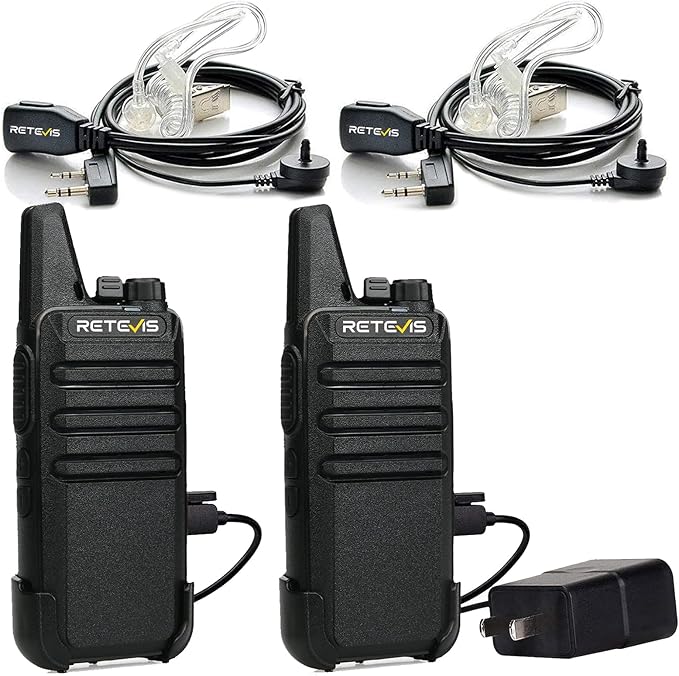 | Retevis RT22 Rechargeable | Check Price |
Our Selected Top 12 Hiking Walkie You Can Trust
This list features reliable and durable hiking walkie-talkies designed for outdoor communication. Each review covers performance, suitability for different users, and highlights the strengths and weaknesses to help you find the right device for your hiking needs.
1. Motorola Solutions Talkabout T605_H2O Two Way Radio
Keeping in touch across long trails or during outdoor adventures requires reliable gear that won’t quit under pressure. Designed for hikers who face wet environments and need a durable communication tool, this walkie’s standout feature is its waterproof build that even floats, so losing it in water isn’t a disaster.
Pairing it is straightforward, and you won’t struggle to find a channel with 22 options plus 121 privacy codes. Charging via USB-C makes topping up simple, and the battery life lasts about 9 hours, which is enough for a full day of hiking.
The water-activated flashlight adds a practical touch for low-light conditions, especially when you’re at a campsite or trailhead after dark.
The radios handle long-range communication well, capable of up to 35 miles in ideal conditions. The IP67 waterproof rating ensures it won’t fail if dropped in a stream or caught in heavy rain.
Reviews praise its rugged design and ease of use, but some note that the dual 12V batteries can be on the bulky side compared to smaller, lighter models.
Users often highlight how its waterproof design and floating ability make it worry-free around water. At the same time, battery bulkiness and life limitations appear frequently as downsides for heavier packers or multi-day adventures.
Ideal for day hikers or anyone needing a sturdy, water-ready radio on shorter trips. Those seeking lighter gear with longer battery life might want to explore other options.
Pros
- Floats face up for easy retrieval
- Water-activated flashlight for dark conditions
- USB-C charging convenience
- Wide channel and privacy code options
Cons
- Dual 12V batteries make it somewhat bulky
- Battery life may limit extended trips
| Specification | Details |
|---|---|
| Number of Channels | 22 |
| Battery Average Life | 9 hours |
| Talking Range Maximum | 35 mile |
| Water Resistance Level | Waterproof (IP67) |
| Connectivity Protocol | FRS |
2. Retevis RT22 Compact FRS Walkie Talkies 4 Pack
Lasting about 10 hours on a charge, these walkie talkies suit families or small groups needing reliable communication over short distances. Their compact size and safety-focused antenna design help with ease of carry and safer handling during outdoor activities.
Setting up is quick since they are ready to use out of the box and license-free. USB-C charging means you can top off the batteries wherever there’s power, making it convenient on extended trips. The separate clip design lets you clip them to your belt and access the walkie-talkie easily without removing the clip, which is handy while on the move.
They deliver clear, loud audio thanks to a built-in 300 mW speaker and squelch function that reduces background noise. The thumb-length antenna reduces hazards common with longer, sharp antennas.
Users often praise the size and ease of carrying, while complaints mostly revolve around the limited two-mile maximum range in dense conditions.
Clear audio and a safer, compact antenna design are standout features praised often, while range limitations show up as the main concern. The Bluetooth-free, license-free operation makes them easy to start using immediately.
Anyone needing short-range communication with easy charging will be satisfied. Groups needing longer range or more rugged clips might look for other options.
Pros
- Compact and lightweight for easy carrying
- Safety-focused short antenna design
- USB-C charging port for convenience
- Clear and loud sound quality
Cons
- Limited 2-mile range under certain conditions
- Belt clip can feel loose for some users
| Specification | Details |
|---|---|
| Talking Range Maximum | 2 mile |
| Battery Average Life | 12 hours |
| Channels | 16 |
| Charging Port | USB-C |
| Water Resistance Level | Water Resistant |
| Frequency Range | FRS |
3. Retevis RT22 Rechargeable Walkie Talkies 2 Pack
Hikers and outdoor adventurers looking for a compact and straightforward way to stay connected will find these walkie talkies useful. Ideal for short-range communication, they stand out for being light and easy to carry without sacrificing sound clarity in noisy environments.
Setup is simple; just charge the built-in 1000mAh battery and pick one of the 16 channels. The VOX function lets you speak hands-free, which is handy when you’re on the move or handling trekking gear. The detachable belt clip keeps it accessible while you walk, and the battery saver mode helps extend talk time during long hikes.
Audio comes through loud and clear, making it easy to hear your partner even outdoors. The water-resistant design handles typical weather conditions well, but the signal only reaches up to 2 miles, which suits most trail needs but limits longer-distance contact.
Most people mention the long battery life as a big plus, while a few find the range could be better.
Strong points include clear audio and all-day battery life, which users appreciate during extended outdoor activities. Commonly noted drawback involves the limited communication range, which can fall short on longer hikes or in challenging terrain.
Those hiking within short distances needing reliable, simple communication will benefit. Anyone requiring longer range or waterproof devices may want to explore other options better suited to more demanding conditions.
Pros
- Compact and lightweight design for easy carrying
- Clear and loud sound quality in outdoor settings
- Long-lasting 1000mAh rechargeable battery
- Hands-free VOX function for convenient use
Cons
- Maximum range limited to 2 miles
- Not fully waterproof, just water resistant
| Specification | Details |
|---|---|
| Number of Channels | 16 |
| Battery Average Life | 12 hours |
| Talking Range Maximum | 2 miles |
| Water Resistance Level | Water Resistant |
| Frequency Range | FRS |
4. IP67 Waterproof FRS Long Range Walkie Talkies
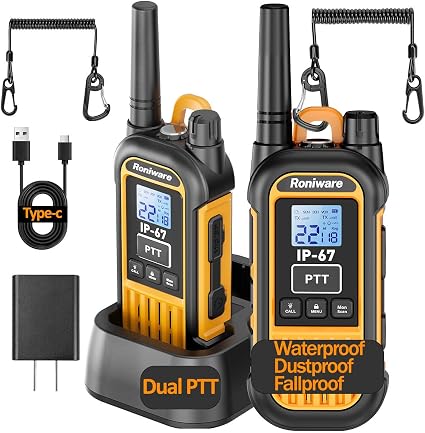
Waterproof and durable, these IP67-rated walkie talkies suit hikers needing reliable communication in tough conditions. Their standout feature is ruggedness combined with a broad frequency range, making them dependable over long distances and in wet weather.
Setup is straightforward with 22 FRS channels accessible right away. Day-to-day use benefits from features like dual PTT buttons for quick channel switching and a built-in flashlight for night hikes.
Weather alerts and NOAA channels add practical safety options, while the USB Type-C charging keeps power management simple.
The audio quality stays clear across most distances, and the sealed casing handles drops, dust, and varying temperatures without a hitch. Many appreciate the long battery life, but some find the size slightly bulky. It delivers as a solid communication tool for outdoor use, backed by a rugged construction that holds up well.
The walkie talkies earn praise for surviving harsh outdoor use with clear audio and reliable waterproofing. Complaints largely focus on the size and the requirement for multiple 9V batteries, which can add weight.
Avid outdoor enthusiasts requiring durable, weatherproof communication will appreciate this model. Those preferring lightweight, compact radios or rechargeable batteries might want to explore other options.
Pros
- Sturdy, sealed design resists drops and dust
- Includes weather alerts with 10 NOAA channels
- Two PTT buttons for easy channel control
- Type-C USB charging simplifies power management
Cons
- Uses four 9V batteries, adding weight
- Some find it bulkier than other models
| Specification | Details |
|---|---|
| Number of Channels | 22 |
| Water Resistance Level | IP67 Waterproof |
| Frequency Range | 462.55 -462.725MHz, 467.5625-467.7125MHz |
| Additional Features | Dual PTT, NOAA, VOX hands-free, Keypad Lock |
| Number of Batteries | 4 9V batteries required (included) |
5. Mountain Radio FRS Long Range Handheld Radio 2 Pack

Mountain Radio FRS Long Range Handheld Radio 2 Pack offers solid communication across backcountry hiking trips. This set is ideal for adventurers valuing long battery life and durable design without needing a license.
Its standout quality lies in delivering strong signal power up to 35 miles in ideal conditions.
Setting it up is straightforward with clear channels to choose from, and the rechargeable lithium-ion battery means charging once in a while is enough for several days out. Mounting the radio feels secure with the metal-reinforced leash and climbing-rated carabiner, which clips easily to gear. The shatterproof LED screen handles rough handling well, making it practical for daily trail use.
Transmitting at the legal maximum 2-watt power allows confident communication up to around 1 to 5 miles in typical backcountry terrain, though claims suggest longer ranges in open areas. It has a water-resistant build and tough outer shell that survives accidental drops without issue. Users often praise its battery life lasting over four days, while a common gripe notes the signal weakens significantly in densely wooded or mountainous terrain.
Strong battery life and durable construction are highlights, with many noting reliable use through several days and rugged outdoor conditions. The most frequent drawback occurs when radio range drops significantly in heavily forested or mountainous areas, limiting communication distance compared to flat open spaces.
Adventurers spending multiple days hiking or climbing will appreciate the long-lasting battery and tough build. Users needing guaranteed communication in dense wilderness might want to consider radios with higher power or different frequencies better suited for obstructed terrain.
Pros
- Long battery life over 4 days
- Maximum legal 2-watt transmit power
- Durable shatterproof LED screen
- Secure carabiner and metal leash attachments
Cons
- Signal range reduced in dense terrain
- Water resistance but not fully waterproof
| Specification | Details |
|---|---|
| Number of Channels | 128 |
| Talking Range Maximum | 35 miles |
| Battery Average Life | 4 days |
| Water Resistance Level | Water Resistant |
| Connectivity Protocol | FRS |
6. Airiton AI-K28 4G LTE Long Range Walkie Talkies 2 Pack

Easy to carry and use during long hikes, these walkie talkies suit hikers needing reliable communication over great distances. The biggest strength lies in their ability to connect across vast areas using cellular networks, offering coverage that traditional radios can’t match.
Setup is straightforward since the SIM card comes pre-installed and ready to use right out of the box. Using the push-to-talk feature works much like any walkie talkie, but instead of being limited by line-of-sight, it operates on a 4G LTE network. Day-to-day use benefits from private and group call options, and the device supports up to 200 channels for flexible communication with your hiking group.
The actual communication quality holds well over long distances, staying connected up to 10,000 miles away, as long as there is cellular coverage. The build is practical but not water-resistant, so care is needed in wet conditions. The strongest praise highlights the lifetime free SIM card service with no hidden fees, while the most common complaint focuses on the lack of water resistance, which limits its use in bad weather.
The strongest benefit is unlimited communication range with a free lifetime SIM, making it reliable far beyond typical radio limits. Users often mention disappointment that the devices are not water-resistant, so they need protection in rain or damp environments.
Those who hike in areas with good cellular coverage and value long-distance communication will appreciate this product. Hikers frequently exposed to weather or without battery access might want to look at more rugged or battery-efficient options instead.
Pros
- Unlimited range via 4G cellular networks
- Lifetime free high-speed data SIM included
- Supports private and encrypted group calls
- Works anywhere with cellular coverage
Cons
- Not water-resistant, avoid wet conditions
- Requires 9V batteries, which may be bulky
| Specification | Details |
|---|---|
| Number of Channels | 200 |
| Talking Range Maximum | 10000 mile |
| Water Resistance Level | Not Water Resistant |
| Number of Batteries | 2 9V batteries required (included) |
| Connectivity Protocol | LTE |
7. Midd Kacy MK108 GMRS Two Way Radios 2 Pack

Great for hikers needing dependable communication, the Midd Kacy MK108 GMRS radios offer strong range and user-friendly features. Ideal for groups in varied terrain, it stands out for its long-range capability and privacy codes that keep chatter clear.
Setting up is straightforward; just match the channel and privacy codes on both radios to start. Switching between 60 channels and 121 privacy codes cuts down on interference from other users.
Dual watch mode lets you keep track of two channels at once. Hands-free VOX is adjustable with 9 sensitivity levels, perfect when your hands are busy on the trail.
Range holds up well with up to 6 miles in open areas, though it drops in cities and suburbs. The radios feel solid, with a rugged housing that survives drops from about 6.6 feet and resists rain and dust. The clearest praise revolves around its extended communication distance.
Common complaints include shorter actual range in urban settings and no submersion waterproofing.
These radios consistently deliver excellent range and clear communication in open spaces, praised for handling interference well with numerous privacy codes. The most frequent drawback is the reduced range in urban settings and the inability to be submerged despite the waterproof rating.
Reliable for hikers and outdoor groups needing stable communication over several miles in nature, it suits those who favor rugged gear. Anyone requiring deep water resistance or guaranteed signal in dense city environments might want to consider alternatives.
Pros
- Up to 6-mile range in open areas
- 121 privacy codes reduce unwanted chatter
- Rugged build withstands 2 m drops
- Hands-free VOX with 9 sensitivity levels
Cons
- Range drops significantly in city environments
- Not submersible despite being waterproof rated
| Specification | Details |
|---|---|
| Number of Channels | 60 |
| Water Resistance Level | Waterproof (IP55) |
| Talking Range Maximum | 6 mile |
| Voltage | 3.7 volts_of_direct_current |
| Additional Features | Dual Watch, VOX, Weather Alert |
8. Midland GXT1000VP4 GMRS Two-Way Radios 2 Pack

Rugged and water resistant, these Midland GMRS two-way radios are built to keep you connected in outdoor adventures like camping, hiking, or skiing. They suit adults looking for a long-range communicator with safety features like weather alerts, making group coordination easy even when cell signals fade.
Easy to set up right out of the box with rechargeable battery packs and a desktop charger included. Day-to-day use benefits from the 50 channels and 142 privacy codes that filter interference, letting you stay clearly connected.
Hands-free voice activation allows talk without holding the unit, while dual-power mode lets you switch to AA batteries in a pinch.
Conversation clarity stands out even at distances reportedly up to 36 miles in ideal conditions. Their solid build includes weather resistance to handle rain or snow on the trail.
Praised for early NOAA weather alerts, one notable drawback is the relatively short 10-hour battery life before needing a recharge or fresh batteries.
Users appreciate the dependable long-range communication and timely NOAA weather alerts that help stay ahead of storms. The main complaint centers on the battery life, which can feel limited for extended trips without easy access to power.
Those spending a day or weekend outdoors where weather updates matter will find these radios reliable. People needing longer battery endurance or a smaller, lighter radio may want to explore other options.
Pros
- Long 36-mile maximum talking range
- Includes rechargeable batteries and charger
- Built-in NOAA weather alerts
- Hands-free voice activation
Cons
- Battery life lasts about 10 hours per charge
- Requires 8 AA batteries when not charging
| Specification | Details |
|---|---|
| Number of Channels | 50 |
| Talking Range Maximum | 36 mile |
| Water Resistance Level | Water Resistant |
| Battery Average Life | 10 hours |
| Batteries Included | 8 AA batteries required (included) |
9. Rechargeable UHF Two-Way Radios with Earpieces 2 Pack

Compact and reliable, these rechargeable UHF two-way radios fit well for hikers needing dependable communication over moderate distances. Its standout feature is a long-lasting 96-hour battery life, which keeps you connected on extended treks without constant recharging.
Setup is straightforward with 16 preset channels accessible via a simple knob, letting you switch frequencies easily during your hike. The included earpieces and VOX voice control mean you can stay hands-free while moving.
Additional gear like belt clips and hand straps make carrying the device much easier. The radios also feature a night flashlight and low battery alarm, handy for early starts or late finishes on the trail.
Designed to handle the outdoors, these radios provide clear transmission up to 2 miles in unobstructed areas, suitable for most hiking groups. The water-resistant build stands up against weather challenges, though the range may shorten in dense woods or hilly terrain. The most appreciated part is the solid battery life, while some note the water resistance does not make them fully waterproof in heavy rain.
Users find the 96-hour battery life exceptionally useful for extended hikes without needing a charge. Common feedback points to the water resistance as helpful but sometimes insufficient in heavy or prolonged rain exposure.
Those hiking in moderately open terrains and needing durable, clear voice communication will appreciate these radios. For adventurers requiring longer range or full waterproof protection, alternative models may offer better suitability.
Pros
- Long-lasting battery with 96-hour average life
- Includes earpieces for discreet communication
- Low battery alarm and night flashlight included
- Water resistant for outdoor use
Cons
- Range limited to 2 miles in ideal conditions
- Not fully waterproof in heavy rain
| Specification | Details |
|---|---|
| Number of Channels | 16 |
| Frequency Range | UHF |
| Talking Range Maximum | 2 mile |
| Battery Average Life | 96 hours |
| Water Resistance Level | Water Resistant |
10. Retevis RB48 FRS Long Range Two Way Radio

Retevis RB48 FRS Long Range Two Way Radio is ideal for hikers who need reliable communication in tough outdoor conditions. Its biggest strength lies in military-grade durability that can withstand harsh environments and rough handling without failing.
Setting it up is straightforward, with 22 channels to choose from and dual push-to-talk buttons for easy use, even when wearing gloves. The rechargeable 2000mAh battery provides up to 20 hours of talk time, and USB-C charging offers flexibility.
You don’t need a license to operate it, which is great for casual or serious use on trails.
The walkie-talkie maintains clear transmission up to two miles, making it dependable for communication during hikes. It has passed numerous drop tests and is waterproof with an IP67 rating, so it keeps working even in dusty or wet conditions.
Some users have mentioned the device is a bit bulkier than cheaper models, which could bother those wanting a lightweight option.
Strong points include its ability to endure drops and water exposure without compromising communication quality. The most frequent downside is the weight and size, which some find less convenient for extended carries.
Anyone needing rugged, long-lasting walkie talkies for serious outdoor use will appreciate this model. Those prioritizing compactness or looking for a longer range might prefer exploring other options.
Pros
- Military-grade durability for harsh conditions
- Up to 20 hours of battery life
- Easily operated with gloves on
- IP67 waterproof and dustproof rating
Cons
- Heavier and bulkier than some competitors
- Maximum range limited to 2 miles
| Specification | Details |
|---|---|
| Number of Channels | 22 |
| Talking Range Maximum | 2 miles |
| Battery Average Life | 18 hours |
| Water Resistance Level | Waterproof (IP67) |
| Frequency Range | FRS |
| Voltage | 3.7 volts_of_alternating_current |
11. MOICO 22 Channel FRS Two-Way Radios

Keeping in touch during hikes without phone signal is a key concern for many adventurers. Designed for outdoor use, these walkie talkies stand out for their extensive channel and privacy code options, making them suitable for groups needing clear communication in busy or remote areas.
Setting up involves simply inserting four AAA batteries, and then you’re ready to go with 22 FRS channels plus 99 CTCSS tones to filter out background chatter. The VOX hands-free function lets you chat without pressing buttons, which is handy when your hands are full or cold.
A lightweight design keeps it comfortable for all-day carry on any trail.
The radios deliver reliable transmission up to three miles, good for most hiking scenarios. The water-resistant and shockproof features offer solid durability against elements and accidental drops.
A bright digital display and keypad lock prevent accidental changes. People say the clear reception impresses them most, while some mention battery life could be longer for extended trips.
Clear and private communication is a strong point, thanks to 2178 tone-code combinations. The most common drawback is that the battery life limits continuous use on longer trips without spares. Handling and setup remain straightforward for users.
People who want reliable, long-range communication within moderate distances will find these effective. Those needing extended battery life or deeper waterproofing for wet conditions might look elsewhere.
Pros
- Lots of privacy codes to reduce interference
- VOX hands-free operation with adjustable sensitivity
- Lightweight and comfortable to carry on hikes
- Digital display with keypad lock for secure use
Cons
- Batteries need replacing after about 12 hours of use
- Three-mile range may fall short in very rugged terrain
| Specification | Details |
|---|---|
| Number of Channels | 22 |
| Battery Average Life | 12 hours |
| Talking Range Maximum | 3 miles |
| Water Resistance Level | Water Resistant |
| Frequency Range | 462.5500-462.7250MHz, 462.5625-462.7125MHz, 467.5625-467.7125MHz |
12. Motorola Solutions Talkabout T475 Extreme Two-Way Radio

Offering up to 35 miles of maximum talking range, these two-way radios suit hikers needing reliable communication in remote areas. The wide selection of 22 channels and 121 privacy codes makes it simple to find a clear channel during busy outings. Its ability to operate without a license adds to its convenience.
Pairing the radios is straightforward, so getting started doesn’t take long. The built-in flashlight comes in handy around camp or at dusk.
Running on two AA batteries or the rechargeable NiMH battery that lasts up to 12 hours keeps you connected through long days. Weatherproof design means it can take some rain without issue. NOAA weather alerts are useful for staying informed on the go.
Clear audio covers long distances well, while the dual-band functionality helps find a signal in tricky areas. The solid construction feels tough enough for outdoor use, and the IPx4 water resistance protects it from splashes during wet weather.
Most people highlight the ease of use, but some find the battery life shorter than expected with heavy radio use.
Many users appreciate how easy the two-way radios are to use and how well they perform across long distances, even in varying weather. The most frequent downside mentioned is that the battery doesn’t last very long during extended conversations or constant use.
Those heading out on longer hikes or group trips in areas without cellphone coverage will find these radios a solid choice for staying in touch. People needing waterproof devices for rugged water activities should consider models with higher water resistance ratings.
Pros
- Long talking range up to 35 miles
- Built-in flashlight for low light situations
- Wide choice of 2,662 channel/privacy combinations
- Weatherproof with IPx4 rating
Cons
- Battery life decreases with heavy use
- Water resistance not suitable for submersion
| Specification | Details |
|---|---|
| Talking Range Maximum | 35 miles |
| Number of Channels | 22 |
| Battery Life | up to 12 hours (NiMH 800 mAH included) |
| Water Resistance Level | Water Resistant IPx4 |
| Frequency Range | 462-467 MHz |
| Number of Batteries | 2 AA batteries required (included) |
Comparison of Best Hiking Walkie Talkies
| Product | Talking Range | Water Resistance | Channels | Battery Type |
|---|---|---|---|---|
| Motorola Talkabout T605 | 35 mile | Waterproof | 22 | 2 12V batteries included |
| Retevis RT22 4-Pack | 2 mile | Water Resistant | 16 | Rechargable (3.7 volts) |
| Retevis RT22 Rechargeable | 2 miles | Water Resistant | 16 | Rechargable (3.7 volts) |
| IP67 Waterproof Long Range | – | Waterproof | 22 | 4 9V batteries included |
| Mountain Radio 2-Pack | 35 miles | Water Resistant | 128 | – |
| Airiton AI-K28 LTE | 10000 mile | Not Water Resistant | 200 | 2 9V batteries included |
| Midd Kacy MK108 | – | – | 60 | – |
| Midland GXT1000VP4 | 36 mile | Water Resistant | 50 | 8 AA batteries |
| Rechargeable UHF Radios | 2 mile | Water Resistant | 16 | 2 Lithium Ion included |
| Retevis RB48 Long Range | 2 miles | Waterproof | 22 | 3.7 volts (AC) |
| MOICO 22 Channel FRS | 3 miles | Water Resistant | 22 | 1.5 volts |
| Motorola Talkabout T475 | 35 miles | Water Resistant | 22 | 2 AA batteries included |
- Talking Range35 mile
- Water ResistanceWaterproof
- Channels22
- Battery Type2 12V batteries included
- Talking Range2 mile
- Water ResistanceWater Resistant
- Channels16
- Battery TypeRechargable (3.7 volts)
- Talking Range2 miles
- Water ResistanceWater Resistant
- Channels16
- Battery TypeRechargable (3.7 volts)
- Talking Range–
- Water ResistanceWaterproof
- Channels22
- Battery Type4 9V batteries included
- Talking Range35 miles
- Water ResistanceWater Resistant
- Channels128
- Battery Type–
- Talking Range10000 mile
- Water ResistanceNot Water Resistant
- Channels200
- Battery Type2 9V batteries included
- Talking Range–
- Water Resistance–
- Channels60
- Battery Type–
- Talking Range36 mile
- Water ResistanceWater Resistant
- Channels50
- Battery Type8 AA batteries
- Talking Range2 mile
- Water ResistanceWater Resistant
- Channels16
- Battery Type2 Lithium Ion included
- Talking Range2 miles
- Water ResistanceWaterproof
- Channels22
- Battery Type3.7 volts (AC)
- Talking Range3 miles
- Water ResistanceWater Resistant
- Channels22
- Battery Type1.5 volts
- Talking Range35 miles
- Water ResistanceWater Resistant
- Channels22
- Battery Type2 AA batteries included
How to Choose the Right Hiking Walkie Talkie
Choosing a good hiking walkie talkie depends on range, battery life, and durability to ensure reliable communication in the outdoors. Selecting the right features helps avoid frustration and extra costs from replacements or failures during critical moments on the trail.
Range and Signal Strength
Most radios lose significant range in dense forests or hilly areas, sometimes dropping communication just a few hundred meters apart. Open fields can allow signals to travel more than a couple of miles, but the real challenge is maintaining a consistent connection when trees or buildings block the path.
Radios with higher power output (around 2 watts or more) and external antennas keep conversations clearer over longer distances, especially through obstacles. Signal clarity deteriorates quickly if the device can’t handle interference, which gets frustrating on trails that wind through valleys or crowded campsites. Look for models that specify effective range in wooded or urban settings rather than just ideal, line-of-sight distances.
Consistent clarity requires radios with good noise reduction and strong transmitter power.
Battery Life and Power Options
Battery life often causes unexpected problems on trips lasting a full day or more. Radios that run only a few hours per charge will need frequent recharging or new batteries, which is a hassle in remote spots. Devices that support both rechargeable packs and disposable AA or AAA batteries add flexibility; you can swap cells if recharging isn’t available.
Battery capacity around 1500 mAh or more usually provides 8 to 12 hours of talk and standby, depending on usage. Power-saving modes that reduce output during idle times extend this further.
Low battery warning indicators help avoid sudden shutdowns without notice. Avoid radios with short standby times, as constantly turning the unit off and on can be distracting.
Durability and Weather Resistance
Radios with poor water or impact resistance rarely last long outside, especially when exposed to rain, dust, or accidental drops on rocky trails. Look for models rated at least IP54 or higher, which means protection against dust ingress and splashes of water. Build materials like sturdy ABS or reinforced polycarbonate resist cracks and handle knocks better than cheap plastic casings.
Some radios also feature rubberized exteriors for shock absorption. Devices lacking these features often develop faults from minor bumps or get damaged by unexpected downpours.
Durable units feel solid and don’t flex easily, giving confidence in rough outdoor conditions. Proper sealing around buttons and speaker grills prevents dirt and moisture from harming internal components.
Ease of Use and Interface
Complicated controls become frustrating when wearing gloves or moving quickly on uneven ground. Radios with large, well-labeled buttons and intuitive layouts simplify channel switching and volume adjustment without fiddling. Screens with adjustable backlighting also improve visibility under bright sunlight or at dusk.
Small displays focused on essential info avoid clutter and help users glance at channels and signal strength quickly. Handsfree options like VOX (voice-activated transmission) free up hands for climbing or carrying gear, making communication smoother and safer.
Radios that require multiple steps to change frequencies or activate features add unnecessary hassle during hikes where speed and convenience matter.
Weight and Portability
Carrying a bulky, heavy radio on a long trek adds fatigue and takes up space in your pack or on your belt. Radios weighing around 150 grams or less balance durability and portability nicely.
Compact designs fit comfortably in jacket pockets or attach easily to straps using sturdy clips or included lanyards. Having options to secure the device without holding it reduces the chance of dropping it during active movement. Smaller units shouldn’t compromise on key functions like channel access or speaker volume.
Radios that combine light weight with a firm grip and reliable attachment points make practical companions on the trail.
Maximizing Range and Signal Clarity on Hiking Walkies
Range and signal clarity depend heavily on terrain and environmental conditions during hikes. Open areas like fields or ridges typically allow better communication distances, while dense forests or valleys reduce signal strength.
Choosing walkies with adjustable power settings can help balance battery use and range. Models operating on UHF frequencies usually perform better in wooded areas as they penetrate obstacles more effectively. Antenna quality also plays a key role; longer, flexible antennas tend to pick up and transmit signals more clearly compared to short or stubby ones.
To maximize performance, consider these factors:
- Use high-capacity batteries or rechargeable packs to avoid power loss affecting signal strength.
- Keep the antenna in a vertical position during use for better reception.
- Test the devices on your intended trails to understand effective range in specific environments.
Adjusting these elements can lead to more reliable communication, which is essential when hiking in groups across varying topographies.
Essential Care and Maintenance Tips for Prolonged Walkie Lifespan
Proper care extends walkie talkies’ operational life and maintains consistent performance in outdoor conditions. After each trip, wipe down the units to remove dirt, sweat, and moisture that could cause corrosion or button malfunctions. Avoid submerging walkies unless they are specifically rated waterproof.
Storing them in a dry container and charging batteries regularly prevents degradation and unexpected shutdowns.
Routine maintenance steps include:
- Checking battery contacts for corrosion and cleaning with a dry cloth if needed.
- Inspecting antennas for cracks or bends that could affect signal quality.
- Keeping firmware updated if the model supports software upgrades.
Consistent upkeep reduces the risk of failures at crucial moments and ensures dependable communication during extended hikes.
Comparing Walkies to Alternative Communication Devices for Outdoor Adventures
Walkie talkies offer direct, instant communication without relying on cellular networks, which is useful in remote hiking areas with limited or no service. Compared to mobile phones, they provide longer battery life under continuous use and don’t incur additional fees. Satellite messengers provide a reliable alternative for emergencies but usually require a subscription and lack the immediacy of push-to-talk communication.
Consider the following when weighing options:
- Walkies allow group communication without dialing or data plans but have limited range.
- Mobile apps can work in areas with cell service but drain battery faster and depend on network coverage.
- Satellite devices excel in emergencies over any terrain but are generally more expensive and less convenient for casual chat.
The choice depends on your hiking environment, group size, and communication needs during the trip.
People Also Asked
How Do I Properly Care for a Hiking Walkie?
Keep a hiking walkie dry and clean, especially the battery contacts. Store it in a padded case to avoid damage during outdoor use. Wipe off dirt and moisture before charging or storing to prevent corrosion.
What Size Walkie Talkie Battery Lasts the Longest on Hikes?
Large AA batteries usually last longer than smaller rechargeable ones on hikes. Carry spare batteries in a sealed plastic bag to keep them dry and ready for replacement on long trips.
Are Hiking Walkie Talkies Compatible with Other Radio Brands?
Many hiking walkie talkies operate on standard frequencies, allowing communication with other brands if they share the same channel and privacy code. Double-check frequency compatibility before pairing devices from different brands.
What Safety Features Should I Look for in a Hiking Walkie?
Good safety features include an emergency alert button and weather alerts. A built-in flashlight or SOS signal can also be handy in low light or urgent situations.
Why Is My Hiking Walkie Not Transmitting Properly on Trails?
Poor transmission is often caused by obstacles like mountains or dense forests blocking signals. Change your position on the trail or move yourself to get a better line of sight with other units.
Conclusion
Range, battery life, and durability are the key points when choosing a hiking walkie. You want something that can cover the distances you plan to hike, hold a charge through long trips, and stand up to rough outdoor conditions.
Clear audio and simple controls also make a difference on the trail.
Pick a walkie that fits your usual hiking group size and how often you’ll use it. Spending more won’t be worth it if you only hike a few times a year.
Check the comparison table and reviews above to find the model that matches your needs and budget.