
Top 12 Best Long Range Shooting Scope That Will Shock You!
Struggling with a cheap scope that fogs up or shifts zero after a few shots is a common frustration for anyone who needs the best long range shooting scope. Using a low-quality optic can mean missing critical shots because the image isn’t clear or adjustments aren’t precise enough.
It’s a situation familiar to many, where the scope’s reticle might blur in cold weather or the magnification isn’t strong enough to see distant targets clearly.
Good long range scopes usually stand out by the quality of their glass, offering clear and bright images even at 10x magnification or more. The tube diameter, often 30 to 34 mm, affects how much light enters, impacting clarity in low light conditions. Reliable adjustment turrets that click crisply and hold zero, along with durable waterproof and fogproof construction, make a practical difference for consistent, accurate shooting over long distances.
Need a Quick Check?
| Image | Product | Price |
|---|---|---|
Our Top Picks 1  | Arken EP5 GEN2 | Check Price |
Our Top Picks 2  | DiscoveryOpt XED 6-36 | Check Price |
Our Top Picks 3  | KT12 60×60 Scope | Check Price |
Our Selected Top 12 Long Range Shooting Scope for Different Needs
This list features twelve long range shooting scopes selected for various needs and skill levels. Each review covers performance details, suitability for different users, and highlights strengths and weaknesses to help readers choose the right option for their shooting preferences.
1. Arken Optics EP5 GEN2 7-35×56 FFP Rifle Scope
Arken Optics EP5 GEN2 7-35×56 FFP Rifle Scope stands out for its clear and sharp optics, ideal for shooters who need detailed views at long ranges. Its adjustable magnification up to 35x makes it well-suited for precision target work, especially in low light conditions thanks to the large objective lens.
Setting up on a Picatinny or Weaver mount is straightforward, and the tactile adjustment turrets make zeroing in easy and reliable day after day. The scope’s Multi-Coated ED Japanese Glass keeps images bright with minimal color distortion, which helps when tracking targets at variable distances between 7x and 35x magnification. The first focal plane reticle stays precise through all zoom levels.
Performance-wise, the shooter’s ability to make repeatable, precise adjustments stands out and supports accurate shooting at long distances. The build feels solid and well-constructed, supporting steady use in the field.
The most frequent note about it is how clear and vivid the image remains even at high magnifications, though some mention the size and weight might be on the heavier side for extended carry.
The scope delivers outstanding optical clarity and color accuracy, praised for precise repeatable adjustments that help accuracy at long distances. On the downside, bulk and weight are the most common complaints, suggesting it’s a better fit for range shooting versus fast-moving situations.
This scope suits shooters focused on long-range precision who tolerate a heavier setup for clear visuals. Those seeking a compact, lightweight option for quick handling might want to explore alternatives better optimized for mobility.
Pros
- Exceptional clarity with Multi-Coated ED Japanese Glass
- Precise, tactile adjustment turrets
- Large 56mm objective for low light performance
- First focal plane reticle stays consistent across magnification
Cons
- Heavier and larger, less suited for lightweight setups
- May feel bulky for carry in tight or fast scenarios
| Specification | Details |
|---|---|
| Magnification Minimum | 7 x |
| Magnification Maximum | 35 x |
| Objective Lens Diameter | 5.6 centimeters |
| Reticle Type | VPR |
| Mounting Type | Picatinny/Weaver Mount |
2. DISCOVERYOPT XED 6-36x56mm PRS FFP Rifle Scope
Feeling confident in long-range shooting gets easier with clear optics that don’t let you down. Suited for those who need sharp detail at varying distances, this scope shines brightest because of its strong magnification range and clear glass.
It’s especially handy when accuracy matters over long shots.
Mounting it on a Picatinny rail is straightforward, and dialing in your zero feels smooth thanks to the upgraded Zero Stop feature. You can quickly return to your preset zero without fumbling through settings. The 35mm tube design means there’s plenty of room for extensive elevation adjustments, making fine-tuning less of a chore in the field.
The image clarity benefits from premium Japanese ED glass, cutting down on color fringing and delivering clean visuals at high power. 36x magnification lets you see targets clearly far away.
The scope is solidly built, focusing on precise, repeatable adjustments. Most praise the optical clarity, while some note the size and weight can feel a bit bulky for lightweight setups.
Optical clarity receives the highest praise, thanks to the ED glass and reduced chromatic aberration that gives sharp, color-accurate images at high magnifications. The most frequent complaint is about the scope’s bulkiness, which can feel heavy or off-balance on lighter rifles.
Precision shooters who prioritize clear imaging and need a wide range of elevation adjustments will find this scope reliable. Those looking for a lighter, more compact option for quick maneuvering might want to explore smaller scopes instead.
Pros
- Clear optics with premium Japanese ED glass
- Upgraded Zero Stop for quick zero return
- Large 120 MOA elevation adjustment range
- First Focal Plane reticle for accurate holdovers
Cons
- Slightly bulky for lightweight rifle builds
- Size may affect balance for some users
| Specification | Details |
|---|---|
| Magnification Maximum | 36 x |
| Objective Lens Diameter | 5.6 centimeters |
| Magnification Minimum | 6 x |
| Mounting Type | Picatinny Mount |
| Reticle Type | First Focal Plane |
3. KT12-60X60SAL 60×60 Long Range Rifle Scope
A high-magnification rifle scope designed for serious long-range shooters looking for clear, precise targeting at extended distances. Its standout feature is the wide 12-60x zoom paired with a large 60mm objective lens, making it ideal for those who prioritize sharp images and detailed adjustments.
Setting up involves mounting the scope on a Picatinny rail, where the 35mm tube size fits snugly. The side parallax adjustment lets you fine-tune focus between 30 yards and infinity, which helps with sharp target acquisition. The illuminated reticle with red and green options and multiple brightness levels adapts well to changing light conditions, making it functional during dawn or dusk shooting sessions.
Performance-wise, the scope offers crystal-clear images thanks to its large objective lens and high magnification range. The glass-etched MIL reticle stands up well to regular use without fading.
Most appreciate the crisp clarity and adjustable illumination, although some mention the eye relief at 10.9 centimeters requires attention to avoid discomfort. The build quality feels solid and durable, making it well-suited for consistent outdoor use.
Many praise the sharp clarity and flexible reticle illumination, making targeting at various distances easier. The main drawback mentioned involves eye relief, which some find tight and uncomfortable with certain shooting setups. Adjusting positioning solves this but demands attention.
Shooters who need a powerful, bright scope with fine parallax control will appreciate its features. Those prioritizing an ultra-wide field of view or longer eye relief might want to consider alternatives better tuned for those preferences.
Pros
- Outstanding zoom range from 12x to 60x
- Large 60mm objective lens for bright images
- Side parallax adjustment for precise focus
- Dual-color illuminated MIL reticle
Cons
- Eye relief may cause discomfort during prolonged use
- Relatively narrow field of view at 8.38 feet
| Specification | Details |
|---|---|
| Magnification Minimum | 12 x |
| Magnification Maximum | 60 x |
| Objective Lens Diameter | 6 centimeters |
| Reticle Type | MIL |
| Eye Relief | 10.9 centimeters |
| Mounting Type | Picatinny Mount |
4. DISCOVERYOPT HD 5-30×56 GEN2 PRS FFP Rifle Scope

Crafted around a sturdy 34mm main tube, this rifle scope suits shooters looking for long-range precision with a broad adjustment range. Its standout feature lies in the precision zero stop turrets that help maintain your original settings after dialing in for windage and elevation.
Setting it up on a Picatinny mount works smoothly, and the 5-30x magnification range covers most long-distance shooting needs. The first focal plane Mrad reticle stays accurate across zoom levels, making holdovers and wind calls straightforward. Adjusting with 0.1 MRAD clicks feels responsive and precise, while the fully multi-coated optics offer clear views during hunts or target practice at various lighting conditions.
The scope delivers sharp and bright images with excellent light transmission, crucial for spotting targets at distance. Solid construction provides durability without adding unnecessary bulk.
Many appreciate the repeatable zero stop function, yet a few find the field of view at 25 feet slightly narrow for fast target acquisition. It handles long-range tasks with confidence but requires some getting used to the zoom and FOV.
The precision zero stop turrets stand out by allowing instant returns to zero after adjustments, which users find very useful in the field. Some feel the 25 feet field of view narrows focus at maximum zoom, making quick target acquisition more challenging. Excellent optical clarity brightens distant images consistently.
Ideal for shooters prioritizing exact long-range corrections and clarity in varied lighting. Not recommended for those needing a wide field of view or unfamiliar with adjusting first focal plane reticles smoothly. Works well for rifle applications demanding fine elevation and windage control.
Pros
- Wide 5-30x magnification for versatile shots
- Zero Stop turrets ensure quick return to zero
- Fully multi-coated optics improve light transmission
- The 34mm tube provides plenty of adjustment travel.
Cons
- Field of view can feel tight at higher magnification
- Requires practice to get used to focal plane reticle
| Specification | Details |
|---|---|
| Magnification Maximum | 30 x |
| Objective Lens Diameter | 5.6 centimeters |
| Magnification Minimum | 5 x |
| Mounting Type | Picatinny Mount |
| Field Of View | 25 feet |
| Reticle Type | Mrad Ffp (first Focal Plane) |
5. Vortex Venom First Focal Plane Rifle Scope

Impressive zoom range and exceptional clarity stand out on the Vortex Venom First Focal Plane Rifle Scope, ideal for long-range shooting and competition. Its 5-25x magnification built into a 34mm tube offers plenty of turret travel, making it well-suited for precise adjustments at varying distances.
Setting up involves mounting with a cantilever mount that keeps the scope secure and stable on your rifle. The side knob parallax adjustment is handy, letting you tweak parallax quickly without breaking your shooting position, featuring clearly marked range numbers. Eye relief measures 9.1 centimeters, which is comfortable for extended shooting sessions.
The scope delivers sharp images edge to edge with minimal chromatic aberration, thanks to its XD Optical System and fully multi-coated lenses, providing excellent performance. It handles low-light environments well, important for dawn or dusk shoots. The build quality feels solid, with a practical RevStop Zero System that makes returning to zero easy and reliable.
Some note the large size can add weight and bulk in the field.
Sharp, bright optics with excellent low-light performance is the strongest compliment, while the main drawback involves the size and weight adding noticeable bulk to the setup. The RevStop Zero System makes precise zeroing straightforward and repeatable without fuss.
Shooters who need powerful magnification and high precision will appreciate this scope. Those prioritizing a lightweight, compact optic might prefer a smaller model over the Vortex Venom for easier carry and handling.
Pros
- Wide 5-25x magnification range
- Clear optics with reduced chromatic aberration
- Easy, fast zero return with RevStop system
- Side parallax knob with visible range numbers
Cons
- Relatively large and bulky for some setups
- Weight may affect balance on lighter rifles
| Specification | Details |
|---|---|
| Magnification Minimum | 5 x |
| Magnification Maximum | 25 x |
| Objective Lens Diameter | 5.6 centimeters |
| Eye Relief | 9.1 centimeters |
| Reticle Type | EBR-7C |
| Mounting Type | Cantilever Mount |
6. CVLIFE EagleBlaze 5-25×56 FFP Rifle Scope

Long-range shooting demands clarity and precision, and the CVLIFE EagleBlaze 5-25×56 FFP Rifle Scope delivers just that. It suits shooters who need sharp visuals and reliable holdovers at various zoom levels, making it solid for long-distance hunting or competition.
The standout feature is its fully multi-coated Japanese ED glass, which ensures clear images even at high magnifications.
Mounting it on a Picatinny rail felt secure from the start. The scope’s magnification range from 5x to 25x covers most long-range scenarios, while the first focal plane illuminated Christmas-tree reticle helps with fast target acquisition, especially in low-light conditions.
Adjustments using the zero-stop and locking turrets are straightforward, and the crisp clicks make zeroing in feel precise and reassuring.
Performance-wise, it holds zero well thanks to the locking turrets, maintaining shot consistency without drifting after recoil. The build supports clear target visibility with 98% light transmittance, and the image stays sharp with no edge distortion across all zoom levels. A common complaint is that the objective lens diameter at 34 millimeters might limit light gathering compared to scopes with larger lenses.
The scope is praised for maintaining precise zero and delivering sharp images without edge distortion throughout its zoom range. Some users find the smaller objective lens reduces brightness in low-light scenarios, which can be a drawback during dawn or dusk shooting. The locking turrets provide reliable shot placement but take some getting used to due to stiffness.
Those wanting precise holdovers and reliable accuracy at different distances will value the illuminated reticle and sturdy turret system. Shooters prioritizing maximum light transmission might prefer scopes with larger objective lenses for better low-light performance. It fits well for long-range hunting but may not satisfy needs for extreme low-light visibility.
Pros
- Crystal clarity with fully multi-coated ED glass
- First focal plane reticle with 6-level red illumination
- Zero-stop and locking turrets prevent zero shift
- Wide magnification range from 5x to 25x
Cons
- 34mm objective limits light gathering in dim conditions
- Turret adjustments may feel stiff to some users
| Specification | Details |
|---|---|
| Magnification Maximum | 25 x |
| Magnification Minimum | 5 x |
| Objective Lens Diameter | 34 millimeters |
| Reticle Type | Christmas-tree |
| Mounting Type | Picatinny Mount |
| Field Of View | 26.2 feet |
7. Arken Optics SH4J GEN2 6-24×50 FFP Rifle Scope
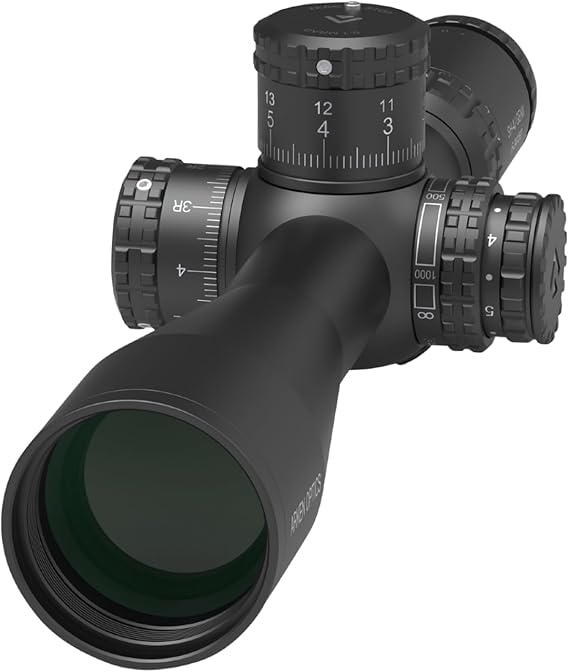
Long-range shooting demands clarity and precision, especially when lighting conditions change. Ideal for shooters wanting solid performance without breaking the bank, this scope’s biggest strength lies in its sharp imaging and dependable zero-stop feature.
Setting up involves mounting it on a standard rail and adjusting parallax with the side knob, which keeps range numbers visible while staying in shooting position. The zoom range from 6 to 24 times means you get versatile magnification, and the lenses remain clear thanks to full multi-coatings that help even when light dims.
Its main job of keeping clear and accurate sighting at distances is well done, aided by quality Japanese ELD glass. The rugged zero-stop system ensures you can quickly return to your original setting without fuss. Among the feedback, many praise the image clarity and easy parallax adjustment.
Some users find the weight a bit noticeable during long sessions.
Sharp glass paired with effective light transmission makes sighting distant targets precise. The parallax adjustment is convenient when quickly changing ranges. The zero stop gets high marks for reliability but can seem somewhat basic compared to more complex systems.
Anyone after excellent image quality and straightforward handling will appreciate this scope. Those focused on the absolute lightest setup or advanced zeroing features might want to explore other options better tailored to those preferences.
Pros
- Superb clarity with Japanese ELD glass
- Simple and reliable zero stop mechanism
- Side parallax knob with visible range numbers
- Wide 6-24x magnification range
Cons
- Heavier than some scopes in its class
- Zero stop might feel basic to advanced users
| Specification | Details |
|---|---|
| Magnification Maximum | 24 x |
| Objective Lens Diameter | 50 millimeters |
| Magnification Minimum | 6 x |
| Reticle Type | VPR |
| Field Of View | 20.88 feet |
| Mounting Type | Rail Mount |
8. BURRIS Eliminator 6 4-20×52 Rifle Scope

Ranging reflective targets out to 2,000 yards makes this scope a strong choice for anyone serious about long-range shooting. Its built-in rangefinder combined with a heads-up display means you get quick aiming solutions without taking your eyes off the target.
Ideal for shooters who want precise data instantly.
Setup is straightforward, with the BurrisConnect app making a big difference in day-to-day use. You can upload custom ballistic profiles, adjust advanced features, and turn HUD zones on or off to suit your needs.
The included Bluetooth remote adds convenience, so you can control settings without breaking your shooting position.
Its performance shines with clear magnification from 4x up to 20x and a 52mm objective lens offering ample light for distant targets. The build quality is solid, ensuring reliability in different conditions. A frequent compliment is the accuracy provided by the integrated rangefinder, while some find the heads-up display cluttered or distracting at times.
The built-in rangefinder and ballistics integration receive strong praise for speeding up target acquisition. Some people find the heads-up display busy and say it takes time to get used to, especially when switching between different data zones.
Shooters wanting quick, accurate ranging and customizable data will appreciate the technology packed inside. Those preferring a simpler visual experience might look for scopes with less on-screen information.
Pros
- Built-in rangefinder effective up to 2,000 yards
- Heads-up display customizable via app
- Bluetooth app connection for easy adjustments
- Integral, dovetail, and Weaver mounting options
Cons
- Heads-up display can appear cluttered
- Advanced features require app for full use
| Specification | Details |
|---|---|
| Magnification Minimum | 4 x |
| Magnification Maximum | 20 |
| Objective Lens Diameter | 5.2 centimeters |
| Field Of View | 30.5 feet |
| Reticle Type | X177 |
9. Monstrum Hornet 6-24×50 FFP Rifle Scope

Long-range shooters looking for a versatile scope that adapts well to different distances will appreciate this one. Best for people who want clear magnification and reliable reticle illumination, it stands out for its smooth adjustments and accurate holdover capabilities.
Setting up involves attaching the integrated throw lever, which makes switching from 6x to 24x magnification quick and steady. The first focal plane X-Tree reticle is designed for faster range estimation, aided by six levels of brightness.
Adjusting windage and elevation is precise, thanks to 1/8 MOA clicks and an easy zero stop on the elevation turret that keeps your zero setting locked in place.
It performs solidly for long-range shots, holding zero reliably and offering good clarity across the zoom range. Built to last with a decent weight of 1.42 kg, the scope feels sturdy on the rifle.
The main compliment is about the smoothness of adjustments; the primary gripe revolves around the weight, which some find a bit on the heavier side for extended carry.
The smooth adjustment of magnification and the reliable zero stop feature receive strong praise for usability and consistency during shooting. Common feedback points to its heavier weight, which can make carrying or mounting less comfortable for some users over long periods.
Shooters who want precise windage and elevation control with quick magnification changes will be pleased. Those prioritizing lightweight gear or simpler illumination controls might consider different models tailored to those needs.
Pros
- Smooth magnification with integrated throw lever
- Accurate holdover with X-Tree FFP MOA reticle
- Reliable zero stop on elevation turret
- Six illumination levels for reticle
Cons
- Heavier weight may affect long sessions
- Some may find illumination brightness adjustment fiddly
| Specification | Details |
|---|---|
| Magnification | 6-24x |
| Objective Lens Diameter | 50 mm |
| Reticle | First Focal Plane X-Tree MOA, 6 illumination levels |
| Adjustment Increment | 1/8 MOA/click |
| Elevation Adjustment | Zero stop mechanism |
| Weight | 1.42 kg |
10. Monstrum Beast 6-24×50 Rifle Scope

Monstrum Beast 6-24×50 Rifle Scope stands out with its versatile 6-24x magnification and a large 50mm objective lens, perfect for anyone serious about long-range shooting. Its fiber optic reticle gives you a bright center dot that stays visible without relying on batteries, making target acquisition easier in daylight.
Setup is straightforward thanks to the cantilever mount, which fits securely on rifles or shotguns. Day-to-day use benefits from the side focus parallax adjustment dial, letting you sharpen your aim and reduce image distortion at different distances.
Switching between the newly designed second focal plane reticles lets you find the one that matches your preference for range estimation and holdover.
Performance shines in clarity and precision when dialing in distant targets, with the 50mm lens boosting light transmission and field of view. The build feels solid and well-made, though some users mention that the reticle brightness could be inconsistent under varying lighting.
The standout feature is the fiber optic center dot offering great visual assistance, but parallax adjustment requires some manual tweaking to keep the image crisp.
Clear and bright fiber optic reticle improves aiming in daylight, though some users notice the reticle brightness varies with the amount of light. The parallax adjustment dial helps sharpen your view but needs careful use for best results. Construction is sturdy, offering reliability during long-range sessions.
It suits shooters who value a bright reticle and flexible magnification for precise long-range targeting. Those who want a fully automatic or illuminated reticle might want to explore other options, especially if quick adjustments in changing light are critical.
Pros
- Bright fiber optic center dot for daylight aiming
- Wide range of magnification from 6 to 24x
- Large 50mm lens improves light transmission
- Side focus parallax adjustment dial included
Cons
- Reticle brightness varies with lighting conditions
- Parallax focus requires manual adjustment
| Specification | Details |
|---|---|
| Magnification Maximum | 24 x |
| Objective Lens Diameter | 50 millimeters |
| Magnification Minimum | 6 x |
| Mounting Type | Cantilever Mount |
| Reticle Type | Dot |
11. Bushnell Match Pro Riflescope

Bushnell Match Pro Riflescope suits those aiming for precision in long-range shooting, delivering a wide magnification range and excellent light gathering. Its biggest strength lies in the 5-30x zoom combined with a 56mm objective lens, which helps maintain a bright, clear sight picture even at extreme distances.
Setting up the scope is straightforward with its 34mm maintube and wall mount compatibility, fitting securely on most rifles. The 100 MOA elevation adjustment and 50 MOA windage allow fine-tuning for precise targeting.
The Deploy MOA 2 reticle includes 11 brightness settings including night vision, making it adaptable for various lighting conditions, while the 3.8 eye relief offers comfortable viewing during long sessions.
The scope performs well on distant targets, providing clear images and reliable adjustments. The build is solid, focusing on functionality without extra weight.
Many appreciate how the illumination adjusts easily across 11 levels, but some note the elevation dial travel limit of 73 MOA as a limiting factor on extreme long shots.
The illumination settings get consistent praise for adapting to different lighting from daylight to night vision. Some users point out the 73 MOA travel limit on the elevation dial as a drawback when dialing for extreme distances beyond the usual range.
Anyone shooting targets at various long ranges with changing light will appreciate its flexibility and clarity. Shooters needing more elevation adjustment or very relaxed eye relief might consider other options better suited to those specific needs.
Pros
- Wide 5-30x magnification for versatile shooting
- Large 56mm objective lens gathers lots of light
- 11 brightness levels on illuminated reticle
- Generous 100 MOA elevation adjustment range
Cons
- Elevation dial travel limit at 73 MOA
- Eye relief of 3.8 may feel tight to some
| Specification | Details |
|---|---|
| Magnification Minimum | 5 |
| Magnification Maximum | 30 |
| Objective Lens Diameter | 5.6 centimeters |
| Eye Relief | 3.8 |
| Reticle Type | Deploy MOA 2 |
| Elevation Adjustment Range | 100 MOA |
12. Athlon Optics Heras SPR 15-60×56 30mm Rifle Scope
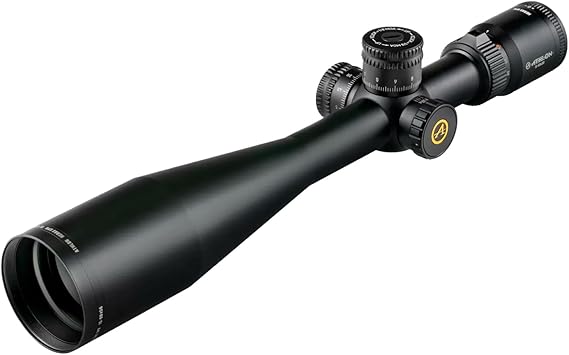
Using this scope feels like having a clear window into distant targets, making it perfect for anyone serious about precision shooting at long range. Its biggest strength lies in the wide 15-60x magnification range, which easily adjusts from mid to extreme distances without losing clarity.
Setting up involves mounting the 30mm tube on a rifle and adjusting the eye relief of 9.4 centimeters, which provides ample room to avoid recoil and maintain comfortable viewing. The BLR2 reticle helps with measuring and holding points, while the fully multi-coated lenses keep the image bright and true in various light conditions, making daily use practical and reliable.
Performance is solid, delivering sharp, high-contrast images even at the maximum 60x magnification. The build quality feels durable and precise, designed for steady bench rest or F-Class shooting.
Common compliments focus on the lens clarity and adjustment range, while critiques often mention the smaller 7.84 feet field of view at lower magnification can feel a bit tight.
The scope receives praise for clear, bright images even at maximum magnification and its ability to smoothly cover distances from 15x to 60x. Many users appreciate the crisp reticle and accurate colors, but the smaller field of view can make it harder to maintain situational awareness during quick target acquisition.
Great for bench rest shooters and long-distance precision hunters who value clarity and adjustable power. Less ideal for those who need a wide field of view or prefer lighter, more compact scopes for fast-moving scenarios.
Pros
- Wide 15-60x magnification for versatile shooting needs
- Fully multi-coated lenses provide bright, true color images
- Generous eye relief for comfortable, recoil-safe viewing
- Durable 30mm tube suits precision shooting setups
Cons
- Field of view at 7.84 feet feels tight on lower magnification
- Heavy lens diameter may require sturdy mounting hardware
| Specification | Details |
|---|---|
| Magnification Minimum | 15x |
| Magnification Maximum | 60x |
| Objective Lens Diameter | 5.6 centimeters |
| Eye Relief | 9.4 centimeters |
| Field Of View | 7.84 feet |
| Reticle Type | BLR2 |
Best Long Range Shooting Scopes Comparison Table
| Product | Max Magnification | Min Magnification | Objective Lens Diameter | Reticle Type |
|---|---|---|---|---|
| Arken EP5 GEN2 | 35x | 7x | 5.6 cm | VPR |
| DiscoveryOpt XED 6-36 | 36x | 6x | 5.6 cm | First Focal Plane |
| KT12 60×60 Scope | 60x | 12x | 6 cm | MIL |
| DiscoveryOpt HD GEN2 | 30x | 5x | 5.6 cm | Mrad Ffp |
| Vortex Venom FFP | 1x | 5x | 5.6 cm | EBR-7C |
| CVLIFE EagleBlaze 5-25 | 25x | 5x | 34 mm | Christmas-tree |
| Arken SH4J GEN2 | 24x | 6x | 50 mm | VPR |
| Burris Eliminator 6 | 20x | 4x | 5.2 cm | X177 |
| Monstrum Hornet 6-24 | 24x | – | – | X-Tree MOA Reticle |
| Monstrum Beast 6-24 | 24x | 6x | 50 mm | Dot |
| Bushnell Match Pro | 30x | 5x | 5.6 cm | Deploy MOA 2 |
| Athlon Heras SPR 15-60 | 60x | 15x | 5.6 cm | BLR2 |
- Max Magnification35x
- Min Magnification7x
- Objective Lens Diameter5.6 cm
- Reticle TypeVPR
- Max Magnification36x
- Min Magnification6x
- Objective Lens Diameter5.6 cm
- Reticle TypeFirst Focal Plane
- Max Magnification60x
- Min Magnification12x
- Objective Lens Diameter6 cm
- Reticle TypeMIL
- Max Magnification30x
- Min Magnification5x
- Objective Lens Diameter5.6 cm
- Reticle TypeMrad Ffp
- Max Magnification1x
- Min Magnification5x
- Objective Lens Diameter5.6 cm
- Reticle TypeEBR-7C
- Max Magnification25x
- Min Magnification5x
- Objective Lens Diameter34 mm
- Reticle TypeChristmas-tree
- Max Magnification24x
- Min Magnification6x
- Objective Lens Diameter50 mm
- Reticle TypeVPR
- Max Magnification20x
- Min Magnification4x
- Objective Lens Diameter5.2 cm
- Reticle TypeX177
- Max Magnification24x
- Min Magnification–
- Objective Lens Diameter–
- Reticle TypeX-Tree MOA Reticle
- Max Magnification24x
- Min Magnification6x
- Objective Lens Diameter50 mm
- Reticle TypeDot
- Max Magnification30x
- Min Magnification5x
- Objective Lens Diameter5.6 cm
- Reticle TypeDeploy MOA 2
- Max Magnification60x
- Min Magnification15x
- Objective Lens Diameter5.6 cm
- Reticle TypeBLR2
How to Choose the Right Long Range Scope
Choosing the right long range scope depends on key factors like clarity, magnification, and durability, which ensure precise aiming and reliable performance. Prioritizing these features helps avoid costly replacements and improves accuracy, making shooting more efficient and enjoyable.
Optical Clarity and Magnification
Sharp images depend heavily on the quality of the lenses and coatings used. Lenses with high transmission rates let in more light, making targets appear clearer and colors truer, especially in low-light conditions. Cheaper scopes often suffer from blurry edges or color distortion, which slows down target acquisition.
Coatings reduce glare and protect the glass, extending the life of the lens.
Variable magnification scopes tend to be more versatile in the field. Switching from low to high zoom helps quickly find a target and then zero in for a precise shot. Fixed magnification scopes, while simpler and lighter, can limit flexibility if the shooting distance changes.
The field of view narrows as magnification increases, so it’s important to choose a scope with a wide enough viewing angle at high zoom levels to maintain situational awareness. Scopes around 4-16x magnification cover most needs, offering a good balance between clarity and field of view.
Durability and Build Quality
Repeated recoil can loosen parts or misalign optics in poorly built scopes. Durable materials like aircraft-grade aluminum provide the right balance of strength and weight without adding unnecessary bulk.
Polycarbonate lenses might be more resistant to impact but often sacrifice optical clarity. Good scopes resist recoil without damage for years, which makes a noticeable difference downrange.
Waterproofing and fog proofing are essential to prevent moisture from compromising image quality or internal components. Nitrogen or argon purging helps eliminate internal fogging when moving between cold and warm environments.
Shockproof designs reduce internal damage from impacts during transport or rough handling. Pay attention to these features for long-term reliability in harsh weather.
Reticle Type and Adjustability
Different reticle types suit specific needs. MIL and MOA reticles are popular for precise rangefinding and adjustments, allowing shooters to make accurate windage and elevation changes without guessing.
BDC (bullet drop compensator) reticles help account for bullet drop at different distances but can be less versatile if you’re using various loads.
Illuminated reticles provide better visibility in low light, with multiple brightness settings to avoid washing out the image or being too dim in bright conditions. Adjustment turrets should feel crisp and provide consistent, repeatable clicks.
Turrets with tactile feedback aid quick zeroing and make fine-tuning easier during cold or windy days.
Eye Relief and Comfort
A safe distance between the eye and the scope, known as eye relief, is critical to prevent injury from recoil, especially with high-caliber rifles. Eye relief of around 3-4 inches works well for many rifles, but adjustable scopes enable fine-tuning to individual needs. This adjustment also helps accommodate different mounting heights and cheek weld preferences.
Tube size affects both eye relief and mounting options. Common sizes like 30mm or 34mm tubes offer good structural strength and allow more adjustment travel on the turrets. Comfortable ergonomics reduce neck and eye strain during prolonged use, making a noticeable difference during extensive shooting sessions or competitions.
Mounting Compatibility and Stability
Matching the scope with the correct mounts and rings simplifies setup and keeps the scope securely in place. Scopes built for 30mm or 34mm tubes often fit a wide range of standard mounts, but double-check compatibility before buying. Stability during recoil is vital; loose mounts cause the scope to lose zero, forcing time-consuming adjustments.
Installation shouldn’t require specialty tools. Many scopes come with mounts that can be tightened with standard screwdrivers or hex wrenches. Quick removal is helpful for transport or swapping optics.
A solid mounting system combined with easy installation techniques reduces downtime in the field.
Optimizing Your Long Range Scope for Different Environmental Conditions
Adjusting your long-range scope according to the environment can make a significant difference in shot accuracy. Elevation and windage settings need recalibration with changes in altitude and wind speed. For example, scopes with exposed turrets simplify these adjustments during a session.
Consider the light conditions, scopes with adjustable brightness reticles help maintain clarity in both bright daylight and low-light situations at dawn or dusk.
- Use lens covers to protect optics from rain and dust, which can blur vision and impact shot placement.
- Zero your scope for the specific range and environmental setting before shooting to avoid guesswork in the field.
- Temperature shifts can change air density, so recheck ballistic data or use a reticle with holdover marks for quick corrections.
Preparing your scope to match environmental factors helps maintain consistency and reliability during long-range shooting.
Common Mistakes to Avoid When Using Long Range Shooting Scopes
A common mistake is neglecting to verify zero after mounting the scope on the rifle. Even slight misalignment can throw off accuracy at long distances.
Many shooters also fail to account for parallax adjustment. Without correcting parallax, the reticle may shift relative to the target when you move your eye, causing aiming errors.
- Over-reliance on maximum zoom without considering environmental effects like mirage can reduce image quality.
- Ignoring reticle illumination settings can lead to poor visibility in changing light, reducing precision.
- Skipping regular cleaning of lenses leads to smudges or debris that interfere with sight clarity.
Taking time to properly set up, maintain, and adjust the scope ensures better shot placement and reduces frustration.
Comparing Rifle Scopes and Spotting Scopes for Long Range Precision
Rifle scopes mount directly on the firearm and offer features like ballistic reticles, adjustable turrets, and variable magnification tailored for accurate aiming at distance. They combine durability with the convenience of on-gun use.
Spotting scopes, meanwhile, provide higher magnification and a larger objective lens, making it easier to identify and observe targets before shooting. However, they require a stable tripod and are not attached to the rifle.
- Rifle scopes allow quick follow-up shots as the aiming device is always aligned with the weapon.
- Spotting scopes help spot bullet impacts and assess wind by observing environmental cues, playing a crucial role in long-range sessions.
- Choosing between the two depends on whether the focus is on direct targeting or target observation and adjustment.
Both tools complement each other in the precision shooting process but serve different roles in identifying, engaging, and confirming hits at long range.
People Also Asked
How Do I Properly Care for a Long Range Shooting Scope?
Clean the lenses gently using a microfiber cloth and lens cleaner. Store the scope in a dry, padded case to prevent damage. Avoid touching the glass with your fingers, which can leave oils and smudges that affect clarity.
What Size Scope Is Ideal for Long Range Shooting Rifles?
A 4-16x or 5-20x magnification range is common for long range shooting rifles. This provides flexibility for varying distances. Consider your shooting conditions when choosing magnification levels.
Are Long Range Scopes Compatible with All Rifle Models?
Long range scopes fit most rifles but require compatible mounting systems. Check the scope ring size and rail type on your rifle. Proper mounting ensures accuracy and prevents scope damage.
How Long Does a Typical Long Range Shooting Scope Last?
A long range scope can last many years with proper care. Frequent use and rough handling may shorten its lifespan. Regularly check for loose mounts or damaged components to keep it reliable.
What Are Common Problems with Long Range Shooting Scopes?
Fogging inside the lens and reticle shifts after heavy recoil are common issues. Sealed, nitrogen-filled scopes resist fogging better. Proper mounting and regular inspections help avoid reticle movement.
Conclusion
Choosing a long range shooting scope comes down to a few key factors: clear optics for a sharp image, reliable adjustment turrets for accuracy at different distances, and durable construction to withstand rough conditions. Magnification range also matters, depending on how far you plan to shoot and the terrain you’ll be in.
These basics cover most practical needs without overcomplicating the decision.
Think about your budget and how often you’ll use the scope to find the right balance between features and cost. Also, consider the space where you’ll carry and mount it.
Check the comparison table and the detailed options above to help pick a scope that fits your specific shooting setup and goals.