
Top 12 Best Monocular Magnification for Bird Watching Revealed!
Spending a day with a poorly chosen monocular often means missing out on sharp details because of shaky images or cloudy lenses. The best monocular magnification for bird watching helps avoid those frustrations by providing clear views without being too bulky or hard to steady.
Straining to focus or dealing with a device that’s too heavy can turn a pleasant outing into a tiring experience.
The most important factors for a good bird-watching monocular include magnification power, lens quality, and size. A magnification between 8x and 10x usually offers the right balance of detail and stability; higher magnifications often require tripods. Look for lenses with multi-coatings that improve brightness and reduce glare.
Compact size and lightweight materials make it easier to carry and hold steady for longer periods. Durable construction and weather resistance also matter since bird watching often involves outdoor conditions.
Need a Quick Check?
| Image | Product | Price |
|---|---|---|
Our Top Picks 1 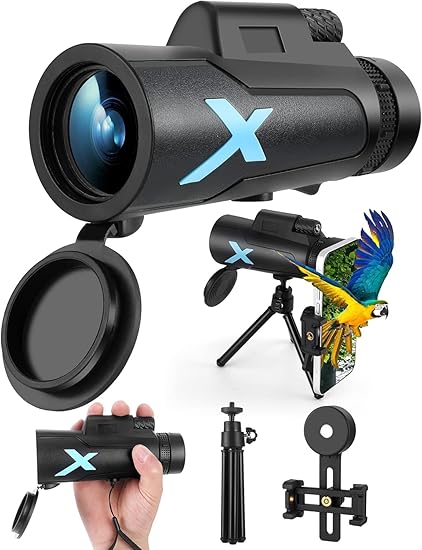 | High Power 12×50 Monocular | Check Price |
Our Top Picks 2  | 12×56 Monocular Telescope | Check Price |
Our Top Picks 3  | Nocs Zoom Tube 8×32 | Check Price |
Our Selected Top 12 Monocular Magnification for Bird Watching Worth Considering
These carefully chosen monoculars offer a range of magnifications ideal for bird watching. Each review highlights key features, performance, suitability for different users, along with strengths and potential drawbacks to help you make an informed decision.
1. High Power 12×50 Monocular Telescope
Strong 12x magnification combined with a wide 6.5° field of view makes spotting birds easier and clearer from a distance. Ideal for those who spend time outdoors and want to see nature up close without wearing bulky equipment.
Comfortable viewing without dizziness stands out during long sessions.
Setting it up is straightforward since it’s handheld but can also be attached to a tripod using the standard 1/4-inch thread. The manual focus lets you smoothly adjust the image, and the large 20mm eyepiece paired with the 53mm objective lens makes looking through it comfortable, even for people who wear glasses.
No batteries needed means no interruptions during trips or hikes.
Bright, sharp, and accurate images come from the BAK4 prism lens and Fully Multi-Coating technology, making colors vivid and clear. The construction feels solid and designed to last outdoors, though manual focusing requires some practice to get it just right.
Most find the wide angle great for tracking moving birds, but some users mention that adjusting focus takes a bit of time.
Bright and vivid views thanks to the BAK4 prism and multi-coated lenses receive frequent praise. Many users note the manual focus requires time to master, affecting quick spotting. Comfort during extended use is a strong point, with minimal dizziness reported.
People who want a powerful, clear monocular for bird watching and don’t mind practicing focus will appreciate this model. Those needing faster autofocus or smaller size might look for alternatives better suited to quick handheld use or compact storage.
Pros
- Clear images with high contrast and accurate colors
- Comfortable viewing for glasses wearers
- Wide field of view for easy tracking
- No battery required
Cons
- Manual focus can be slow to adjust
- Some users may find size a bit bulky for pocket carry
| Specification | Details |
|---|---|
| Eye Piece Lens Description | Multi-coated Eyepiece Lens With Adjustable Eye Relief For Comfortable Viewing |
| Mount | Handheld, Tripod-adaptable Mount With Standard 1/4-inch Thread |
| Focus Type | Manual Focus |
| Coating | Fully Multi-coated (fmc) Green Film Optical Lens |
| Field Of View | 6.5 degrees |
| Zoom Ratio | 12x |
2. 12×56 Monocular Telescope
Strong 12x magnification combined with a wide 6.5° field of view makes it great for bird watching and other outdoor activities. Ideal for those wanting a bright, clear image with enough zoom to catch fine details at a distance.
Setup involves adjusting the manual focus and attaching the smartphone adapter if needed for photography. The included travel bag, hand strap, and adjustable tripod add convenience during hikes or camping. Large eyepieces and a 56mm objective lens help gather plenty of light, so it works well in various lighting conditions without feeling bulky to carry.
Delivers crisp, detailed views thanks to fully multi-coated lenses and prism design. Construction feels solid, with a fixed mount that keeps it stable on the tripod.
Most users appreciate the bright, wide images, but some find the manual focus takes a moment to get just right, especially for quick moves when watching birds.
Bright and detailed viewing is praised due to the large lens and multi-coated optics. Common complaints focus on manual focusing being a bit slow for fast-moving subjects like birds.
Great choice for bird watchers who value image clarity and portability with added accessories. Users needing quick autofocus or easier mount adjustments may want to consider alternatives.
Pros
- Bright image with large 56mm objective lens
- Wide 6.5° field of view for better scene coverage
- Comes with tripod and smartphone adapter included
- Compact and easy to carry on outdoor trips
Cons
- Manual focus requires some time to adjust
- Fixed mount limits repositioning flexibility
| Specification | Details |
|---|---|
| Magnification | 12X |
| Objective Lens Diameter | 56 mm |
| Field Of View | 391.7 yard |
| Focus Type | manual |
| Finderscope | Reflex |
| Additional Features | Travel Bag, Hand Strap, Phone Adapter, 6 x Adjustable Tripod |
3. Nocs Provisions Zoom Tube 8×32 Monocular
Lightweight and compact design makes this monocular ideal for birdwatchers who need something portable without sacrificing clarity. It suits anyone looking for easy-to-carry optics that handle outdoor adventures well.
The brightest field of view stands out, ensuring crisp details during long viewing sessions.
Setting up takes just seconds thanks to the central focusing system. Its small size fits comfortably in hand or pack, making it ready to use wherever you go. Fully Multi Coated optics cut down glare and increase brightness, while the water-resistant and scratch-proof body keeps it reliable on wet or rough trails.
Bright and clear images come through with the Swiss-designed BaK4p prism, offering a wide 384ft view at 1000 yards. Build quality feels strong and designed for outdoors, with lightness as a key feature.
Common comments praise the sharp visuals, though some mention the need for careful handling to avoid accidental drops due to its small size.
Sharpness and brightness of the view receive frequent praise, making it a reliable companion for spotting birds at a distance. Some users point out the need to handle it carefully since its compact size can make it easier to drop.
This monocular fits birdwatchers who value portability and bright optics without bulk. Those needing rugged, larger devices with more stability might prefer different models better suited to heavy-duty use.
Pros
- Lightweight and portable at just 7.6 ounces
- Central focusing system for quick adjustments
- Scratch-proof and water-resistant body
- Bright, clear images with wide field of view
Cons
- Small size may feel fragile to some users
- Manual focus requires steady handling
| Specification | Details |
|---|---|
| Magnification | 8x |
| Objective Lens Diameter | 32 mm |
| Field of View | 384 ft @ 1000 yds |
| Weight | 7.6 ounces |
| Dimensions | 4.96 x 0.73 x 2.72 inches |
| Prism Type | Swiss-designed BaK4p |
4. 40×60 Monocular Telescope

40X magnification stands out immediately, making it ideal for anyone who wants close-up views of distant birds. It suits those who enjoy bird watching in various outdoor settings and need clear, bright images with a large lens that captures plenty of light.
Its clarity at high zoom distances is the biggest strength.
Setup involves adjusting the manual focus to zero in on birds or scenery. The straight-through finderscope helps with quick target alignment while hiking or at a concert. Day-to-day, the waterproof and fog-proof features are noticeable when weather conditions change.
Including a tripod makes stable viewing easier during longer observation sessions. Its smartphone compatibility means capturing moments or using apps to learn more about birds happens naturally.
Image quality benefits from the BAK4 prism and fully multi-coated lens, producing bright and sharp pictures even at full zoom. The build feels solid and practical, made for consistent use outdoors.
Praises often mention the clear, crisp images, while the most frequent complaint revolves around occasional difficulty with manual focusing, which requires some patience to master.
The monocular delivers bright, sharp images thanks to the BAK4 prism and large lens, making faraway details visible and vibrant. The main downside seen is adjusting manual focus, which some find challenging but improves with use. Weather resistance and added tripod support stand out in daily usage.
Those who want a powerful zoom with good image quality and don’t mind a bit of learning curve for focus will appreciate this model. People seeking a lightweight, quick-focus monocular might want to look at other options with simpler focus systems.
Pros
- 40X magnification with bright, clear images
- Waterproof and fog-proof for all weather
- Includes tripod for steady viewing
- Smartphone compatible for easy photo capture
Cons
- Manual focus can be tricky at first
- Heavier than smaller monoculars when carried all day
| Specification | Details |
|---|---|
| Focus Type | Manual Focus |
| Finderscope | Straight-Through |
| Compatible Devices | Smartphone |
| Additional Features | Waterproof, Fog-proof, Smartphone Compatible, Tripod Included, Multi-coated Lens, BAK4 Prism |
5. 10×42 Monocular Telescope
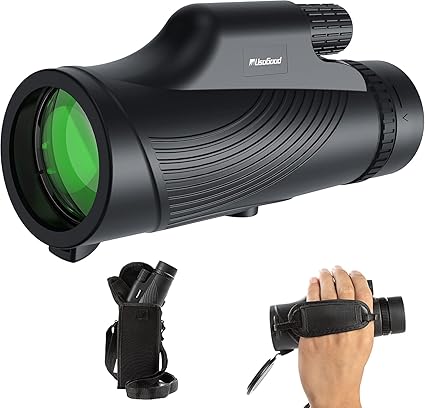
Offering a solid 10x magnification combined with a 42 mm objective lens, this monocular is ideal for bird watchers who need a clear view at various distances. It stands out with its high-definition image quality and broad 360 feet field of view at 1000 yards, making it easy to spot details both near and far.
Setting up involves a simple manual focus, which feels smooth enough for daily use during outdoor activities. The waterproof design comes in handy when weather changes, and the compatibility with smartphones adds convenience for capturing sights. Its tripod mount option is useful for steady shots during longer observation sessions in the field.
Performance lives up to its specs, delivering sharp, detailed images even at 10x power. Construction includes BAK4 prisms and fully multi-coated lenses that minimize light loss and aberrations, keeping images crisp. A common drawback cited is the manual focus might feel less quick when trying to track fast-moving birds, but the overall build is reliable and durable.
The monocular impresses with clear, bright views thanks to its BAK4 prisms and fully multi-coated lenses, but the manual focus requires some patience to adjust quickly during bird watching. It handles both close and distant subjects well but may need a tripod for the best stability at full zoom.
Bird watchers looking for detailed views and smartphone compatibility will appreciate this model. Those who prefer faster autofocus or ultra-lightweight devices might want to explore other options better suited to rapid tracking and easy carry.
Pros
- Clear image from near 3.3 yards to far distance
- Water-resistant for varied weather conditions
- Compatible with smartphones for photo capture
- Broad 360 feet field of view
Cons
- Manual focus can be slow for quick movements
- Relies on steady hands or tripod for best stability
| Specification | Details |
|---|---|
| Magnification Maximum | 10 x |
| Objective Lens Diameter | 42 millimeters |
| Field of View | 360 feet |
| Focus Type | Manual Focus |
| Water Resistance Level | Waterproof |
| Mount Type | Tripod Mount |
6. 16×52 High Power Monocular Telescope
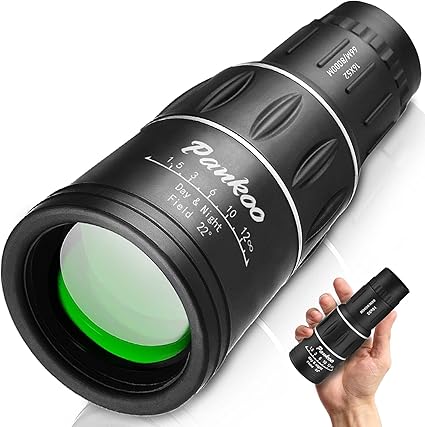
Struggling to see birds clearly in their natural habitat can be frustrating, especially from a distance. This monocular with 16x magnification suits bird watchers looking for a powerful, compact option with bright images.
Its biggest strength is delivering sharp, detailed views even in varied outdoor conditions.
Setting up involves simply holding it steady and adjusting the manual focus to sharpen your view. The large 52mm lens lets in plenty of light, so images stay clear and bright during morning or evening outings.
Its handheld design makes it easy to carry on hikes, while waterproof, fogproof, and shockproof features ensure it withstands rough weather and terrain without issue.
Performance-wise, the 16x zoom provides impressive close-ups of birds without needing extra accessories. The build feels solid with BAK4 prisms contributing to high image clarity and brightness.
A common complaint is that manual focusing can take some practice to get just right. It delivers on magnification and durability, making it a reliable companion for outdoor enthusiasts.
Sharp and bright images stand out as this monocular’s best quality, making it great for spotting birds at a distance. It’s built tough for rough environments but focusing requires patience to achieve the clearest picture.
Anyone wanting a strong magnification tool in a compact, durable design will appreciate this model. Those seeking faster autofocus or wider views may prefer a different option.
Pros
- Clear, bright image with 16x magnification
- Compact and easy to carry on outdoor trips
- Waterproof, fogproof, and shockproof build
- Fully multi-coated for better light transmission
Cons
- Manual focus can take practice to master
- Relatively narrow field of view at 5.8 degrees
| Specification | Details |
|---|---|
| Magnification | 16X |
| Object Lens Diameter | 52mm |
| Field Of View | 5.8 degrees |
| Focus Type | Manual Focus |
| Coating | Fully Multi-Coated |
| Additional Features | Waterproof, Fogproof, Shockproof |
7. 12×60 HD Monocular Telescope

12× magnification paired with a 60mm objective lens makes this monocular excellent for bird watching enthusiasts who want clear, close-up views over long distances. Its wide 6.5° field of view helps capture more of the scene, making spotting birds and other wildlife easier in diverse outdoor settings.
Setting up involves manual focusing with the altazimuth mount, which is straightforward to adjust while on the move. The fully multi-coated optics reduce glare, and the large 21mm BAK-4 prism ensures bright and clear images. It’s powered by batteries and includes a reflex finderscope, which is handy for lining up your target before zooming in.
Image quality stands out due to the high light transmission through the BAK-4 prism, resulting in vivid, distortion-free views. The build feels solid enough for regular outdoor use, though some might find the manual focus takes a moment to fine-tune at higher magnifications.
The monocular’s size and weight are manageable, making it convenient to carry during hikes or trips.
The quality of the 21mm BAK-4 prism provides clear and bright views without color distortion, highly praised in feedback. The most common issue noted is the need to fine-tune manual focus carefully, especially when spotting small, distant birds.
People who enjoy detailed, steady observation during hikes or bird watching will find the magnification and field of view very satisfying. Those looking for quicker autofocus or a lighter, battery-free option might consider other models.
Pros
- Large 60mm lens captures ample light
- 21mm BAK-4 prism ensures sharp images
- Wide 6.5° field of view is handy
- Reflex finderscope assists target alignment
Cons
- Manual focus can be slow to adjust
- Battery powered, relies on consistent power
| Specification | Details |
|---|---|
| Magnification | 12× |
| Objective Lens Diameter | 60mm |
| Field Of View | 6.5 degrees |
| Focus Type | Manual Focus |
| Prism Type | 21mm BAK-4 |
| Mount | Altazimuth Mount |
8. 80×100 Monocular Telescope

Birdwatchers who want extreme close-up views will appreciate the 80×100 Monocular Telescope. It suits those serious about spotting fine details from a distance, thanks to its 80X magnification when combined with a smartphone lens. Its clearest strength is how much you can zoom in without losing too much clarity.
Setting up involves mounting it on the included tripod, which steadies the view for sharp images. The dual focus system helps lock on quickly whether looking nearby or far away. The wide 7-degree viewing angle and large objective lens make scanning a wider scene easier.
Using it with an iPhone adapter adds convenience for photos or video of birds in action.
The optical glass lens with BAK4 prism and full multi-coating ensures bright, sharp images with minimal distortion. Magnification really feels powerful and brings distant details clearly into view.
The build is solid and stable on the tripod, though manual focusing can take some practice. Most users say the clarity is impressive, while a common complaint is that handling takes patience during quick stops and starts.
Many find the image clarity exceptional at high zoom levels, making distant birds appear close and detailed. Commonly, users mention that manual focusing means you need time and care to get a sharp image, especially when tracking moving targets.
Birdwatchers dedicated to detailed observation and photography will enjoy this tool. Casual or quick-glance watchers might prefer a simpler, quicker-to-use model without the high manual focus demands.
Pros
- Achieves real 80X magnification with smartphone lens
- Bright, sharp images with BAK4 prism and FMC lens
- Wide 7-degree viewing angle for broader scenes
- Stable tripod mount included for steady viewing
Cons
- Manual focus requires patience and practice
- Set up and adjustment can be slow in fast situations
| Specification | Details |
|---|---|
| Zoom Ratio | 80 multiplier x |
| Field Of View | 363 feet |
| Focus Type | manual focus |
| Mount | Tripod Mount |
| Coating | Fully Multi-Coated (FMC) |
| Compatible Devices | iPhone |
9. 80×100 Monocular Telescope

Offering an impressive 80X magnification paired with a large 100mm objective lens, this monocular is designed for anyone wanting to see distant birds clearly. Its combination of power and clarity stands out, making it especially suitable for long-range outdoor observation where detail is key.
Setting up is straightforward with manual focus control and a reinforced tripod that keeps the view steady. The included universal smartphone adapter makes it easy to snap pictures or record videos using most phones.
Lightweight and compact, it fits comfortably in hand, while fully multi-coated optics ensure the image remains bright and sharp throughout your birdwatching sessions.
Performance delivers on the promise of sharp, detailed views thanks to premium BAK-4 prisms and multi-coated lenses. Build quality feels solid with a glasses-friendly design for comfortable extended use. The main praise points to its clear and bright images, while the most frequent complaint involves the manual focus sometimes requiring patience to get just right.
The monocular consistently provides bright and sharp images thanks to its high-quality optics, though manual focusing sometimes takes time to fine-tune, which can affect quick bird spotting. The reinforced tripod helps minimize shake but is necessary for steady long-range observation.
Anyone needing powerful magnification and smartphone compatibility will appreciate this model. Those seeking quick autofocus or ultra-portable gear might want to explore alternative options better suited for fast adjustments or travel convenience.
Pros
- 80X magnification with large 100mm objective lens
- Universal smartphone adapter for easy photo capture
- Fully multi-coated optics for bright, crisp images
- Compact, lightweight design with glasses-friendly use
Cons
- Manual focus can require extra adjustment effort
- Requires steady tripod for best long-range viewing
| Specification | Details |
|---|---|
| Focus Type | Manual Focus |
| Finderscope | Straight-Through |
| Compatible Devices | Smartphone |
| Additional Features | Fully Multi-Coated Optics, Universal Smartphone Adapter Mount, Upgraded Reinforced Tripod, Premium BAK-4 Prism, One-Hand Focus, Glasses-Friendly Design, Compact & Lightweight |
10. 8×42 Monocular Telescope
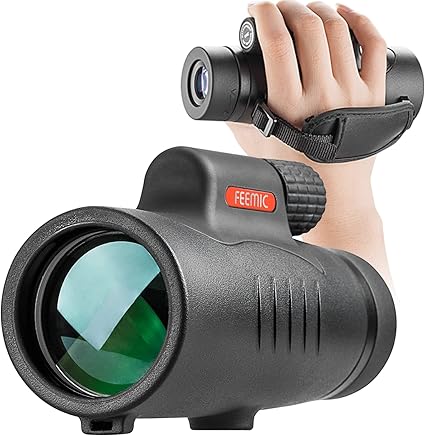
8×42 Monocular Telescope delivers sharp 8X magnification with a wide 42mm lens ideal for bird watching. It suits outdoor enthusiasts seeking clear, detailed views across long distances without lugging heavy gear.
The standout feature is its wide-angle, high-definition optics that capture crisp images over a large field of view.
Setting up involves manual focus, which gives you control to dial in sharpness depending on how far the bird is from your position. The monocular has a rubber coating that feels sturdy and aids grip, making it easier to hold steady in the field. Its compact size and built-in lens dust cover keep it clean and ready for daily use outdoors, while full multi-coated lenses reduce glare and improve visibility in varying light.
Performance excels with a 360ft field of view at 1000 yards, helping track birds easily without constantly shifting your eyes. Constructed with FMC Superior BAK-4 Green Film Prism glass, it resists moisture and dust thanks to nitrogen-filling and waterproof armor.
Most praise its clarity and ruggedness, though some find manual focusing slower than autofocus options.
The optical clarity stands out for spotting birds at a distance, supported by a wide field of view that helps track movement easily. Lens protection and waterproofing ensure clear viewing in tough outdoor conditions. Common frustrations come from the manual focus being less quick to adjust compared to autofocus.
Bird watchers valuing rugged optics and bright, sharp images will appreciate this. People wanting faster focusing or full smartphone compatibility may want to look elsewhere for alternative models.
Pros
- Wide 42mm lens offers bright, clear views
- Durable waterproof and shockproof design
- Manual focus lets you fine-tune sharpness
- Rubber finish provides good grip outdoors
Cons
- Manual focus can be slow in the field
- Not compatible with all smartphone adapters
| Specification | Details |
|---|---|
| Magnification | 8X |
| Objective Diameter | 42 millimeters |
| Field Of View | 360ft/1000yards |
| Focus Type | manual focus |
| Coating | fully multi-coated |
| Waterproof | yes, nitrogen-filled |
11. Gosky 12×55 Monocular Telescope

Using the Gosky 12×55 Monocular Telescope feels like having a close-up window to nature, especially suited for bird watching and outdoor activities. Its biggest strength is balancing strong 12x magnification with a wide field of view, making it easier to locate and follow birds without losing sight of the surroundings.
Setting it up involves adjusting the manual focus, which works easily with one hand while holding it steady. Its large 55mm lens gathers plenty of light, so your view stays bright even in shaded areas or early mornings.
The included tripod and phone adapter add convenience for longer observation or capturing photos without straining your hands.
Clarity and detail are impressive at 12x magnification, letting you see distant birds clearly yet comfortably. The build feels solid and weather-resistant thanks to the IPX7 waterproof and fogproof design, which handles outdoor conditions well.
The main downside users mention is manual focusing needing a careful touch, which can be tricky at higher zoom levels.
Most praise goes to the bright and wide viewing experience supported by the large 55mm objective lens. The most common complaint is that manual focusing can be a little challenging to manage steadily, especially when tracking small, moving birds at long distances.
The monocular works well for bird watchers who want clear detail combined with a broad viewing area and don’t mind fine-tuning focus manually. Those who prefer automatic focus or easier adjustment might want to look for other models better suited to that need.
Pros
- Bright view from large 55mm objective lens
- Wide 352 ft field of view aids quick target location
- Waterproof and fogproof for outdoor durability
- Comes with tripod and smartphone adapter included
Cons
- Manual focus requires steady hands at higher zoom
- Some find the focus adjustment a bit sensitive
| Specification | Details |
|---|---|
| Magnification | 12X |
| Objective Lens Diameter | 55MM |
| Field Of View | 2.1 degrees / 352 ft at 1,000 yds |
| Focus Type | Manual Focus |
| Waterproof Rating | IPX7 Waterproof & Fogproof |
| Additional Features | Wide Field of View, Tripod and Phone Adapter |
12. 80×100 High Power Monocular Telescope

Great for bird watchers needing powerful close-ups, this monocular delivers impressive 80X magnification with a large 100mm lens, making details pop even at long distances. Ideal for outdoor enthusiasts wanting bright, clear views in a compact, hand-friendly design.
Setting up involves just adjusting the manual focus while holding it comfortably with one hand, thanks to its ergonomic build. The multi-coated lens and BAK4 prism work together to let in plenty of light, keeping images bright and colorful during daylight outings. Attaching a smartphone is straightforward with the included adapter, letting you capture what you see without a fuss.
Performance in magnification and clarity is very strong, showing sharp and vivid images across wide fields of view. The construction feels solid, built tough for hiking or climbing.
Most users mention the impressive brightness and detail. Some note the manual focus takes a bit of patience to get just right, especially for moving subjects.
Its brightest point is delivering high-contrast, true-color views that reveal bird details far away, while the main drawback is the manual focusing, which may slow capturing fast-moving birds. Users appreciate the combination of optical quality and handheld comfort for daytime use.
People wanting powerful, daylight monoculars with smartphone integration will find it a solid option. Those needing quick autofocus or better night performance might want to explore other models designed specifically for those needs.
Pros
- 80X magnification with wide-field 100mm lens
- FMC multi-coated lens and BAK4 prism optics
- Ergonomic design fits comfortably in one hand
- Smartphone adapter for easy photo capture
Cons
- Manual focus requires steady adjustment
- Limited low-light performance after dusk
| Specification | Details |
|---|---|
| Focus Type | manual focus |
| Finderscope | straight-through |
| Compatible Devices | smartphone |
| Zoom Ratio | 80 |
| Additional Features | smartphone adapter |
Best Monocular Magnifications for Bird Watching Comparison
| Product | Magnification | Objective Lens Diameter | Coating | Finderscope |
|---|---|---|---|---|
| High Power 12×50 Monocular | 12x | 50 mm | Multi-coated | Straight-Through |
| 12×56 Monocular Telescope | 12x | 56 mm | Fully Multi-Coated | Reflex |
| Nocs Zoom Tube 8×32 | 8x | – | – | – |
| 40×60 Monocular Telescope | 40x | 60 mm | Multi-coated | Straight-Through |
| 10×42 Monocular Telescope | 10x | 42 mm | Fully Multi-Coated XLT | – |
| 16×52 High Power Monocular | 16x | 52 mm | Fully Multi-Coated | Reflex |
| 12×60 HD Monocular | 12x | 60 mm | Fully Multi-Coated | Reflex |
| 80×100 Monocular Classic | 80x | 100 mm | Fully Multi-Coated | Straight-Through |
| 80×100 Ultra Monocular | 80x | 100 mm | Fully Multi-Coated | Straight-Through |
| 8×42 Monocular Telescope | 8x | 42 mm | Fully Multi-Coated | Reflex |
| Gosky 12×55 Monocular | 12x | 55 mm | Multi-Coated | Reflex |
| 80×100 High Power Monocular | 80x | 100 mm | – | Straight-Through |
- Magnification12x
- Objective Lens Diameter50 mm
- CoatingMulti-coated
- FinderscopeStraight-Through
- Magnification12x
- Objective Lens Diameter56 mm
- CoatingFully Multi-Coated
- FinderscopeReflex
- Magnification8x
- Objective Lens Diameter–
- Coating–
- Finderscope–
- Magnification40x
- Objective Lens Diameter60 mm
- CoatingMulti-coated
- FinderscopeStraight-Through
- Magnification10x
- Objective Lens Diameter42 mm
- CoatingFully Multi-Coated XLT
- Finderscope–
- Magnification16x
- Objective Lens Diameter52 mm
- CoatingFully Multi-Coated
- FinderscopeReflex
- Magnification12x
- Objective Lens Diameter60 mm
- CoatingFully Multi-Coated
- FinderscopeReflex
- Magnification80x
- Objective Lens Diameter100 mm
- CoatingFully Multi-Coated
- FinderscopeStraight-Through
- Magnification80x
- Objective Lens Diameter100 mm
- CoatingFully Multi-Coated
- FinderscopeStraight-Through
- Magnification8x
- Objective Lens Diameter42 mm
- CoatingFully Multi-Coated
- FinderscopeReflex
- Magnification12x
- Objective Lens Diameter55 mm
- CoatingMulti-Coated
- FinderscopeReflex
- Magnification80x
- Objective Lens Diameter100 mm
- Coating–
- FinderscopeStraight-Through
How to Choose the Best Monocular Magnification
Choosing the right monocular magnification depends on balancing zoom power with clarity and stability, ensuring clear views without excessive shakiness. Considering size and durability also matters for comfortable, long-term use. Getting these factors right helps avoid frustration and saves money on replacements or upgrades.
Magnification Power
Birds often perch at varying distances, sometimes close and sometimes far away, making the zoom level crucial. A magnification around 8x strikes a useful balance between seeing enough detail and keeping the image steady without the need for a tripod. Stronger zoom levels like 12x or more can reveal finer details but tend to magnify hand movements, leading to shaky and tiring viewing sessions.
In daily use, lenses offering about 6x to 10x magnification reduce eye strain and avoid frustrating blurriness caused by shaky hands. A well-chosen power means being able to spot feathers and colors clearly without constantly trying to hold the monocular perfectly still. This range works best for most typical birdwatching distances and conditions.
Lens Quality and Coatings
Lens clarity varies greatly with quality and coatings. High-quality glass combined with antireflective coatings helps maintain brightness and sharpness even in dawn, dusk, or shaded conditions. These coatings reduce glare and boost contrast, making it easier to identify bird features in low light or against bright skies.
Durability of these optical coatings matters too. Cheaper models can lose their coating with scratches or daily wear, leading to dull, cloudy views. Look for lenses with multi-coated or fully multi-coated markings for longer-lasting clarity and protection.
Size and Weight
Carrying a monocular all day during birding hikes demands a lightweight design. Heavy models become uncomfortable after a few hours and can cause hand fatigue, especially without a strap or harness.
Compact sizes fit better into backpacks or jacket pockets alongside other gear like binoculars and field guides.
A weight under 400 grams and a size that fits easily in one hand help maintain comfortable handheld use during long sessions. This improves steadiness and makes it simple to raise to the eye quickly when spotting a new bird.
Weather Resistance
Outdoor use exposes optics to rain, fog, and dust. A waterproof seal ensures rain or humidity won’t seep inside the lens and cause fogging or internal damage.
Fogproofing, often through nitrogen or argon purging, keeps the view clear when moving between temperature changes like cool morning air to warm daytime sun.
Durability against dust and rough environments prevents scratches and protects internal mechanisms during fieldwork. Black rubber armor on the casing offers extra grip and shock resistance, useful for unpredictable terrain.
Focus Mechanism and Ease of Use
Smooth focus adjustment helps lock onto birds quickly, especially when they move. A coarse wheel paired with a precise fine focus reduces time spent fumbling with blurry images. Early models often felt stiff or jumped between focus points, making quick use frustrating.
An ergonomic design with focus controls placed within easy finger reach allows one-handed focusing, leaving the other hand free to manage other gear. This setup improves response time when tracking active or distant birds.
Optimal Monocular Magnification Levels for Different Bird Watching Environments
Magnification in a monocular directly affects the clarity and field of view, which are crucial for bird watching. For close-range environments like backyards or parks, a 6x to 8x magnification provides a good balance.
It offers enough detail without making the image too shaky or narrow. In open fields or where birds are farther away, 10x magnification is common. However, going above 12x can make images unstable without a tripod, due to hand movements.
Consider these points when choosing magnification:
- Lower magnifications provide wider fields of view, useful for spotting fast-moving birds.
- Higher magnifications deliver more detail but reduce image stability and brightness.
- Environmental conditions like lighting and distance also play a role in effective magnification choice.
Choosing a monocular with adjustable magnification or trying out specific models can help match the gear to the watching environment.
Common Mistakes to Avoid When Using a Monocular for Bird Watching
One frequent mistake is relying on high magnification without stabilizing the monocular. This often results in a blurry or shaky image that makes spotting details difficult. Holding the monocular directly with one hand while moving can worsen this issue.
Instead, resting the monocular on a steady surface or using a strap can improve steadiness during prolonged use.
Another common problem is not properly focusing before observing. Birds move quickly, so taking a moment to fine-tune focus on a stationary object beforehand saves time.
Also, overlooking weather conditions like fog or rain can reduce visibility significantly, regardless of magnification.
Failing to clean the lens regularly leads to smudges and dust accumulation, which hampers clarity. Keeping the lens clean with appropriate tools is a simple way to maintain image quality.
Comparing Monoculars with Binoculars: Which Is Better for Bird Watching?
Monoculars and binoculars each have advantages for bird watching. Monoculars are compact and lighter, making them easier to carry during long walks.
They can be quickly raised to the eye with one hand, which helps in brief or spontaneous bird sightings. Their smaller size often makes them more affordable, too.
Binoculars provide depth perception because they use both eyes. This can make spotting and following birds easier, especially at higher magnifications.
They generally offer wider fields of view, which helps in scanning larger areas.
Choosing between the two depends on the bird watching style. For casual, mobile observation, monoculars can be more convenient. For stationary sessions where detail and depth matter, binoculars might serve better.
People Also Asked
What Magnification Is Ideal for Bird Watching Monoculars?
A 6x or 8x magnification is ideal for bird watching monoculars. This range offers a good balance between zoom and image stability, making it easier to spot birds without too much shakiness. Higher magnification often makes it difficult to keep the image steady by hand.
How Do I Properly Care for My Bird Watching Monocular?
Keep the lenses clean and store the monocular in a protective case when not in use. Avoid touching the lenses with fingers and use a microfiber cloth to remove smudges. Regular cleaning ensures clear viewing and prevents dirt buildup that can damage the coating.
What Size Monocular Is Easiest to Carry for Bird Watching?
A monocular around 4 to 6 inches long and lightweight is easiest to carry. This size fits comfortably in a pocket or small bag, making it convenient for hikes or walks in nature. Larger monoculars can become cumbersome during long periods of use.
Are Higher Magnifications Safe for Prolonged Bird Watching Use?
Higher magnifications, like 10x or above, are not ideal for prolonged bird watching. They tend to increase image shakiness and reduce the field of view, causing eye strain over time. Stabilization or support like a tripod can help but adds bulk.
How Long Can a Typical Bird Watching Monocular Last with Regular Use?
A typical bird watching monocular can last several years with regular use. Proper maintenance, like cleaning lenses and protecting it from drops or moisture, extends its life significantly. Durable materials are common in models designed for outdoor use.
Conclusion
Choosing the right monocular magnification for bird watching comes down to clarity, field of view, and ease of use. Higher magnifications bring distant birds closer but can make the image shakier and harder to hold steady.
A moderate zoom usually strikes the best balance, providing clear details without sacrificing stability or comfort during long viewing sessions.
Consider how and where you plan to use the monocular most often before deciding on magnification. Compact models work better for quick trips or travel, while larger ones suit stationary spotting from a favorite spot. Review the comparison table and the picks above to find a monocular that fits your budget and bird watching habits.