
Top 12 Best Predator Rifle Scope Choices You Can’t Miss
Finding the best predator rifle scope can be tough because many scopes fail when facing low light and tough conditions. Cheap scopes often have blurry images or unreliable adjustments that make it hard to track fast-moving animals at dusk. Settling for a poorly chosen scope means losing chances on clear shots and frustration from constant readjustments during critical moments.
A good predator rifle scope typically offers sharp optics with at least 3-9x magnification and clear reticles suited for quick target acquisition. Durable, weatherproof construction is essential since hunting often involves wet, dusty environments.
Ease of zeroing adjustments and a size that balances weight and field of view can make all the difference when you need steady aim on the move.
Need a Quick Check?
| Image | Product | Price |
|---|---|---|
Our Top Picks 1 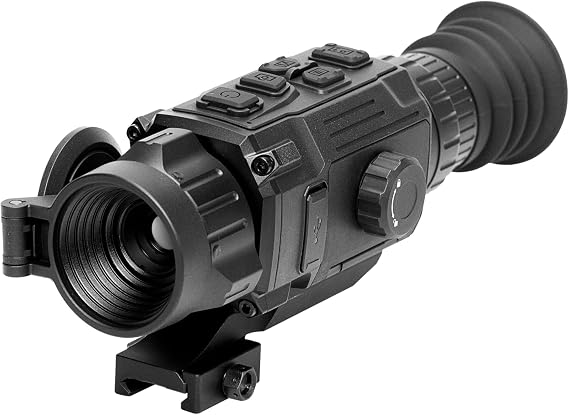 | AGM Rattler V2 | Check Price |
Our Top Picks 2  | Vortex Triumph HD 3-9×40 | Check Price |
Our Top Picks 3  | Steiner Predator 4 | Check Price |
Our Selected Top 12 Predator Rifle Scope for Different Needs
This list features carefully chosen predator rifle scopes designed to meet various hunting and shooting needs. Each review explains how the scope performs, highlights its advantages and drawbacks, and identifies the type of user it best suits for effective predator hunting.
1. AGM Global Vision Rattler V2 Thermal Imaging Scope
Up to 11.5 hours of runtime on a single charge makes the AGM Global Vision Rattler V2 Thermal Imaging Scope a dependable choice for long predator hunts. It suits anyone needing fast target acquisition and all-night power without worrying about batteries dying mid-hunt.
Setting up this scope is straightforward with its Picatinny mount, fitting easily on most rifles. It offers a base magnification of 2.5x and a maximum of 20x, making it versatile for spotting targets at various ranges. The 9.3-degree field of view helps track quick-moving animals in brush, while a 45-millimeter eye relief keeps shooting comfortable.
Swapping batteries is simple since it includes two rechargeable ones, perfect for extended time outdoors.
Performance lives up to the promise of quick target detection thanks to the thermal imaging and wide field of view. The build feels solid and reliable for rugged use. Reviewers point out how well it handles fast-moving targets and long sessions.
Some mention its 19-millimeter objective lens could be limiting in very low light conditions, but most users appreciate the overall durability and battery life.
The scope’s long runtime and wide field of view stand out as strong points for all-night hunting. The most common issue noted is the smaller 19-millimeter lens, which some find less effective in very dim conditions. Everyday use involves quick setup and easy handling in dense brush due to these features.
This model fits hunters focusing on predators and hogs in close to mid-range environments who need reliable battery life and fast detection. Those looking for more magnification or superior low-light optical clarity may want to consider other options.
Pros
- Long battery life with two rechargeable batteries
- Wide field of view for quick target tracking
- Easy Picatinny mounting system
- Comfortable 45 mm eye relief
Cons
- Objective lens size could limit low light clarity
- Maximum magnification may not suit long-range needs
| Specification | Details |
|---|---|
| Magnification Minimum | 2.5 x |
| Magnification Maximum | 20 x |
| Objective Lens Diameter | 19 millimeters |
| Field Of View | 9.3 degrees |
| Eye Relief | 45 millimeters |
| Mounting Type | Picatinny Mount |
2. Vortex Triumph HD 3-9×40 Riflescope
Hunters stepping into the field for the first time will appreciate a scope that doesn’t complicate things. The Vortex Triumph HD 3-9×40 riflescope suits those who want clear optics paired with simple setup, making confidence easier to find during a tough hunt.
Its biggest strength lies in delivering sharp views without extra fuss.
Day-to-day use is straightforward thanks to the easy-to-install 1 Hunter Rings, which hold the scope firmly yet sit low for comfort. The 3-9x magnification range is versatile enough to handle close and moderate distances without constant adjustments.
The included neoprene case protects your gear when not in use, which makes carrying and storing the scope easier.
The optical system clearly separates it from basic scopes by reducing chromatic aberration and providing sharpness all the way to the edges of the lens. Fully multi-coated lenses improve clarity, especially when light is fading.
While the build feels solid and reliable, some users mention that it can feel a bit bulky on lighter rifles. The clear, easy-to-use Dead-Hold BDC reticle earns praise for quick target acquisition.
Vision quality with minimal color distortion is the most appreciated feature, while some find the scope’s size a bit cumbersome on lighter rifles. The straightforward reticle and multi-coated lenses significantly help during varying light conditions and quick shots.
The scope fits hunters who want clear images and a simple setup without too many bells and whistles. Those needing a higher magnification for long-range targeting might look for a different model better tailored to their needs.
Pros
- Sharp edge-to-edge clarity and color fidelity
- Simple setup with included low-height Hunter Rings
- Good light transmission for low-light hunting
- Protective neoprene case included
Cons
- Can feel bulky on lightweight rifles
- Limited maximum magnification at 9x
| Specification | Details |
|---|---|
| Magnification Minimum | 3 x |
| Magnification Maximum | 9 x |
| Objective Lens Diameter | 40 millimeters |
| Mounting Type | Ring Mount |
| Reticle Type | Dead-Hold BDC |
3. Steiner Predator 4 Series Hunting Rifle Scope
Offering a versatile 4-16x zoom range, this scope suits hunters needing precision at varying distances. Its standout feature lies in balancing strong magnification with a broad 50mm objective lens, aiding both detailed shots and low-light visibility.
Mounting is straightforward with a cantilever mount that fits well on many handguns. The compact and lightweight design makes it easy to carry during long hunting sessions.
The E3 reticle supports accurate windage and elevation holdovers, helping you adjust for environmental factors quickly in typical hunting scenarios.
Image quality benefits from Steiner’s Predator Diamond Coating on HD glass, resulting in bright, sharp visuals with good contrast even at maximum zoom. Rugged construction ensures durability in rough conditions.
While many praise its optical clarity, some mention the size might feel bulkier on smaller handgun setups.
The optical clarity and brightness stand out, thanks to the Predator Diamond Coating on the HD glass. Most users find it sturdy and well-suited for varying light conditions, though some express concern about the size feeling a bit large for smaller handgun platforms.
Hunters who need flexible magnification and high contrast in low light will appreciate this scope’s capabilities. Those prioritizing the lightest and smallest setups for handguns may want to explore more compact alternatives.
Pros
- Clear images from Predator Diamond Coating
- Wide field of view with 50mm objective
- Compact and lightweight design
- Effective E3 reticle for windage and elevation
Cons
- May feel bulky on smaller handguns
- Limited field of view at highest magnification
| Specification | Details |
|---|---|
| Magnification Maximum | 16 x |
| Objective Lens Diameter | 50 millimeters |
| Magnification Minimum | 4 x |
| Field Of View | 30 feet |
| Reticle Type | E3 |
| Mounting Type | Cantilever Mount |
4. ATN Thor 6 Elite Thermal Imaging Rifle Scope

ATN Thor 6 Elite Thermal Imaging Rifle Scope excels at delivering clear heat detail in challenging environments, perfect for serious predator hunters. Its strongest feature is the 6th-Gen thermal engine combined with SharpIR AI image enhancement, providing crisp and contrast-rich visuals that make spotting prey easier than ever.
Setup involves pairing the scope with a suitable rifle, after which day-to-day use centers around its sharp imaging and easy controls. The full HD OLED screen makes long sessions surprisingly comfortable on the eyes. Recoil Activated Video records footage automatically when you fire, saving critical moments without interrupting your focus.
Internal storage and an on-device gallery allow quick review without extra gadgets.
Performance shines through with up to 28x magnification and a 640×512 resolution that keeps images detailed at distance. The build feels sturdy and made for the field.
Most praise mentions the sharp IR image quality and smooth 50 Hz refresh rate, while common complaints point to the weight and size being a bit bulky for some setups.
Praise commonly focuses on how the SharpIR AI feature delivers crisp, detailed thermal images under various conditions, making it easier to pick out targets. The main drawback mentioned is the scope’s bulkiness, which can make mounting on lighter rifles tricky and adds to overall setup weight.
Hunters demanding detailed thermal views with solid recording features will like this scope. Those wanting something lighter or more compact might prefer another option better suited to quick carry or smaller setups.
Pros
- Clear heat detail in tough conditions
- Full HD OLED reduces eye fatigue
- Recoil Activated Video captures shots
- SharpIR AI for automatic image enhancement
Cons
- Heavier and bulkier than some rivals
- Large size may affect rifle balance
| Specification | Details |
|---|---|
| Magnification Minimum | 3.5 x |
| Magnification Maximum | 28 x |
| Resolution | 640×512 |
| Video Recording | Yes, with audio and 64 GB storage |
| Refresh Rate | 50 Hz |
5. RIX Storm S2 Thermal Scope

Clear thermal imaging that reaches far-off targets makes this scope a solid choice for heavy-duty predator hunting. It suits hunters who want reliable visuals in low light and across long distances.
The standout feature is its sharp, enhanced imagery that keeps targets visible well past a thousand yards.
Setting it up on a Picatinny mount is straightforward, and the 48mm eye relief makes aiming comfortable throughout the day. Zooming in from 3.5x to 14x helps track prey at different ranges without losing detail. Thanks to a 25mm lens and a wide 7.0° field of view, scanning areas feels natural and not restricted, making it easier to spot movement quickly.
Detection up to 1422 yards away means it performs well in real hunting conditions. The built-in image enhancement uses smart algorithms to bring out better detail from the 256×192 sensor, close to what you’d expect from higher-resolution optics. The scope is solidly built for rough outdoor use, though some users note the field of view could be wider.
Its main praise comes from outstanding clarity at distance, while a common gripe concerns the size of the detective lens limiting overall brightness in some scenarios.
The scope delivers exceptional clarity and detection distances, thanks to its image enhancement and thermal sensor quality. Its primary complaint revolves around brightness limitations due to the small 25mm lens size, which can impact visibility in certain lighting.
Hunters needing a thermal scope for varied distances and reliable detail will appreciate this model. Those who prioritize a wider field of view or brighter image in low-visibility might want to explore other options.
Pros
- Strong thermal detection up to 1422 yards
- Adjustable magnification from 3.5x to 14x
- Comfortable 48mm eye relief for aiming
- Improved image clarity with RET technology
Cons
- 25mm lens limits brightness in some conditions
- Field of view narrower than some competitors
| Specification | Details |
|---|---|
| Magnification Minimum | 3.5 x |
| Magnification Maximum | 14 x |
| Objective Lens Diameter | 25 millimeters |
| Field Of View | 4266 feet |
| Eye Relief | 48 millimeters |
| Mounting Type | Picatinny Mount |
6. Triton StarStrike Gen II Night Vision Rifle Scope

Designed for night hunters and tactical shooters, the Triton StarStrike Gen II Night Vision Rifle Scope shines with its enhanced fixed magnifier and expanded field of view. It particularly suits those who need clear target acquisition in low-light or no-light conditions without struggling with a removable scope accessory.
Setup happens quickly thanks to the Picatinny mount that fits most rifles without fuss. Day-to-day use benefits from a wide 4.91-degree field of view, so tracking movement at 5x to 20x magnification feels natural. The scope stays reliable under changing light, delivering crisp images whether it’s complete darkness or dim daylight.
The night vision performance really stands out due to its military-grade sensor combined with refined image processing. The 50-millimeter objective lens collects enough light to help spot details from afar, while the crosshair reticle keeps aiming straightforward.
Some find it a bit bulky compared to simpler optics, but few argue with its clarity when the lights go out.
Users praise the superior night vision clarity provided by the military-grade sensor and infrared technology, which makes target detection in total darkness reliable. The most frequently noted downside is the scope’s bulk, which can add notable weight and size to smaller rifle setups, potentially affecting handling comfort during long sessions.
Those who require excellent night performance and don’t mind a larger optic will find this scope very effective. Shooters prioritizing a lighter, more compact scope or richer color quality during daylight might want to look into alternative models without night vision features.
Pros
- Wide field of view improves situational awareness
- Strong low-light and night vision clarity
- Fixed magnifier avoids fiddling with attachments
- Picatinny mount offers secure, quick setup
Cons
- Can feel bulky on smaller rifles
- Limited daylight color rendition compared to optical scopes
| Specification | Details |
|---|---|
| Magnification Minimum | 5 x |
| Magnification Maximum | 20 x |
| Objective Lens Diameter | 50 millimeters |
| Field Of View | 4.91 degrees |
| Mounting Type | Picatinny Mount |
| Reticle Type | Crosshair/Duplex |
7. Leupold VX-Freedom 3-9×40 Riflescope

Built with a matte finish and engineered in the USA, this riflescope suits hunters looking for reliable magnification and clear sighting. Its standout feature lies in the 3-9×40 zoom, offering flexibility for both close and extended range shots through a durable design.
Setting up the scope is straightforward with capped finger click adjustments, allowing quick and precise changes on the fly. The Hunt-Plex reticle aids sighting without cluttering the view, while the 33.1 feet field of view at 100 yards provides a good balance for tracking moving targets. Its cantilever mount fits well on most rifles, making daily use practical for various hunting conditions.
Performance shines through the Advanced Optical System, delivering sharp clarity and strong light transmission, which helps during long hunting sessions and bright environments. The build quality feels solid and dependable, reflecting the USA manufacturing pride. Some notes mention that while the capped turrets are good for adjustments, some would prefer easier reset options.
Crystal-clear optics and strong light transmission stand out, making glassing sessions easier even in bright conditions. Most common feedback revolves around turret adjustments, which can feel less intuitive when trying to reset zero quickly.
Hunters looking for solid versatility between short and longer shots will appreciate this scope’s balance of features. Those needing wider views or ultra-fast turret handling for tactical setups might want to explore other options.
Pros
- Flexible 3-9x magnification for varying distances
- Clear and bright optics with glare reduction
- Durable build with matte finish
- Capped finger click adjustments for quick dialing
Cons
- Some users find turret reset cumbersome
- Field of view limited compared to larger lenses
| Specification | Details |
|---|---|
| Magnification Minimum | 3 x |
| Magnification Maximum | 9 x |
| Objective Lens Diameter | 40 millimeters |
| Field Of View | 33.1 feet |
| Reticle Type | Hunt-Plex |
| Mounting Type | Cantilever Mount |
8. ATN Thermal Scope

Sharp thermal imaging stands out with a 384×288 sensor and 6th gen tech that suits hunters and predators tracking across tough terrains. Its ability to detect heat signatures clearly at long ranges is what makes it a strong choice for serious wildlife observation and hunting.
Setting up goes smoothly with integral and cantilever mounts designed to fit rifles, shotguns, and handguns. The range of 2.5x to 20x magnification lets you adjust easily from broad to focused views.
The full HD OLED screen means you see every detail clearly without straining your eyes during long sessions in brush or fog.
Thermal detection performs well up to 2710 meters, which covers a lot of ground when scouting. The AI-powered image processing helps animals stand out from clutter, improving identification in tricky environments. The scope feels solidly built without being too heavy, although some find the reticle options limited.
It works well but could improve on user interface simplicity.
Strong thermal sensor and AI make distant animals stand out sharply, making it useful in dense or foggy conditions. The main frustration is the limited reticle variety and interface navigation challenges.
Hunters focusing on long-range thermal detection who want clear visuals will appreciate this scope. Those seeking simpler controls or more reticle choice might want to explore different models.
Pros
- Clear edge definition with AI image processing
- High detection range up to 2710 meters
- Large 0.49 inch 1920×1080 OLED display
- Wide magnification range from 2.5x to 20x
Cons
- Reticle options limited to duplex style
- Some complexity in user interface reported
| Specification | Details |
|---|---|
| Magnification Minimum | 2.5 x |
| Magnification Maximum | 20 x |
| Reticle Type | Duplex |
| Compatible Devices | Rifle, Shotgun, Handgun |
| Mounting Type | Integral Mount, Cantilever Mount |
9. Leupold VX-4HD 4-16×50 Riflescope

Leupold VX-4HD 4-16×50 is a riflescope built for precision and flexibility during predator hunting. Its biggest strength lies in the Custom Dial System that lets you tailor elevation adjustments exactly to your ballistics, making long-distance shots much easier to manage.
Setting up involves attaching the scope to your rifle and fine-tuning the zero lock elevation with the CDS-ZL2 system. The 4 to 16 times magnification range offers a good mix of wide field of view or zoomed-in detail.
Adjusting focus on the side and using the duplex reticle makes daily spotting and aiming straightforward in varying light conditions.
Performance-wise, the 50mm objective lens collects plenty of light for clear images through dawn or dusk. The build feels solid with a 30mm tube size holding well against recoil. The most common praise notes its precise ballistic dial and clear optics.
The main complaint centers on the 30mm objective lens diameter, which some feel limits light-gathering compared to larger scopes.
The ballistic Custom Dial System is highly praised for its precision and ease of locking down zero, helping secure repeatable shots. Some users find the 30mm objective lens restrictive when hunting in lower light conditions, slightly diminishing brightness compared to bigger lenses.
Hunters who value tailored elevation adjustments and sharp mid-range magnification will appreciate this scope. Those regularly hunting in very low light or needing extreme zoom might want to explore scopes with larger objective lenses or more powerful magnification ranges.
Pros
- Custom Dial System for exact ballistic adjustments
- Wide 4:1 zoom ratio for versatile magnification
- Side Focus adjustment aids quick clarity tuning
- Duplex reticle keeps aiming simple and precise
Cons
- 30mm objective may limit low-light visibility
- Maximum magnification capped at 16x, less for extreme range
| Specification | Details |
|---|---|
| Magnification Minimum | 4 x |
| Magnification Maximum | 16 x |
| Objective Lens Diameter | 30 millimeters |
| Reticle Type | Duplex |
| Model Number | 185456 |
10. Pulsar Thermion 2 LRF 50mm Thermal Riflescope

Hunting in poor visibility like rain, fog, or cold mornings demands a scope that sees beyond the obvious. Perfect for night and low-contrast conditions, this thermal riflescope offers unmatched clarity through its advanced sensor, making it a strong choice for serious predator hunters who need reliable detection in challenging environments.
Setting up the scope is straightforward with its Picatinny mount, ensuring a solid fit on most rifles. The 50mm objective lens pulls in plenty of light for thermal imaging, while magnification starts at 3x, adjustable for varying distances.
Picture-in-Picture mode keeps your target magnified without losing sight of the whole scene, making adjustments quick and intuitive during a hunt.
Detection range reaches out to a remarkable 2000 yards, capturing heat signatures clearly in total darkness. It handles low thermal contrast situations well, thanks to the sensor’s sensitivity below 25mK.
Made with durable materials suited for rugged use, its most praised feature is the sharp, reliable thermal imagery. Some note the weight as a drawback during extended carries, but the performance rarely disappoints.
The thermal sensor sensitivity below 25mK delivers exceptional thermal images even in rain or fog, praised widely for how it handles difficult visibility. Most users mention the scope’s weight as the main downside during lengthy outings or when trying to maintain steady aim for extended periods.
Predator hunters needing long-range detection and reliable thermal clarity will appreciate the performance and features. Those who prioritize lightweight gear or require very high close-up magnification might look for alternative models more suited to those specific needs.
Pros
- High sensor sensitivity for clear images in tough weather
- Detection range up to 2000 yards in complete darkness
- Picture-in-Picture mode for detailed aiming and wide view
- Sturdy Picatinny mount for secure rifle attachment
Cons
- Weight can be cumbersome on long hunts
- Magnification starts at 3x, limited for very close targets
| Specification | Details |
|---|---|
| Objective Lens Diameter | 50 mm |
| Magnification Minimum | 3 |
| Compatible Devices | Rifle |
| Mounting Type | Picatinny Mount |
| Reticle Type | Cross |
11. Steiner Predator 4S 4-16×44 Hunting Riflescope

Offering a magnification range up to 16x in a remarkably compact and lightweight design, the Steiner Predator 4S suits hunters prioritizing portability without giving up optical power. Its standout feature is being 25% shorter than the nearest competitors, making it perfect for fast handling in varied hunting situations.
Setting up involves mounting on a standard rifle, benefiting from its 30mm tube for stability. Day-to-day use is comfortable since the scope measures just 10.9 inches and weighs a little over 18 ounces, which helps avoid front-heavy feel. The E3 reticle is clear and aids in precision aiming across the zoom levels, while the balance suits both traditional and modern hunting styles.
Optically, it delivers sharp images even at full 16x magnification. The rugged chassis handles rough conditions well, making it a solid choice for field use.
Most users find the compact size great for quick target acquisition. A common criticism is that the limited objective lens size can struggle in extremely low light compared to larger scopes.
Sharp imaging and a lightweight design receive strong praise for making it easy to carry during long hunts. The most mentioned downside is that the moderate objective lens size doesn’t perform as well in dawn or dusk conditions compared to larger scopes.
Hunters who value a portable, sturdy scope that balances zoom and weight will appreciate this one. Those regularly hunting in low-light environments might want to explore options with larger lenses for better light gathering.
Pros
- 25% shorter than competitors enhances portability
- Lightweight at just over 18 ounces
- Rugged 30mm tube construction
- Clear E3 reticle for accurate aiming
Cons
- Smaller 44 mm objective limits low-light performance
- Compact size may reduce eye relief comfort for some
| Specification | Details |
|---|---|
| Magnification Maximum | 16 x |
| Objective Lens Diameter | 44 millimeters |
| Magnification Minimum | 4 x |
| Compatible Devices | Rifle |
| Reticle Type | E3 |
12. ATN Thor 6 Mini Thermal Imaging Rifle Scope

Hunters and predator enthusiasts looking for advanced thermal imaging will find this mini rifle scope suits their needs well. Its standout feature lies in the 6th generation thermal sensor and AI image enhancement that sharpens heat signatures, making it ideal for low visibility environments.
Setting up is straightforward on any Picatinny mount rifle, with magnification adjustable from 3.5x to 28x, fitting a variety of distances and targets. The OLED display paired with picture-in-picture lets you keep situational awareness while aiming.
Recording video and audio is easy without swapping SD cards thanks to 64GB internal memory plus Wi-Fi and app support.
The thermal sensor provides clear tracking with a refresh rate of 50 Hz and excellent image clarity through AI processing. The build feels solid and well made.
Reviews praise the sharp image enhancement while noting some users find the learning curve on controls a bit steep initially.
The thermal sensor and AI image enhancement consistently deliver clear heat signatures, even in fog or brush. Some find the controls take time to master, especially when adjusting reticles or navigating the menu options.
Hunters wanting detailed thermal views and video capture will appreciate this scope. Those seeking a simpler user interface or larger display might look for alternatives better suited to straightforward use and bigger screens.
Pros
- 6th Gen thermal sensor with sharp image details
- 50 Hz refresh rate for smooth tracking
- 64GB internal memory for recording without SD cards
- Multiple reticle styles with adjustable transparency
Cons
- Control system can be complex at first
- Smaller OLED display may feel cramped in some scenarios
| Specification | Details |
|---|---|
| Magnification Maximum | 28 x |
| Magnification Minimum | 3.5 x |
| Compatible Devices | Rifle |
| Mounting Type | Picatinny Mount |
| Sensor Options | 256×192 (≤20mK), 384×288 / 640×512 (≤18 mK NETD) |
Best Predator Rifle Scopes Comparison Table
| Product | Max Magnification | Min Magnification | Objective Lens Diameter | Mounting Type |
|---|---|---|---|---|
| AGM Rattler V2 | 20x | 2.5x | 19mm | Picatinny Mount |
| Vortex Triumph HD 3-9×40 | 9x | 3x | 40mm | Ring Mount |
| Steiner Predator 4 | 16x | 4x | 50mm | Cantilever Mount |
| ATN Thor 6 Elite | 28x | 3.5x | – | – |
| RIX Storm S2 | 14x | 3.5x | 25mm | Picatinny Mount |
| Triton StarStrike Gen II | 20x | 5x | 50mm | Picatinny Mount |
| Leupold VX-Freedom 3-9×40 | 9x | 3x | 40mm | Cantilever Mount |
| ATN Thermal Scope Basic | 20x | 2.5x | – | Integral, Cantilever Mount |
| Leupold VX-4HD 4-16×50 | 16x | 4x | 30mm | – |
| Pulsar Thermion 2 LRF 50mm | – | 3x | 50mm | Picatinny Mount |
| Steiner Predator 4S 4-16×44 | 16x | 4x | 44mm | – |
| ATN Thor 6 Mini | 28x | 3.5x | – | Picatinny Mount |
- Max Magnification20x
- Min Magnification2.5x
- Objective Lens Diameter19mm
- Mounting TypePicatinny Mount
- Max Magnification9x
- Min Magnification3x
- Objective Lens Diameter40mm
- Mounting TypeRing Mount
- Max Magnification16x
- Min Magnification4x
- Objective Lens Diameter50mm
- Mounting TypeCantilever Mount
- Max Magnification28x
- Min Magnification3.5x
- Objective Lens Diameter–
- Mounting Type–
- Max Magnification14x
- Min Magnification3.5x
- Objective Lens Diameter25mm
- Mounting TypePicatinny Mount
- Max Magnification20x
- Min Magnification5x
- Objective Lens Diameter50mm
- Mounting TypePicatinny Mount
- Max Magnification9x
- Min Magnification3x
- Objective Lens Diameter40mm
- Mounting TypeCantilever Mount
- Max Magnification20x
- Min Magnification2.5x
- Objective Lens Diameter–
- Mounting TypeIntegral, Cantilever Mount
- Max Magnification16x
- Min Magnification4x
- Objective Lens Diameter30mm
- Mounting Type–
- Max Magnification–
- Min Magnification3x
- Objective Lens Diameter50mm
- Mounting TypePicatinny Mount
- Max Magnification16x
- Min Magnification4x
- Objective Lens Diameter44mm
- Mounting Type–
- Max Magnification28x
- Min Magnification3.5x
- Objective Lens Diameter–
- Mounting TypePicatinny Mount
How to Choose the Right Predator Rifle Scope
Choosing the right predator rifle scope involves focusing on clarity, durability, and appropriate magnification to match your hunting environment. Selecting these features carefully ensures better accuracy and reliability, helping to avoid costly replacements and improving your overall shooting experience.
Magnification and Reticle Clarity
Adjustable magnification plays a key role in spotting and engaging predators at varying distances. Using low magnification allows a wider field of view, which helps locate movement or track fast prey, while higher magnifications bring distant targets into sharp focus for precise shots. A scope with 3-9x or 4-12x zoom covers most scenarios encountered in the field.
The clarity of the reticle is just as important, especially at dawn or dusk when light levels drop. An illuminated reticle aids in quick target acquisition by standing out against dark backgrounds.
Simple reticle designs like duplex or mildot make holdover calculations easier, reducing guesswork for quick follow-up shots without needing complicated adjustments.
Durability and Weather Resistance
Scopes designed for outdoor use must survive rough handling and exposure to the elements. A rugged construction with shockproof features prevents damage from recoil or accidental drops. Solid metal tubes, often made from aircraft-grade aluminum, provide sturdy protection and resist bending or dents.
Waterproof and fogproof capabilities ensure the scope remains usable in rain, snow, or humid conditions. Nitrogen or argon purging inside the tube stops internal fogging caused by temperature changes. Opt for models rated to at least IPX7 standards or fogproof specifications, since scopes often face temperature extremes and wet environments during real hunting trips.
Eye Relief and Field of View
Eye relief distance protects the shooter’s eye by keeping it a safe gap from the scope’s lens, preventing injury from recoil. For higher caliber rifles, at least 3.5 inches of eye relief is preferred to avoid painful impacts during repeated shots.
A broad field of view helps track predators that move quickly or get close. Scopes that provide about 30 feet or more of view at 100 yards improve situational awareness by reducing blind spots and making target acquisition smoother. Comfort also becomes crucial for long hunts; scopes should allow easy head positioning without forcing strain or awkward posture.
Mounting Compatibility and Adjustability
Mounting a scope securely is vital for accuracy and consistency. Scopes with standard tube diameters (30 or 34 mm) and common rail compatibility work across a wide range of rifles and calibers.
This reduces headaches when switching gear or upgrading equipment.
Adjustability for windage and elevation should be precise, typically in 1/4 MOA increments, to allow fine-tuning at long ranges. Look for turrets that provide clear tactile or audible clicks to avoid overshooting adjustments. Compatibility with laser rangefinders or night vision gear adds versatility, so check if the scope can interface with or be co-mounted alongside these accessories comfortably.
Battery Life and Illumination Control
Extended hunts demand a scope with long battery life to avoid interruptions. Many illuminated reticles now use efficient LED technology that can last hundreds of hours on a single battery. Battery compartments designed for quick replacement in the field simplify maintenance.
Brightness control must cover multiple settings, letting the shooter dial illumination up for low light or dim it to prevent glare during daylight. Some scopes feature automatic shutoff or memory settings. A visible backup reticle without illumination ensures the scope remains functional if the battery fails, preventing loss of aiming capability at critical moments.
Maximizing Accuracy: Tips for Zeroing and Adjusting Your Predator Rifle Scope
Zeroing a predator rifle scope requires patience and a steady setup. Start by establishing a stable shooting rest, such as a bench rest, to reduce movement.
Before adjusting, confirm the mounting is secure and tight. Use a consistent distance, often 100 yards, for initial zeroing.
Begin by firing a three-shot group and note the point of impact relative to your aim. Use the turrets to make gradual windage and elevation adjustments, moving the reticle in the direction you want the bullet impact to shift. Repeat this process until shots consistently align with the crosshairs.
Fine-tuning can involve adjusting parallax settings to sharpen the target image and reduce reticle shift. Record your zeroing settings for different ranges and holdover points for quicker adjustments in the field.
- Use quality targets that show bullet holes clearly.
- Adjust in small increments to avoid overshooting the zero.
- Verify zero after changing ammunition types.
Proper Cleaning and Maintenance Practices for Long-Lasting Performance
Maintaining a predator rifle scope prolongs its accuracy and clarity. After use in harsh environments, wipe the exterior with a soft, damp cloth to remove dirt and debris.
Avoid harsh chemicals which can damage lens coatings.
Lens cleaning requires gentle care. Use a lens brush or air blower to remove dust before wiping lenses with microfiber cloths designed for optics. Apply lens cleaner sparingly when needed.
Check mounting rings and screws routinely for tightness to prevent shifting during shooting. Store the scope in a protective case or cover when not in use to shield it from moisture, dust, and bumps.
- Do not disassemble the scope; this can affect internal mechanisms.
- Keep lens caps on until ready to shoot.
- Inspect for any signs of fogging or damage after extreme weather exposure.
Comparing Predator Scopes with Reflex and Red Dot Sight Alternatives
Predator scopes typically offer magnification tailored for precision at varying distances, unlike reflex and red dot sights which usually have zero or low magnification. This makes predator scopes better suited for long-range shooting where clarity and detailed reticles assist with holdovers and windage corrections.
Reflex and red dot sights excel at rapid target acquisition in close to medium ranges. Their wide field of view and simple reticles are faster for tracking moving targets but less effective for accurate shots beyond 100 yards.
The choice depends on shooting style and typical engagement distances. Predator scopes provide exact aiming points and adjustable zoom lenses, while reflex and red dot sights are lightweight and straightforward for quick shots.
- Predator scopes require more setup for zeroing compared to reflex sights.
- Red dots conserve situational awareness with minimal parallax distortion.
- Durability varies by model; verify waterproof and shock resistance specifications.
People Also Asked
How Do I Properly Clean and Maintain a Predator Rifle Scope?
Use a soft brush to remove dust, then clean lenses with lens-specific cloth and solution. Avoid household cleaners as they can damage coatings. Check mounting screws regularly to keep the scope stable during use.
What Size Predator Rifle Scope Is Ideal for Long-Range Shooting?
A 3-9×40 scope works well for long-range predator hunting, balancing magnification and a clear field of view. Larger objective lenses let in more light but add weight and bulk. Find a setup that feels steady and allows quick target acquisition.
Are Predator Rifle Scopes Compatible with All Rifle Types?
Predator scopes can fit most rifles but check the tube diameter and mounting system compatibility. Some scopes use 1-inch tubes while others use 30mm, so matching rings are important. Also, make sure the scope’s adjustment range suits your rifle caliber’s trajectory.
How Long Does a Typical Predator Rifle Scope Last with Regular Use?
Normal use can keep a predator rifle scope effective for many years, often 5 to 10 years with proper care. Lens coatings may wear down over time, reducing clarity. Keep the scope capped when not in use to protect from dust and moisture.
What Common Problems Should I Watch for with Predator Rifle Scopes?
Fogging inside the lens, loose mounts, and parallax issues are common problems. Regularly test zero, especially after transport or rough use. Clean lenses carefully to prevent scratches, and store the scope in a dry place to avoid moisture buildup.
Conclusion
Choosing a predator rifle scope comes down to clarity, durability, and reticle type. Clear glass helps spot targets easily, especially in low light.
The scope needs to hold zero after repeated shots and rough handling. A reticle designed for quick holdovers simplifies long shots on moving game.
Think about where you’ll hunt and how often you’ll use the scope before buying. A heavy setup might not suit long treks, and expensive options may not justify occasional use.
Take another look at the comparison table and detailed reviews to find a scope that fits your needs and budget.