7 Simple Steps to Build Your Gun Safe
Many gun owners know the challenge of keeping their firearms secure while ensuring quick access when needed. You’re not alone—building a reliable gun safe can seem overwhelming, but with the right steps, it’s entirely doable.
To build a gun safe, first guarantee you understand local safety laws and set clear security goals for your collection.
Next, select the right materials like reinforced steel and plan your space for accessibility and protection.
Assemble a strong frame, then install reliable locks such as combination or biometric systems.
Secure it to the floor or wall, organize your firearms and accessories, and test everything for durability and security.
Keep following these steps to master the process and create a safe that works perfectly for you.
Key Takeaways
– Assess your firearm storage needs and plan the safe size, organization, and location accordingly.
Think about how many guns you need to store and what extra space you might want for accessories or other valuables. Decide on a spot in your home that’s easily accessible but also keeps the safe out of reach of children or intruders.
– Choose durable, high-quality materials like reinforced steel and fire-resistant insulation for construction.
Look for safes built with sturdy materials that can stand up to tampering and fire. Reinforced steel is a great choice, and fire-resistant insulation adds an extra layer of protection for your guns.
– Verify compliance with local laws and safety regulations before building your safe.
Make sure you’re aware of any laws or rules in your area about firearm storage. It’s important to build or buy a safe that meets these standards to stay compliant and keep your firearms secure.
– Assemble the safe using proper tools, ensuring strong joints and secure anchoring to prevent theft.
Use the right tools for assembly to make sure everything fits tightly. Securely anchoring your safe to the floor or wall can help prevent theft or accidental tipping.
– Test locks, hinges, and structural integrity to ensure security, functionality, and durability of the safe.
Once everything is assembled, open and close the locks and hinges several times. Check the overall sturdiness to confirm your safe is secure, functional, and built to last.
Understand Legal and Safety Requirements Before Building
Before you start building a gun safe, it’s crucial to understand the legal and safety regulations in your area. Laws vary widely; some places require specific lock types, security standards, or registration processes. Failing to comply can lead to legal trouble or confiscation.
Check with local law enforcement or legal resources to confirm your plans meet all requirements. Safety is just as important. Your safe must prevent unauthorized access and protect against accidents.
Consider restrictions on size, locking mechanisms, and placement within your home. Knowing these rules beforehand helps you design a safe that’s both legal and secure.
Taking the time to research guarantees you build a compliant, effective storage solution that keeps your firearms safe and legal.
Determine Your Firearm Storage Needs and Design Goals
Start by figuring out how many firearms you need to store and what security features are most important to you.
Decide where the safe will go and how much space you have available.
Getting clear on these points helps ensure your safe design fits your collection and your security needs.
Assess Firearm Collection Size
Knowing the size of your firearm collection is essential for designing an effective storage solution. Count all your guns, including rifles, shotguns, handguns, and any specialty firearms.
Think about whether your collection is growing or if you’re likely to add more firearms soon. This helps determine the size and capacity of your safe.
Consider how you want to organize your guns—do you prefer horizontal stacking or vertical shelving? Also, account for accessories like magazines, ammunition, and cleaning supplies.
Accurate measurement of your collection ensures you don’t choose a safe that’s too small or unnecessarily large. It’s better to plan for a bit more space now than to outgrow your safe later.
This step guarantees your storage solution is functional and adaptable.
Identify Security Priorities
Understanding your security priorities is key to designing a firearm storage solution that effectively protects your collection. You should consider how often you access your guns, who else might have access, and the level of theft or unauthorized use you’re guarding against.
Decide if your main goal is quick access for self-defense or maximum security from theft and tampering. Think about whether you need fire-resistant features or reinforced locking mechanisms.
Clarifying your priorities helps you choose the right size, lock type, and additional security features. It also guides your overall design goals, ensuring your safe meets both your practical needs and safety concerns.
Being clear about these priorities guarantees your safe offers the right balance of accessibility and security.
Define Space and Location
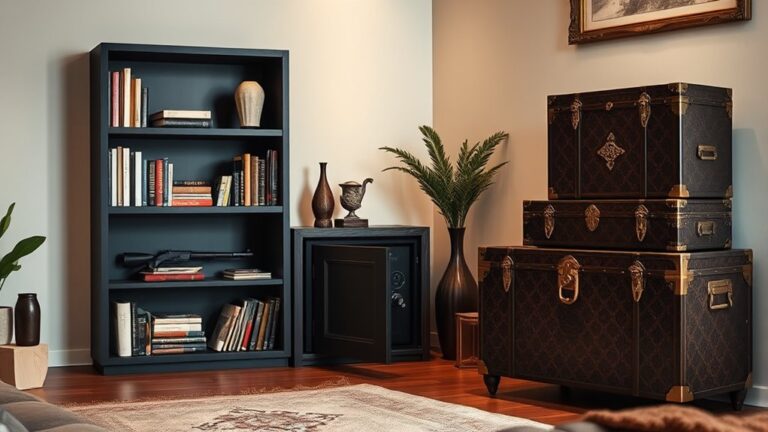
Determining the right space and location for your gun safe is key to making sure it fits your needs and stays accessible when you need it. First, check your available space—make sure there’s enough room for the safe and easy access.
Next, pick a spot that’s discreet but easy to reach so it’s secure from theft and unauthorized access. Think about environments that protect against moisture, extreme temperatures, and humidity to keep your firearms in good shape.
Also, plan how you’ll secure the safe properly. Anchoring it down prevents theft and tipping over. Keep these points in mind:
- Make sure it’s big enough for your firearms and accessories
- Hide it from plain sight for added security
- Choose a climate-controlled spot to prevent damage
- Ensure it’s easy to access during emergencies
Choose the Right Materials and Tools for Your Gun Safe
To build a secure gun safe, you need to select durable materials like thick steel or reinforced composites.
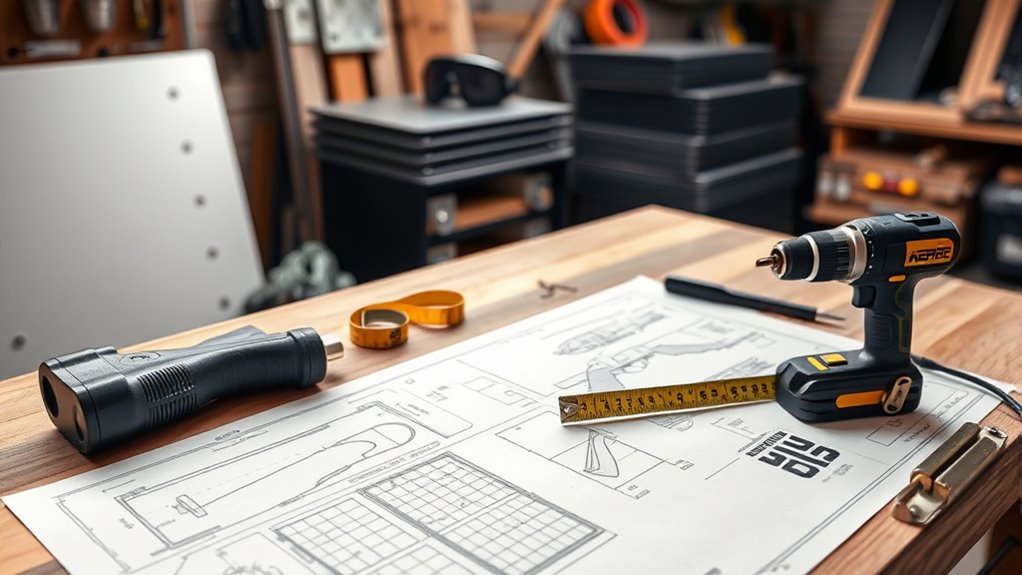
Make sure you have the essential tools, such as a drill, screwdriver, and measuring tape, to complete the project efficiently.
Choosing the right materials and tools now guarantees your safe will be strong and reliable.
Durable Material Options
Choosing the right materials for your gun safe is key to ensuring it’s strong and secure. Durable materials help keep your firearms safe from theft and damage. Consider these options:
- Reinforced Steel provides maximum strength and resistance to tampering.
- Hardened Steel Walls add an extra layer of security against drilling or cutting.
- Fire-Resistant Insulation protects your guns from heat and fire damage.
- Composite Materials like fiberglass make the safe lightweight yet sturdy.
Picking high-quality materials makes your safe more resistant to forced entry and environmental hazards. Be sure to balance durability with weight, ease of installation, and cost. Proper material choice is the foundation for a secure, long-lasting gun safe.
Essential Tool Checklist
Building a sturdy gun safe requires a well-organized toolkit tailored to your project. You’ll need basic hand tools like a drill, screwdriver set, and hammer.
A power drill speeds up drilling holes and installing hardware. A level guarantees your safe sits perfectly upright, preventing misalignment.
A measuring tape and square help you mark precise cuts and placements. For cutting and shaping materials, include a jigsaw or rotary tool.
Safety gear like goggles and gloves protect you during construction. Consider a stud finder if you’re anchoring the safe to a wall.
Don’t forget clamps for securing panels during assembly. With these essential tools, you’ll work efficiently and accurately, reducing mistakes.
Proper tools make all the difference in your project’s success.
Build a Strong and Secure Frame for Your Gun Safe
A sturdy frame is the foundation of a secure gun safe, so it’s important to choose strong materials and assemble carefully. Use high-quality steel or reinforced metal for durability.
When putting it together, make sure each joint is tightly welded or bolted for maximum strength. Keep these tips in mind to build a reliable frame:
- Use thick gauge metal to prevent easy breakage.
- Reinforce corners with extra welding or bracing.
- Double-check measurements before cutting or welding.
- Secure all panels tightly to avoid wobbling or gaps.
Install Locking Mechanisms for Maximum Firearm Security
To guarantee your gun safe provides maximum security, installing reliable locking mechanisms is essential. Choose sturdy locks like combination locks, digital keypads, or biometric systems for added protection.
Make sure the lock is compatible with your safe’s design and easy for you to operate quickly in emergencies. Properly install the locking mechanism following the manufacturer’s instructions, ensuring it’s securely mounted and aligned.
Test the lock multiple times to confirm it works smoothly and reliably. Avoid cheap or flimsy locks that could be easily forced open or tampered with.
Secure Your Safe to the Floor or Wall for Safety
Securing your safe to the floor or wall is an important step to prevent theft or accidental tipping. Proper anchoring makes it much harder for intruders to carry it away or for it to fall during an earthquake.
To do this effectively, choose sturdy mounting hardware rated for your safe’s weight. Find studs or solid concrete surfaces for the best attachment points.
Use a level to make sure the safe is perfectly aligned before drilling. Once you’ve drilled the holes, tighten the bolts securely and check for stability after installation.
Organize and Test Your DIY Gun Safe for Reliable Use
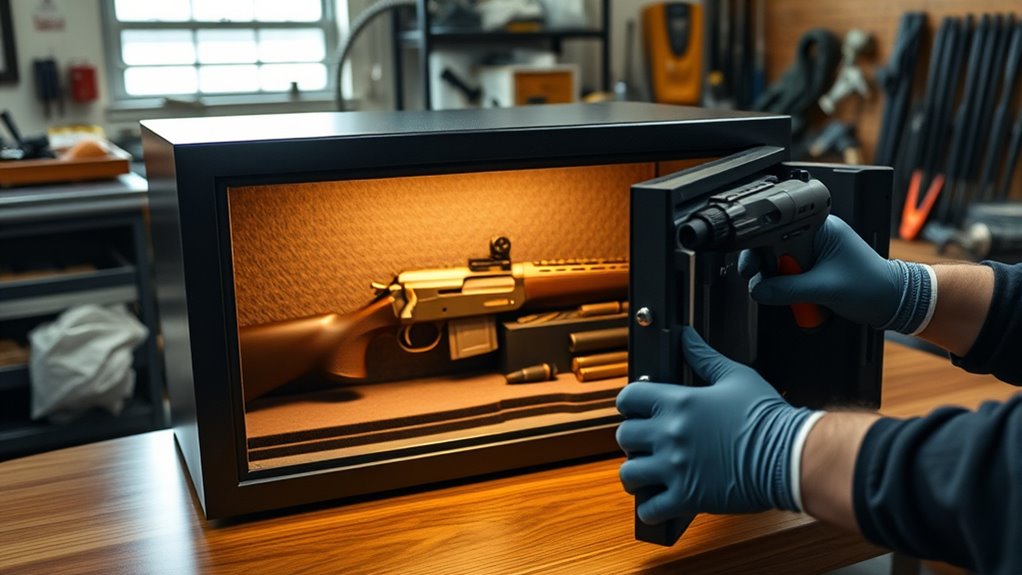
After anchoring your safe firmly in place, it’s time to organize its interior and make sure everything works properly. Start by arranging your firearms, ammunition, and accessories logically, using racks or foam padding to prevent damage.
Label compartments for quick access and safety. Next, test the safe’s locking mechanism by confirming it locks securely and opens smoothly. Check the keypad or combination lock for responsiveness, and replace batteries if needed.
Label compartments for quick access; test locking mechanisms and replace batteries to ensure smooth, secure operation.
Verify that the hinges and bolts operate without resistance. Conduct a durability test by gently applying pressure to ensure the safe’s stability. Finally, review your organization and testing to confirm everything is secure, accessible, and reliable.
Proper organization and thorough testing help keep your firearms safe and ready for use whenever you need them.
Frequently Asked Questions
How Do I Prevent My Safe From Rusting Over Time?
To prevent your safe from rusting over time, make sure to clean and dry it regularly, especially if it gets exposed to moisture. Wiping down the surfaces and paying attention to hinges and locks can really help.
You might also want to apply a rust-inhibitor or a light coat of oil on the metal parts. This creates a barrier that keeps moisture from causing rust.
Keep your safe in a dry, well-ventilated spot. Inside, you can also place silica gel packs to absorb any humidity that might build up.
Routine maintenance is key. Doing these simple steps will help protect your safe and keep your firearms in good shape for years to come.
What Is the Best Location to Install My Gun Safe?
Think of your gun safe as a treasure chest; its best hiding spot is where it’s shielded from the chaos. Install it in a cool, dry corner of your home—preferably anchored to a wall or floor—to dodge humidity and potential theft.
Avoid damp basements or overly sunny attics. Placing it in a discreet, low-traffic area keeps prying eyes away, ensuring your collection stays safe and sound.
How Often Should I Test the Locking Mechanisms?
You should test your locking mechanisms at least once every three to six months. Regular testing makes sure your safe stays reliable and secure.
When you test, open and close the lock multiple times to check that it operates smoothly. If you notice any issues, like difficulty locking or releasing, fix them right away.
Routine checks help you avoid surprises during emergencies and keep your firearms safely protected over time.
Can I Customize My Safe With Additional Features Later?
Yes, you can customize your safe with additional features later. Did you know that nearly 60% of safe owners upgrade or add features over time? You might install extra shelving, upgraded locks, or biometric access systems.
Just make sure your safe’s design allows for modifications, and check with the manufacturer about compatible customizations. Planning ahead makes future upgrades easier, so choose a safe with flexible options to suit your evolving needs.
What Are Common Mistakes to Avoid During Construction?
You should avoid rushing the construction process, as it can lead to weak joints or misaligned parts. Don’t ignore safety precautions, like wearing protective gear, because accidents happen easily.
Skipping detailed planning or measurements can result in a safe that’s not secure or functional. Also, resist the urge to cut corners by using inferior materials; quality materials guarantee durability and security.
Finally, neglecting proper ventilation during construction can cause respiratory issues.
Conclusion
Building your gun safe is like constructing a fortress, with each step strengthening your security. When I first built mine, I realized it’s not just about safety but peace of mind, knowing your firearms are secure and accessible only to you.
With proper planning and effort, you turn a simple project into a reliable sanctuary. Remember, a well-built gun safe isn’t just a storage solution; it’s a safeguard for your family’s safety, peace, and confidence.