7 Simple Steps to Unlock Your Gun Safe
Many gun owners know the frustration of trying to unlock their safe in a hurry or when it’s not cooperating. You’re not alone—many people struggle with accessing their safes quickly and smoothly.
To open your gun safe, first identify its lock type—whether it’s digital, combination, or key-operated. Gather the necessary tools like a keypad code, override key, or lockpick set if you’re trained.
Follow step-by-step instructions for your lock, applying steady pressure and patience. If you face issues like power or mechanical failure, troubleshoot or consider calling a professional locksmith.
Keep these tips in mind, and you’ll uncover more expert strategies to access your safe smoothly.
Key Takeaways
- Identify the safe’s lock type—whether it’s a combination, digital, or key lock. This will help you choose the right method to unlock it.
- If available, use the override key or emergency access options for quick entry.
- Gather necessary tools like a flashlight, tension wrench, or keypad override device before you start.
- Follow the specific procedures for your lock type. Turn dials, enter the code, or use the key as needed.
- If you run into issues, check the batteries, reset electronic locks, or consider calling a professional locksmith for help.
Identify Your Safe’s Lock Type Before Trying to Open It

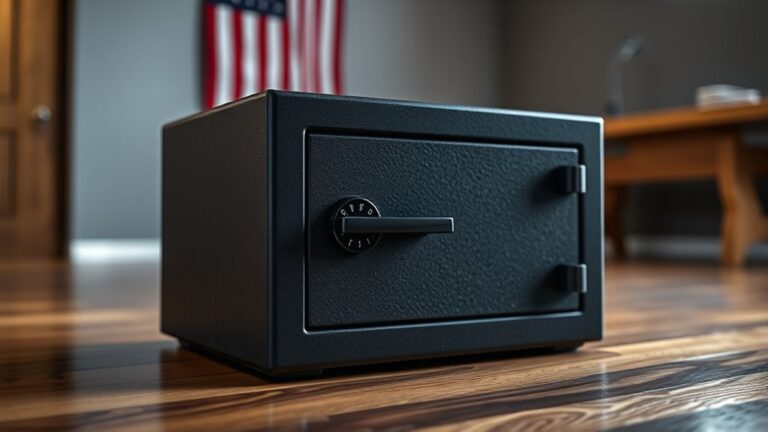
Before attempting to open your gun safe, it’s essential to identify the type of lock it uses. Different safes have different locking mechanisms, like keypad locks, dial combination locks, or key locks.
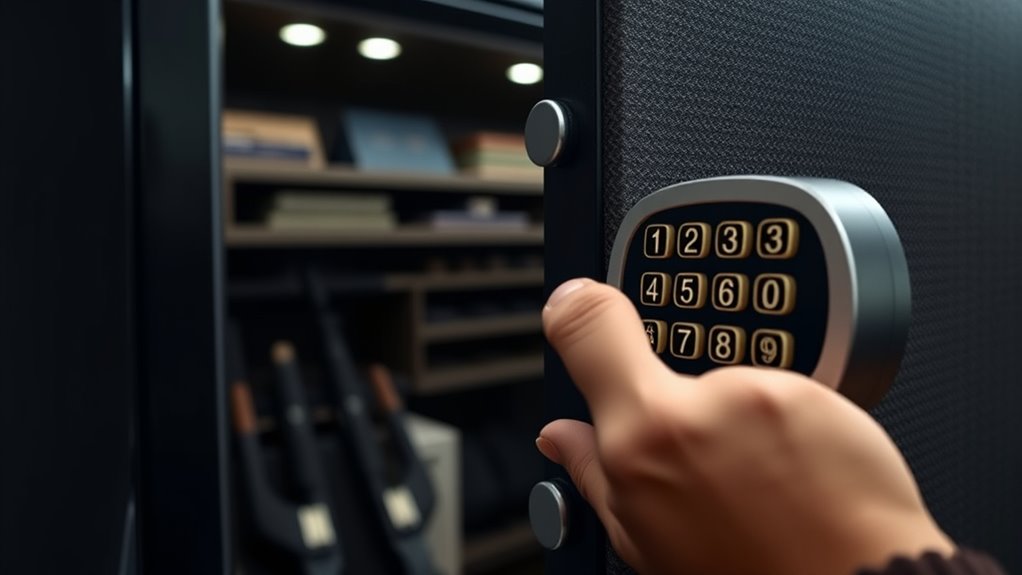
Look closely at your safe’s exterior to spot clues. Are there numbers to enter, a keyhole, or a digital keypad? If you see a keypad, it’s probably electronic. A dial suggests a combination lock. A keyhole indicates a traditional key lock.
Examine your safe’s exterior for clues: numbers, a keyhole, or a digital keypad to identify the lock type.
Knowing your lock type helps you choose the best approach for opening it. For example, electronic safes might require a code or battery check, while dial safes need precise turning.
Identifying your lock type saves you time and prevents accidental damage, ensuring you handle your safe correctly.
Quick Ways to Unlock Your Gun Safe in an Emergency
In an emergency, you can quickly open your gun safe using the override key if you have it nearby.
Magnetic methods might also work if your safe’s lock is compatible, but they require a steady hand and some practice.
Always keep these options in mind so you can access your firearm swiftly when it matters most.
Use Override Key
When you’re in an emergency and can’t access your gun safe the usual way, using the override key is a quick and reliable fix.
Find the override keyhole, which is often hidden behind a panel or inside the keypad area. Insert the key firmly and turn it slowly until the safe opens.
Remember, override keys are usually stored somewhere secure but accessible. Make sure you know exactly where yours is kept ahead of time.
Avoid forcing the key, as that could damage the lock. Using the override key is a straightforward way to get in fast when time matters.
Once you get the safe open, consider replacing or reprogramming your lock system if you find yourself needing this method often.
Try Magnetic Methods
If you can’t access your gun safe with the override key, trying magnetic methods can be a quick fix in an emergency. These tricks involve using strong magnets to manipulate the safe’s internal parts, which might disrupt the lock.
Here are some effective ways to do it:
- Use a powerful neodymium magnet to find and influence the lock’s internal components.
- Gently slide the magnet along the edges of the safe, focusing on areas where the lock’s actuator is.
- Keep applying steady pressure while moving the magnet to see if the lock releases.
What Tools Do You Need to Unlock Your Safe Safely
To open your safe safely, you’ll need the right set of tools tailored to its locking mechanism. If your safe uses a key, make sure you have the correct key and a sturdy backup key if available.
For combination locks, a reliable dial or keypad may be necessary, along with a flashlight for better visibility. Electronic safes require a compatible keypad or keypad override tool to access the control panel.
For mechanical locks, consider a tension wrench and lock pick set, but only if you’re trained to use them properly. Always use tools designed specifically for safes to avoid damage or injury.
Step-By-Step Guide to Opening Your Gun Safe
Opening your gun safe carefully and methodically helps prevent damage and keeps your security intact. To do this right, just follow these simple steps:
Opening your gun safe with patience protects both your valuables and your security.
- Identify the lock type. Check if it’s a combination, digital, or key-operated lock.
- Gather your tools. Have the right key, combination, or backup method ready before you start.
- Follow the proper procedure. For combination locks, turn the dial correctly. For digital locks, enter the code precisely. For key locks, turn the key gently.
Make sure your hands are steady and don’t rush. Double-check your inputs before trying to open the safe. If you feel resistance, stop and reassess to avoid causing damage. Patience and attention to detail are key to opening your safe smoothly and securely.
Troubleshooting Common Lockout Problems
If your safe isn’t opening, start by checking the battery power, since weak batteries often cause lockouts.
Sometimes, resetting the lock mechanism can fix the problem if the electronics are acting up.
These quick steps can save you time and help you get back in quickly.
Checking Battery Power
A common reason your gun safe might not open is a dead or weak battery. If your keypad isn’t responding or the lock feels sluggish, check the battery first.
To do this, remove the battery compartment cover, usually located inside the door or at the back of the keypad.
Inspect the batteries for corrosion, leaks, or low voltage, and replace them if needed.
Test the new batteries by trying to open the safe or using a multimeter for voltage verification.
If replacing batteries doesn’t fix the problem, make sure they’re installed correctly with the proper polarity.
Weak batteries can cause lockouts or unresponsiveness, so regular replacement helps keep your safe working.
Always carry spare batteries for quick troubleshooting.
Resetting Lock Mechanism
When replacing the batteries doesn’t fix the problem, resetting the lock can often clear any electronic glitches causing the lockout. Most electronic safes have a reset button or a specific sequence you need to follow to reset the lock.
Check your safe’s manual for the exact instructions. Usually, you’ll need to press and hold the reset button for several seconds or enter a reset code. Make sure the safe is powered on and that the keypad responds.
If your safe has a manual override or key, use it to access the interior and reset the electronics. After resetting, carefully re-enter your code and test the lock.
Resetting can fix minor software glitches and get everything working normally again. This can help you regain access quickly and without hassle.
When to Call a Professional Locksmith
Sometimes, trying to open your gun safe on your own can cause more harm than good, especially if you’re not sure about the lock type or if the safe isn’t working right. If you’ve already tried the basic methods without success, it’s time to call a professional locksmith. They know how to handle complex lock mechanisms safely and efficiently.
Consider calling a locksmith if:
- You’ve tried all DIY options and still can’t get into your safe.
- The lock looks damaged or stuck, and forcing it might make things worse.
- You think the locking mechanism isn’t working properly or has broken down.
A locksmith can open your safe without causing any damage, keeping your valuables safe and your safe functioning properly.
Tips to Prevent Future Lockouts and Keep Your Safe Secure
To prevent future lockouts and keep your safe secure, establishing good habits and regular maintenance is key. Always test your lock and combination periodically to make sure they work smoothly.
Keep backup keys or alternative access methods in a secure, known location. Avoid forcing the lock if it sticks; instead, consult a professional. Regularly clean and lubricate the locking mechanism to prevent dirt buildup.
To help you stay organized, consider this quick reference:
| Tip | Benefit |
|---|---|
| Regularly test your lock | Ensures smooth operation and spots problems early |
| Store backup access securely | Prevents lockouts during emergencies |
| Schedule maintenance checks | Keeps your safe functioning reliably |
Consistent care helps prevent issues and keeps your valuables secure.
Frequently Asked Questions
Can I Open My Safe Without Damaging It?
Yes, you can access your safe without damaging it by carefully following the manufacturer’s instructions or using the backup key or override code if available.
If you’re locked out, avoid forcing the door open, as this can cause damage. Instead, contact the safe’s customer support or a professional locksmith.
They have the right tools and expertise to gain entry to your safe safely and without harm.
Are There Any Legal Restrictions on Opening a Locked Safe?
Think of legal restrictions as the guard dogs of safety. You don’t want them barking up the wrong tree.
Yes, there are laws that govern opening a locked safe, especially if it’s not yours or involves sensitive items.
You could face serious penalties if you break into a safe illegally.
Always check local, state, and federal laws before attempting to open a locked safe.
And consider consulting a professional locksmith if needed.
How Often Should I Change My Safe’s Combination or Code?
You should change your safe’s combination or code at least once a year to keep it secure. If you notice any signs of tampering, forget your code, or think someone else has accessed it, change it right away.
Regular updates help prevent unauthorized access and keep your valuables safe. Whenever someone who knew the code leaves your household or workplace, resetting the combination is a smart move.
Staying on top of these updates is a good way to ensure your safe remains secure and protected.
What Should I Do if My Safe’s Lock Is Broken?
Your safe’s lock is broken like a silent scream, and you need action. First, don’t try to force it open, as that can cause more damage.
Contact a professional locksmith or the safe’s manufacturer for help. Keep your proof of purchase handy, and avoid DIY fixes unless you’re trained.
Patience and expert help are your best bets to restore security quickly and safely.
Is It Safe to Store Spare Keys Outside the Safe?
Storing spare keys outside the safe isn’t safe because it creates a security risk. Anyone who finds the key can access your safe and its contents.
Instead, hide the spare key in a secure, discreet location known only to you, or give it to a trusted person.
Consider using a combination lock or biometric safe for added security so you don’t need to keep spare keys somewhere vulnerable.
Conclusion
Think of your gun safe as a fortress guarding your peace of mind. By understanding its lock, acting quickly in emergencies, and knowing when to call a professional, you hold the key to your security.
Each step you take builds a sturdy shield against lockouts. You’ll keep your safety intact and your valuables protected. It’s all about being prepared and staying calm.
Remember, mastering these simple steps helps ensure your gun safe remains secure. Keep these tips in mind, and your sanctuary will stay strong—a silent guardian watching over what matters most.