8 Simple Steps to Build a Wooden Gun Safe
Building a wooden gun safe might seem like a daunting project, especially if you’re worried about keeping your firearms secure and out of reach. You’re not alone—many people struggle with finding affordable, reliable ways to protect their valuables at home.
Luckily, creating a sturdy, customized safe is easier than you think.
To build a wooden gun safe, start by gathering quality materials like plywood, tools, and safety gear. Design your safe with the right dimensions, considering interior features like shelves and lock mechanisms.
Cut and assemble the panels carefully, reinforcing corners with brackets for durability. Finish by applying paint or stain, and add personal touches if desired.
Regularly maintain and weatherproof your safe, ensuring it stays secure and protected. Keep going to uncover detailed steps for a successful build.
Key Takeaways
- Plan and design the safe’s size, interior features, and reinforcement for strength and security. Take your time to sketch out what you want, making sure everything fits and is easy to access.
- Gather high-quality materials, tools, and safety gear before you start building. It’s better to have everything ready so you don’t have to stop halfway through.
- Cut, assemble, and reinforce the panels with accurate measurements. Use clamps to hold pieces steady and drill pilot holes to prevent splitting.
- Finish the surface with paint, stain, or sealant. Make sure to apply a smooth, protective coating to keep the wood looking good and lasting longer.
- Keep humidity levels stable and monitor the environment. This helps preserve the wood and keeps your firearms in good condition over time.
Gather Materials and Tools for Your Wooden Gun Safe
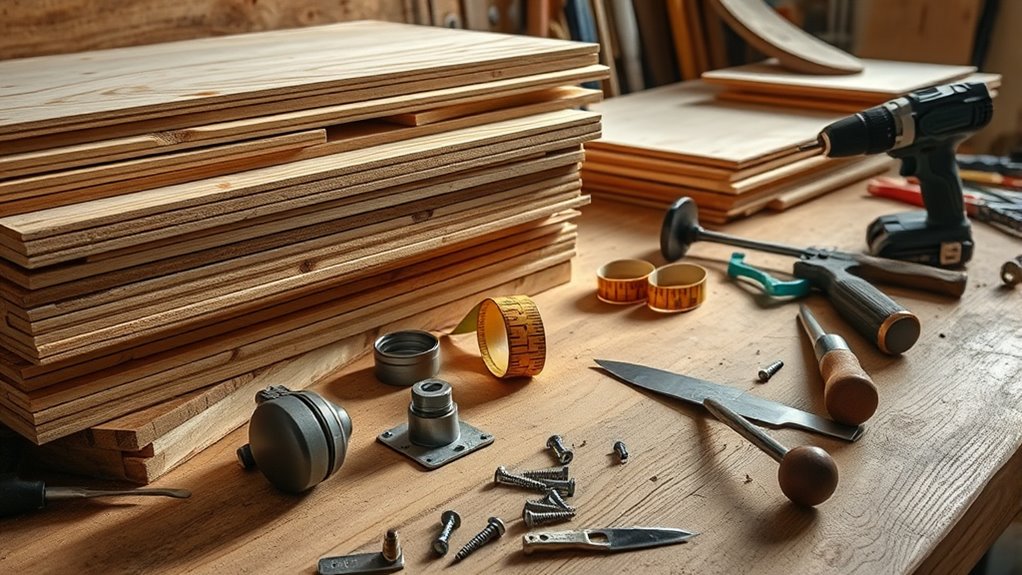
To start building your wooden gun safe, gather all the necessary materials and tools first. You’ll need high-quality plywood or hardwood for the main structure, along with screws, nails, and wood glue for assembly.
Begin by collecting quality materials and essential tools to ensure a smooth woodworking process.
A measuring tape and a pencil are essential for precise markings, while a square helps guarantee right angles. Power tools like a saw, drill, and screwdriver make cutting and fastening easier.
Consider adding hinges, a lock mechanism, and foam padding for interior protection. Don’t forget safety gear such as goggles and gloves to protect yourself during construction.
Organize everything before you begin to streamline the process. Having all materials and tools ready saves time and reduces interruptions, making your project smoother and more efficient.
Design Your Safe: Plan Dimensions and Features
Before you start building, it’s essential to plan the dimensions and features of your safe carefully. Think about how many guns you want to store and whether you need extra space for ammunition or accessories.
Decide on a height, width, and depth that fit your space and suit your storage needs. Consider adding shelves, a lock mechanism, or interior padding for protection.
Keep in mind the weight of the safe, especially if you plan to secure it to a wall or floor. Draw a simple sketch to visualize the layout, making adjustments as needed.
Planning these details upfront saves you time later and helps guarantee your safe is both functional and secure. Clear planning sets the foundation for a successful build.
Cut and Assemble Wooden Panels for Your Safe
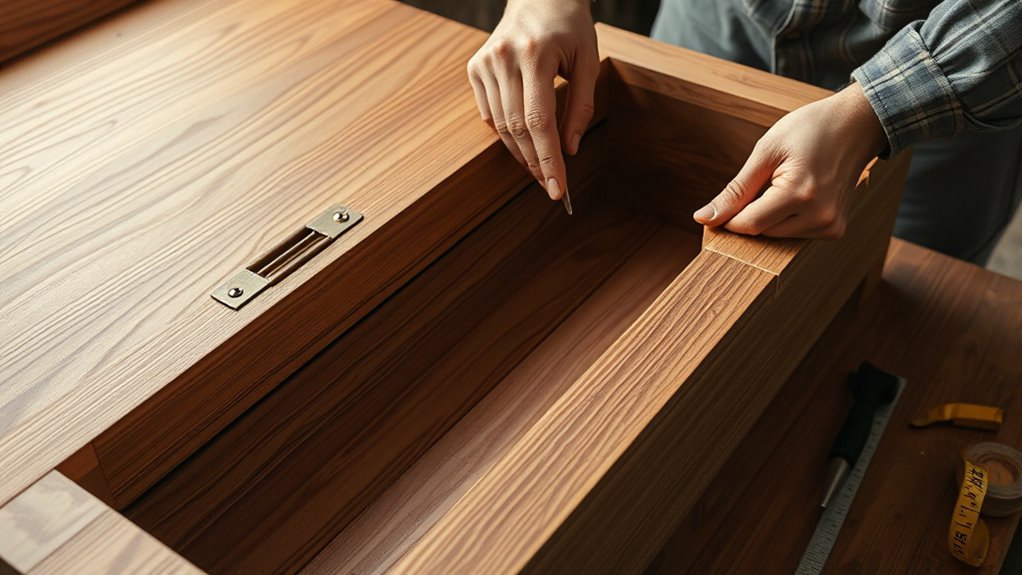
Begin by carefully measuring and marking your wooden panels according to your planned dimensions. Use a ruler and pencil to guarantee precise lines, double-checking measurements before cutting.
Set your saw to the correct depth and cut along your marked lines, taking your time for accuracy. Smooth any rough edges with sandpaper to prevent splinters and ensure a clean fit.
When assembling, align the panels carefully, using clamps to hold pieces steady. Drill pilot holes before screwing to prevent the wood from splitting.
Secure the panels tightly, making sure corners are square. If needed, use wood glue at joints for extra stability, but avoid over-applying.
Take your time during assembly to confirm the panels fit snugly, forming a sturdy frame for your gun safe.
Reinforce the Structure for Durability and Security
To make your gun safe more durable and secure, try reinforcing the corners with sturdy brackets. It’s a simple step that can really boost its strength.
Adding cross bracing across the panels will also help prevent wobbling and make the whole structure more solid. These small upgrades can make a big difference in protecting your firearms.
Use Reinforced Corners
Reinforcing the corners of your wooden gun safe is key to making it stronger and more secure. Well-built corners help prevent warping, splitting, and forced entry, making your safe tougher to break into.
To do this right, start by adding corner braces or metal brackets. Secure them with screws to reinforce the joints and stop any movement. Installing corner blocks or gussets inside the corners also adds extra support and stability.
Don’t forget to use wood glue and clamps to make sure the joints are tight before fastening. This creates a solid, unified structure that’s much harder for intruders to pry open or damage.
These simple steps strengthen your safe’s critical points, giving you peace of mind that your firearms and valuables stay protected over time.
Add Cross Bracing
Adding cross bracing inside your wooden gun safe really boosts its strength and stability. You do this by installing diagonal braces across the interior walls, which helps prevent warping or twisting over time.
Use sturdy materials like plywood or hardwood strips, and cut them to fit snugly between corners or along the walls. Secure the braces with strong wood screws or nails, making sure they’re tightly fixed for maximum support.
Cross bracing spreads stress more evenly across the structure, making it more durable against impacts or shifting. This reinforcement also helps keep the safe’s shape intact, especially if the wood is thinner.
Install Locking Mechanisms and Internal Storage
Installing the locking mechanisms and internal storage is a key step to make sure your wooden gun safe is both secure and functional. First, pick a sturdy lock—whether it’s a combination, keypad, or keyed lock—that matches your security needs.
Next, attach the lock to the safe’s door with screws, making sure it’s firmly in place. Test the lock to ensure it opens and closes smoothly.
Then, organize the inside by adding shelves, padded compartments, or drawers. This helps keep your firearms and accessories tidy and easy to access.
Following these steps will make your safe both secure and user-friendly when you need it.
Finish Your Gun Safe With Paint, Sealant, or Stain
Finishing your gun safe with paint, sealant, or stain not only makes it look better but also helps protect the wood from moisture and damage. Pick a finish that matches your style and the environment where the safe will sit.
If you want a natural look, stain enhances the wood grain. Paint gives a bold, uniform color. Sealants create a protective layer, shielding the wood from humidity and scratches.
Before you start, make sure the surface is clean and smooth. Use even strokes when applying, and let each coat dry completely. You might need several coats for lasting durability.
This step not only makes your safe look great but also extends its life. It keeps your firearms protected from moisture and environmental wear.
Add Personal Touches and Custom Features
To truly make your wooden gun safe unique and tailored to your needs, consider adding personal touches and custom features that reflect your style and preferences. These details can turn a simple project into a functional piece of art.
Here are some ideas to get you started:
- Add a personalized nameplate or engraved message for that special touch.
- Install custom foam padding or compartments to organize your firearms exactly how you like.
- Incorporate decorative hardware or handles that match your home decor or personal aesthetic.
These customizations not only elevate the look but also improve how your safe functions. They make your safe a true reflection of your personality and needs.
Maintain Your Wooden Gun Safe for Long-Term Safety
To keep your wooden gun safe secure over time, it’s important to set up a regular cleaning routine to prevent dust and dirt from building up.
Controlling humidity levels is also key to avoid warping or cracking the wood.
Regular Cleaning Routine
Regular cleaning is essential to keep your wooden gun safe in top condition and guarantee its long-term safety. Regular upkeep prevents dust buildup, maintains the finish, and preserves the wood’s integrity.
To keep your safe in peak shape, follow these simple steps:
- Use a soft, lint-free cloth to gently wipe down the exterior and interior surfaces, removing dust and fingerprints.
- Avoid harsh chemicals; instead, opt for a mild wood cleaner or a slightly damp cloth to preserve the finish.
- Check for any signs of damage or wear, addressing issues early to prevent long-term problems.
Sticking to a routine ensures your safe remains beautiful and functional for years to come, safeguarding your firearms effectively.
Proper Humidity Control
Maintaining proper humidity levels is key to protecting your wooden gun safe from warping, cracking, or mold over time. Aim to keep humidity between 40-60%. Too much moisture can cause the wood to swell or develop mold, while too little can lead to cracking or splitting.
Use a hygrometer regularly to monitor the humidity levels. If the air feels too dry, consider adding a small humidifier or placing a moisture-absorbing desiccant inside the safe. Conversely, if humidity is too high, use a dehumidifier or ventilate the safe periodically.
Keep the safe in a stable environment, away from direct sunlight or heating sources. Proper humidity control helps preserve the wood’s integrity and keeps your firearms protected for years to come.
Frequently Asked Questions
How Can I Ensure My Wooden Gun Safe Is Fire-Resistant?
To make your wooden gun safe fire-resistant, line the interior with fireproof materials like fireboard or drywall. This creates a barrier that helps protect against heat and flames.
Apply a fire-resistant sealant or insulative spray to the exterior for extra protection. You might also consider adding a fire-resistant lining, such as ceramic fiber, inside the safe.
Keep the safe in a cool, low-humidity environment to prevent damage from moisture and heat. Regularly check and maintain these layers to ensure your safe stays protected against fire damage effectively.
What Are the Best Hinge Types for Security and Durability?
Think of your hinges as the backbone of your safe’s security. Heavy-duty, stainless steel hinges are your best bet for durability and strength, resisting warping and corrosion over time.
Continuous hinges provide added security because they run the full length of the door, making it harder to pry open. Ball-bearing hinges also offer smooth operation and can handle frequent use.
Prioritize these types to keep your safe secure and sturdy for years to come.
How Do I Prevent Warping or Cracking Over Time?
To prevent warping or cracking over time, choose high-quality, kiln-dried wood that resists moisture changes.
Apply a protective finish like sealant or polyurethane to help guard against humidity and temperature shifts.
Keep the safe in a stable environment, avoiding direct sunlight and damp areas to maintain its condition.
Regularly check it for any signs of damage, and sand or refinish the surfaces when needed to keep it strong and durable.
Can I Add a Biometric Lock to a Wooden Safe?
Yes, you can add a biometric lock to a wooden safe, turning it into a high-tech treasure chest. Imagine your safe as a sturdy fortress and the biometric lock as a secret handshake that only you hold.
To do this, carefully drill a hole, install the scanner, and make sure it’s securely wired. This upgrade combines craftsmanship with modern security, making your safe both beautiful and smart.
What Safety Precautions Should I Take During Assembly?
You should wear safety goggles to protect your eyes from dust and debris, and use gloves to prevent splinters and cuts.
Make sure your workspace is clean and well-lit so you can avoid accidents.
Always read and follow the instructions that come with your tools, and keep them away from children or pets.
Double-check your measurements before cutting or assembling to avoid mistakes.
Taking these precautions will help you stay safe throughout the entire building process.
Conclusion
By following these steps, you’ve crafted more than just a wooden gun safe—you’ve built a sanctuary of security and craftsmanship. Like a sturdy fortress from ancient tales, your safe stands as a symbol of your effort and care.
With each nail and stain, you’ve woven a shield of protection, echoing the timeless promise of safety. Now, your cherished firearms rest within this wooden gun safe, born from your hands.
It’s more than just a storage spot—it’s a testament to your dedication. Your wooden gun safe is now ready to guard your peace of mind for years to come.