10 Steps to Mount a Sight on Your Shotgun
Mounting a sight on your shotgun can be a tricky task, especially if you’re new to the process. Many enthusiasts struggle with ensuring their sight is both secure and perfectly aligned for accurate shooting. You’re not alone—getting it right takes patience and the right steps.
To mount a sight on your shotgun, start by gathering all necessary tools and safety gear. Choose a compatible sight based on your shooting needs, then thoroughly clean your firearm.
Mark your mounting points accurately, install the mounting base or rail securely, and attach the sight, ensuring proper alignment.
Zero and test your sight for stability, then troubleshoot any issues. Regular maintenance keeps your sight reliable.
Keep going to find out more detailed steps for a precise and secure installation.
Key Takeaways
- Choose a sight that fits your shotgun and what you’ll be using it for. Think about features like visibility in different lighting and how tough it is.
- Take a good look at your shotgun and clean it thoroughly. Make sure there’s no rust or dirt on the surface before you start installing anything.
- Use a ruler and pencil to mark exactly where you want to place the mounting points. Make sure everything lines up correctly before moving on.
- Attach the mounting base or rail securely. Tighten the screws evenly so the mount doesn’t wobble or come loose.
- Place the sight onto the mount and check the alignment.
- Make small adjustments as needed to zero in the sight. It’s a good idea to test it out with some shots to see if it’s accurate.
Gather the Tools and Supplies You Need
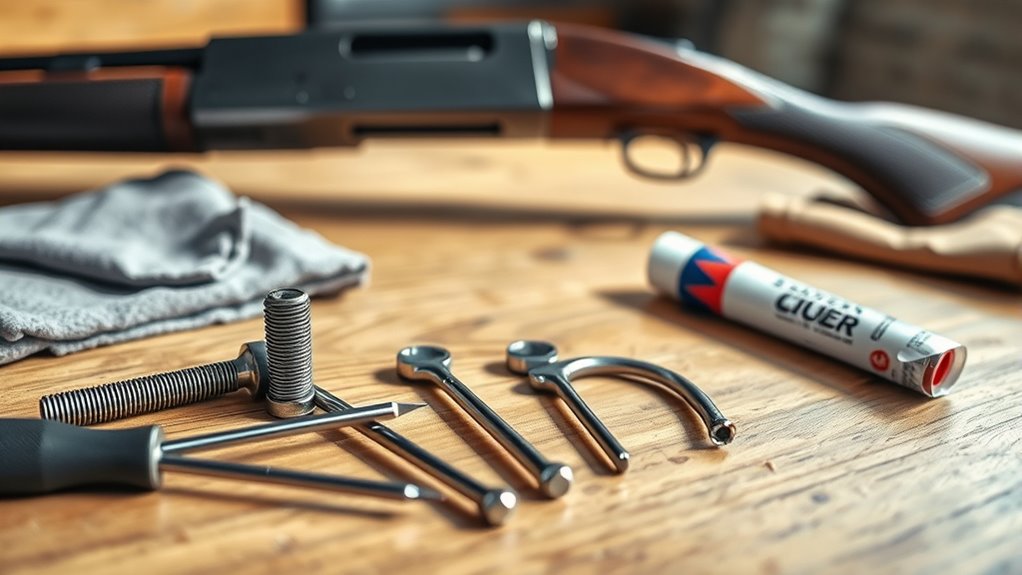
Gather all the tools and supplies you’ll need before you start mounting your sight.
You’ll want a set of screwdrivers—usually both Phillips and flat-head—and a torque wrench to ensure proper tightness.
Grab some cleaning supplies, like a cloth and alcohol wipes, to remove dirt or oil from the mounting area.
It’s also helpful to have a drill or punch ready, if needed, for installation.
Don’t forget the sight itself and any mounting hardware it requires, such as screws or adapters.
Having everything on hand first helps keep the process smooth and minimizes interruptions.
Double-check you have everything before you begin so you can focus on mounting your sight efficiently.
Choose the Right Sight for Your Shotgun
Choosing the right sight is key to improving your shotgun’s accuracy and handling. First, think about what kind of shooting you’ll be doing—hunting, target shooting, or home defense—as each needs different sights.
Selecting the right sight enhances your shotgun’s accuracy and handling for any shooting purpose.
Next, look at the sight features like how well they show up in low light, how tough they are, and how easy they are to use. Finally, make sure the sight mount fits your shotgun and matches your skill level.
Here are some options to consider:
- Bead sights – simple and quick for close-range shots.
- Fiber optic sights – make it easier to see in various lighting conditions.
- Red dot sights – help you aim faster and shoot more accurately.
Choosing the right sight helps you aim better, builds confidence, and makes shooting more enjoyable.
Prepare Your Shotgun: Safety and Cleaning Tips
Before working on your shotgun, make sure you wear safety gear like gloves and eye protection.
Clean your firearm thoroughly using proper techniques to avoid damage or corrosion.
Always inspect your shotgun carefully to ensure it’s safe and ready for mounting the sight.
Safety Gear Essentials
Always wear proper safety gear when handling your shotgun to protect yourself from accidents and injuries. Safety gear is essential for keeping you safe during sight mounting and other firearm tasks.
First, always wear eye protection like safety glasses to shield your eyes from debris or accidental discharge fragments. Second, use hearing protection such as earplugs or earmuffs to prevent hearing damage from loud noises.
Third, consider wearing gloves to improve grip and protect your hands from sharp edges or hot surfaces. These items help you stay safe and focused while working on your shotgun.
Proper Cleaning Techniques
Proper cleaning is essential to keep your shotgun functioning safely and reliably. After each use, disassemble the gun according to the manufacturer’s instructions.
Use a cleaning rod, patches, and solvent to thoroughly clean the barrel, removing residue and fouling. Pay close attention to the chamber and bolt areas, making sure no debris remains that could cause malfunctions.
Wipe down external surfaces with a cloth to remove dirt and moisture, which can cause rust. Apply a light coat of gun oil to protect metal parts from corrosion.
Avoid harsh chemicals that might damage finishes. Regular cleaning not only maintains performance but also extends your shotgun’s lifespan.
Always verify the firearm is unloaded before cleaning, and follow safety procedures during the process.
Inspection Before Use
Inspecting your shotgun before use is essential to make sure it’s safe and ready for action. Doing a proper check helps prevent accidents and keeps it working at its best.
Start by checking the barrel for any obstructions or debris that could cause dangerous malfunctions. Next, examine the action and locking mechanism to ensure they move smoothly without sticking or making unusual noises.
Then, look over the stock and receiver for cracks, wear, or damage that might affect safety or accuracy. Also, make sure all screws, bolts, and fittings are tight and secure.
If you notice any problems during your inspection, don’t use the shotgun until you’ve made the necessary repairs. Doing a thorough check before each use keeps you safe and helps ensure your firearm functions reliably every time.
Mark and Align Your Mounting Points Correctly
To make sure your sight is mounted correctly, start by marking the exact spots where the mount will sit on your shotgun. Use a pencil or marker to gently outline the base of the mount on the gun’s surface.
Make sure your markings are precise and line up with the mounting holes or slots. Check that the marks are consistent on both sides and centered so the sight will be level once installed.
Use a ruler or straightedge if you need to verify that your lines are straight. Double-check everything before moving on, because accurate placement really impacts your aim and the sight’s performance.
Taking your time to mark and align properly will prevent misalignment and save you from having to make adjustments later. Properly marked points create a solid foundation for a secure, precise mount.
Install the Mounting Base or Rail on Your Shotgun
Begin by securing the mounting base or rail to your shotgun at the marked points, making sure it lines up with your previous markings. Once it’s in place, use the right screws or clamps to tighten it securely. Ensure the base sits flush against the gun’s surface without any gaps.
Next, check that the rail or mount is straight and properly aligned. Tighten all screws evenly to prevent any shifting or wobbling. Gently try to move the base—if it stays firmly in place, you’re good to go.
Proper installation is key to making sure your sight mounts correctly and stays in place during use. Take your time to double-check everything before moving on to the next step.
Attach the Sight Properly to the Mounting Platform
Carefully position your sight onto the mounted platform, making sure it lines up with your markings or desired point of aim.
Once it’s in place, check that the base or rail is clean and free of debris to ensure a secure fit.
Use your fingers or the provided tools to tighten the mounting screws gradually, alternating sides so the sight stays centered.
Don’t overtighten, as this could damage the sight or mount. Confirm that the sight is level and properly aligned with your markings.
If your sight has adjustment screws, lightly tighten them to hold it securely but wait to fully tighten until you verify the correct positioning.
Take your time to make sure the sight is firmly attached without shifting.
Zero and Align Your Sight for Accurate Shooting
To hit your target accurately, you need to make sure your sight is properly zeroed and aligned.
Focus on keeping your zeroing techniques consistent to avoid discrepancies in your shots. Precise sight alignment is key to improving your shooting accuracy and reliability.
Precise Sight Alignment
Achieving precise sight alignment is key for accurate shooting, and it all begins with zeroing your sight properly. When your sight is aligned right, your shots will hit exactly where you aim.
Start by centering the sight in your view so it’s perfectly lined up with the target. Then, check how the sight sits in relation to the barrel to avoid any misalignment.
Finally, carefully adjust the sight until it lines up perfectly with your target point. This ensures you can aim consistently and shoot accurately every time.
Consistent Zeroing Technique
Establishing a consistent zeroing technique is key to reliable accuracy. To do this, shoot from a stable position with your shotgun rested or supported to minimize movement.
Use the same target distance and environmental conditions each time you zero your sight. Aim precisely at the target’s center, then fire a shot and check where it lands relative to your point of aim.
Adjust the sight in small increments until your shots consistently hit the desired spot. Record your settings for future reference, so you know what works best.
Repeat this process regularly to keep your accuracy sharp, especially after changing the sight or if environmental conditions shift. A systematic approach helps keep your sight aligned and gives you confidence in every shot.
Test Your Sight for Stability and Precision
Once you’ve mounted your sight, it’s important to check that it’s stable and accurate. Start by securing your shotgun firmly and aiming at a distant target.
Next, gently shake the firearm to make sure the sight doesn’t move or shift. Then, look through the sight and verify it lines up consistently with your target, adjusting if necessary.
Finally, shoot some test shots at a known distance. Check how your shots group. If they’re off or scattered, double-check your sight alignment and make adjustments as needed.
Troubleshoot Common Mounting Problems
Even after securing your sight and confirming its stability, mounting problems can still pop up. You might notice the sight isn’t lining up right or feels loose.
Check if the mounting base fits your shotgun model. Sometimes, screws can be stripped or not tight enough, which causes instability.
Make sure you’re using the right tools and following the proper torque specs. If the sight isn’t sitting flush, clean all mounting surfaces to remove debris or oil that could prevent it from seating properly.
Cross-threaded screws are another common issue. If you see thread damage, replace the screws. Finally, double-check that your sight is compatible with your mounting system.
Addressing these issues quickly can prevent further damage and ensure your sight works reliably.
Maintain and Care for Your Shotgun Sight System
To keep your shotgun sight system in top condition, you need to stay on top of regular cleaning and proper storage.
Clean your sights gently to remove dirt and debris, and store your shotgun in a dry, secure place to prevent damage.
These simple steps help guarantee your sight stays accurate and reliable for years to come.
Regular Cleaning Practices
Regular cleaning is essential for keeping your shotgun sight system functioning accurately and reliably. Dirt, dust, and residue can impair visibility and impact accuracy. To keep your sight in top condition, follow these steps:
- Use a soft brush or cloth to gently remove debris from the sight and surrounding area.
- Apply a small amount of lens cleaner or isopropyl alcohol to a microfiber cloth, then wipe the sight to remove smudges and fingerprints.
- Inspect for any damage or loose parts, tightening screws as needed.
Perform this cleaning routine after every few uses, especially if you’ve been shooting in dusty or muddy environments. Regular maintenance guarantees your sight remains clear, precise, and ready for your next shot.
Proper Storage Techniques
Proper storage is key to preserving your shotgun sight system’s accuracy and longevity. After use, clean the sight thoroughly to remove dirt, oil, and debris.
Store your shotgun in a dry, cool place away from direct sunlight and extreme temperatures, which can cause materials to degrade. Use a gun safe or a padded case to prevent physical damage and protect against dust and moisture.
Consider applying a light coat of oil to metal components to prevent rust. Keep the sight covered or wrapped if not in use for extended periods.
Regularly inspect the sight for any signs of corrosion or damage, and address issues promptly. Proper storage guarantees your sight remains reliable and ready whenever you need it.
Frequently Asked Questions
Can I Mount a Sight on Any Shotgun Model?
Yes, you can mount a sight on most shotgun models, but you’ll want to check compatibility first. Some shotguns have specific mounting rails or receiver styles that work best with certain sight types.
Make sure the sight’s mounting system matches your shotgun’s design. If not, you might need adapters or custom mounts to get everything to fit properly.
Always follow the manufacturer’s instructions to ensure the sight is attached correctly and safely.
What Is the Ideal Height for Mounting a Sight?
Think of your sight as the eye of your shotgun’s soul—its height shapes your aim’s harmony. The ideal height lines up the sight with your natural eye line, usually about 1/4 to 3/8 inch above the bore.
This setup helps minimize parallax and ensures a clear sight picture. Adjust it based on what feels comfortable and suits your shooting style, kind of like tuning a musical instrument for perfect pitch.
How Often Should I Realign or Re-Zero My Sight?
You should re-align or re-zero your sight whenever you notice a drop in accuracy, after changing ammunition, or if your firearm gets bumped or dropped.
Regular check-ups are a good idea, especially if you hunt often or use your shotgun frequently. Typically, re-zero every few months is enough, but trust how you’re shooting.
If things feel off or your shots aren’t hitting the mark, it’s time for a quick realignment to ensure you shoot accurately.
Are There Specific Tools Recommended for Different Sight Types?
Yes, there are specific tools recommended for different sight types. For example, you’ll need a scope wrench or ring wrench for scopes.
For fiber optic sights, a hex or Allen wrench is usually required. And for bead sights, a screwdriver is the tool you’ll want.
Just make sure to use the correct size so you don’t damage your sight or firearm. Having the right tools ensures proper installation and alignment.
This will help make your shooting more accurate and enjoyable.
Can I Upgrade or Change Sights Without Removing the Mount?
Can you upgrade or change sights without removing the mount? Usually, you can if your sight uses a quick-release mechanism or is mounted on a rail that stays in place.
But often, removing the mount gives you a cleaner, more secure fit for the new sight. Are you okay with some convenience at the expense of stability, or do you prefer a more permanent upgrade?
Conclusion
Now that you’ve mastered these steps, mounting your shotgun sight becomes smooth and straightforward. With patience and attention to detail, you’ll boost your accuracy and confidence with every shot.
Remember, proper installation is key to reliable performance. Take your time and double-check your work to avoid any mistakes. Just like tuning a fine instrument, your shotgun and sight system will perform best when cared for carefully.
When you follow these steps for mounting a shotgun sight, you’ll ensure it stays secure and functions perfectly. The effort you put in now will pay off during your next shooting session.