8 Essential Steps to Clean Your Glock 48
Cleaning your Glock 48 might feel like a chore, especially when you’re unsure where to start. Many gun owners struggle with knowing the right steps to keep their firearm in top shape. You’re not alone—proper maintenance is key to reliability and safety, and it’s easier than you think.
To clean your Glock 48, start by gathering your supplies and ensuring safety by removing the magazine and clearing the chamber.
Disassemble the firearm and clean the barrel, slide, and other parts thoroughly with solvent and brushes. Lubricate key moving components, then reassemble, checking for proper function.
Inspect for wear or damage and finish with a light lubrication and overall inspection.
For detailed steps and tips, keep going—you’ll uncover everything you need for a safe, effective clean.
Key Takeaways
- Remove the magazine, make sure the chamber is empty, and always point the firearm in a safe direction before starting to disassemble.
- Take apart the slide, barrel, and recoil spring so you can clean all the parts thoroughly.
- Use the right cleaning tools and solvent to scrub and wipe down the barrel, slide, and internal components.
- Check all parts carefully for any damage, wear, or corrosion. This is a good step before applying lubricant to key contact points.
- Once everything is clean and inspected, reassemble the firearm. Do a function check to ensure it works properly.
- Finish up by applying a light coat of lubricant to keep everything operating smoothly.
Gather the Right Supplies to Clean Your Glock 48
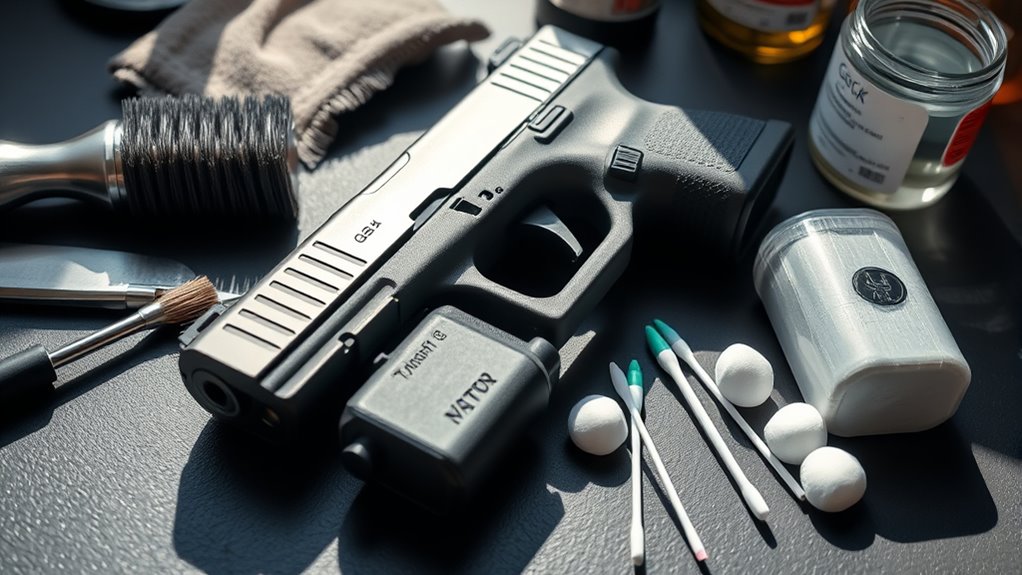
Before you start cleaning your Glock 48, gather all the supplies you’ll need to make the process smooth and easy. You’ll want a cleaning kit with a bore brush, cleaning patches, and a cleaning rod.
Gather all your cleaning supplies first for a smooth, hassle-free Glock 48 maintenance session.
Grab a gentle gun solvent and a lubricant made specifically for firearms. A soft cloth or microfiber towel is great for wiping down surfaces without scratching them.
Don’t forget a toothbrush or small brush for those hard-to-reach spots. You might also need a punch tool for disassembly if necessary. Keep a small container or tray nearby to hold tiny parts.
Having everything ready before you start saves time and keeps your cleaning organized. Proper prep helps you clean thoroughly without interruptions.
Safely Remove the Magazine and Clear the Chamber
Start by removing the magazine from your Glock 48 to prevent any accidental discharge. Next, pull back the slide to check the chamber. Visually and physically verify it’s empty—no round should be present. This guarantees safety before handling your firearm.
Use the following table for quick reference:
| Step | Action | Tip |
|---|---|---|
| Remove magazine | Press the magazine release | Keep fingers clear of the mag |
| Lock slide back | Pull slide fully rearward | Use the slide lock lever |
| Check chamber | Visually inspect chamber | Confirm it’s empty |
| Release slide | Release the slide gently | Ready for cleaning |
| Store safely | Keep gun pointed in a safe direction | Until cleaning begins |
Always double-check that the chamber is clear before proceeding.
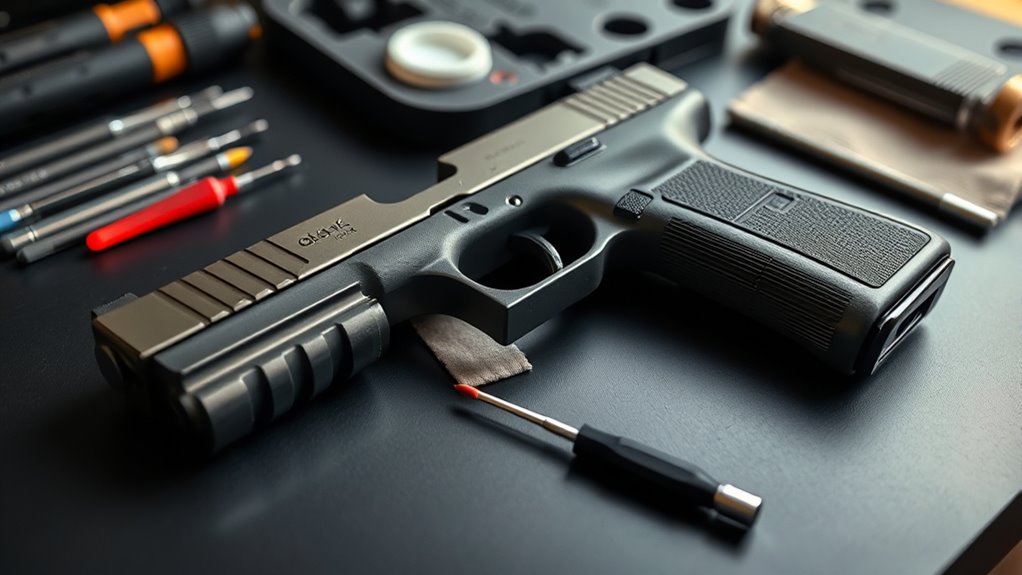
Disassemble Your Glock 48 for Cleaning
With the chamber confirmed empty and the firearm pointed away from you, you can start disassembling your Glock 48. First, make sure the gun is unloaded. Pull back the slide slightly and check that it’s empty.
Then, release the slide and pull the trigger to release the firing pin safety. Next, pull down the takedown tabs on each side of the frame while holding the slide and sliding it forward off the frame.
Once the slide is off, take out the recoil spring assembly and the barrel. Keep track of these parts and set them aside. This will prepare your Glock 48 for a thorough cleaning, giving you access to all the components.
Clean the Barrel and Slide Step-by-Step
Begin by wiping down the exterior of the barrel and slide with a clean cloth to remove loose dirt and debris.
Next, attach a bore brush to your cleaning rod and apply a small amount of solvent. Insert the brush into the barrel and scrub in a circular motion to loosen fouling.
Run the brush through the barrel several times, then switch to a clean patch soaked with solvent and push it through to remove residue.
Use a clean, dry patch to wipe the inside of the slide, paying attention to rails and grooves.
For stubborn dirt, gently scrub with a nylon brush. Once everything is clean, wipe all parts dry with a cloth and prepare them for lubrication.
Lubricate Moving Parts for Smooth Operation
To keep your Glock 48 operating smoothly, you should lubricate its moving parts with the right type of lubricant.
Focus on the components that experience friction, like the slide and trigger mechanism. Be careful not to over-lubricate, as excess oil can attract dirt and cause malfunctions.
Apply Proper Lubricant Types
Choosing the right lubricant is essential to guarantee your Glock 48 operates smoothly and reliably. Use a high-quality gun oil or lubricant specifically designed for firearms. These lubricants are formulated to reduce friction without attracting dirt or debris.
Avoid using household oils, as they can gum up over time or cause corrosion. Apply a small amount of lubricant to the slide rails, barrel, and other moving parts—less is more. Use a clean cloth or applicator to spread it evenly.
Remember, over-lubricating can attract dust and grime, which may impair your gun’s performance. Focus on the key contact points, ensuring they’re adequately coated for smooth operation.
Proper lubrication not only improves performance but also prolongs your Glock 48’s lifespan.
Focus on Moving Components
Focusing on the moving components of your Glock 48 ensures it runs smoothly and reliably. Proper lubrication reduces friction and prevents wear, helping it perform consistently.
Start by applying a small amount of lubricant to the slide rails. These are crucial for smooth slide movement.
Next, lubricate the barrel lug and locking lugs to keep the lockup working properly and reduce metal-to-metal contact.
Finally, add a light coat of lubricant to the trigger mechanism and slide release. This keeps these parts operating seamlessly.
Use a precision applicator or a clean cloth to avoid applying too much lubricant, which can attract dirt. Regularly inspecting and lubricating these key areas will keep your Glock 48 functioning flawlessly every time you shoot.
Avoid Over-Lubrication
While lubricating your Glock 48, it’s important not to go overboard. Too much oil can attract dirt, debris, and carbon buildup, which isn’t good for your firearm.
Applying excess lubricant creates a sticky film that can interfere with the gun’s smooth operation. Use just a small amount on the moving parts, focusing on the slide, barrel, and recoil spring.
Wipe away any extra lubricant with a clean cloth to prevent buildup. Over-lubrication can cause more problems than it solves, like malfunctions or increased wear.
Remember, a little lubricant goes a long way. Properly lubricating your Glock 48 ensures it works reliably without attracting grime.
Keep the process simple and measured to get the best performance and extend your firearm’s lifespan.
Inspect for Wear, Damage, or Fouling
Start by checking your Glock 48 for any visible damage or cracks on the slide, frame, and barrel. Look closely for excess fouling or buildup that could affect performance.
Also, inspect the moving parts for signs of wear, like rounded edges or stretched springs, and replace any damaged components.
Check for Visible Damage
Before you start cleaning, take a close look at your Glock 48 for any visible signs of wear, damage, or fouling. Check the slide, barrel, and frame carefully for cracks, chips, or deformities.
Make sure to examine the slide rails and locking lugs for any excessive wear or deformation. Also, inspect the barrel’s crown for dents or burrs that could affect your gun’s accuracy.
Focus on three key areas: cracks or chips in the slide or frame, uneven or excessive wear on the slide rails, and damage or fouling around the barrel’s crown or chamber.
If you find any issues, address them before you proceed with cleaning or firing. Catching damage early helps prevent malfunctions and keeps your firearm safe to use.
Look for Excess Fouling
Examining your Glock 48 for excess fouling is a key part of keeping it running smoothly. Fouling, like carbon buildup, dirt, and residue from firing, can slow down operation and lead to malfunctions.
Carefully check the barrel, slide, and chamber for thick deposits or blackened areas. Use a flashlight to spot any fouling that might be hidden or hard to see at first.
If you find excessive fouling, it’s a clear sign your firearm needs a good cleaning. Don’t ignore this buildup, as it can impact accuracy and reliability.
Remove any loose debris with a cleaning brush or cloth. Regularly inspecting for fouling helps ensure your Glock 48 stays in top shape and works when you need it most.
Inspect Wear on Parts
Inspecting your Glock 48 for wear, damage, or fouling is crucial to keep it reliable and safe. Regular checks help you catch issues early before they cause malfunctions.
When inspecting, focus on these key areas:
- Slide and Barrel: Look for cracks, dents, or excessive fouling that could interfere with cycling.
- Frame and Locking Lugs: Check for signs of wear or deformation that might compromise structural integrity.
- Internal Components: Examine the recoil spring, firing pin, and extractor for damage, corrosion, or buildup.
If you notice any irregularities, replace worn parts immediately. Keeping a close eye on damage ensures your Glock 48 runs smoothly and safely every time you shoot.
Reassemble Your Glock 48 and Test Function
Reassembling your Glock 48 carefully lines up all the parts and makes sure it works properly. Start by putting the barrel into the slide, and check that it sits securely.
Next, slide the recoil spring assembly into place, making sure it’s properly seated. Reattach the slide to the frame, pulling it back slightly to lock it in position.
Ensure the recoil spring is securely seated before locking the slide back onto the frame.
Once it’s assembled, do a function check. Rack the slide, pull the trigger, and engage the safety if your gun has one.
Make sure the slide moves smoothly, the trigger resets, and the safety operates correctly. This step confirms everything is assembled right and ready to go.
Taking your time during reassembly and testing helps prevent malfunctions and keeps your Glock 48 safe and reliable.
Post-Cleaning Maintenance Tips for Your Glock 48
After cleaning your Glock 48, it’s important to do some simple maintenance to keep it in top shape. Regular upkeep helps ensure it’s reliable and lasts longer.
First, apply a light coat of lubricant to the slide rails, barrel, and other moving parts. This helps prevent rust and keeps everything running smoothly.
Next, check the recoil spring. If you notice signs of wear or it’s lost tension, usually after 3,000 to 5,000 rounds, it’s a good idea to replace it.
Finally, inspect the frame and slide for any damage or debris that could interfere with how it functions. Doing these steps regularly keeps your firearm performing well.
Frequently Asked Questions
How Often Should I Clean My Glock 48?
You should clean your Glock 48 after every 200 to 300 rounds or once a month if you shoot less often. Regular cleaning helps keep your firearm reliable and prevents buildup that can cause malfunctions.
If you’ve been shooting in dirt, mud, or bad weather, it’s a good idea to clean it sooner. Always check for signs of wear or damage while you’re cleaning.
Keeping your gun well-maintained ensures safe, peak performance every time you shoot.
Can I Use Household Cleaning Products on My Glock 48?
You absolutely shouldn’t use household cleaning products on your Glock 48. They’re like a tornado tearing through your firearm’s delicate parts!
These products contain harsh chemicals that can corrode or damage your gun’s finish and internal components. Instead, stick to dedicated gun cleaning solutions, lubricants, and brushes.
Your firearm deserves the same care you’d give a fragile masterpiece, not a reckless splash with everyday household cleaners.
What’s the Best Way to Dry the Firearm After Cleaning?
After cleaning your Glock 48, make sure to dry it thoroughly with a clean, soft cloth or microfiber towel. Focus on wiping all metal parts, especially the slide and frame.
You can also use compressed air to blow out any leftover moisture from those tricky spots. Just be gentle so you don’t damage any components.
Avoid leaving any dampness on your firearm, as that can lead to rust or corrosion over time. Once it’s dry, reassemble and lubricate your gun as needed.
How Do I Prevent Rust After Cleaning My Glock 48?
To prevent rust after cleaning your Glock 48, you gotta treat it like a precious gem—seriously, it’s that important!
Immediately apply a high-quality, oil-based firearm lubricant, making sure every nook and cranny is coated. Store it in a dry, cool place, and consider using silica gel packs in your gun safe.
Regular maintenance and inspections keep rust at bay, ensuring your firearm stays in perfect condition for years to come.
Are There Specific Cleaning Tools Recommended for Glock 48?
Yes, you should use a nylon or brass brush to scrub the barrel and slide, making sure to clean thoroughly without scratching the metal. A soft cloth or microfiber towel is great for wiping down parts.
Cotton swabs are handy for those tight spots that are hard to reach. You’ll also want quality cleaning patches and solvent that’s designed for firearms.
These tools help make cleaning more effective, so you can keep your Glock 48 performing well and lasting longer.
Conclusion
Now that your Glock 48 is spotless and ready, imagine it shining like a well-polished mirror, with each part working smoothly beneath your fingertips.
With every cleaning step, you’ve kept it in top shape—ready for your next adventure, whether at the range or in the field.
A clean gun isn’t just about safety; it’s about confidence and readiness.
Keep up with regular maintenance, and your Glock 48 will serve you reliably shot after shot.