Essential Tips and Tricks to Dehumidify a Gun Safe
Many gun owners know the struggle of keeping their firearms in pristine condition. Humidity, rust, and mold are constant threats that can damage your collection over time. You’re not alone—many people struggle with maintaining the perfect environment inside their gun safe.
To dehumidify your gun safe effectively, monitor moisture levels with a hygrometer and keep humidity between 30-50%. Use desiccant packs like silica gel, replacing or recharging them regularly, and consider installing an electric dehumidifier for continuous control.
Guarantee proper ventilation with vents or small fans, and avoid sealing the safe completely. If you keep these tips in mind, you’ll prevent rust and mold — learn more to keep your firearms in top condition.
Key Takeaways
- Regularly check the humidity levels inside your safe with a hygrometer. Aim to keep it between 30 and 50 percent.
- Use desiccant packs like silica gel to keep the air dry. Remember to replace or recharge them when they become saturated.
- Installing small vents or ventilation holes can help promote airflow. This reduces moisture buildup inside the safe.
- You might also consider electric dehumidifiers. They can automatically remove moisture and keep the space consistently dry.
- Keep your safe in a dry, well-ventilated area. If moisture problems persist, don’t hesitate to seek professional advice.
Why Humidity Is a Threat to Your Gun Safe and Firearms
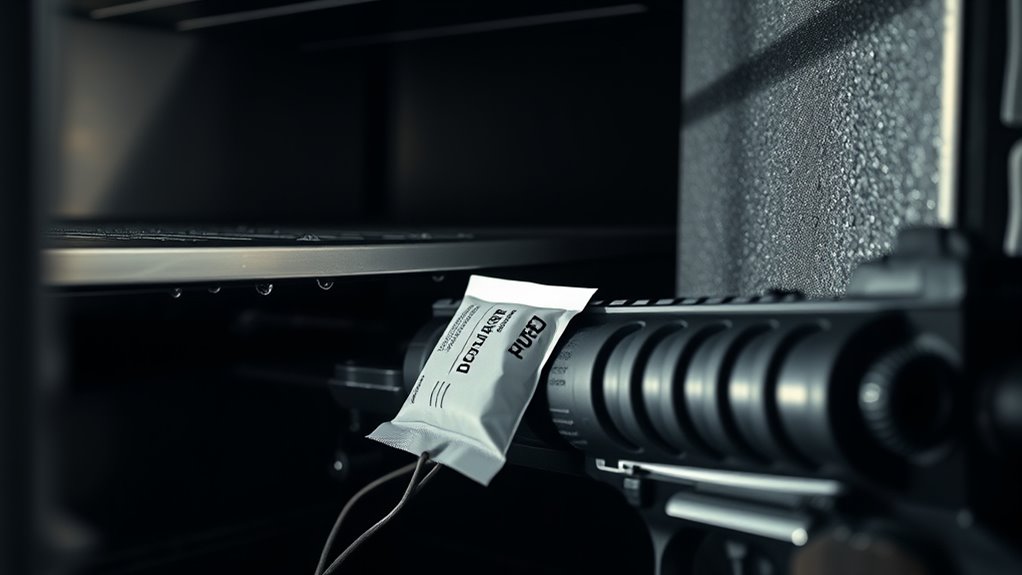
Humidity inside your gun safe can cause serious damage without you even realizing it. Excess moisture creates the perfect environment for rust and corrosion on your firearms and accessories. Over time, this can weaken metal parts, making guns less reliable and more prone to damage.
Humidity also promotes mold and mildew growth, which can stain or deteriorate your stored items and create unpleasant odors. If you don’t keep it in check, moisture can warp wooden gun stocks and degrade delicate finishes.
High humidity levels can lead to condensation when temperatures fluctuate, making things worse. Protecting your firearms means understanding that humidity isn’t just a minor inconvenience—it’s a real threat that can compromise your guns’ safety, appearance, and longevity.
How to Check Moisture Levels Inside Your Gun Safe
Wondering if your gun safe is maintaining proper moisture levels? Start by inspecting the interior for visible signs of dampness, like rust or mold.
Check your gun safe regularly for rust or mold to ensure proper moisture levels and protect your firearms.
Use a hygrometer, a small device that measures humidity, and place it inside your safe for at least 24 hours. This gives you an accurate reading of the moisture level.
If you don’t have a hygrometer, moisture indicator cards are a good alternative. They change color depending on humidity levels—just place one inside and check it periodically.
Regularly checking these indicators helps you catch any excess moisture early. Keep in mind, ideal humidity for gun safes is around 30-50%.
Monitoring moisture levels regularly ensures your firearms stay protected from rust and corrosion.
Best Ways to Dehumidify Your Gun Safe
To keep your gun safe dry, make sure to use desiccant packs effectively by replacing or recharging them regularly. This helps absorb moisture and prevents rust.
Installing dehumidifier devices can give you continuous moisture control, especially if you’re in a humid environment. They work automatically to keep the air inside your safe dry.
Also, maintaining proper ventilation is key. It helps prevent excess humidity buildup inside the safe, keeping your firearms in good shape.
Use Desiccant Packs Effectively
Using desiccant packs effectively is one of the easiest ways to keep your gun safe and dry. Place them evenly throughout the interior, especially near areas where moisture tends to build up.
Choose high-quality packs made for firearms or small spaces, and replace or recharge them as needed—usually every few months. Avoid overstuffing your safe, as this can block airflow and reduce moisture absorption.
Keep the packs away from your firearms’ finishes to prevent potential corrosion. Store extra desiccant packs nearby so you can swap them out quickly when necessary.
Monitor the moisture indicator or feel for dampness to know when it’s time to replace them. Proper placement and regular maintenance help these packs absorb excess humidity, protecting your firearms from rust and damage effectively.
Install Dehumidifier Devices
Installing dehumidifier devices is one of the most effective ways to keep your gun safe dry. You can choose between electric dehumidifiers, which actively remove moisture and need a power source, or moisture-absorbing desiccant dehumidifiers that don’t require electricity.
Electric models often have adjustable settings and indicators to help you monitor humidity levels, making them convenient for continuous use. Desiccant dehumidifiers are silent, low-maintenance, and perfect for smaller safes.
For best results, place the device in a central spot inside your safe and keep vents clear. Regularly check and replace or recharge the dehumidifier as the manufacturer recommends.
Proper installation of these devices greatly reduces moisture buildup and helps protect your firearms from rust and corrosion.
Maintain Proper Ventilation
Making sure proper ventilation is one of the most effective ways to keep your gun safe dry and free from excess moisture. You want to prevent humid air from becoming trapped inside, which can cause rust and corrosion.
To do this, avoid sealing your safe completely airtight. Instead, leave small vents or gaps that allow air to circulate. If your safe doesn’t have built-in ventilation, consider installing a vent cover that permits airflow while keeping dust out.
Regularly opening the door for a few minutes also helps refresh the air inside. Good ventilation guarantees moisture doesn’t build up over time, reducing the risk of rust.
Keep an eye on the environment around your safe, and adjust your ventilation methods as needed to maintain a dry, safe storage space.
Using Desiccant Packs to Keep Your Safe Dry
To keep your safe dry, place desiccant packs where they can absorb moisture effectively.
Keep an eye on them and replace or recharge as needed to stay dry.
Monitoring humidity levels helps you know when it’s time to refresh the packs and prevent moisture buildup.
Proper Desiccant Placement
Placing desiccant packs correctly inside your gun safe is key to keeping it dry and protecting your firearms. You want to distribute the packs evenly, avoiding overcrowding in one spot. Place them on shelves or in corners where moisture tends to accumulate, ensuring good airflow around each pack.
Don’t let the packs touch the walls or firearms directly, as this can cause uneven moisture absorption. Use a variety of sizes if possible, with larger packs in the center and smaller ones around the edges.
Replace or recharge the packs when they become saturated, but for now, focus on proper placement to maximize their effectiveness. Proper positioning helps maintain a balanced, dry environment inside your safe, safeguarding your firearms from rust and corrosion.
Regular Desiccant Replacement
Check your desiccant packs regularly and replace or recharge them as needed to keep your gun safe and dry. Over time, desiccants absorb moisture and become less effective, so it’s important to keep an eye on their condition.
If you notice clumping, saturation, or a change in color (if applicable), it’s time to replace or regenerate them. Replacing desiccant packs is quick and easy—just remove the old ones and put in fresh ones.
Rechargeable desiccants can be dried out in an oven according to the manufacturer’s instructions, restoring their moisture-absorbing capacity. Regular replacement keeps the inside of your safe dry, preventing rust and corrosion.
Make this part of your safety routine to keep your firearms in top shape and avoid moisture-related damage.
Monitoring Humidity Levels
Ever wonder how to keep your gun safe dry without constantly opening it up? Monitoring humidity levels is the way to go. You can do this easily with simple tools like a hygrometer, which measures moisture inside the safe.
Make sure to check the gauge regularly to keep humidity below 50%. If it starts to creep higher, it’s time to replace or recharge your desiccant packs.
This helps prevent moisture buildup that can lead to rust or corrosion. Try to check the readings every month, especially if you live in a humid climate.
Staying vigilant allows you to catch any increases early and adjust your dehumidification methods as needed. Proper monitoring keeps your firearms in pristine condition without the hassle of unnecessary openings or damage.
Installing Electric Dehumidifiers: Pros and Cons
Installing electric dehumidifiers offers an effective way to keep the humidity level inside your gun safe consistent. These devices automatically remove excess moisture, helping to prevent rust and corrosion without much effort on your part.
They’re quiet, easy to install, and can be set to maintain specific humidity levels. However, electric dehumidifiers can be more expensive initially and require a power source, which might be inconvenient in some setups.
They also need regular maintenance, like replacing desiccants or ensuring proper functioning. If your safe isn’t well insulated or ventilated, the dehumidifier may struggle to keep humidity levels stable.
How to Ventilate Your Gun Safe Effectively
Proper ventilation is essential for maintaining a stable environment inside your gun safe, especially if you store firearms in humid climates. Ventilation helps reduce moisture buildup and prevents rust and corrosion.
To do this effectively, consider installing vent panels or small vents on opposite sides of your safe to promote airflow. Make sure vents are covered with breathable, moisture-resistant materials to keep dust and debris out.
Avoid sealing your safe completely, as stagnant air can increase humidity. Regularly open the safe for a few minutes to allow fresh air in, especially after cleaning or exposure to outdoor elements.
Using a gentle fan or airflow system can also help circulate air more efficiently. Proper ventilation keeps humidity levels balanced, protecting your firearms over the long term.
Tips to Keep Your Gun Safe Humidity Low Year-Round
Keeping your gun safe dry year-round is simple when you use desiccant packs, guarantee proper ventilation, and control your room’s humidity levels.
Regularly checking and replacing desiccants prevents moisture buildup, while good airflow helps prevent mold. Adjusting your environment’s humidity keeps your firearms in top condition without hassle.
Use Desiccant Packs Effectively
Desiccant packs are a simple yet effective way to keep humidity low inside your gun safe. To get the most out of them, choose high-quality desiccants like silica gel or activated clay, and replace or recharge them regularly.
Place packs in different areas of the safe to ensure even moisture absorption. Avoid overcrowding the safe with too many packs, as this can block airflow and reduce their effectiveness.
Keep packs away from firearms or valuables to prevent direct contact. Check the desiccant packs periodically; if they feel damp or change color, replace or recharge them to stay effective.
Using desiccant packs properly helps prevent rust and corrosion, protecting your firearms all year round without constant monitoring.
Maintain Proper Ventilation
Ensuring good airflow inside your gun safe is key to keeping humidity levels low all year. Proper ventilation helps prevent moisture buildup, which can lead to rust and corrosion.
You can improve airflow by leaving vents open or adding small ventilation panels. Just make sure to check regularly that vents aren’t blocked by dust or debris.
For even better results, place silica gel or desiccants near the vents. They’ll help absorb any excess moisture effectively.
| Ventilation Method | Benefits | Tips |
|---|---|---|
| Open vents | Promotes airflow | Keep vents clean |
| Ventilation panels | Improves air exchange | Install adjustable panels |
| Desiccants near vents | Absorbs moisture effectively | Replenish regularly |
Control Room Humidity Levels
Controlling room humidity is key to keeping a low-humidity environment inside your gun safe all year.
Make sure the room where your safe sits stays at a steady humidity level, ideally between 30-50%.
Use a reliable hygrometer to keep track of the air moisture and make adjustments as needed.
If the room tends to be humid, run a dehumidifier nearby or install a vent fan to cut down on moisture buildup.
Avoid placing your safe in damp or unventilated areas like basements or laundry rooms.
Good insulation and sealing any leaks around the safe also help prevent humidity from seeping in.
Keeping the room’s humidity under control creates a stable environment that protects your firearms from rust and corrosion all year long.
Common Mistakes That Make Your Gun Safe Humid
One of the most common mistakes that can make your gun safe humid is neglecting proper ventilation. When your safe isn’t well-ventilated, moisture gets trapped inside, creating a humid environment. This often happens when safes are kept in confined, enclosed spaces with little airflow.
Furthermore, sealing the safe too tightly without allowing for air exchange can lead to condensation buildup. Another mistake is using materials inside the safe that retain moisture, like cardboard or untreated wood. These can release humidity over time, worsening the problem.
Failing to regularly check and clean the interior also contributes, as dust and moisture can accumulate unnoticed. To prevent humidity, ensure your safe has good air circulation and avoid sealing it airtight without proper ventilation options.
How to Monitor Humidity With a Hygrometer
How can you tell if your gun safe is maintaining the right humidity levels? The easiest way is to use a hygrometer—an inexpensive device that measures humidity.
Place it inside your safe, ideally on a shelf or hanging from a hook, so it’s not touching the sides or bottom. Check the reading regularly, aiming for a humidity level between 30% and 50%.
If the hygrometer shows higher or lower readings, it indicates your safe’s environment isn’t ideal. Digital hygrometers are accurate and easy to read, while analog ones offer a classic look.
Make sure to calibrate your hygrometer periodically for the most precise measurements. Monitoring humidity with a hygrometer helps you maintain a dry, safe space for your firearms.
When to Call a Professional for Moisture Problems
When you notice persistent moisture or mold growth inside your gun safe, it’s time to call in a professional. Small signs like lingering dampness after ventilation might be manageable with routine maintenance.
But if mold keeps coming back or humidity levels get out of control, experts can find hidden issues and suggest advanced solutions. Ignoring these signs could lead to damaged firearms or compromised safety.
| Issue | When to Seek Help |
|---|---|
| Persistent mold or dampness | Mold continues despite your efforts |
| Sudden humidity spikes | Unexpected moisture increases |
| Structural damage | Rust or corrosion affecting the safe |
Trust a professional to diagnose the problem and keep your gun safe dry and secure.
Frequently Asked Questions
How Often Should I Check Humidity Levels in My Gun Safe?
You should check the humidity levels in your gun safe at least once a month. Regular checks help you catch any moisture buildup early, which can prevent rust and corrosion.
Use a reliable hygrometer to get accurate readings. If you notice humidity rising above 50%, take action by adding dehumidifiers or increasing ventilation.
Consistent monitoring guarantees your firearms stay dry and well-preserved over time.
Can Certain Types of Guns Attract More Moisture?
Yes, certain guns, especially those with steel parts or stored in humid areas, can attract more moisture. Metal components tend to rust if moisture sticks around, so it’s a good idea to check your firearms regularly and keep the humidity in check.
Guns with protective coatings or made from corrosion-resistant materials are less likely to gather moisture. Using dehumidifiers and silica gel packs inside your safe can also help keep moisture levels low and prevent rust from forming on your firearms.
Are There Natural Remedies to Reduce Humidity in a Safe?
Yes, you can turn to natural remedies to reduce humidity in your safe. Think of silica gel packets or charcoal briquettes as tiny moisture magnets, drawing excess dampness out of the air.
Place them inside your safe, and they’ll work quietly like a refreshing change, soaking up moisture without harsh chemicals. Just remember to replace or recharge them regularly for best results, keeping your guns dry and protected.
How Does Temperature Affect Humidity Control in Safes?
Temperature plays an essential role in controlling humidity inside your safe. When it’s warmer, the air can hold more moisture, which increases humidity levels.
Conversely, cooler temperatures help reduce moisture retention, keeping your safe dry. By maintaining a stable, moderate temperature, you prevent condensation and moisture buildup.
It’s important to keep the climate inside consistent. Fluctuating temperatures can cause humidity spikes, which might damage your firearms and valuables.
What Are the Signs of Mold or Corrosion Caused by Humidity?
You’ll notice mold appears as fuzzy or slimy spots on your guns or safe walls, often green or black.
Corrosion shows up as rust, which looks like reddish-brown patches or flaky spots on metal surfaces.
You might also smell a musty odor, which is a sign of excess humidity.
Regularly checking your safe helps catch these signs early, so you can take action before the damage gets worse.
Keep an eye out for any unusual discoloration or changes in texture.
Conclusion
Think of your gun safe as a delicate ecosystem. It needs the right balance to stay healthy.
By keeping an eye on humidity, using the proper dehumidifying tools, and monitoring moisture levels, you’re protecting your firearms like a vigilant gardener tending to precious plants.
Keep humidity at bay, and your safe remains a fortress of protection.
With these tips, you’ll ensure your firearms stay pristine, ready, and protected—your personal vault of security in a world full of moisture threats.