
How to Make a Hidden Gun Safe in 8 Steps
Many people worry about keeping their guns safe and hidden from curious eyes or potential intruders. It’s a common dilemma—how do you secure your firearms without making them obvious or accessible to others? You’re not alone in this struggle, and the good news is there are simple ways to create a hidden gun safe that blends seamlessly into your home.
To make a hidden gun safe in 8 steps, start by choosing an inconspicuous spot that offers quick access and security.
Select a durable container that is tamper-resistant and moisture-proof. Use everyday objects or furniture to hide the safe discreetly.
Secure it firmly with anchors and test its accessibility and concealment. Regularly inspect and update the safe to maintain security.
Keep in mind, the right placement and security measures are key—continue to learn more for best results.
Key Takeaways
- Select inconspicuous locations that offer a good balance between quick access and security within your home.
- Use durable, tamper-resistant containers with secure hiding methods like false books or furniture modifications.
- Anchor the safe securely and regularly test its stability and accessibility to make sure everything works smoothly.
- Keep the placement discreet, blending it seamlessly into the environment so there’s no obvious sign of concealment.
- It’s a good idea to periodically reassess the safe’s location and security measures to ensure they stay effective over time.
Evaluate Your Space to Find the Best Hidden Gun Safe Location
Before installing a hidden gun safe, it’s important to review your space carefully. Look for areas that are inconspicuous but still easy to access, like inside closets, behind furniture, or under floors.
Think about your home’s layout and find spots where the safe won’t stand out or seem out of place. Consider how often you’ll need to get to it—pick a spot that allows quick access but still keeps things secure.
Avoid obvious places like drawers or open shelves since they’re easy for thieves to spot. Check the structural integrity of walls, floors, or cabinets to make sure they can support the safe without causing damage.
Choose a Secure, Durable Container for Your Hidden Safe
Selecting a secure, durable container is essential to protect your hidden gun safe from damage and tampering. You want a container that’s sturdy enough to withstand impacts and resistant to moisture, rust, and pests. Metal boxes or heavy-duty plastic containers are excellent choices, offering strength and longevity.
Ascertain the container has a tight-sealing lid or gasket to prevent dust and humidity from entering. Consider adding foam padding or insulation inside for extra protection.
| Material | Key Features |
|---|---|
| Metal | High strength, tamper-resistant, moisture-proof |
| Heavy-duty Plastic | Lightweight, resistant to rust, waterproof |
| Reinforced Lid | Prevents accidental opening, adds security |
Design Discreet Ways to Hide Your Safe Without Drawing Attention
You can hide your safe by camouflaging it with everyday items like books or household decor. Incorporating it into furniture, such as hollowed-out drawers or false panels, keeps it out of sight.
Using hidden compartments in common spaces also provides discreet storage without attracting attention. It’s all about blending your safe seamlessly into your environment so it doesn’t stand out.
Camouflage With Everyday Items
Camouflaging your hidden gun safe with everyday items is a smart way to keep it discreet. You can hide it behind common household objects like a false book on a bookshelf or inside a hollowed-out cereal box in your pantry.
Using items that blend seamlessly into your daily environment reduces suspicion. For example, place the safe inside a large plant pot or hide it behind a stack of magazines on your coffee table.
You can also incorporate it into your closet by hiding it behind hanging clothes or inside a stored duffel bag. The key is to pick items that look natural and are unlikely to draw attention.
This simple camouflage helps ensure your safe remains unnoticed, giving you peace of mind and quick access when needed.
Incorporate Into Furniture
Integrating a hidden safe into furniture is a smart way to keep it out of sight while still easy to access. You can hide a safe in a hollowed-out section of a bookshelf, behind a false panel in a cabinet, or under a drawer.
Pick furniture pieces that match your decor so the safe doesn’t stand out. For example, install a lockable compartment behind a false back in a dresser or inside a stool with a removable seat.
Use discreet hardware or magnetic latches to keep the safe from drawing attention. The goal is to make it look like part of the furniture’s natural design, so it stays unassuming.
This method offers both convenience and discretion, helping your valuables stay protected without raising suspicion.
Use Hidden Compartments
Hidden compartments are one of the most effective ways to hide a safe without drawing attention. You can stash valuables in unexpected spots to keep intruders unaware. Consider these options:
- Inside a false drawer bottom. Remove the bottom panel and hide your safe behind it.
- Behind a wall panel. Use a removable panel to hide a compartment in your wall.
- Within furniture. Create a secret spot inside a bookshelf or closet.
- Underneath flooring. Install a trapdoor or false floor section to hide your safe beneath the surface.
These discreet solutions blend seamlessly into your home, making it almost impossible for anyone to find your hidden safe. Using hidden compartments adds extra security while staying unobtrusive.
Gather Materials and Tools Needed for Building Your Hidden Safe
Before you start building your hidden gun safe, it’s important to gather all the materials and tools you’ll need. Basic supplies like plywood or a sturdy wood plank are essential.
You’ll also need a drill, screws, and a saw to cut your materials to size. Think about what kind of lock mechanism you want, like a concealed latch or magnetic lock, based on your design.
Hinges, a measuring tape, and a pencil for marking are useful tools. A level can help ensure everything lines up properly.
For finishing touches, grab some sandpaper, paint or stain, and protective gloves. Having everything ready beforehand makes the process smoother and helps avoid interruptions.
Make sure your tools are in good shape and your materials are durable enough to keep your safe secure and well hidden.
Build or Modify Your Concealed Enclosure Step-by-Step
Once you’ve gathered your materials and tools, it’s time to start building or modifying your concealed enclosure. First, measure the space where you want the safe to fit, making sure the dimensions are precise.
Next, cut or modify the chosen surface or furniture to fit your safe. Follow these steps:
- Mark the outline of your safe on the surface, ensuring it’s level and centered.
- Carefully cut out the marked area using appropriate tools like a saw or rotary cutter.
- Install your safe or enclosure, securing it firmly with screws or brackets.
- Finish the surface by patching or painting around the edges for a seamless look.
Stay precise, work carefully, and double-check that everything fits snugly before securing it all in place.
Secure Your Safe Properly to Prevent Theft and Accidental Access
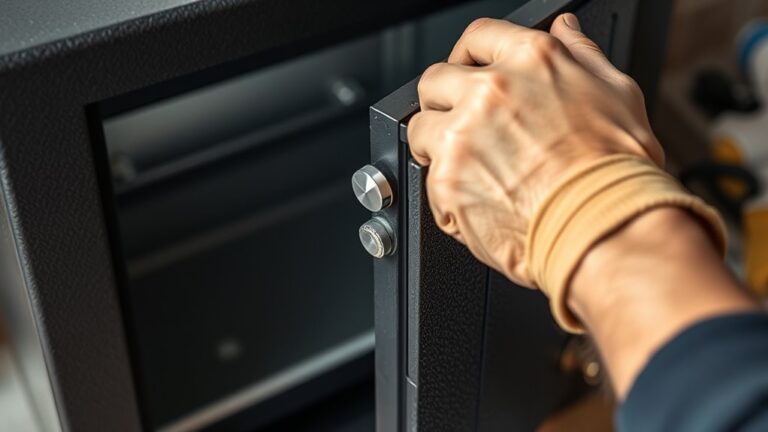
After installing your safe securely into the chosen surface, it’s important to focus on anchoring it properly to prevent theft or accidental access. Use heavy-duty bolts or screws designed for the material you’re anchoring into, making sure they are long enough to hold the safe firmly in place.
Tighten all fasteners completely and check for stability by giving a gentle shake. Consider anchoring multiple points for added security. If possible, embed the safe into a wall or floor to make removal difficult for intruders.
Keep the anchoring hardware hidden or disguised to avoid drawing attention. Regularly inspect the bolts and fasteners to ensure they remain tight and secure over time. Proper anchoring reduces the risk of theft and accidental opening, keeping your valuables safe and secure.
Test If Your Safe Is Easy to Access and Well Hidden
To make sure your safe is easy to access when you need it and well hidden from others, test how quickly you can get to it. Try timed retrievals or simulate emergencies to see how fast you can open it.
Think about where you place the safe. It should stay hidden from plain sight but still be quick to reach in a pinch. Finding that balance between convenience and concealment is key.
Fine-tuning these details will help you keep your valuables both accessible and discreet.
Accessibility Test Techniques
Conducting an accessibility test is key to making sure your hidden gun safe works well and stays discreet. To do this, try these simple techniques:
First, simulate a quick retrieval to see if you can access your safe within seconds without giving away its location. It’s a good way to check how fast and discreet you can be.
Next, ask a trusted friend or family member to try opening it. This helps confirm they can’t easily find or access it, keeping your safe secure.
Then, use different methods of access like keys, combinations, or hidden triggers. Make sure each one works smoothly and reliably.
Finally, test visibility under various lighting conditions to ensure the safe remains hidden during both day and night.
These steps help you identify any issues, making sure your safe is both easy for you to access and discreet enough to keep intruders guessing.
Discreet Placement Strategies
Choosing the right spot for your hidden gun safe is key to keeping it both accessible and discreet. You want it hidden enough to avoid detection but easy enough to reach in an emergency.
Test your placement by trying quick access without revealing where it is. Consider blending the safe into everyday surroundings, like inside a bookshelf, behind a false panel, or under a false floor.
| Easy Access | Hidden from Sight |
|---|---|
| Can open quickly | No obvious clues |
| Located near exit | Blends with decor |
| Not obstructed | Hidden behind objects |
| Within reach | No signs of modification |
| Secure but accessible | Discreet placement |
Make sure your safe strikes this balance so it’s both protected and ready when you need it.
Maintain and Update Your Hidden Gun Safe for Ongoing Security
Regularly maintaining and updating your hidden gun safe is key to making sure it stays secure. It’s a good idea to check on it often to catch any issues early.
Start by inspecting the safe for signs of tampering or damage. Look for anything out of place or suspicious that could compromise security.
Next, replace batteries or electronic parts as needed. This ensures your locks work properly and you’re not caught off guard.
It’s also smart to update your security codes or keys periodically. Changing them keeps your safe more protected from unwanted access.
Finally, reassess where your safe is placed. Make sure it remains discreet and only accessible to you.
Frequently Asked Questions
What Legal Considerations Should I Be Aware of When Creating a Hidden Gun Safe?
You should check local, state, and federal laws regarding firearm storage and concealment. Make sure your hidden gun safe complies with all regulations, especially if it’s in a shared or rented space.
Avoid illegal hiding spots that could be considered tampering or illegal concealment. Also, verify your safe is secure enough to prevent unauthorized access, especially by children or intruders.
Consulting legal experts or law enforcement can help you stay compliant and avoid potential legal issues.
How Can I Ensure My Hidden Safe Is Fire-Resistant?
They say, “Better safe than sorry,” and that’s especially true for your hidden gun safe. To make sure it’s fire-resistant, pick a safe with a high fire-resistance rating, ideally offering 1-2 hours of protection.
Line the inside with fireproof materials like mineral wool or fire-resistant insulation. Seal all openings tightly to prevent heat from getting in.
For extra security against heat damage, consider adding a fireproof safe inside your hidden compartment. It’s a smart move to keep your valuables safe from fire.
Are There Any Safety Tips for Children Around Hidden Safes?
Yes, you should always keep children away from hidden safes to prevent accidents. Use childproof locks or alarms on or near the safe, and choose discreet locations children can’t easily access or see.
Educate older children about safety, explaining that safes contain important items and shouldn’t be tampered with.
Regularly check for potential hazards and make sure the safe remains secure and out of reach. This will give you peace of mind.
Can I Use Electronic Locks on My Concealed Safe?
Yes, you can use electronic locks on your concealed safe. They offer quick access and advanced security features, making them a popular choice.
However, keep in mind that electronic locks can malfunction or drain batteries. So, it’s a good idea to have a backup plan, like a manual override or spare key.
This way, you balance convenience with reliability, ensuring your firearm stays secure yet accessible when needed.
How Often Should I Inspect or Update My Hidden Gun Safe?
You should check your hidden gun safe at least once every three to six months. Regular inspections help ensure the lock works properly, the safe stays discreet, and there are no signs of tampering or damage.
Make sure to update any electronic locks as needed, especially after firmware updates or if you notice any issues. Staying proactive is key to keeping your safe secure and reliable.
Conclusion
By evaluating your space and choosing the right container, you set a solid foundation for your hidden gun safe.
Design discreet hiding spots and gather the necessary materials with care to ensure your safe remains unnoticed.
Build or modify your safe carefully, paying attention to secure installation and proper concealment techniques.
Secure your safe properly to prevent accidental access or tampering, making it both reliable and discreet.
Test your hidden gun safe for accessibility and concealment, making adjustments as needed to keep it hidden but easy to access.
Maintain your hidden gun safe regularly, checking for any signs of wear or security issues to keep it always ready.
With patience and attention to detail, you’ll create a hidden gun safe that’s reliable, discreet, and secure.
By following these steps, you ensure your firearm is protected, your peace of mind preserved, and your safety stays hidden, protected, and always ready when you need it most.