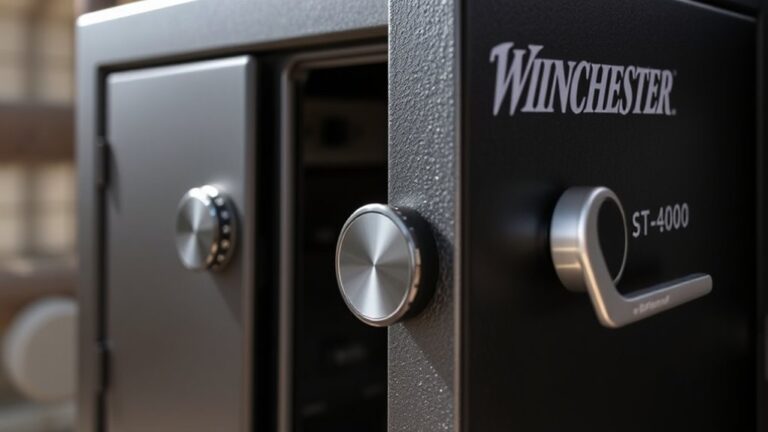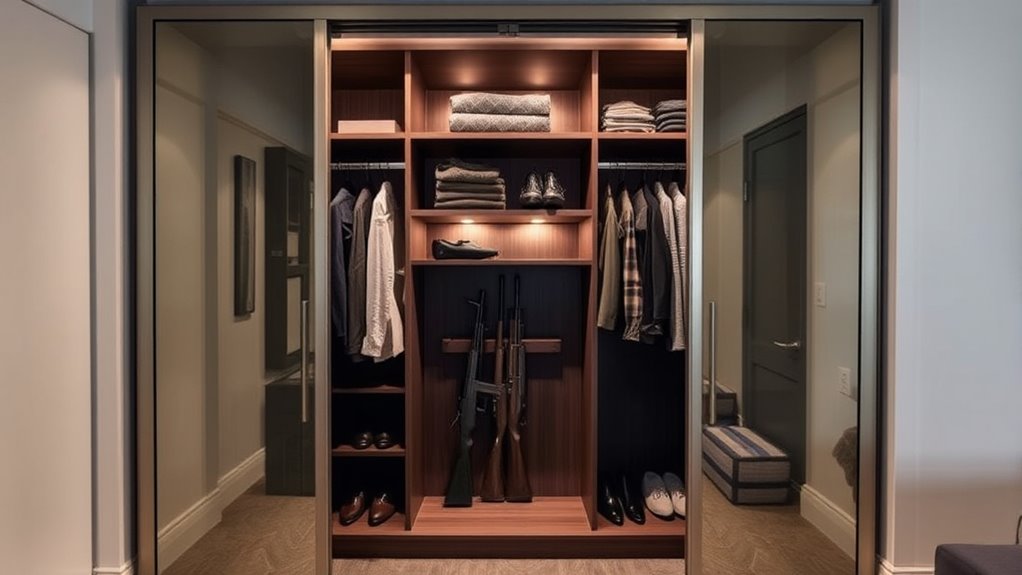
7 Steps to Turn Your Closet Into a Gun Safe
Many gun owners struggle with finding a secure, accessible way to store their firearms at home. You’re not alone—turning a closet into a gun safe is a popular solution that offers both convenience and peace of mind.
To turn your closet into a gun safe, start by measuring your space and deciding how many firearms you’ll store. Plan your upgrade with security and local laws in mind, then reinforce walls, doors, and locking systems for maximum protection.
Organize your guns and accessories inside carefully, ensuring proper ventilation and fire safety measures are in place.
Regular maintenance keeps everything secure and functioning smoothly.
Keep exploring to uncover detailed tips and tricks for a secure, efficient conversion.
Key Takeaways
- Measure your closet’s dimensions and plan for secure, accessible storage. Make sure to include proper ventilation and environmental protections to keep your firearms in good condition.
- Choose a safe that fits your current needs and leaves room for future additions. Pick the right size and type to ensure your firearms are stored securely and conveniently.
- Reinforce the walls, doors, and locks of your closet. This helps improve security and prevents tampering or theft.
- Organize your firearms and accessories in labeled containers. Use secure access controls so only authorized people can get to your firearms.
- Regularly maintain your safe and check the ventilation. Also, take fire safety measures to keep everything safe and reliable.
Assess Your Closet Space and Security Needs
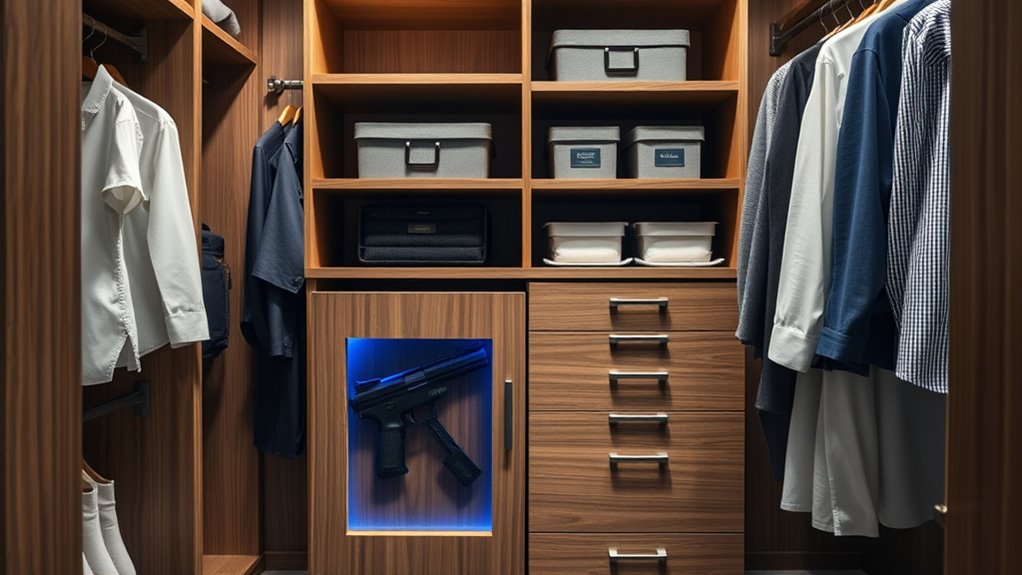
Before choosing a closet gun safe, you should evaluate both your available space and your security needs. Measure the closet’s dimensions carefully, including height, width, and depth, to make sure the safe fits comfortably without overcrowding.
Think about how many firearms and accessories you plan to store. Pick a size that can handle your current needs and leaves room for future additions. Next, assess your security requirements: do you need basic protection against accidental access or more advanced features like biometric locks?
Consider the level of threat and the environment—humidity, temperature, and potential tampering. Knowing your specific needs helps you narrow down safe styles and features. This step ensures you choose a safe that fits your space and provides the right security for your firearms.
Plan Your Conversion and Check Local Regulations
Planning your conversion carefully guarantees your closet space is optimized and compliant with regulations. Start by mapping out your design, considering access, ventilation, and concealment.
Determine the type of safe you want to install, whether a built-in or portable option, and how it fits within your closet. Next, research local laws and regulations related to gun storage, including any permits or restrictions.
Some areas require specific safety features or storage methods, so understanding these rules prevents legal issues later. Document your plan, including measurements and security features, to verify everything aligns with regulations.
Consulting with local authorities or a security professional can help clarify compliance requirements. Proper planning saves time, money, and ensures your safe is both effective and legal.
Reinforce Walls and Doors for Maximum Security
Reinforcing your walls and doors is essential to maximizing the security of your closet gun safe. Start by adding steel plates or high-density plywood behind drywall to make it harder for intruders to breach.
Reinforce walls with steel or plywood to enhance your gun safe’s security and deter intruders.
Consider installing a reinforced door frame and a door made from solid core or metal, which resist forced entry better than standard doors. Use heavy-duty hinges and secure them with long screws that anchor into wall studs.
Seal gaps around the door with weatherstripping or steel strips to prevent prying. Furthermore, reinforce any weak spots, like existing locks or hinges, with additional hardware or metal reinforcements.
These steps create a formidable barrier, deterring intruders and protecting your firearms effectively.
Select and Install the Best Locking System
Choosing the right locking system is crucial for your closet gun safe’s security.
You should consider different types, like keypad locks, biometric options, or traditional key mechanisms.
Don’t forget to look at essential security features to ensure your firearms stay protected.
Proper installation tips will help your lock work reliably and keep everything secure.
Types of Locking Mechanisms
Selecting the right locking mechanism is key to making sure your closet gun safe offers reliable security while still being easy for you to access when needed.
There are several options to consider, each with different levels of security and convenience. Mechanical locks like combination dials and key locks are simple and don’t rely on batteries, but they can take a bit longer to open.
Electronic locks offer faster access with keypad codes or biometric fingerprint scanners, adding modern security and making things easier for you.
Biometric locks are very secure because they recognize only your fingerprint, but they tend to be more expensive.
Padlocks are versatile but are less integrated into your safe’s structure.
Pick a lock that balances security, ease of use, and your budget to keep your firearm protected yet accessible in an emergency.
Security Features to Consider
When evaluating security features for your closet gun safe, it’s important to consider how each option balances protection with easy access. You want a system that’s reliable but also quick to open when needed.
Electronic locks are great for fast access, especially if multiple people need to get in. Just make sure they have backup keys or override options in case of battery failure.
Biometric locks add extra security by using fingerprints, which helps reduce chances of unauthorized access. Mechanical combination locks are sturdy and don’t rely on batteries, but they might take a little longer to open.
Think about features like tamper alarms or reinforced bolts for added security. Ultimately, pick a locking system that fits your security needs while still allowing quick, easy access in emergencies.
Installation Tips and Tricks
To make sure your safe functions properly and securely, installing the locking system correctly is key. Pick a lock that fits your security needs and follow the manufacturer’s instructions carefully.
Check that the lock is mounted at a height that’s easy for you to access quickly but hard for others to reach. Use the right tools so you don’t damage the safe or the lock during installation.
Double-check the alignment to prevent jamming or malfunctions. For added security, consider hiding the lock’s wiring or components.
Here’s a quick overview of common locking systems:
| Lock Type | Pros | Cons |
|---|---|---|
| Electronic | Fast access, programmable | Battery dependency |
| Mechanical | No power needed, reliable | Slower to open, key required |
| Biometric | High security, quick access | Costly, sensitive to dirt |
| Combination | No electronics, versatile | Memorization needed |
Organize Your Guns and Accessories Inside
To make the most of your closet gun safe, focus on maximizing storage space and keeping everything accessible. Categorize your guns by type for quick retrieval.
Guarantee your access controls are secure yet convenient. Proper organization keeps your firearms safe, easy to find, and properly protected.
Maximize Storage Efficiency
Maximizing storage efficiency inside your closet gun safe requires thoughtful organization to make the most of available space. Start by using adjustable shelving or stackable storage containers to create multiple levels, keeping smaller accessories like magazines, cleaning supplies, and ammunition neatly separated.
Utilize door-mounted organizers to free up shelf space for firearms and larger items. Consider installing foam or felt-lined compartments to securely hold guns without shifting. Keep less frequently used items toward the back or on higher shelves, while placing your most accessible firearms at the front.
Use clear bins or labeled containers to easily identify contents and avoid clutter. By optimizing every inch, you’ll ensure your safe stays organized, accessible, and secure without sacrificing space.
Categorize Gun Types
Organizing your guns and accessories by type makes it easier to find what you need quickly and keeps your safe orderly. Start by grouping similar firearms together, like handguns, shotguns, and rifles, so you can easily grab the right one when needed.
Use dividers or labeled containers to separate each category, which helps reduce clutter and confusion. Store accessories like magazines, cleaning supplies, and safety gear in designated compartments or small bins nearby, keeping everything within reach but tidy.
Be consistent with your categorization so you always know where each item belongs. This setup not only streamlines your access but also helps you keep track of your inventory and makes sure nothing gets misplaced.
Proper categorization improves safety, efficiency, and peace of mind every time you open your closet safe.
Secure Access Controls
Implementing secure access controls inside your closet safe makes sure only authorized people can reach your firearms and accessories. Choose a reliable locking system like electronic keypads or biometric scans to prevent unauthorized access.
Organize your items systematically so you can quickly find what you need without compromising security. Use compartments or dividers to separate different types of guns and accessories, which helps reduce clutter and confusion.
Keep your access codes or biometric data confidential, and change them regularly for added security. Below is a helpful table to organize your firearms and accessories efficiently:
| Gun Type | Accessories |
|---|---|
| Handguns | Magazines, holsters |
| Rifles | Scopes, grips |
| Shotguns | Slings, cleaning kits |
| Ammunition | Bullets, shells |
| Maintenance | Oils, brushes |
Ensure Proper Ventilation and Fire Safety
Guaranteeing proper ventilation and fire safety is essential when installing a closet gun safe. It helps prevent dangerous buildup of fumes and reduces fire hazards.
You should install a vent or small exhaust fan to ensure air circulates and fumes don’t accumulate inside the closet. Keep the safe away from heat sources like radiators or direct sunlight, which could increase fire risk.
Use fire-resistant materials around the safe to slow potential fires. Consider installing a smoke detector nearby for early warning. Regularly check that vents remain unobstructed and that fire safety devices are working.
Proper ventilation minimizes chemical fumes from cleaning supplies or ammunition, while fire precautions protect your home and belongings. Prioritizing these safety measures helps keep your safe secure and your home safe.
Maintain and Regularly Check Your Closet Gun Safe
Regularly maintaining and checking your closet gun safe is key to keeping it working properly and making sure your firearms stay secure. Doing routine inspections helps catch problems like rust, loose hinges, or dead batteries early on.
Keep the inside clean and dry, and make sure the lock mechanisms move smoothly. It’s a good idea to set up a schedule to check the safe’s overall condition and security regularly.
Use the table below to guide your maintenance routine:
| Task | Frequency | Notes |
|---|---|---|
| Check lock and hinges | Monthly | Lubricate if needed |
| Inspect for rust | Quarterly | Use rust remover or protective coating |
| Test electronic lock | Every 6 months | Replace batteries as needed |
| Clean interior | Annually | Remove dust and debris |
Staying proactive protects your firearms and ensures your safe functions reliably.
Frequently Asked Questions
How Can I Discreetly Hide My Converted Gun Safe From Intruders?
To discreetly hide your converted gun safe, pick a concealed spot like behind a false wall panel or inside a rarely accessed corner of a closet.
Use furniture or decor items to cover the entry, such as a bookshelf or a large mirror. Keep any signs of a safe minimal—avoid obvious locks or hardware.
Regularly check that your hiding spot still works and doesn’t draw suspicion. Make sure intruders overlook it entirely by keeping it low-key and natural.
What Materials Are Best for Soundproofing My Closet Gun Safe?
To soundproof your closet gun safe, you could line its interior with mass-loaded vinyl, which absorbs noise effectively. Imagine a homeowner in a suburban neighborhood who installed this material around their safe, markedly reducing noise transfer and keeping their firearm storage discreet.
You should also add dense foam panels on the closet walls and seal gaps with weatherstripping to prevent sound leaks, ensuring your firearm remains hidden and quiet from outside noise.
How Do I Prevent Mold or Moisture Buildup Inside the Safe?
To prevent mold and moisture buildup inside your safe, control humidity levels by using a dehumidifier or silica gel packs.
Make sure the safe is in a well-ventilated area and check regularly for any condensation.
Keep the safe in a cool, dry place, and avoid storing damp items inside.
Cleaning the interior with a dry cloth periodically helps keep it dry.
Sealing any leaks or cracks around the safe prevents moisture from getting in.
Are There Specific Fireproofing Options Suitable for Closets?
You can armor your closet with fireproofing options like fire-resistant drywall or insulation, turning it into a fortress against flames. Fireproof safes or blankets can also be added for extra protection.
Think of these materials as a shield, enveloping your valuables in a barrier that absorbs heat and prevents flames from breaching. With these defenses, your closet becomes a safe haven, guarding your possessions from fire’s destructive reach.
Can I Convert a Shared Closet Without Damaging the Structure?
Yes, you can convert a shared closet into a gun safe without damaging the structure. Just focus on adding a sturdy, lockable safe inside it to keep its integrity intact.
Use non-invasive methods like adjustable shelving or modular safes that don’t need permanent changes. This way, you won’t have to drill or remove walls.
Make sure to chat with others sharing the space so everyone’s on the same page. This approach keeps the closet’s structure safe while securely storing your firearms.
Conclusion
By thoughtfully transforming your closet into a secure sanctuary, you create a space that respects both your needs and the importance of discretion. Regularly tending to this hidden corner guarantees it remains a trusted refuge, quietly safeguarding what matters most.
Remember, the true strength lies not just in the walls you reinforce, but in your ongoing care and vigilance. Keeping your secrets safe and your peace of mind intact is what truly matters.
Turning your closet into a gun safe is about more than just storage. It’s about peace of mind and protecting what you value most.