Master Your Aim: Use a Peep Sight Effectively
Struggling to improve your aim with a peep sight? You’re not alone—many shooters find it tricky to get consistent accuracy. Mastering this skill takes more than just pointing and shooting; it’s about honing your technique and understanding how to use the sight effectively.
To master your aim with a peep sight, focus on proper eye positioning by directly aligning your eye behind the aperture and maintaining a steady head. Adjust the sight to keep the ring centered and clear, and guarantee your anchor points are consistent.
Practice focusing on the sight rather than the target to improve stability and accuracy. Keep practicing these techniques, and you’ll uncover even more tips to perfect your aim as you go.
With patience and persistence, you’ll see your shooting skills improve dramatically.
Key Takeaways
- Keep your eye directly behind the aperture for a clear, centered sight picture.
- Make sure the peep sight is adjusted so you see a sharp, defined ring that lines up with your target.
- Focus on the sight plane rather than the target itself. This helps improve your accuracy and makes your shots more consistent.
- Keep your anchor points steady and maintain a consistent cheek weld. This really helps with aim stability.
- When lighting conditions change, use filters or sunglasses to keep things clear.
- Choose the right aperture size for your skill level and the situation you’re shooting in.
Why Use a Peep Sight to Improve Your Shooting Accuracy
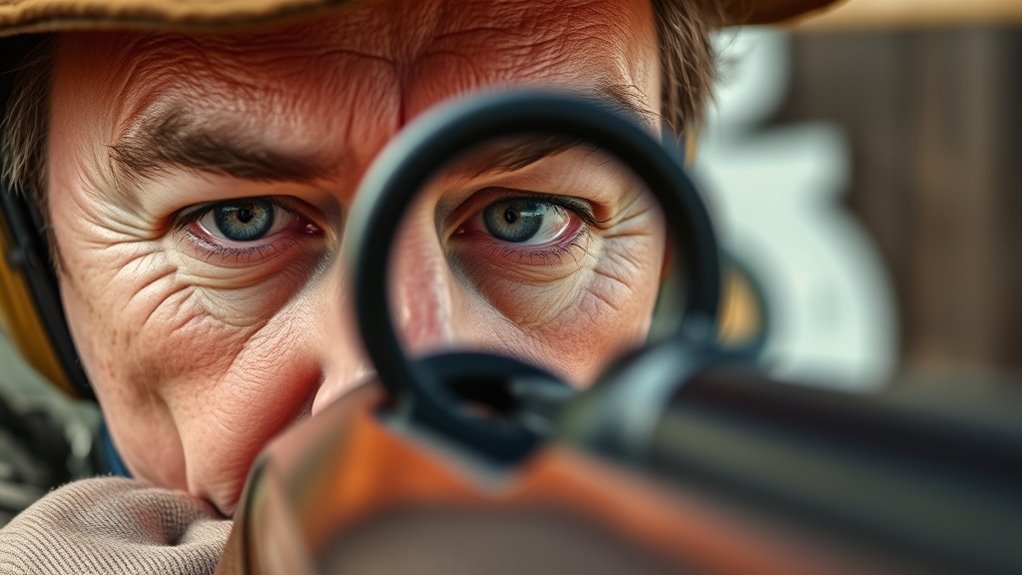
Using a peep sight can really improve your shooting accuracy because it gives you a clearer, more consistent sight picture. When you look through one, your eye naturally centers the front sight, which helps reduce common alignment errors with open sights.
This focus keeps the front sight sharp and easy to see, making it simpler to aim precisely. Unlike open sights, which can be distracted by your surroundings, a peep sight filters out unnecessary noise so you can concentrate on your target.
It also helps you acquire targets faster and repeat your shots more accurately. By minimizing parallax and misalignment, a peep sight boosts your consistency, helping you become a more accurate and confident shooter.
What Are the Main Parts of a Peep Sight and How They Work
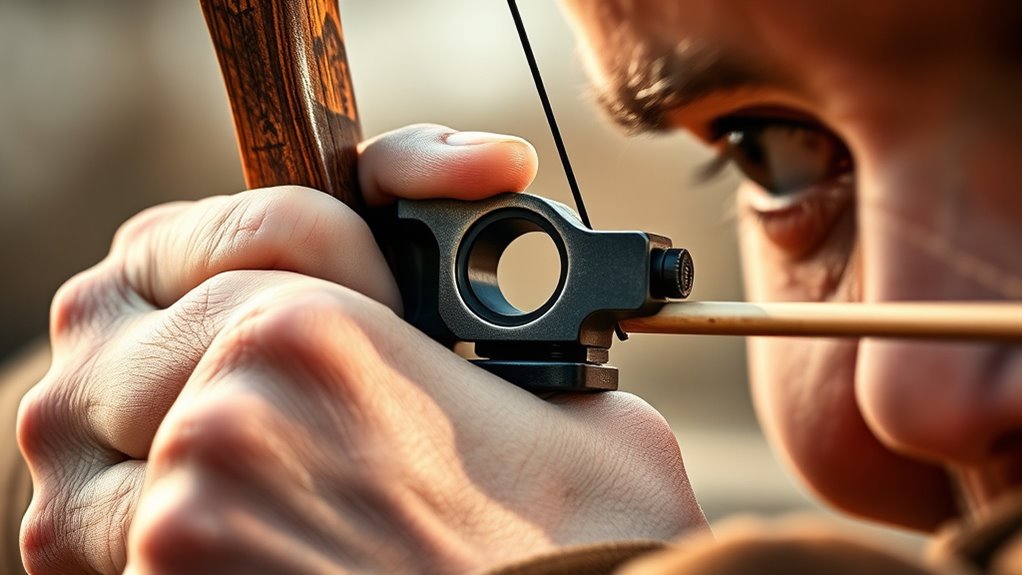
A peep sight mainly has an aperture and a frame that work together to help you focus on your target. The aperture is the small hole you look through, and the frame holds it in place.
The mounting mechanism keeps the sight aligned and stable when you’re shooting, so your aim stays consistent. Understanding these parts helps you aim better and improve your accuracy overall.
Aperture and Frame
The main parts of a peep sight—the aperture and the frame—work together to help you aim accurately. The aperture is the small hole through which you view your target, controlling light and focus. The frame surrounds this opening, providing structure and alignment.
To understand how they work:
- The aperture limits the amount of light entering, reducing glare and sharpening your focus.
- The frame keeps the aperture steady, ensuring consistent sight alignment.
- Properly positioning your eye relative to both parts helps you quickly acquire a clear, centered view of your target.
Together, these components create a precise sight picture, allowing you to aim with confidence and consistency. Mastering their function is key to improving your shooting accuracy.
Mounting Mechanism Function
Mounting mechanisms are crucial for securely attaching your peep sight to the bow or firearm, helping you shoot accurately. The main parts include the mounting bracket, screws, and the sight itself.
The bracket attaches to the string or rail, giving a stable base. Screws then fasten the peep sight securely to the bracket, so it doesn’t move when you’re aiming.
Some mounting systems use a dovetail or clamp design, making installation and adjustments easier. When these parts are properly aligned, they keep the peep sight in the right position shot after shot.
A good mounting mechanism reduces play and vibration, which helps maintain precise sight alignment. This ultimately improves your accuracy over time.
Finally, making sure all parts are tight and installed correctly is key to mastering your aim.
Sight Alignment Principles
Understanding how your peep sight lines up with your aiming system is crucial for accurate shooting. The main parts of a peep sight are the aperture, the mounting ring, and the pinhole.
The aperture is the circular opening you look through, helping you focus on your target. The mounting ring holds the aperture in place and attaches to your bow or firearm. The pinhole is the small hole in the aperture that creates a clear, sharp sight picture.
When everything is properly aligned, the aperture centers over your front sight or target. This gives you a consistent reference point. Good alignment ensures your eye, the sight, and the target work together, boosting your accuracy and precision with every shot.
How to Position Your Eye for Clearer Sight Alignment
To get the clearest sight alignment, position your eye at the right distance from the peep sight and make sure it’s directly in line with the aperture.
Keep your eye steady and focused on the sight plane, not the target, to stay accurate.
Aligning your eye properly helps you see a crisp, consistent sight picture every time.
Maintain Proper Eye Distance
Maintaining the correct eye distance from your peep sight is key to getting sharp, consistent target images. If you’re too close or too far, the sight picture gets blurry, which hurts your accuracy.
To keep things proper, make sure your eye is directly aligned with the sight, not off to the side. Stay steady and find a comfortable distance that gives you a full, clear view through the peep.
Avoid moving your head or eye position during the shot—stay anchored in your stance for the best results.
Align Eye With Aperture
Making sure your eye is properly aligned with the aperture is key for a clear and consistent sight picture. To do this, position your eye directly behind the peep sight so you see a full, unobstructed circle through the aperture.
Avoid tilting your head or shifting your eye to the side, as this can cause the sight picture to blur or distort. Keep your eye relaxed and centered, focusing on the aperture itself.
You might need to make small adjustments to find the perfect alignment, where the entire circle is visible and the aiming points are clear. Consistently aligning your eye with the aperture helps improve accuracy and ensures your shot is based on a stable, well-aligned sight picture.
Focus on Sight Plane
Once you’ve aligned your eye with the aperture, the next step is to focus on the sight plane itself. This means making sure your eye is positioned so the front sight, rear aperture, and target are all clear and aligned.
To do this effectively, keep your dominant eye centered behind the peep sight. Maintain a relaxed, steady head position so your view doesn’t shift. Focus your vision slightly beyond the front sight to keep the entire sight picture sharp rather than just the front bead.
How to Adjust Your Peep Sight for Better Accuracy
To improve your accuracy with a peep sight, start by adjusting the sight’s position until you see a clear, centered ring in your dominant eye. Move the sight forward or backward along the scope tube or housing to get a sharp, well-defined ring.
Make sure the ring is perfectly centered in your pupil’s view without any distortion or blurriness. If the ring is off-center or fuzzy, make small adjustments until it’s crisp and aligned.
Keep your head in the same position during these adjustments to prevent misalignment. Once the ring looks clear and centered, lock the sight in place.
Proper adjustment helps your eye naturally align with the sight, which boosts your accuracy and consistency with each shot.
Practicing Techniques to Sharpen Your Sight Picture
Practicing regularly is key to sharpening your sight picture with a peep sight. To improve, focus on these techniques:
- Dry Fire Drills: Practice aiming without live rounds, focusing on smooth sight alignment and a steady hold.
- Controlled Breathing: Inhale and exhale slowly, then pause to settle your aim. This helps minimize movement and sharpens your focus.
- Target Focus: Keep your eyes on the target while maintaining a clear, consistent sight picture through the peep. This trains your eye to quickly align and acquire targets.
Consistent repetition of these exercises builds muscle memory and boosts your ability to quickly and accurately align your sight picture. Over time, your aim becomes more precise, and your overall shooting confidence grows.
Common Mistakes When Using a Peep Sight and How to Avoid Them
Many shooters make common mistakes when using a peep sight that can hurt accuracy and consistency. One mistake is not aligning your eye properly with the sight, which makes the view blurry or off-center. Always ensure your eye is directly behind the sight and centered for a clear, symmetrical picture.
Rushing the shot is another common error. Moving too quickly can cause poor alignment and inconsistent results. Take your time to focus and smoothly align your sight picture.
Rushing your shot leads to poor alignment and inconsistent accuracy—focus, take your time, and shoot smoothly.
Some shooters also ignore their cheek weld, which leads to inconsistent eye relief and sight alignment. Keep a steady, consistent cheek position to improve your accuracy.
Finally, neglecting proper sight clearance or using a poorly fitted peep can block your view. Regularly check your sight for a good fit and clarity to avoid these mistakes.
Adapting Your Peep Sight Use for Different Shooting Conditions
When shooting in different lighting conditions, you might need to adjust your focus or choose a different peep size to see clearly.
Handling moving targets requires quick aim adjustments and a steady hold to keep your shot on target.
Adjusting for Lighting Conditions
Lighting conditions can really affect how well you see through your peep sight, so it’s important to adapt your technique. Bright light can cause glare, while low light makes it harder to see your target and sight picture.
To adjust effectively, in bright conditions, try using a darker lens filter or shade your eyes with a hat or sunglasses to cut down on glare. During low light, focus more on the front sight and use natural or artificial light to boost contrast.
For variable lighting, think about changing your shooting angle or position. This can help you find the best light for clear visibility and a better shot.
Handling Moving Targets
Handling moving targets requires quick adjustments to your peep sight technique to stay accurate. Instead of trying to fix your aim instantly, focus on smoothly aligning your sight with the target’s path.
Use your peripheral vision to keep the target in sight while making subtle adjustments to your aim. Anticipate where the target is headed and lead your shot accordingly, rather than aiming directly at where it is now.
Keep your breathing steady to prevent unnecessary movement. Practice smooth, controlled motions and develop a rhythm that matches the speed of the target. Over time, you’ll instinctively adjust your sight and lead your shots more effectively, boosting your accuracy in dynamic situations.
Troubleshooting Your Aim: Fixing Common Problems
Even the most experienced archers can run into aim problems, but many issues have simple fixes. Here’s how to troubleshoot:
- Misaligned sight picture: Make sure your peep sight is centered and clear. If it’s off, double-check your string alignment and adjust your head position until it looks right.
- Inconsistent anchor point: Keep your anchor point the same every shot. Practice anchoring the same way each time to avoid aim fluctuations.
- Poor sight picture clarity: Clean your peep sight regularly and check for dirt or fog. Good lighting also helps you see through the sight clearly.
Choosing the Right Peep Sight for Your Rifle or Bow
Are you unsure how to pick the right peep sight for your rifle or bow? First, think about the size of the aperture. Smaller openings give you more precision but need steadier hands. Larger ones are more forgiving, especially for beginners.
Consider your shooting style. If long-range accuracy is your goal, a high-quality, adjustable sight might be the best choice. Material is important too—stainless steel or aluminum are durable, especially in tough conditions.
Check that the peep sight fits your rifle or bow’s specific barrel or string diameter. Compatibility is key. And don’t forget to think about your budget and how much you want to spend.
Trying out different sizes and styles at the range can really help. Finding the right fit will improve your accuracy and make shooting more comfortable.
Integrating Peep Sight Practice Into Your Shooting Routine
To improve your shooting skills, it’s important to include peep sight practice in your routine. Consistency helps build muscle memory and better alignment. Dedicate specific practice sessions each week focused only on sight acquisition.
Set clear goals for each session, like tightening shot groups or quick target hits. Use drills that emphasize steady, controlled breathing and smooth alignment through your peep sight. Track your progress by recording shot groups and adjusting your technique as needed.
Incorporate these steps regularly, and over time you’ll notice sharper focus, faster target acquisition, and better accuracy. Consistent, deliberate practice makes your peep sight a natural part of your shooting process.
Conclusion: Tips for Mastering Your Peep Sight and Improving Accuracy
Mastering your peep sight and improving accuracy takes consistent effort and focused practice. To succeed, keep your shooting form steady and make sure your eye aligns perfectly with the sight.
Regularly practice aiming at targets at different distances. This helps build muscle memory and boosts your confidence. Pay attention to your sight picture, ensuring the peep lines up smoothly with the front sight and the target.
Don’t rush your shots. Take your time to establish a clear, steady sight picture each time. Analyzing your shots can help you spot patterns and areas that need improvement.
Finally, stay patient and persistent. Mastery doesn’t happen overnight. With disciplined practice and attention to detail, your accuracy will improve over time, making your shots more precise and reliable.
Frequently Asked Questions
Can a Peep Sight Improve Long-Range Shooting Accuracy?
Yes, a peep sight can really improve your long-range shooting accuracy. It helps you line up your eye with the front sight and the target more precisely, which reduces errors from misalignment.
By giving you a clear and consistent sight picture and cutting down on parallax, it makes focusing easier and your shot more stable. With some practice, you’ll see better shot placement at longer distances.
What Materials Are Best for Durable Peep Sights?
You should choose stainless steel or aluminum for durable peep sights. Stainless steel offers excellent corrosion resistance and strength, making it great for tough conditions.
Aluminum is lightweight yet strong, providing durability without adding much weight. Both materials can handle wear and tear, so your sight stays reliable over time.
Avoid cheap plastics because they tend to crack or fade quickly. Investing in quality materials helps keep your sight accurate and long-lasting.
How Often Should I Clean My Peep Sight?
You should clean your peep sight after every few uses or whenever you notice dirt, dust, or debris affecting your vision. Regular cleaning helps keep your sight clear and accurate.
Use a soft cloth or a cotton swab with a mild solvent to gently remove buildup. Avoid harsh chemicals that could damage the sight.
Consistent maintenance keeps your sight clear so you can aim precisely and improve your shooting performance.
Is a Peep Sight Suitable for Beginner Shooters?
Yes, a peep sight is suitable for beginner shooters. It helps improve your accuracy by giving you a clear, consistent sight picture and better alignment.
Since it’s straightforward to use, it allows you to focus on proper form and aim without overcomplicating your shot. As you gain experience, you’ll appreciate how a peep sight helps develop steady shooting habits.
Can Peep Sights Be Used Effectively With Different Shooting Stances?
Using a peep sight with different shooting stances is like riding a bike over varied terrain. You adapt and stay steady.
You can effectively use a peep sight whether you’re standing, kneeling, or prone, as long as you keep proper alignment and focus.
Practice switching stances smoothly so your sight picture stays consistent. With time, it becomes second nature.
This helps improve your accuracy in any shooting position.
Conclusion
Mastering your peep sight is like tuning a finely crafted instrument—you’ll hit the right notes more often. With consistent practice and proper adjustments, your shots will become much more precise.
Remember when a seasoned archer told me that patience and persistence turned her aim from luck to skill? That’s the true power of a well-used peep sight.
Keep honing your technique, and soon, every shot will feel like second nature. Master your aim with the peep sight, and watch your accuracy improve dramatically.