7 Key Differences: Suede Vs Leather Holsters
Finding the perfect holster can be tricky, especially when you’re trying to balance style, comfort, and practicality. Many people struggle with choosing between suede and leather holsters, wondering which one suits their needs best. You’re not alone in this—making the right choice can make a big difference in your daily carry experience.
When choosing between suede and leather holsters, consider their material qualities—leather offers durability, a polished look, and ages beautifully, while suede feels softer and more casual.
Leather provides better retention and security, making it ideal for active use, whereas suede is more lightweight and flexible but less weather resistant.
Maintenance differs, with leather needing conditioning and suede requiring protection from moisture.
To find the best fit for your needs, examine each option further to uncover how style, environment, and comfort play a role.
Key Takeaways
- Leather holsters offer a firm fit, which helps keep your firearm secure. Suede holsters, on the other hand, may soften over time, possibly reducing how well they grip your gun.
- Leather gives off a glossy, more formal look that works in many different settings. Suede has a matte finish and a more casual vibe, making it great for everyday wear.
- Leather is more durable and resistant to wear and tear. It develops a unique patina over time, adding character. Suede is softer but tends to be more vulnerable to damage and easier to stain.
- Suede feels softer and more flexible, making it more comfortable for long periods of wear. Leather provides more structured support, which some might prefer for added security.
- When it comes to maintenance, leather is easier to care for and handles moisture better. That makes it a good choice for various weather conditions compared to suede, which needs more careful handling.
Material Quality: Suede Vs. Leather-What Sets Them Apart?
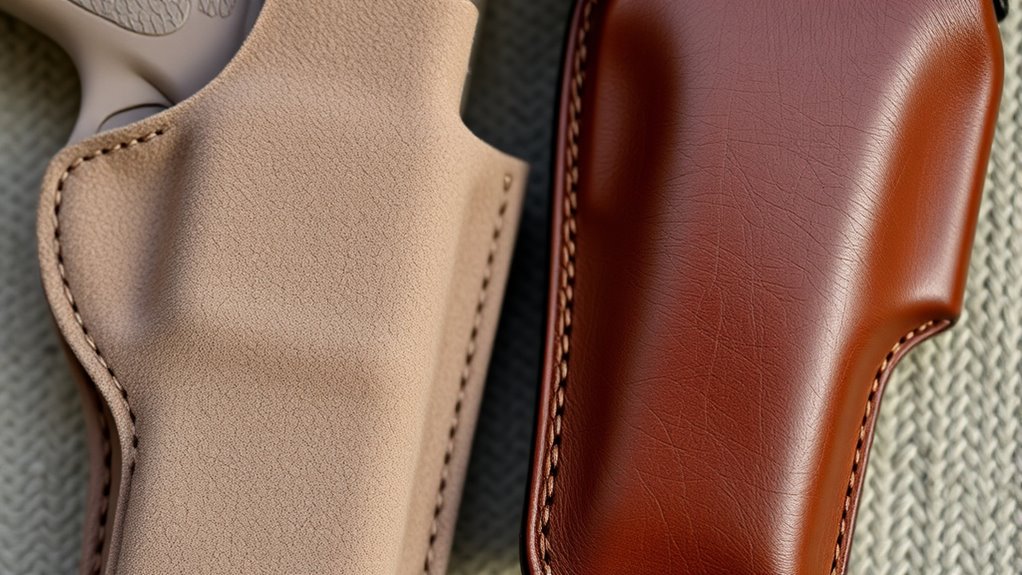
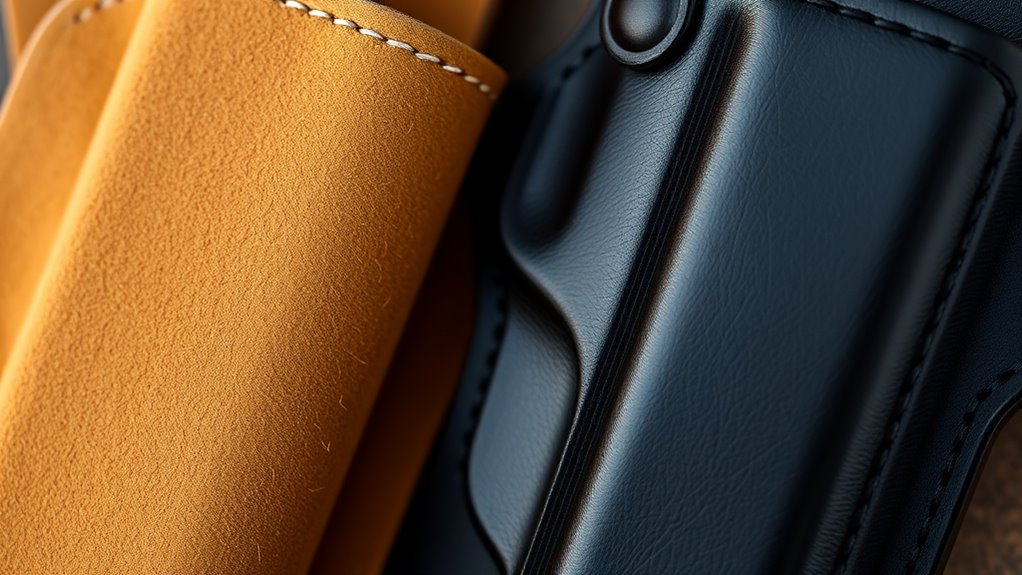
When comparing suede and leather holsters, the material quality really makes a difference. Leather is known for being durable and strong, making it a top choice for everyday use. Over time, it ages nicely and develops a unique patina.
Suede, on the other hand, is softer with a more textured surface, giving it a different look. It feels plush and luxurious, but isn’t as resistant to water and dirt, which can affect its appearance and durability.
Leather’s natural fibers and dense build give it a premium feel. Suede’s velvety surface offers a distinct style that many find appealing.
Your choice mostly depends on whether you prefer the tactile richness of suede or the toughness of leather.
Durability: Which Holster Lasts Longer-Suede or Leather?
In terms of durability, leather holsters generally resist wear and tear better over time than suede. Leather’s material resilience helps it maintain its shape and integrity longer, even with frequent use.
Suede, on the other hand, can be more susceptible to damage from scratches and moisture, which may shorten its lifespan.
Material Resilience Over Time
While both suede and leather holsters are known for their durability, leather generally outperforms suede over time. Leather ages better, developing a rich patina that adds character as it gets older.
Its natural fibers are more resistant to cracking and splitting, especially when properly cared for. Suede, however, is more vulnerable to moisture and scratches, which can weaken its structure.
Over extended use, suede’s softer surface can wear thin and become fragile, reducing its resilience. Leather’s thicker, denser material offers better resistance to environmental factors and daily handling.
If longevity is your main concern, leather’s ability to withstand the test of time makes it a more resilient choice for holsters that need to last for years.
Wear and Tear Resistance
Durability under daily use is a key factor when choosing between suede and leather holsters. Leather usually offers better wear and tear resistance because its dense fibers make it more durable against scratches, abrasions, and stretching.
Leather holsters tend to age gracefully, developing a patina that can actually make them look better over time. Suede, on the other hand, is softer and more delicate, so it’s more vulnerable to damage from rough handling, moisture, and friction.
While suede gives a stylish, lightweight option, it may show signs of wear sooner than leather. If you want something that lasts longer and resists daily wear, leather is the smarter choice. Suede is better for short-term use or decorative purposes where wear resistance isn’t as important.
Retention and Security: How Do Suede and Leather Compare?
In terms of retention and security, suede and leather differ in how well they grip your firearm. Leather usually provides a firmer hold and better wear resistance, helping it stay secure over time.
Suede, on the other hand, may soften or wear more quickly, which can affect its grip. Think about how secure you want your holster to be and how each material’s features match your daily needs.
Grip Strength Differences
The grip strength of a holster is key to how well it keeps your firearm secure. Suede and leather are very different in this area. Suede is softer and more flexible, making drawing smoother but possibly reducing retention.
Leather provides a firmer hold that keeps your firearm more secure, especially when you’re moving around. Keep these points in mind:
- Leather creates a snug fit that helps prevent accidental discharges.
- Suede’s flexibility lets you access your firearm more easily but might need some adjustments for better retention.
- Leather’s firmness offers better security in high-stress situations.
- Suede’s softer texture can wear out faster, which might weaken grip strength over time.
Choosing between them depends on whether you want a quick draw or maximum retention.
Wear and Tear Resistance
Suede and leather differ a lot in how they handle wear and tear over time, which affects how long they last. Leather is generally tougher, better at resisting scratches and abrasions, so it’s good for frequent use. It ages nicely, developing a unique patina that adds character.
Suede, on the other hand, is softer and more delicate. It’s prone to staining, scuffing, and damage from moisture. Over time, suede can wear thin or develop rough patches, making it less protective.
If you want something that lasts, leather is the better choice because it stands up to daily abuse. Suede’s look might fade faster with heavy use and will need more upkeep to stay looking good.
Knowing these differences can help you pick a holster that matches how you carry and how much wear it will face over time.
Secure Retention Features
Both suede and leather holsters are designed to keep your firearm secure, but they do so using different mechanisms that affect their overall retention.
Leather holsters often rely on tension and precise molding to hold your gun firmly in place. Suede holsters, on the other hand, typically depend on friction and the material’s texture.
Consider these retention features:
- Leather’s snug fit provides a reassuring sense of security, preventing accidental slips.
- Adjustable tension screws in leather holsters let you customize retention to your comfort.
- Friction grip in suede holsters offers quick access but might feel less secure during rigorous activity.
- Material texture influences how tightly the firearm stays, impacting confidence and safety.
Comfort and Wearability: Which Material Feels Better?
Ever wondered which material offers a more comfortable fit for daily wear? Suede generally feels softer and more flexible against your skin, making it comfortable for extended use. Its plush texture cushions your hand and molds to your body over time, providing a natural, snug fit.
Leather, on the other hand, can start out stiffer but tends to become more comfortable as it breaks in. It offers firm support without feeling too restrictive. If you prefer a lightweight, plush feel, suede might be your best choice.
For a more structured, durable fit, leather provides better support and stability. Ultimately, comfort depends on your personal preference and how you wear the holster daily. Both materials can be comfortable, but your experience will vary based on individual fit and wear.
Maintenance Tips: Keeping Suede and Leather Holsters in Top Shape
To keep your suede and leather holsters in top condition, regular maintenance is essential. Proper care guarantees your holster stays durable, looks great, and functions reliably. Here are four key tips:
- Clean regularly: Use a soft brush for suede and a damp cloth for leather to remove dirt and dust.
- Condition: Apply a leather conditioner or suede protector to prevent cracking and keep it flexible.
- Store properly: Keep your holster in a cool, dry place away from direct sunlight to avoid fading and warping.
- Avoid moisture: Keep your holster dry. If it gets wet, dry it naturally and steer clear of heat sources.
Consistent care keeps your holster functional and beautiful, ready for any situation.
Style and Aesthetics: Which Looks Better for Your Needs?
Choosing between suede and leather holsters often comes down to how they look and fit your personal style. Suede gives a softer, more casual vibe with a matte finish that feels relaxed. Leather offers a polished, classic look that works well in formal or professional settings.
Your choice depends on whether you prefer a rugged or refined aesthetic. Here’s a quick comparison:
| Feature | Suede | Leather |
|---|---|---|
| Appearance | Soft, matte, casual | Smooth, glossy, formal |
| Style Flexibility | Rustic, laid-back | Elegant, timeless |
| Color Options | Usually limited, earthy tones | Wide range, vibrant options |
| Wear & Aging | Becomes softer, develops character | Gains patina, looks distinguished |
| Suitability | Casual, outdoor activities | Business, dress occasions |
Think about your style needs to pick the look that best matches your personality.
Best Environments for Suede and Leather Holsters
Suede and leather holsters perform best in environments that suit their unique qualities. For suede, think dry, mild conditions that keep moisture away and protect its softness. Leather holsters are more versatile and handle different settings well.
Consider these environments:
- Sunny, dry outdoor settings – great for leather, helping it stay strong.
- Indoor ranges – controlled spaces with minimal moisture and dirt.
- Urban daily carry – leather’s durability handles everyday wear and tear.
- Mild, dry climates – ideal for suede to keep its texture and look.
Avoid humid or rainy environments for suede, and steer clear of excess moisture for leather. This way, your holsters stay in top shape and last longer.
Frequently Asked Questions
Are Suede Holsters Suitable for Everyday Concealed Carry?
Suede holsters aren’t ideal for everyday concealed carry because they lack the durability and moisture resistance of leather.
You might find them more comfortable at first, but they can wear out quickly with daily use. Plus, suede’s porous surface can attract dirt and moisture, risking damage or affecting your firearm’s safety.
For reliable, long-term concealment, it’s better to choose a sturdy leather holster designed specifically for everyday carry.
Can Suede Holsters Be Waterproofed Effectively?
Yes, you can waterproof suede holsters, but it takes some careful treatment. Use a water-resistant spray made specifically for suede to create a protective barrier against moisture.
Spray it evenly and let it dry thoroughly before using the holster. Keep in mind, waterproofing might slightly change the texture or look of the suede.
Regular reapplication will help keep it water-resistant, but remember, suede isn’t as waterproof as leather.
How Do Suede and Leather Holsters Perform Under Extreme Weather Conditions?
Suede holsters tend to perform poorly under extreme weather conditions, especially in rain or snow, as they absorb moisture and can become damaged or moldy. Leather holsters, however, generally withstand harsh weather better if properly treated and maintained.
To guarantee durability, you should waterproof and condition your leather holster regularly. Avoid exposing suede to moisture, or it’ll deteriorate quickly, compromising your firearm’s safety and your convenience.
Are Suede Holsters More Affordable Than Leather Options?
Yes, suede holsters are generally more affordable than leather options. Imagine browsing for a holster and noticing suede versions costing less without sacrificing style.
Because suede is often less processed and uses thinner material, manufacturing costs drop, making it a budget-friendly choice. If you’re looking for a stylish, economical option, suede holsters offer a great balance between cost and appearance, especially for casual or light-duty use.
Do Suede Holsters Require Special Storage to Prevent Damage?
Yes, suede holsters do require special storage to prevent damage. You should keep them in a cool, dry place away from direct sunlight and moisture.
Avoid stacking heavy objects on top, which can crush the suede’s delicate fibers. It’s best to store them in a breathable fabric bag or wrap them in soft cloths.
Regularly clean and condition the suede to maintain its appearance and prevent deterioration over time.
Conclusion
Choosing between suede and leather holsters really depends on what matters most to you. If durability and security are your top priorities, leather might be the better choice. Think of police officers who rely on leather for its long-lasting quality.
On the other hand, if comfort and style are more important, suede offers a softer, more casual look. It’s perfect for those who want a holster that feels good and looks good.
In the end, understanding your environment and how you’ll carry your holster helps you make the right decision. When choosing between suede vs leather holsters, consider where and how you’ll use it to pick the best material for your needs.