Ideal Humidity Level for Your Gun Safe?
Many gun owners know the frustration of battling rust and corrosion on their firearms. It’s a common concern, and you’re not alone in wanting to keep your guns in top shape.
To protect your firearms, keep the humidity inside your gun safe between 30% and 50%. This range prevents rust and corrosion on metal parts while avoiding cracking or warping of wooden stocks.
Fluctuations can cause damage, so routinely monitor levels with a hygrometer and use desiccants or dehumidifiers as needed. Maintaining proper humidity is key to long-term firearm care, and staying within this range can make a big difference—more tips await to guarantee your guns stay in top condition.
Key Takeaways
Keep humidity levels between 30% and 50% to prevent rust and wood damage. It’s a good idea to regularly check moisture levels inside your safe.
You can use hygrometers or digital monitors to keep an eye on the humidity. This way, you’ll know if things are getting too dry or too damp.
Employ desiccants or electronic dehumidifiers to help maintain a consistent and optimal humidity level. They’re pretty effective at keeping everything in check.
Try to avoid extreme fluctuations in humidity. Sudden changes can cause metal to rust or wood to warp.
Regular maintenance and proper sealing of your safe will help sustain the ideal humidity and protect your firearms over time.
Why Proper Humidity Matters for Your Gun Safe?
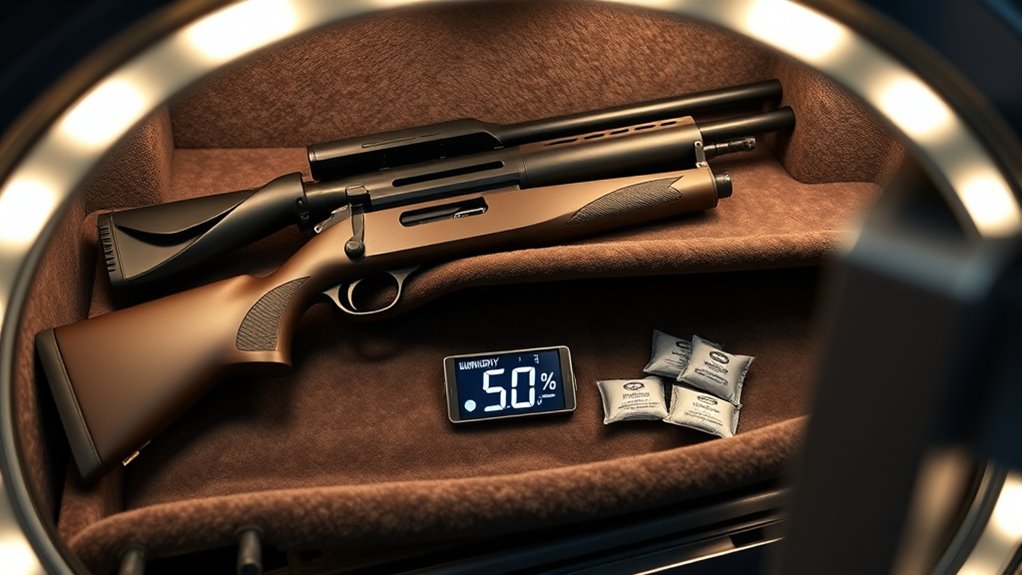
Proper humidity levels are essential because excess moisture can cause rust and corrosion on your firearms, while too little humidity can lead to cracking and damage to wooden stocks. When humidity is too high, metal parts become prone to rust, which can weaken the integrity of your guns.
On the other hand, low humidity dries out wooden stocks, making them brittle and prone to cracking or splitting. Maintaining balanced humidity helps protect both metal and wood components, ensuring your firearms stay in good condition.
Fluctuations in humidity can accelerate deterioration, reducing the lifespan of your collection. By controlling moisture levels, you safeguard your investment and preserve the functionality and appearance of your guns for years to come.
Proper humidity is key to long-term firearm care.
What Is the Ideal Humidity Range for Firearms and Wooden Stocks?
Maintaining the right humidity range is key to protecting your firearms and wooden stocks from damage. Ideally, keep the humidity level in your gun safe between 30% and 50%.
This range helps prevent rust and corrosion while also keeping wooden parts from cracking or warping. Monitoring humidity regularly is important to avoid extremes that could harm your collection.
Here’s a quick overview to help you understand the effects:
| Humidity Level | Effect on Firearms |
|---|---|
| 30-50% | Best for rust prevention and wood preservation |
| Below 30% | Risks cracking and drying out wooden stocks |
| Above 50% | Promotes rust and mold growth |
What Are the Risks of Too Much or Too Little Humidity?
Excessive or insufficient humidity levels in your gun safe can cause serious damage to your firearms and wooden stocks. Too much humidity creates a damp environment that encourages rust and corrosion on metal parts.
It can also cause wooden stocks to swell, crack, or warp over time. On the flip side, too little humidity results in dry conditions that can make wood shrink, split, or crack, which affects your firearm’s stability and looks.
Both extremes can weaken the integrity and lifespan of your guns. Fluctuations in humidity also speed up the deterioration of leather or fabric components inside the safe.
Keeping humidity levels balanced is key to protecting your firearms from these risks. It helps ensure they stay in top condition for years to come.
How to Maintain the Correct Humidity in Your Gun Safe
To keep your gun safe’s humidity at the right level, start by using humidity indicators to monitor moisture.
Make sure to use proper ventilation techniques and check moisture levels regularly to prevent issues.
Consistent maintenance helps protect your firearms from rust and corrosion.
Use of Humidity Indicators
Using humidity indicators is essential for keeping your gun safe in ideal condition. These small devices help you monitor the moisture levels inside your safe accurately.
By placing them in visible spots, you can quickly check if the humidity stays within the recommended range. Indicators come in different types, like cards or digital displays, making it easy to track fluctuations over time.
Regularly checking these indicators allows you to take prompt action if the humidity gets too high or low. This proactive approach prevents rust, corrosion, and damage to your firearms.
Keep in mind, accurate readings from humidity indicators are vital for maintaining a stable environment inside your safe. They’re simple tools that provide peace of mind and help preserve your guns’ condition.
Proper Ventilation Techniques
Proper ventilation plays an essential role in maintaining the right humidity levels inside your gun safe. Without proper airflow, moisture can build up, leading to rust and corrosion.
To keep everything in check, consider these simple techniques:
- Leave a small vent or vent holes to promote continuous airflow and prevent moisture buildup.
- Use a vented dehumidifier or moisture-absorbing products that allow air exchange while controlling humidity.
- Avoid sealing the safe completely; make sure there’s some airflow to prevent stagnant air pockets.
Regular Moisture Checks
Regularly checking the moisture levels inside your gun safe is essential to prevent rust and damage. You should use a reliable hygrometer to monitor humidity consistently. Make it a habit to inspect the gauge weekly, especially in humid climates or during seasonal changes.
If you notice the humidity rising above the recommended level, take immediate steps to lower it, such as adding desiccants or increasing ventilation. Conversely, if the humidity drops too low, consider using a humidifier designed for safes.
Keep an eye out for signs of moisture buildup or corrosion on your firearms and accessories. Regular checks help you catch problems early, saving you from costly repairs or replacements down the line.
Staying vigilant guarantees your guns stay protected and in top condition.
Which Humidity Control Devices Are Best for Firearm Preservation?
Choosing the right humidity control device is key to preserving your firearms and preventing rust or corrosion. The best devices keep a stable environment inside your gun safe, protecting your collection.
Here are three top options:
- Silica Gel Packs. They are affordable and effective, absorbing excess moisture. Plus, they can be reused after drying.
- Desiccant Beads. These offer continuous moisture absorption and are easy to refill or replace when needed.
- Electronic Dehumidifiers. They provide automated humidity control, keeping levels steady with minimal maintenance.
Each option has its benefits, but your choice depends on your budget, the size of your safe, and how much moisture control you need. Picking the right device helps keep your firearms in pristine condition for years to come.
How to Monitor and Adjust Humidity Levels Effectively
You should regularly check your humidity gauges to make sure your gun safe stays within the ideal range.
If levels are too high, add desiccants to absorb the extra moisture.
If the humidity is too low, you might need to introduce some moisture sources.
Consistent monitoring and quick adjustments are key to keeping your firearms protected from rust and corrosion.
Using Humidity Gauges
Using a Humidity Gauge in Your Gun Safe
To keep your firearms in top shape, using a reliable humidity gauge is key. A good gauge gives you accurate, real-time readings so you can make smart adjustments.
Place the gauge at a consistent height and spot inside your safe to get the most accurate readings. Checking the humidity weekly helps catch any fluctuations early.
Make it a habit to record your readings. Over time, you’ll notice patterns or trends and can adjust your approach as needed.
Choose a digital or analog gauge based on what you prefer, but ensure it’s designed for enclosed spaces like safes. Proper monitoring helps protect your firearms from moisture damage.
Adjusting With Desiccants
When using desiccants to control humidity in your gun safe, it’s important to check your humidity indicator or gauge weekly. This way, you can make sure the desiccants are doing their job effectively.
Replace or recharge your desiccants as needed. To keep things simple, use this table to track their status:
| Desiccant Type | Signs of Saturation | Replacement Frequency |
|---|---|---|
| Silica Gel | Beads clump together, color change | Every 1-3 months |
| Clay Desiccants | Moisture visible, beads soft | Every 2-4 months |
| Activated Charcoal | Odor persists, beads saturated | Every 3-4 months |
Using the right desiccant and maintaining it helps keep your firearms dry and protected.
Troubleshooting Common Humidity-Related Problems in Your Gun Safe
Humidity issues in your gun safe can lead to rust, corrosion, and damage to your firearms and valuables. To troubleshoot common problems, start by finding out what’s causing them. Here are three key issues to watch for:
- Persistent moisture or condensation: If you see water droplets, your safe might be too humid or not sealed well. Check the seals and vents, and think about adding dehumidifiers.
- Musty odors: A strange smell means there’s excess humidity or mold. Increase ventilation and give the interior a good clean.
- Surface rust on firearms: This shows humidity levels are too high. Use desiccants, improve airflow, and keep the humidity in check to prevent more damage.
Dealing with these problems quickly will help keep your firearms protected and your safe in great shape.
Tips for Long-Term Firearm Care and Humidity Management
Maintaining your firearms over the long term requires consistent humidity management, as fluctuations can cause rust, corrosion, and deterioration. To protect your guns, regularly monitor the humidity levels inside your safe with a reliable hygrometer.
Consistent humidity control is essential to prevent rust and preserve your firearms’ condition.
Keep the environment at around 50% humidity for ideal preservation. Use dehumidifiers or silica gel packs to absorb excess moisture, especially in humid climates.
Avoid placing firearms directly against the safe walls or stacking them tightly, which can trap moisture. Clean your guns periodically with oil or a corrosion inhibitor to create a protective barrier.
Store firearms unloaded, and consider using gun socks or cases with moisture-wicking properties for extra protection. Consistent care and humidity control will extend your firearms’ lifespan and maintain their condition.
Frequently Asked Questions
How Often Should I Check Humidity Levels in My Gun Safe?
You should check the humidity levels in your gun safe at least once a month. Regular checks help you catch any fluctuations early, preventing rust or corrosion on your firearms.
Use a reliable hygrometer to monitor the humidity, and adjust your dehumidifier or desiccant packs if levels are too high or too low.
Consistent monitoring keeps your guns in peak condition and protects your investment over time.
Can Climate Change Affect My Gun Safe’s Humidity?
Yes, climate change can affect your gun safe’s humidity. As temperatures and humidity levels change because of shifting weather patterns, moisture can seep into your safe.
This increases humidity and risks rust or corrosion on your firearms. It’s a good idea to regularly check the humidity levels inside your safe.
Using dehumidifiers or silica gel packs can help keep things in balance. Staying proactive with these measures protects your firearms and keeps them in good condition despite climate shifts.
Are There Specific Humidity Levels for Different Firearm Types?
Different firearm types have specific humidity needs. For example, high-carbon steel guns need humidity levels around 40-50%, while stainless steel firearms tolerate slightly higher humidity.
Keeping humidity in check prevents rust and corrosion. Think of it as walking a tightrope—too dry, and your guns can dry out or crack; too moist, and corrosion risks spike.
Tailoring humidity levels helps preserve your firearms’ longevity.
How Do I Prevent Rust During Seasonal Humidity Fluctuations?
To prevent rust during seasonal humidity fluctuations, you should use silica gel packs or dehumidifiers inside your gun safe to control moisture levels. Keep the safe in a cool, dry place and avoid opening it frequently during high humidity periods.
Regularly check and maintain a stable humidity level, ideally around 30-50%. Wiping your firearms with a lightly oiled cloth also adds an extra layer of rust protection.
Is There a Recommended Humidity Level for Storing Ammunition?
You should aim to keep the humidity level for storing ammunition between 50% and 60%. This range helps prevent rust and corrosion without causing moisture buildup that could damage the ammo.
Use a hygrometer to keep an eye on the humidity. If levels fluctuate, think about using desiccants or dehumidifiers to stay within that ideal range.
Maintaining consistent humidity is key to keeping your ammunition in top condition, ready for use whenever you need it.
Conclusion
Maintaining the right humidity in your gun safe is like tending a delicate garden—too much or too little can harm your prized possessions.
By keeping humidity levels steady, you protect your firearms from rust, corrosion, and warping. Stay vigilant, use the right devices, and regularly check your settings.
When you master humidity control in your gun safe, you’re not just safeguarding your guns; you’re nurturing a legacy that stands the test of time.