What Makes Gun Safes Easy to Break Into?
Many gun owners worry about the safety of their valuables, but it’s easy to feel overwhelmed by all the options and potential risks. You’re not alone—knowing what makes a gun safe easy to break into can help you make smarter choices.
Gun safes become easy targets when they’re built with weak materials, thin steel, or flimsy doors that can be pried open or cut through. Simple locks are easily picked or bypassed using basic tools, while poor locking mechanisms provide little resistance.
Inadequate anchoring makes it easier for thieves to move or tip over the safe. Cutting corners during manufacturing reduces durability, making it more vulnerable to forced entry and damage.
Keep exploring to find out how to better protect your valuables.
Key Takeaways
- Thin or weak steel walls are easy for burglars to cut through or pry open.
- Simple locks can be picked, bypassed, or drilled out with relative ease.
- Poor door construction and weak hinges make forced entry much simpler.
- If a safe isn’t properly anchored, it can be shifted or stolen altogether.
- Low fire and water resistance mean the safe isn’t very durable or sturdy.
Common Construction Flaws That Make Gun Safes Vulnerable
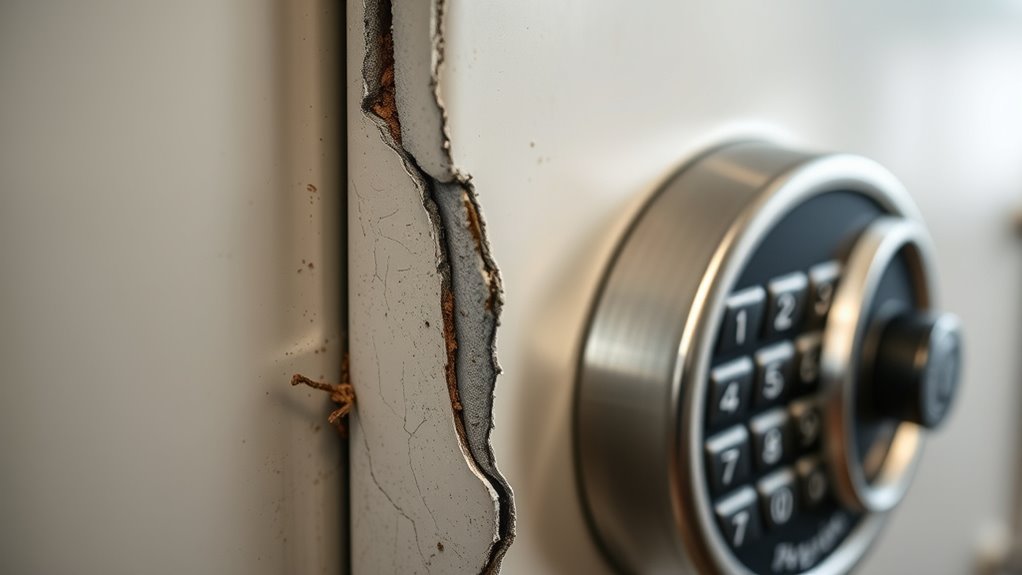
Many gun safes have construction flaws that make them easier to break into. One common issue is thin or weak steel walls, which intruders can compromise with simple tools like a crowbar or hammer.
If the door hinges are exposed or poorly reinforced, someone can pry them open without much effort. Some safes also use inexpensive locking mechanisms or weak welds that crack under pressure.
Lack of internal reinforcements, like steel plates or bolts, leaves the contents more vulnerable. These flaws often come from cost-cutting measures during manufacturing, sacrificing durability for affordability.
As a result, many safes aren’t built to withstand even basic break-in techniques, making them less secure than you might expect.
How Intruders Bypass Locking Systems in Safes
Intruders often bypass safe locking systems by exploiting vulnerabilities with simple tools or techniques, making even high-quality locks ineffective. They use methods like these:
Intruders exploit vulnerabilities with simple tools, rendering even top-tier safes ineffective.
- Lock Picking: Manipulating tumblers or mechanisms with basic tools to open the lock without causing damage.
- Glass Cutting: Breaking a window or panel and reaching inside to access the safe manually.
- Drilling: Using power tools to drill through the lock or locking mechanism, which destroys it.
- Force Attacks: Applying brute force with crowbars or sledgehammers to pry open or break the safe.
How Thin or Poor-Quality Materials Weaken Safe Security
When safes are built with thin or low-quality materials, their strength and durability are significantly weakened, making them easier to break into. Thinner steel or weaker composites are more vulnerable to being cut, drilled, or pried open than high-quality, sturdy materials.
Poorly manufactured safes often lack the reinforcement needed to withstand forceful attacks. For example, a safe with thin walls can collapse under pressure or be drilled through quickly.
Inferior materials also make safes more susceptible to tools like crowbars or power tools, reducing their resistance. When the materials aren’t solid or durable enough, intruders can exploit these weaknesses with less effort, increasing the likelihood of breaking into the safe and accessing your valuables.
Why Simple Locks Are Vulnerable to Break-Ins
Simple locks are easy targets because they can often be picked or bypassed with minimal effort. Many have weak locking mechanisms that don’t stand up to determined intruders.
Plus, limited security features make these safes an open invitation for break-ins. They just aren’t built to keep out someone who really wants to get in.
Easily Picked or Bypassed
Because many gun safes rely on basic lock mechanisms, they are surprisingly easy for someone with the right tools or knowledge to bypass. Simple locks can be manipulated or opened without much effort.
Here are some common methods used:
- Picking the lock: Skilled intruders use lock picks to manipulate internal pins or tumblers.
- Using bypass tools: Devices like shims or bypass rods can disengage locking mechanisms.
- Applying brute force: Forcing entry with prying or hammering can break the lock or door.
- Exploiting design flaws: Weak points or manufacturing defects make locks easier to override.
These vulnerabilities highlight the importance of choosing more secure locking systems to prevent unauthorized access.
Weak Locking Mechanisms
Many gun safes use basic lock mechanisms that are easy to tamper with. Simple locks like keypad or key locks can often be bypassed with little effort.
Criminals might use tools like lock picks, bypass devices, or brute force to crack these weak spots. You might think a lock is secure because it looks solid, but without advanced features, it’s easier to break into.
Here’s a quick overview of common vulnerabilities:
| Vulnerability | Explanation |
|---|---|
| Low-security locks | Easy to pick or force open |
| No audit trail | No way to track who accessed it |
| Simple mechanisms | Susceptible to bypass methods |
Choosing a more secure lock is key to keeping your valuables safe from unauthorized access.
Limited Security Features
Limited security features make it easier for intruders to exploit vulnerabilities in gun safes. When safes lack advanced defenses, they become more accessible to thieves.
For example, simple locking systems can be bypassed with basic tools or techniques. Weak hinges allow pry attempts to gain an advantage.
Limited tamper alerts give intruders time to open the safe unnoticed. Lack of reinforced steel makes drilling or cutting easier.
Without these added layers, your safe becomes vulnerable. Basic locks and minimal reinforcement don’t stand up against determined intruders.
They can quickly identify and exploit these weaknesses, undermining your security. To protect your firearms, choose safes with extensive features that go beyond the basics.
Risks of Inadequate Fire and Water Resistance
If your gun safe isn’t properly water-resistant, your firearms could get damaged by flooding or humidity. Water can cause rust and corrosion, making your guns less reliable.
Fire resistance is also crucial. Without good barriers, your weapons might not be protected during a fire, risking serious damage.
Over time, poor material durability can weaken the safe’s structure. That can leave your valuables vulnerable when they need protection the most.
Water Damage Vulnerability
Water damage is a big risk for gun safes that don’t have proper fire and water-resistant features. If your safe isn’t sealed well, water can get in during floods or leaks, damaging your firearms and valuables.
Without good protection, you might face rust on metal parts, which can weaken your firearms. Ammunition can corrode, making it unsafe or unusable. Mold can grow on your stored items, posing health risks.
Paper documents or serial numbers can also degrade, making it hard to identify or resell your items. These problems happen quickly once water gets inside, especially if the safe is kept in a damp place.
If your safe isn’t water-resistant, your valuables are vulnerable to damage that can’t be undone. Over time, this reduces their value and safety.
Fire Resistance Limitations
Fire resistance is just as important as water protection when you’re safeguarding your firearms and valuables. If your safe isn’t rated for high temperatures, it won’t hold up in a serious fire, risking irreparable damage or loss.
Many safes claim to be fireproof, but these ratings often have limits like a certain duration and temperature. If a fire exceeds these conditions, your contents could still be destroyed, even if the safe claims to be fire-resistant.
Water damage can also happen if the safe isn’t properly sealed, especially during firefighting efforts. Be cautious of safes with low fire ratings or vague claims—they’re more likely to fail in emergencies.
To really protect your valuables, pick a safe with proven fire resistance ratings that match the potential fire scenarios in your area.
Material Durability Risks
Without proper material durability, your safe can be vulnerable to damage from heat and moisture, which can weaken its protective qualities. If the materials aren’t resistant enough, the safe’s structure may weaken over time, making it easier for burglars to pry open or break.
Consider these risks:
- Water infiltration causing rust and corrosion, which weakens metal components.
- Fire exposure leading to warping or melting of the safe’s interior.
- Deterioration of seals, reducing water and fire resistance.
- Material fatigue from repeated environmental stress, decreasing overall strength.
These issues can make your safe less effective at protecting your valuables. Investing in high-quality, durable materials helps ensure your safe stays strong against environmental threats and lasts longer.
Why a Flimsy Door Can Compromise Your Safe
A flimsy door seriously weakens your safe’s security, making it easier for thieves to break in. When the door is thin or poorly built, it’s vulnerable to forceful attacks like prying or kicking.
Thieves can quickly take advantage of weak materials or flimsy hinges, bypassing the lock completely. Even if your safe has high-tech locks, a fragile door can be the weak link that ruins everything.
A sturdy, solid door resists forced entry and gives you peace of mind that your valuables are protected. Without a strong door, all the fancy locking features don’t matter because the physical barrier isn’t strong enough.
In short, the strength of your safe’s door is crucial to its overall security.
Why Proper Anchoring Keeps Your Safe Safe
Proper anchoring keeps your safe from shifting or tipping over, making it harder for intruders to move or access. Using wall anchors boosts stability, ensuring your safe stays securely in place.
When you prioritize secure mounting, you’re greatly reducing the risk of compromise. It’s a simple step that makes a big difference in keeping your valuables safe.
Secure Mounting Prevents Shifting
Securing your gun safe properly to the floor or wall is essential because it prevents shifting and potential theft. When a safe shifts, it becomes easier for a thief to pry open or force. Proper mounting keeps the safe stable and reduces vulnerabilities.
To guarantee effective mounting, consider these key steps:
- Use high-quality bolts designed for your safe’s material and weight.
- Anchor the safe into a solid surface like concrete or heavy-duty plywood.
- Tighten bolts securely without over-drilling or damaging the safe.
- Check periodically that the safe remains firmly attached, especially after relocation or time.
Wall Anchors Enhance Stability
Wall anchors greatly boost the stability of your gun safe, making it much harder for thieves to move or pry it open. When you securely anchor your safe to the wall, it becomes less likely to tip over or be dragged away.
Properly installed wall anchors distribute the safe’s weight evenly, increasing resistance against forceful attempts. Using high-quality anchors designed for your wall type guarantees maximum hold.
If you neglect anchoring, a thief might simply tip or shift the safe to gain an advantage. Anchors also prevent accidental slips or falls that could damage the safe or compromise security.
Design Flaws That Make Forensic Attacks Easier
Many gun safes are vulnerable to forensic attacks because their design features unintentionally create entry points for skilled burglars. These flaws often come from overlooked details that weaken security.
For example, weak hinges can be pried open with simple tools. Thin or poorly reinforced door frames may break under force, making entry easier.
Visible seams or joints can be pried or cut through. Inadequate locking mechanisms might be manipulated or bypassed altogether.
These vulnerabilities give attackers an advantage, making forensic tools like jacks, crowbars, or drills more effective. When safes aren’t carefully designed to resist forced entry, even experienced burglars can exploit these weaknesses.
This significantly reduces the time and effort needed to breach the safe, putting your valuables at risk.
How Cutting Corners Reduces Safe Durability
When manufacturers cut corners to save costs, the overall durability of the safe drops significantly. They might use thinner steel or weaker hinges, making it easier for intruders to break in.
Cheap locks and locking mechanisms are easier to pick or break, which reduces security. Skimping on quality materials means the safe won’t hold up well against tampering or everyday wear.
You might notice corners cut in insulation, which hurts fire resistance. These shortcuts save money initially but create weak spots that skilled burglars can exploit.
Ultimately, sacrificing quality for lower production costs makes the safe less resistant to theft and damage. If durability matters to you, investing in a high-quality safe is the best way to keep your valuables protected.
How to Recognize a Truly Secure Gun Safe
How can you tell if a gun safe is truly secure? First, check the locking mechanism. A reliable safe will have a sturdy, high-quality lock—preferably biometric, combination, or heavy-duty electronic locks.
Next, inspect the material. A secure safe uses thick steel walls, ideally 10 gauge or thicker, with solid construction.
Third, consider fire and water ratings. The best safes can withstand fires and flooding, keeping your guns protected.
Finally, look for reinforced corners and anti-pry features. These upgrades make it much harder for intruders to force their way in.
Frequently Asked Questions
Can a Safe Be Easily Opened With Basic Tools?
Yes, a safe can often be opened with basic tools if it’s not well-protected. Tools like screwdrivers, crowbars, or even simple lock-picking sets can bypass weaker safes.
If your safe isn’t reinforced or has a simple lock, you might find it surprisingly easy to pry open or bypass. To prevent this, choose a high-quality, reinforced safe with advanced locking features that resist common tools.
Do Cheaper Safes Have More Vulnerabilities?
Cheaper safes definitely have more vulnerabilities. You could probably crack one open with a paperclip!
They often use low-quality materials and weaker locking mechanisms, making them easier to pry open or drill through.
If you want real security, investing in a higher-quality safe is essential.
Skimping on price might save you money now, but it could cost you your valuables later.
Protect what matters most with a sturdy, reliable safe.
How Does Safe Size Affect Security?
The size of your safe affects its security because bigger safes usually have thicker walls and are built with heavier materials. This makes them harder to move or break into.
Smaller safes are easier to carry, hide, or pry open, which can make them more vulnerable. When picking a safe, think about its size in relation to its build quality and how you plan to secure it.
A well-sized safe that’s properly anchored offers better protection. But remember, size isn’t everything—strong materials and good installation are just as important.
Are Biometric Safes More Secure Than Traditional Locks?
Biometric safes are generally more secure than traditional locks because they rely on unique fingerprints, making unauthorized access harder. You can quickly access the safe with your fingerprint, which reduces the risk of lost keys or forgotten codes.
However, biometric systems can sometimes be fooled or malfunction. That’s why it’s important to choose a high-quality model. Overall, they offer a modern, convenient, and often more secure way to protect your guns.
Can Environmental Factors Weaken a Safe’s Integrity?
Environmental factors can weaken a safe’s integrity if you don’t protect it properly. Excessive moisture causes rust, which can corrode metal parts and mess with the lock mechanisms.
Extreme temperatures may weaken certain materials or damage electronic parts in biometric safes. Plus, prolonged exposure to sunlight can degrade the safe’s exterior over time.
To keep it secure, place your safe in a dry, cool spot. Consider using dehumidifiers or protective coatings to help shield it from damage.
Conclusion
If you ignore these flaws, your gun safe could turn into an open invitation for intruders—like a neon sign flashing “Come In!”
Remember, a cheap, poorly made safe is basically a welcome mat for burglars.
Don’t let your valuables become tomorrow’s headline. Invest in quality, proper installation, and solid materials. Otherwise, you might as well leave your guns and treasures accessible on your front porch.
Protect what matters before it’s too late. Gun safes that are easy to break into are often the result of poor construction, weak locks, or flimsy materials.
Stay vigilant and choose wisely to keep your valuables secure and out of reach from intruders.