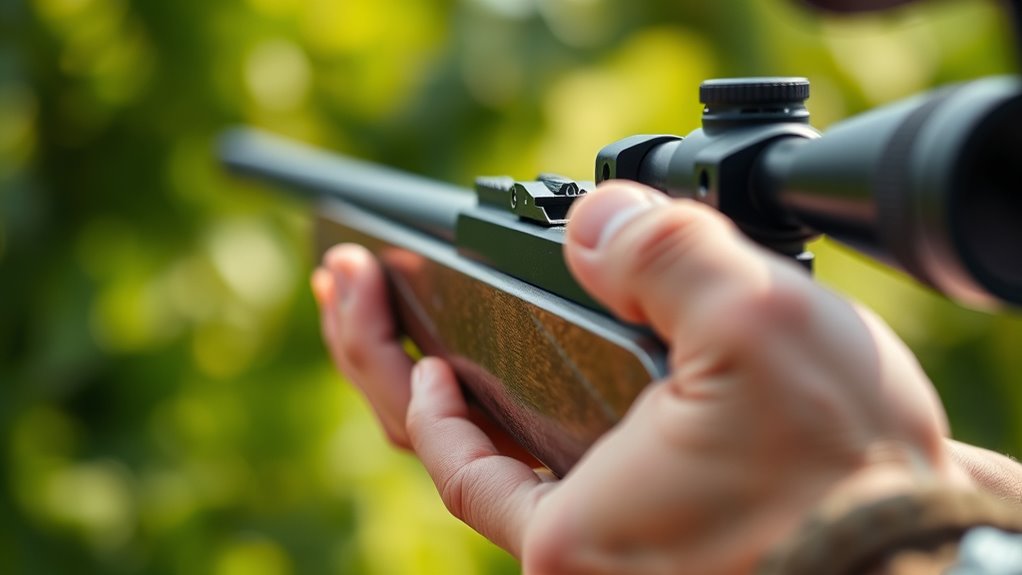
Mastering Open Sights – A Step-by-Step Guide to Shooting
Many shooting enthusiasts struggle with mastering open sights, feeling frustrated when their shots aren’t as accurate as they’d like. You’re not alone—improving your sight alignment and technique takes practice and patience.
To master open sights, focus on aligning the front sight within the rear notch while keeping the target slightly blurry. Adopt a stable stance, maintain a relaxed grip, and squeeze the trigger smoothly to improve accuracy.
Practice focusing on your front sight and controlling your breath for steady shots. Avoid common mistakes like rushing or poor sight alignment.
Keep practicing, and you’ll uncover more effective techniques that will refine your shooting skills over time.
Key Takeaways
- Understand the components and proper alignment of open sights for accurate aiming.
- Choose open sight systems that are compatible with your firearm type and model.
- Practice proper stance, grip, and trigger control. This will help improve your stability and precision.
- Build confidence by practicing regularly, setting achievable goals, and analyzing your shooting mistakes.
- Seek guidance from experienced shooters or mentors. Engaging with a supportive shooting community can also keep you motivated.
What Are Open Sights and How Do They Work?
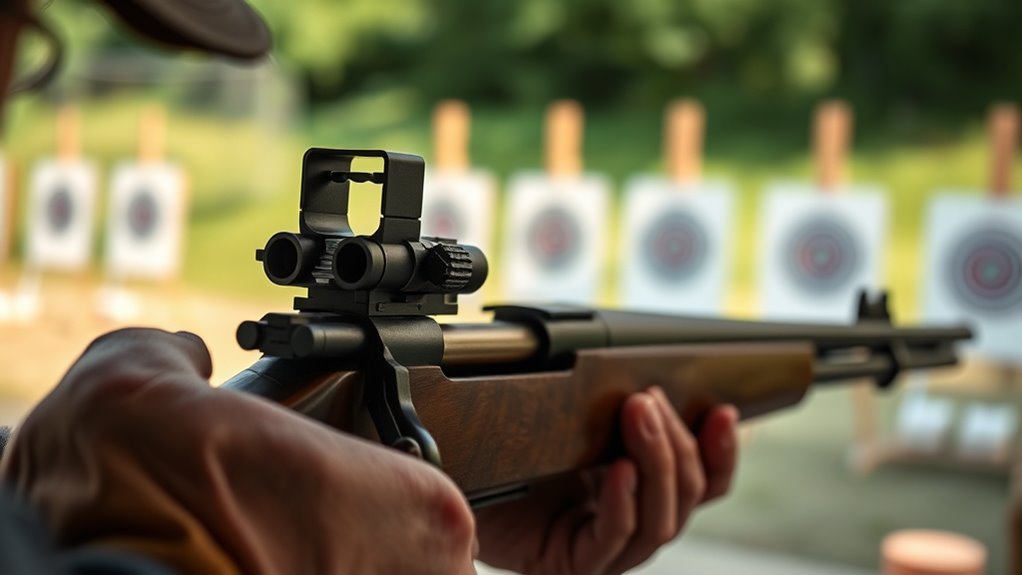
Open sights are a simple aiming device found on many firearms. They have two main parts: a front sight post and a rear notch or aperture.
Open sights consist of a front post and a rear notch or aperture for quick, reliable aiming.
When you aim, you line up the front sight within the rear opening, creating a straight line along the barrel. This helps you aim accurately at your target.
Open sights work best at short to medium ranges. They give a quick and clear sight picture, making them great for quick shots.
You focus on the front sight while keeping the target slightly blurry. This improves your accuracy without needing complicated adjustments.
Because they are simple and reliable, open sights are common on rifles, shotguns, and handguns. They require little maintenance and are easy to learn, which makes them popular with many shooters.
How to Choose the Right Open Sight System for Your Firearm
When selecting an open sight system, it’s important to see how well it fits your firearm’s make and model.
Knowing the different types of sight systems and their benefits helps you make a smart choice.
Don’t forget to balance your needs with your budget to find a setup that’s both effective and affordable.
Compatibility With Firearm
Choosing the right open sight system starts with understanding your firearm’s compatibility. Not all sights fit every gun, so check your firearm’s mounting options—whether it has dovetail slots, drilled and tapped bases, or specific mounting rails.
Measure the size and spacing of existing sight mounts to make sure your chosen open sights will fit securely. Consider the type of firearm—rifle, shotgun, or pistol—as different guns require different sight designs.
Also, verify if your firearm’s materials and finishes are compatible with the sight’s mounting hardware. This helps prevent corrosion or damage down the line. Compatibility guarantees a secure fit, which is essential for accuracy and safety.
Take the time to research your gun’s specifications and consult manufacturer guidelines or experts. This way, you can select an open sight system that aligns perfectly with your firearm.
Sight System Types
Selecting the right sight system depends on your firearm’s intended use and your shooting preferences. Open sights come in various types, each suited for different scenarios.
Here’s a quick overview:
| Sight System Type | Description |
|---|---|
| Blade Sights | Simple, low-profile, ideal for quick target acquisition. |
| Post Sights | Offer a clear, precise aiming point, good for accuracy. |
| Notched Sights | Combine a blade with a notch for quicker alignment. |
| Fiber Optic | Use bright fibers for better visibility in low light. |
| Iron Sights | Traditional, durable, and reliable for general shooting. |
Choose based on your needs—whether it’s quick shooting, precision, or visibility in different conditions.
Budget Considerations
Budget plays an essential role in determining the open sight system that’s right for your firearm. You need to set a realistic price range before shopping.
Basic iron sights are affordable and reliable, making them a great starting point if you’re on a tight budget. If you want better accuracy, consider upgrade options like fiber optic sights or simple aftermarket replacements, which cost a bit more but still remain accessible.
Higher-end options, such as adjustable or tactical sights, come at a premium but offer improved performance and durability. Remember, investing in quality sights can enhance your shooting experience, but you don’t have to overspend.
Choose a system that balances your financial limits with your shooting goals to get the best value.
How to Properly Stance and Grip for Open Sight Shooting
To shoot accurately with open sights, your stance and grip are the foundation. You should stand with your feet shoulder-width apart, creating a stable platform. Lean slightly forward, placing your weight evenly on both feet to improve balance.
Keep your knees relaxed and your body aligned with the target. When gripping the firearm, hold it firmly but not too tight; your hand should wrap around the grip with your fingers comfortably curled. Your dominant hand should be high on the grip, supporting control, while your support hand stabilizes the firearm.
Maintain a natural, consistent grip to prevent movement during shots. A stable stance combined with a proper grip helps reduce recoil and boosts accuracy. This makes your open sight shooting more precise and consistent.
How to Align Open Sights, Target, and Eye for Accurate Shots
Achieving accurate shots with open sights starts with proper alignment between your sights, the target, and your eye.
First, focus on the front sight, keeping it sharp and clear.
The rear sight should be aligned evenly around the front sight, with the top of both sights level.
Your eye should be positioned so that the front sight is centered in the rear notch, creating a straight line to your target.
Keep your head steady and maintain a consistent eye position.
Avoid looking directly at the target with your eye; instead, focus on aligning the sights.
When all three elements—the front sight, rear sight, and target—are aligned correctly, your shot will be more accurate.
Regular practice helps develop this alignment instinctively.
Tips for Practicing Focus and Breathing to Improve Your Aim
Practicing focus and controlled breathing are essential for steadying your aim and improving accuracy. When you concentrate, you eliminate distractions and sharpen your vision on the target.
Controlled breathing helps you relax and reduces muscle tremors that can throw off your shot. Take slow, deep breaths—inhale through your nose, then exhale smoothly. Use a steady rhythm to stay calm.
The table below highlights key techniques to develop focus and breathing:
| Technique | Purpose | Tips |
|---|---|---|
| Deep diaphragmatic breathing | Calm nerves, stabilize aim | Breathe slowly, expand your belly, exhale fully |
| Visualization | Improve concentration | Picture the perfect shot before shooting |
| Focus on a single point | Reduce distractions | Keep your eyes on the front sight |
| Consistent timing | Build muscle memory | Sync your breath with your shot—inhale, shoot, exhale |
Consistent practice helps solidify these habits and boosts your accuracy.
Common Mistakes in Open Sight Shooting and How to Fix Them
Many shooters struggle with proper sight alignment, trigger control, and stance. These mistakes can really hurt your accuracy.
Fixing them means paying close attention to each part and making intentional adjustments.
Recognizing and correcting these common errors is essential for improving your open sight shooting skills.
Incorrect Sight Alignment
Incorrect sight alignment is a common mistake that can really hurt your shooting accuracy. When your sights aren’t lined up right, your shots tend to miss the target, even if your aim feels steady.
To fix this, focus on lining up the front and rear sights evenly. The front sight should be centered in the rear notch, with equal light on both sides. Keep the sights crisp and clear, avoiding any tilt or skew.
Make sure to check your alignment before each shot to build good habits. Practice slow, deliberate aiming to train your eyes and hands to keep the sights properly aligned.
Poor Trigger Control
Poor trigger control is a common mistake that can hurt your shooting accuracy, even if your sights are perfectly aligned. When you jerk or slam the trigger, it causes unintended movement that throws off your shot’s precision.
To fix this, focus on a smooth, steady press instead of pulling forcefully. Keep your finger relaxed and place the pad of your index finger on the trigger. Squeeze slowly and steadily, maintaining control throughout the shot.
Avoid rushing or anticipating the trigger pull, as this can lead to jerking. Practice dry firing to develop a smooth trigger technique without using ammunition.
Ignoring Proper Stance
Ignoring proper stance can really hurt your accuracy, even if your sights are perfectly lined up. Your stance is the foundation for control and stability. Without it, your shots will be inconsistent.
Picture these key elements:
- Feet shoulder-width apart to create a solid base.
- Body leaning slightly forward for balance.
- Knees slightly bent to absorb recoil.
- Arms extended but relaxed to keep control.
How to Build Confidence and Progress Your Shooting Skills
Building confidence in your shooting skills starts with setting realistic goals and practicing regularly. Focus on small milestones, like hitting a target from a specific distance or tightening your shot grouping.
Consistent practice helps you get comfortable with your firearm, which reduces nervousness. Keep track of your progress so you can see your improvements over time, and that will boost your motivation.
Learn from any mistakes instead of getting discouraged. Analyzing what went wrong helps you refine your technique. Stay patient and persistent because developing skills takes time.
Surround yourself with supportive shooters or mentors who can offer guidance and encouragement. With dedication and steady practice, you’ll see progress, and your confidence will grow naturally as your accuracy and consistency improve.
Frequently Asked Questions
What Are the Main Differences Between Open Sights and Other Sighting Systems?
Open sights are simple, consisting of a front post and a rear notch, making them easy to use and maintain. Unlike telescopic or red dot sights, they don’t need batteries or complicated adjustments.
They’re great for quick target acquisition and are ideal for hunting and basic shooting. But they might not be as precise at longer distances compared to other sighting systems that offer magnification or illuminated reticles.
How Do Weather Conditions Affect Open Sight Accuracy?
Weather conditions can greatly influence your open sight accuracy, almost like how fog blurs your view.
Wind can push your shot off course, making precise aiming tricky.
Rain or moisture can cause your sights to fog up, reducing visibility. Bright sunlight creates glare, distracting you from your target.
Cooler temperatures might stiffen your equipment, while heat can cause slight expansion, both affecting shot consistency.
Stay aware, adapt your technique, and practice in various conditions.
Can Open Sights Be Used Effectively for Long-Distance Shooting?
Yes, you can use open sights effectively for long-distance shooting, but it takes skill and practice.
You’ll need to focus on precise alignment and staying steady, because open sights aren’t as accurate at longer ranges.
Adjust your technique by controlling your breath and keeping a consistent stance.
Practice regularly to boost your accuracy, and consider using magnification aids or extra sighting tools if you need better long-distance performance.
What Maintenance Is Required to Keep Open Sights in Optimal Condition?
You need to regularly clean your open sights with a soft brush or cloth to remove dirt, dust, and grime. Check for any corrosion or rust and use a protective oil if needed.
Make sure the sights are properly aligned and tight. If you find any loose screws, tighten them to keep everything secure.
Store your firearm in a dry, cool place to prevent deterioration. Regular maintenance keeps your sights clear, accurate, and reliable for every shot.
Are There Specific Open Sights Recommended for Beginners?
Yes, for beginners, fiber optic open sights are highly recommended because they’re easy to see and quick to acquire. Look for sights with clear, bright colors like red or green.
Adjustable front and rear sights can help improve accuracy, so consider those options. Brands like TruGlo or Williams offer reliable choices.
Start with simple, durable sights that require minimal maintenance. This way, you can focus on learning proper shooting techniques without distractions.
Conclusion
Don’t let doubts hold you back. Mastering open sights is all about practice and patience. Even if you think perfecting your aim takes years, remember that small, consistent improvements build confidence and skill.
With the right techniques and persistence, you’ll find yourself hitting targets more accurately than ever. Keep at it, and you’ll be surprised how quickly your shooting improves.
Confidence in your skills is just a steady shot away.