Drilling Open a Gun Safe: A Step-by-Step Guide
Unlocking a stubborn gun safe can be stressful, especially when you’re in a rush or worried about safety. You’re not alone—many people struggle with accessing their valuables when the lock won’t budge.
Drilling open a gun safe might seem daunting, but with the right tools and a calm approach, it’s manageable.
If you need to drill open a gun safe, stay calm and gather the right tools—like a cordless drill, metal drill bits, and safety gear.
Clear your workspace, identify the lock type, and mark the drilling spot accurately.
Apply gentle, steady pressure and avoid rushing. Be aware of potential damage, and consider safety precautions.
If you’re ready to learn the detailed steps and safety tips, keep exploring for an extensive guide.
Key Takeaways
- Gather the right tools like a cordless drill, metal bits, and safety gear before you get started.
- First, identify the type of lock on the safe. Then, choose a drilling spot that won’t cause damage.
- Mark the spot carefully, and use a center punch to make a small dent. This helps guide your drill.
- When drilling, go slowly with steady pressure. Stop occasionally to clear out debris and check your progress.
- Once the safe is open, check what’s inside. Reset the locks if needed and make sure everything is sealed up securely.
When You Need to Open a Locked Gun Safe Quickly
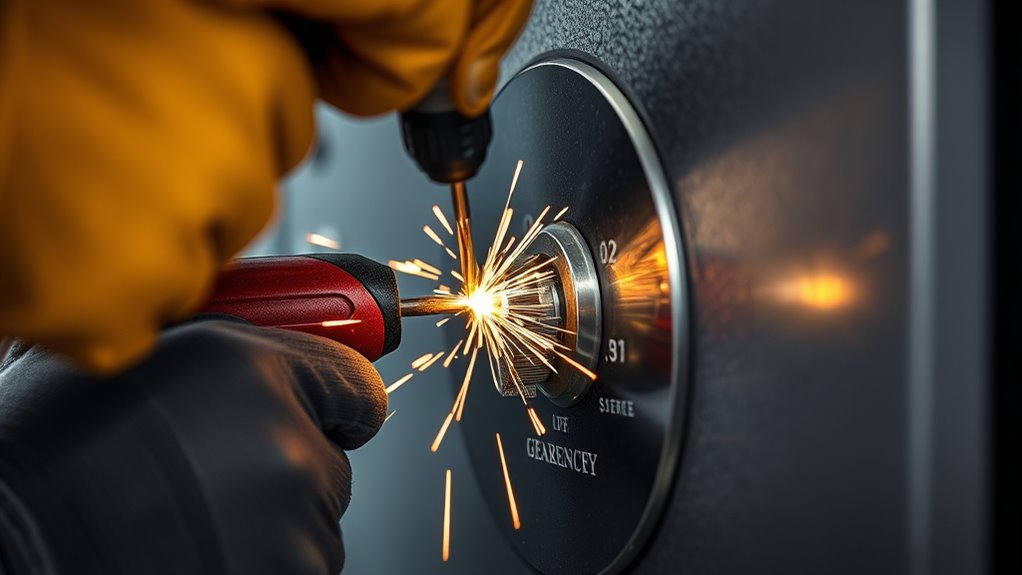
When you’re faced with an emergency and need to access your gun safe quickly, time is of the essence. Every second counts, so you can’t afford to waste time fumbling or trying multiple methods.
First, stay calm. Panicking will only slow you down. If your safe has a combination lock or keypad, try to recall any recent changes or codes.
Check if there’s a key override or backup key nearby—many safes include them for emergencies. If you’ve exhausted these options and still can’t open it, drilling may be necessary as a last resort.
But before you do that, make sure you’ve tried all non-destructive options. Your main goal is quick, safe access, so act decisively and efficiently.
Why Drilling Is Sometimes the Only Option
Sometimes, locked access obstacles or broken lock mechanisms make it impossible to open a safe normally. When time is critical for emergency retrieval, drilling becomes the only viable solution.
It’s a direct approach that bypasses failures and gets you inside quickly.
Locked Access Obstacles
Locked access obstacles can make opening a gun safe more challenging than you might expect, especially when the locking mechanism is highly secure or designed to resist tampering.
Advanced safes often have complex locks, multiple bolts, or electronic systems that prevent easy entry. These security features are meant to protect your valuables from theft or unauthorized access.
When traditional methods don’t work or aren’t an option, drilling might be your only solution. It’s important to realize that these obstacles are intentional, designed to deter quick or forced entry.
Understanding the level of security helps you prepare for the difficulty involved and explains why drilling may be necessary when all other options have been exhausted.
Broken Lock Mechanisms
A broken lock mechanism can make traditional opening methods useless. In such cases, drilling might be the only way to access your safe. When internal parts fail or jam, keys won’t turn, and electronic locks may not respond.
Drilling is necessary to bypass the damaged parts and open the safe efficiently. Knowing the common causes helps you prepare for this situation.
| Issue | Cause | Solution |
|---|---|---|
| Broken key cylinder | Wear and tear over time | Drill and replace cylinder |
| Jammed electronic lock | Power failure or defect | Drill to access wiring |
| Damaged handle | Physical impact or corrosion | Drill to remove handle |
| Failed locking bolt | Internal mechanism breakage | Drill to access locking bolt |
| Faulty sensor | Electrical malfunction | Drill to reset or bypass |
Understanding these issues makes it clear why drilling sometimes becomes the only option.
Emergency Retrieval Needs
When urgent access is needed, drilling often becomes the only way to retrieve valuables from a compromised safe. If you’re in a life-threatening situation or an emergency where time is of the essence, traditional methods might not be quick enough.
Lockouts caused by lost keys, failed electronic locks, or broken mechanisms leave you with no other options. Drilling provides immediate access, helping you get to firearms, medications, or important documents fast.
In these cases, delays could threaten safety or health. While it’s a last resort, drilling is often the only way to gain quick entry when everything else has failed. Understanding this emergency need shows why knowing how to drill safely and efficiently is so important.
Risks and Safety Precautions Before Drilling
Before you start drilling, you need to consider potential damage risks to the safe and its contents. It’s important to be cautious to avoid any costly mistakes.
Always wear proper safety gear to protect yourself from metal shards and debris. Safety first, so don’t skip this step.
Check local laws to ensure you’re legally authorized to open the safe this way. Following the rules will keep you out of trouble.
Potential Damage Risks
Drilling into a gun safe can risk damaging its locking mechanism, panels, or interior parts if you’re not careful. You might accidentally drill through the lock, making it unusable or causing more damage that makes opening the safe harder.
The drill could puncture the safe’s walls, weakening its structure or creating vulnerabilities. If you’re not precise, you could hit wiring or electronic components inside, which might short-circuit or disable electronic locks.
Additionally, drilling in the wrong spot might cause cosmetic damage like dents or scratches, reducing the safe’s value. These risks show how important it is to understand the safe’s construction and plan your approach carefully to avoid costly damage and ensure a successful opening.
Proper Safety Gear
Ensuring your safety while drilling into a gun safe is essential because the process can be risky. You might encounter flying debris, dust, or accidental injuries.
Make sure to wear safety goggles to protect your eyes from shards and dust. A dust mask or respirator helps prevent you from inhaling harmful particles created during drilling.
Heavy-duty gloves are important to safeguard your hands from sharp edges and hot surfaces. Ear protection like earplugs or earmuffs shields your hearing from loud drilling noises.
Wearing long sleeves and sturdy clothing can prevent minor cuts and burns. Always secure your work area to avoid accidents.
Using the right safety gear minimizes risks, allowing you to work efficiently and safely. Never skip protective equipment because it’s crucial for your safety.
Legal Considerations
Understanding the legal implications of opening a gun safe is really important. Unauthorized access or tampering can lead to serious legal trouble.
Before drilling, make sure you own the safe or have proper permission to open it. Laws vary depending on where you are, and some places consider forced entry a crime unless you have legal approval.
If the safe belongs to someone else or is part of shared property, get written consent or consult a legal expert. Also, be aware of laws about firearms and secure storage requirements.
Not following these rules can result in fines or even criminal charges. Always double-check local laws and regulations before you proceed to avoid unintended legal issues.
When you’re unsure, it’s best to seek professional help or legal advice to stay safe and legal.
Tools and Gear You Need for Safe Drilling
Before you start drilling into your safe, make sure you gather the right tools and gear. This will help you work safely and effectively.
| Tool | Purpose | Safety Gear |
|---|---|---|
| Cordless Drill | To make precise holes | Safety glasses |
| Metal Drill Bits | For drilling into steel safe walls | Ear protection |
| Tape Measure | To mark where to drill | Work gloves |
| Center Punch | To start holes accurately | Dust mask (if needed) |
Having these tools ready helps prevent mistakes and keeps you safe. Check that your drill bits are sharp and compatible with metal, and always wear safety gear to protect your eyes, ears, and hands.
Preparing Your Safe and Work Area
To get started, clear the area around your safe and make sure you have enough space to work comfortably. This helps prevent accidents and makes it easier to reach your tools.
Next, check that the surface beneath the safe is stable and protected. Use a thick cloth or padding to prevent scratches or dents.
Finally, double-check that you have all your necessary tools nearby. This way, you won’t need to search for them during the process.
Here’s what to focus on:
- Clear the workspace of clutter and obstructions.
- Protect the surface beneath the safe from scratches or dents.
- Organize your tools for quick, easy access.
How to Identify Your Safe’s Lock Type
To identify your safe’s lock type, start by examining the lock’s appearance and mechanism. Look for visual clues like keyholes, dials, or keypad panels that show whether it’s a key lock, combination lock, or electronic lock.
Recognizing these features helps you figure out the best way to open it safely. It’s a simple first step that can save you time and prevent damage.
Types of Lock Mechanisms
Identifying your safe’s lock mechanism is a key step before you try to drill it open. Different safes use different lock types, and each one needs a different approach.
First, check if your safe has a dial combination lock, which features a rotating numbered dial. Next, look for an electronic keypad lock, which has a digital display and keypad buttons.
Third, see if it has a key lock, which involves a traditional keyhole. Recognizing these types helps you understand what tools you’ll need and how complex the process might be.
Dial locks usually require precise drilling, electronic locks might need circuit bypassing, and key locks often involve drilling through the keyhole or lock body. Getting the right identification makes the opening process more efficient and targeted.
Visual Lock Identification
When examining your safe, start by looking closely at its locking mechanism to determine what type it uses. Check for keyholes, digital keypads, or rotating dials. A keyhole indicates a traditional lock, often operated with a physical key.
If you see a keypad with numbered buttons, it’s a digital lock that requires a code. A dial with numbers around it suggests a combination lock, which uses a rotating mechanism to open. Some safes combine multiple types, like a keypad and a keyhole.
Pay attention to the lock’s appearance. Digital locks often have a small screen or button panel, while mechanical locks have visible dials or key slots. Correct identification helps you choose the right tools and method for drilling or bypassing the lock safely.
Choosing the Right Drill Bits for Gun Safes
Choosing the right drill bits is essential for drilling into a gun safe without causing damage to the contents or the safe itself. The right bits help you make clean cuts and reduce the chances of cracks or splinters.
Start by choosing cobalt or titanium-coated drill bits. They’re durable and handle tough metals well, making your job easier and safer.
Next, pick a bit size that matches the lock or hinge you plan to drill. This precision prevents unnecessary damage and ensures a better fit.
If you’re working with softer metals or aluminum parts, a high-speed steel (HSS) bit is a good choice.
Using properly selected bits makes the process safer, easier, and more accurate. Avoid cheap or dull bits, as they can slip or damage the safe.
With the right tools, you’ll get cleaner results and keep the safe’s integrity intact during drilling.
Step-by-Step: How to Drill Through Your Safe Without Damage
Once you’ve selected the right drill bits, the next step is preparing your safe and workspace. Clear the area of clutter and lay down a protective covering to prevent any damage.
Mark the exact drilling spot with a pencil to ensure accuracy. Use painter’s tape over the mark to help keep the drill bit steady and reduce slipping.
Mark the spot with a pencil, then tape over it to keep the drill steady and prevent slipping.
Set your drill to a low to moderate speed. High speed can cause slips or damage, so it’s better to start slow.
Apply gentle, steady pressure, letting the drill do the work. Keep the drill perpendicular to the surface to avoid jagged edges.
Periodically stop to check your progress and clear away debris. Patience is key—rushing could crack or dent the safe.
Follow these steps carefully to minimize damage and make a clean, precise hole.
Handling Resistance and Lock Mechanism Challenges
Dealing with resistance and lock mechanism challenges is common when you’re safe drilling, but patience and a methodical approach can really make a difference. When you face stubborn resistance, don’t force the drill—it can damage the lock or safe.
Instead, try these steps:
- Adjust your drill speed. Slowing down helps reduce heat and prevents slipping.
- Apply consistent pressure. Steady pressure keeps control and stops the bit from slipping.
- Use lubrication. Light oil or water reduces friction, making drilling smoother and less forceful.
Staying calm and systematic ensures you avoid unintended damage and improves your chances of opening the safe successfully without issues.
Tips to Minimize Damage and Ensure Safe Entry
To minimize damage and guarantee safe entry, it’s important to work carefully and thoughtfully throughout the drilling process.
Start by choosing the right drill bit for the material, typically a carbide-tipped bit for hardened steel. Mark your drilling spot precisely to avoid unnecessary damage.
Apply steady, even pressure, and avoid forcing the drill, which can cause cracks or misalignment. Keep the drill cool by periodically withdrawing it and using water or coolant.
Use masking tape over the drilling area to prevent slipping and reduce surface chipping. Take your time and stay focused, ensuring you drill straight and at the correct angle.
Patience and precision go a long way in reducing damage and making the safe opening smoother and safer.
What to Do After Opening Your Safe
After successfully opening your safe, take immediate steps to secure its contents and prevent unauthorized access. First, carefully verify that all valuables are intact and accounted for.
Next, organize and categorize your items for easy retrieval and security. Finally, reset any access codes or change locks if necessary, especially if there’s any suspicion of tampering.
This guarantees your safe remains protected and only authorized individuals can access its contents. Properly documenting what’s inside and updating security measures immediately helps prevent theft or loss.
Keep the safe door slightly ajar if you plan to re-secure it soon, and avoid leaving valuable items exposed. Taking these steps maintains your security and preserves the integrity of your stored items.
When to Call a Locksmith for Help
Wondering if it’s time to call a locksmith? If you’ve drilled into your safe but still can’t access your valuables, it’s a good idea to get professional help. A locksmith can open the safe without causing more damage and help you fix or replace the lock properly.
| Situation | When to Call a Locksmith |
|---|---|
| Safe is stuck or damaged | If you can’t open it manually or after drilling. |
| Lost or broken combination | When access depends on a secure lock system. |
| Safety concerns or damage | If your safe is compromised or unsafe to use. |
Knowing when to call a locksmith can save you time and money. It also helps prevent any further damage to your safe.
Frequently Asked Questions
Can Drilling Void My Safe’s Warranty or Insurance Coverage?
Yes, drilling can void your safe’s warranty or insurance coverage. When you drill into the safe, you might damage its structure or locking mechanisms, which manufacturers often see as tampering.
Insurance companies could also deny claims if they discover unauthorized modifications like drilling. To avoid this, consider professional lockout services or contact the manufacturer for authorized solutions before trying any invasive methods.
What Are Common Signs That Indicate I Should Drill My Safe?
Think of your safe as a locked treasure chest. Sometimes, you hit a wall.
If keys don’t work, the lock jams, or you’ve tried every trick without success, it’s time to drill.
Also, if the keypad or electronic parts fail, drilling might be your only option.
These signs tell you it’s time to carefully break the shell, especially when safety and security are on the line.
How Long Does the Entire Safe Drilling Process Typically Take?
The entire safe drilling process usually takes about 30 minutes to an hour, depending on your experience and the safe’s complexity. You’ll spend time preparing tools, locating the lock, and carefully drilling.
If you’re new to this, it might take longer, so don’t rush. Stay patient, follow safety precautions, and verify you have the right equipment ready.
With focus, you’ll complete the process efficiently within this timeframe.
Are There Legal Restrictions on Drilling Into Certain Types of Safes?
Think of drilling into a safe like going through a guarded fortress. Some doors are protected by laws, not just locks.
Yes, legal restrictions do exist, especially on certain high-security or fireproof safes. You should check your local laws before proceeding.
Unauthorized entry can lead to legal trouble, so always make sure you have proper permission. If in doubt, consult a professional to stay within the law.
What Alternative Methods Exist if Drilling Is Not an Option?
If drilling isn’t an option, you might want to contact the manufacturer to see if they can provide a master key or combination.
Using a safe lock override tool or hiring a professional locksmith experienced in safe opening can also be effective.
Some safes come with resettable locks or electronic access options—be sure to check if these features are available.
Always make sure you have legal permission before attempting to open a safe to avoid any legal issues.
Conclusion
Just like Odysseus charting treacherous waters, you face the challenge of accessing your safe with resolve and caution.
By following these steps, you’re not only gaining entry to a secure space but also embodying the resilience and ingenuity needed to overcome obstacles.
Remember, sometimes the greatest strength lies in knowing when to seek help.
With patience and care, you’ll regain access to your gun safe—your own heroic journey through the labyrinth of security.