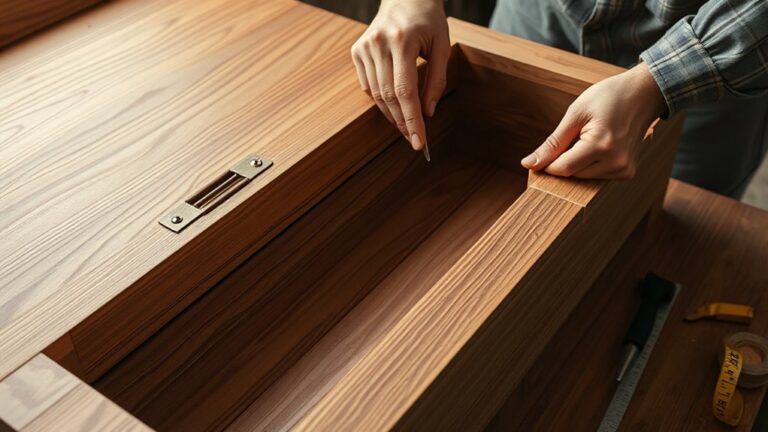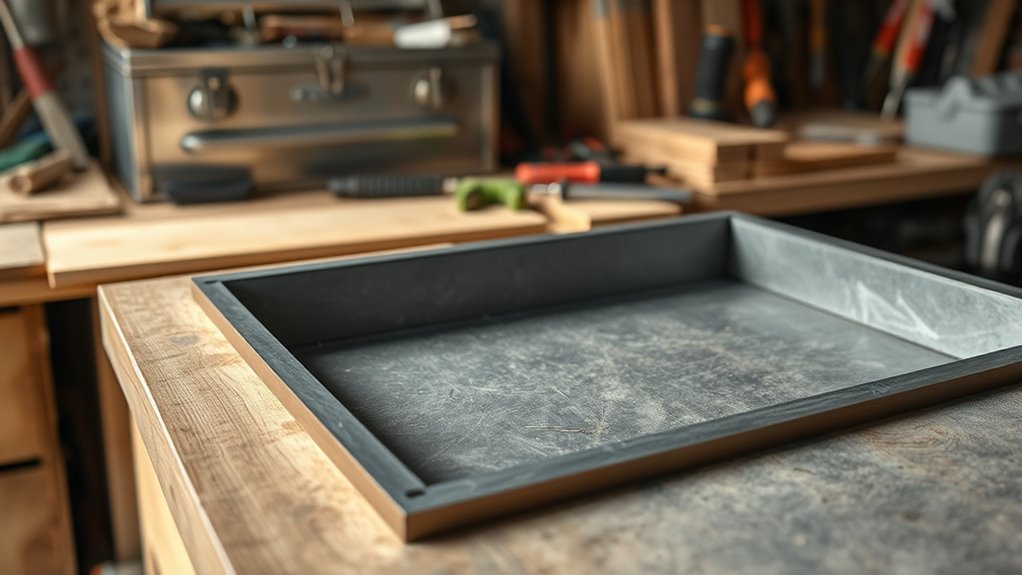
8 Easy Steps to Make a Homemade Gun Safe
Many people struggle with keeping their firearms safe and secure at home. You’re not alone in wanting a reliable solution that fits your space and budget while giving you peace of mind.
To make a homemade gun safe, start by evaluating your security needs and setting a budget. Choose a design and hide it in a discreet spot to improve safety.
Gather sturdy materials and tools, then build a strong frame and secure outer shell. Install reliable locks and security features, and finish by concealing the safe for added privacy.
Finally, test its security and plan regular maintenance—continue on to uncover detailed tips for each step.
Key Takeaways
- Assess your security needs, budget, and choose an appropriate safe design and storage location.
- Gather durable materials, tools, and safety gear before starting construction.
- Build a sturdy frame and outer shell using strong materials like steel or plywood.
- Install reliable locks and security features such as combination or keypad locks.
- Conceal the safe effectively and test for accessibility and security before regular use.
Assess Your Security Needs and Set a Budget
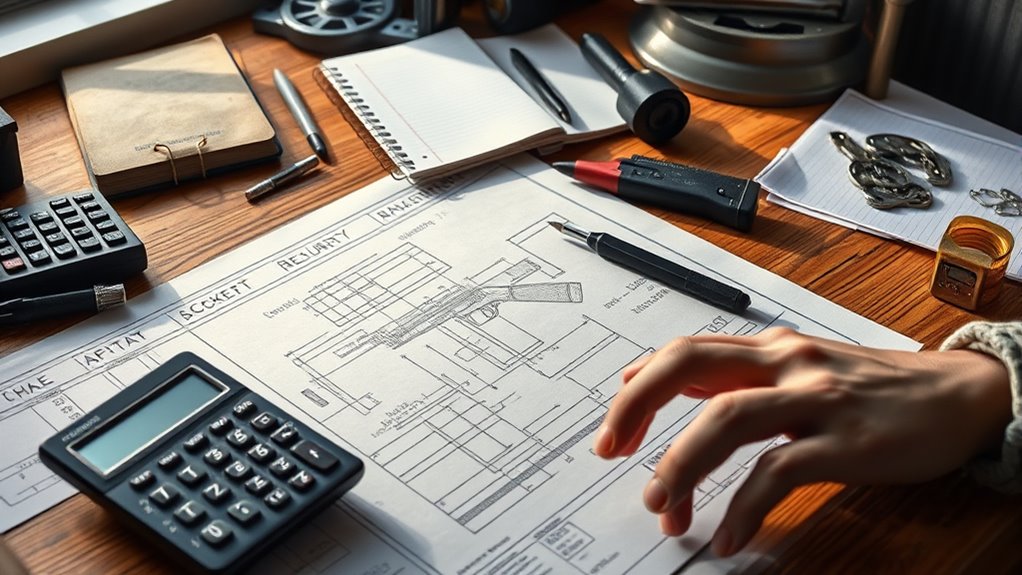
Before building your homemade gun safe, it’s important to figure out what level of security you actually need and set a realistic budget.
Think about how secure you want your firearms to be and whether the safe should resist theft, tampering, or accidental access. If you only need basic protection, a simple design might do the trick.
But for higher security, you’ll want stronger materials and more advanced features. Set your budget accordingly, considering costs for materials, locks, and extra security measures.
Remember, investing in quality components can save you money and trouble later on. Being clear about your needs helps you avoid overspending on unnecessary features or underinvesting in safety.
This step ensures your project stays practical and effective without going overboard or falling short.
Choose a Design and Find the Best Storage Spot
Selecting the right design for your homemade gun safe and finding the best storage spot are key to balancing security and convenience.
Think about how much space you need and whether you’d prefer a hidden compartment or a more obvious safe. Your choice should match your security needs and how easily you want to access it.
Once you’ve picked a safe type, consider where it will be most discreet and easy for you to reach. Look for a spot out of children’s reach and away from potential intruders but still quick for you to access in an emergency.
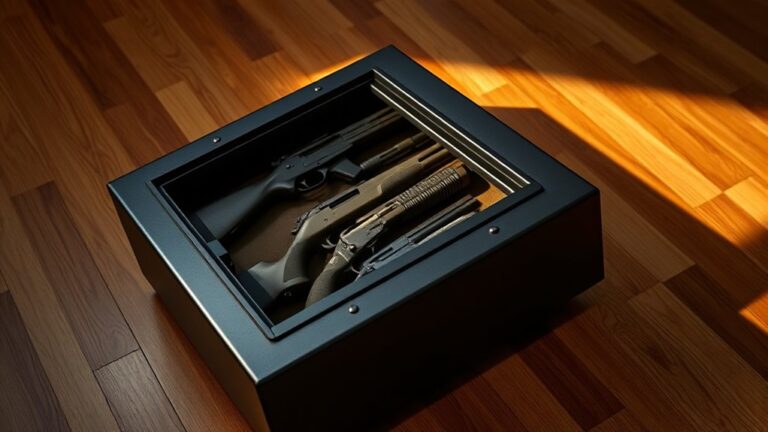
Avoid obvious places like closets or under beds. Instead, think about inside a wall, behind a false panel, or concealed within furniture. The right mix of design and location keeps your firearm secure yet accessible when needed.
Gather Materials and Tools for Building Your Safe
To start building your safe, you’ll want to gather the essential tools and materials like a drill, screws, and sturdy panels.
Check out a material selection guide to pick the right wood or metal for durability and security.
Don’t forget safety gear like gloves and goggles to protect yourself during construction.
Essential Tools List
Gathering the right tools and materials is a crucial first step when building your homemade gun safe. Having the right equipment will help make the project smoother and safer.
You’ll need a few key tools, like a power drill, screwdriver, measuring tape, level, and a saw. These will help you put everything together properly.
Materials like steel or thick plywood, hinges, and locking mechanisms are also essential. Having everything ready beforehand keeps the process moving without delays.
Here’s a quick list to keep handy:
| Tool | Purpose |
|---|---|
| Power drill | Drilling holes and assembly |
| Screwdriver | Fastening screws |
| Measuring tape | Precise measurements |
| Level | Ensuring the safe is level |
| Saw | Cutting materials to size |
Material Selection Guide
Choosing the right materials is crucial to guarantee your homemade gun safe is strong, secure, and durable. Start with thick steel or heavy-duty metal sheets for the main body, as they provide resistance against tampering and forced entry.
You’ll also need sturdy hinges and a reliable locking mechanism. Consider a heavy-duty latch or a combination lock for added security. For insulation and fire resistance, opt for fireproof materials like mineral wool or concrete lining.
Durable screws, bolts, and welding supplies are essential to ensure everything stays securely assembled. Don’t forget rubber or foam padding to protect your firearms from scratches. Prioritize high-quality, corrosion-resistant resources to extend your safe’s lifespan.
Collecting these materials beforehand will streamline your building process and help you create a reliable, long-lasting homemade gun safe.
Safety Equipment Needed
Before starting your project, gather all the safety equipment and tools you’ll need to ensure a safe and smooth building process. Safety should always come first to prevent accidents.
You’ll want basic protective gear and reliable tools to work safely. Make sure you have safety goggles to protect your eyes from debris and sparks.
A dust mask or respirator is essential to avoid inhaling dust or fumes. Heavy-duty gloves will safeguard your hands during cutting and handling materials.
In addition, collect important tools like a power drill, a measuring tape, and a screwdriver. These will help you make precise cuts and assemble parts securely.
Having the right safety gear and tools ready before you begin makes everything easier and safer. Always prioritize safety at every step to avoid injuries and build a sturdy, effective gun safe.
Build the Frame and Secure the Outer Shell
Choose strong, durable materials to make sure your safe is sturdy and secure. Assemble the frame carefully, ensuring all joints are tight and stable.
Then, attach the outer shell firmly to protect your valuables and prevent tampering.
Selecting Durable Materials
Selecting durable materials is key to building a sturdy gun safe that can resist tampering and environmental damage. You want materials that can stand up to forced entry, corrosion, and wear over time.
Steel is your best choice for the frame and outer shell because it offers strength and security. Reinforcing the structure with thicker gauge steel makes it even more durable.
For the outer shell, think about using rust-resistant coatings or galvanized steel to prevent corrosion. Adding a layer of dense, impact-resistant material inside can provide extra security.
Here’s what to focus on:
- Thick, galvanized steel for the outer shell
- Reinforced steel or heavy-duty metal for the frame
- Rust-resistant coatings to prevent corrosion
Choosing these materials will help ensure your safe stays tough and reliable for years to come.
Assembling the Frame Securely
To guarantee your gun safe is truly secure, assembling the frame properly and attaching the outer shell with precision is essential. Begin by aligning the frame pieces carefully, making sure all joints are flush and sturdy. Use strong fasteners like screws or rivets to hold the frame together tightly, avoiding any wobbling or gaps.
Double-check measurements before securing each connection to keep the structure solid. Once the frame is sturdy, position the outer shell around it, making sure it fits snugly without forcing it. Secure the shell firmly to the frame with appropriate fasteners, ensuring there are no loose sections.
A well-assembled frame provides a reliable foundation, so take your time to make sure everything is aligned and securely connected.
Attaching Outer Shell Properly
Once the frame is securely assembled, you can focus on attaching the outer shell carefully to make sure the safe is both strong and tamper-proof. Start by aligning the shell precisely with the frame, making sure all edges match evenly.
Use screws or rivets to fasten the shell, applying even pressure to prevent warping or gaps. Reinforce the attachment points with adhesive or sealant for extra security.
Visualize a sturdy, seamless exterior that hides the internal components and resists tampering. This ensures a tight fit for maximum strength, prevents gaps that could be exploited, and creates a durable, tamper-resistant outer layer.
Install Locks and Additional Security Features
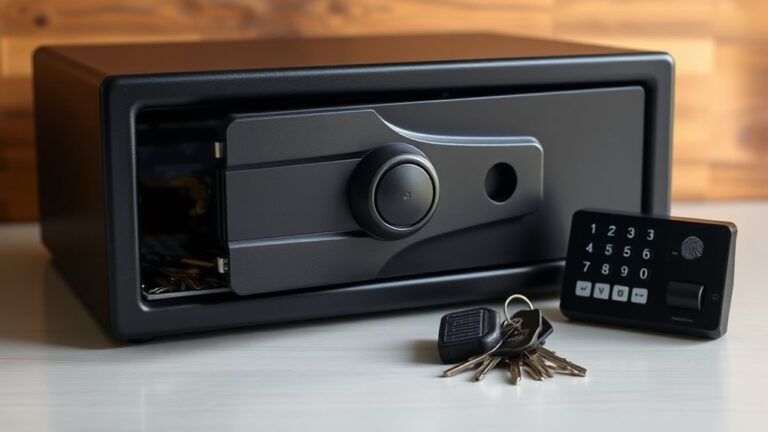
Installing locks and security features is an essential step to ensure your homemade gun safe provides reliable protection. Choose a sturdy lock that’s hard to pick, like a combination or keypad lock.
You can also add extra features like tamper alarms or reinforced hinges for more security. To help you decide, here’s a quick comparison:
| Feature | Pros | Cons |
|---|---|---|
| Combination Lock | No keys needed, quick access | Can be guessed with time |
| Keypad Lock | Easy to operate, customizable | Battery dependency |
| Reinforced Hinges | Prevents forced entry | Slightly more complex |
Pick the features that best match your security needs and install them carefully to keep your firearm safe.
Finish and Conceal Your Homemade Gun Safe
Finishing and concealing your homemade gun safe not only makes it look better but also boosts security by making it less obvious to intruders. You can paint or stain it to match your home decor, helping it blend in seamlessly.
Applying a coat of matte or camouflage paint reduces shine and draws less attention. To hide your safe even more, think about installing it behind a false panel or inside a bookshelf.
Applying matte or camouflage paint helps your safe blend in and stay discreet.
You might also use decorative covers or furniture that completely hide the safe, or try camouflage paint or textured finishes for added concealment. Built-in options like a drawer or wall cavity can make your safe less noticeable.
These steps help keep your firearms protected and out of sight from prying eyes.
Test the Safe’s Security and Accessibility
Before relying on your homemade gun safe, it’s important to test both its security and how easy it is to open. Try opening it multiple times with your chosen method to make sure you can access your firearm quickly when needed.
Check if the lock mechanism stays secure under pressure or tampering attempts. Apply gentle force around the edges and seams—if it moves easily, reinforce those weak spots.
Make sure you can open your safe swiftly but only with authorized methods. Practice opening it in low-light conditions if that applies.
Document any issues you find and make adjustments to your design. Remember, if it’s too hard to open, it defeats the purpose. If it’s too easy, it risks security.
Proper testing helps you find the right balance between security and accessibility.
Maintain and Upgrade Your DIY Gun Safe Over Time
Once you’ve tested your homemade gun safe for security and accessibility, ongoing maintenance and upgrades become key to keeping it reliable over time. Regularly inspect the lock mechanism, hinges, and surrounding materials for signs of wear or damage.
Regularly inspect and maintain your gun safe to ensure lasting security and reliable performance.
Apply lubricant to moving parts to guarantee smooth operation, and tighten any loose screws or fittings. Upgrading your safe might include adding a secondary lock, reinforcing the structure, or improving the interior organization.
You could also replace worn-out or damaged components for improved security. Consider adding a moisture control system to prevent rust and corrosion, or install additional padding or compartments for better organization.
Staying proactive with maintenance and thoughtful upgrades keeps your safe secure, functional, and ready whenever you need it.
Frequently Asked Questions
How Do I Ensure My Homemade Safe Is Fireproof?
To guarantee your homemade safe is fireproof, use fire-resistant materials like brick, concrete, or special fireproof board. Seal all joints tightly to prevent heat from seeping in.
Add a layer of insulating material such as mineral wool or fire-resistant foam inside for extra protection. Think about installing a fireproof lining or applying fire-resistant coatings for added safety.
Regularly test your safe with fire-resistant materials to make sure it holds up. Also, ensure proper ventilation to prevent heat from building up inside.
What Are the Legal Considerations for Making a DIY Gun Safe?
You need to research local, state, and federal laws before making your own gun safe. It’s important to understand restrictions on firearm storage, authentication requirements, and safety standards.
You should also consider licensing, registration, and legal ownership rules. Consulting legal professionals or authorities can help ensure you stay compliant.
Avoid illegal modifications and unsafe practices at all costs. Always prioritize safety, legality, and responsibility in every step of your project.
Can I Customize the Interior for Different Firearm Sizes?
Yes, you can customize the interior for different firearm sizes. When building your safe, measure your firearms carefully and plan adjustable or padded compartments to fit each weapon securely.
Use foam inserts, dividers, or removable panels so you can adapt the interior as needed. This customization helps ensure your guns stay protected, organized, and easy to access.
It also prevents damage or shifting during transport or storage, keeping everything safe and in place.
How Can I Prevent Tampering or Forced Entry?
To prevent tampering or forced entry, use sturdy, heavy-duty materials like steel and reinforce all access points.
Install a high-quality lock, such as a combination lock or biometric system, and secure the safe to a solid surface or the wall to prevent removal.
Keep the combination or key confidential, and consider adding an alarm system or surveillance cameras for extra security.
These steps make unauthorized access much more difficult and help keep your valuables safe.
What Maintenance Is Required to Keep the Safe Secure Long-Term?
You should regularly inspect your safe for any signs of tampering or wear, making sure locks and hinges work properly. Lubricate moving parts to prevent rust and keep everything functioning smoothly.
Keep the exterior clean to avoid corrosion, and consider changing the combination or lock codes periodically for added security. Also, check the interior padding and organization to prevent damage to your firearms.
Consistent maintenance keeps your safe secure and reliable over the long term.
Conclusion
So, now that you’ve built your own gun safe, remember: it’s only as good as your commitment to security and your ability to keep it a secret from curious cats or nosy neighbors.
Sure, you saved a few bucks and had fun, but don’t get complacent. Because in the end, nothing says “I’m responsible” like a DIY project that might just be the most intriguing thing in your house—until it’s not.
Stay vigilant and keep your homemade gun safe secure and discreet. Your safety and responsible ownership depend on it.